
Early in the morning in Playa del Carmen, the pelicans are already working the shoreline while the first coffee carts roll toward Quinta Avenida, and the sea turns from pewter to turquoise as the sun climbs. Down the coast the same light falls on a Maya watchtower above a cliff, on a cenote where roots hang into green water, and on a bay where turtles graze. The Riviera Maya suits travelers who want ruins, reef and jungle swimming holes within easy reach of a comfortable beach town.
What are the best things to do in the Riviera Maya?
The best things to do here pair the Maya past with the water: ruins in the morning, a cenote or a reef in the afternoon, tacos at night.
- Walk the Tulum ruins, a walled Maya port set on a cliff directly above the Caribbean.
- Climb or wander among the jungle pyramids of Coba, where the causeways run through the forest.
- Swim in a cenote such as Gran Cenote or the Dos Ojos system.
- Snorkel with green turtles in Akumal Bay.
- Spend a day at Xcaret, part nature park, part theater.
- Glide through the mangroves and lagoons of the Sian Ka’an biosphere reserve.
- Stroll Quinta Avenida in Playa del Carmen and take the ferry to Cozumel for the reefs.
- Eat cochinita pibil and fresh ceviche in small local restaurants.
Sights and landmarks in the Riviera Maya
Tulum archaeological zone
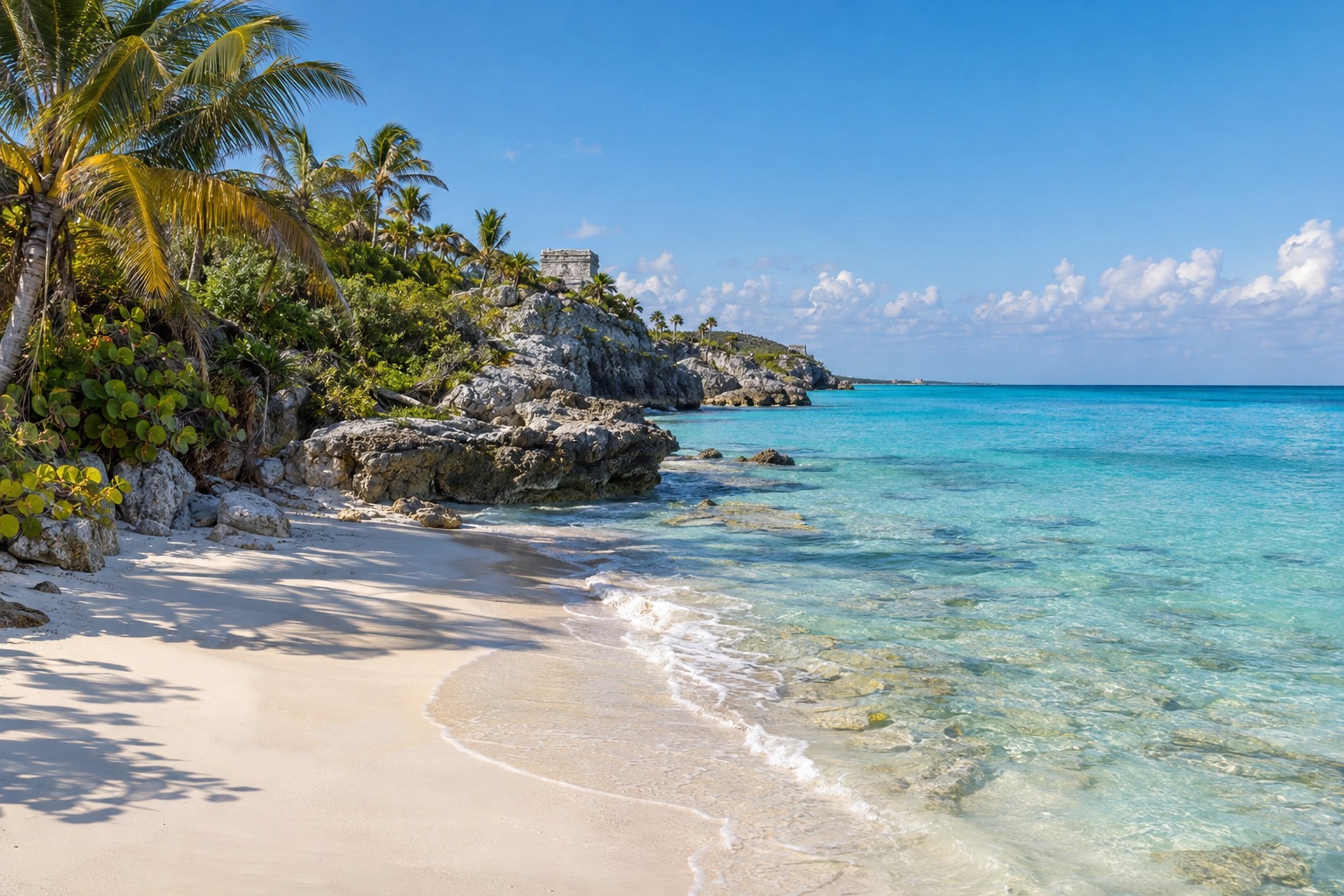
Tulum is the most photographed ruin on the coast, and the reason is the setting. The stone buildings stand on low cliffs with the sea right below, and iguanas sun themselves on the walls of the Castillo. It was a trading port, and you can feel it as you walk between the temples with the breeze coming off the water.
The entrance is on the highway south of Playa del Carmen, and most visitors arrive by car, taxi or tour from the coastal towns. Go early or late in the day, when the light is softer and the tour groups thin out. Shade is scarce and the site is open and exposed, so a hat and water make the visit easier. The small beach below the cliff is a pleasant stop afterward.
| Site | Open | Admission |
|---|---|---|
| Tulum archaeological zone | Daily, 8:00 a.m. to 5:00 p.m. (last entry 3:30 p.m.) | $265 pesos foreign visitors, $80 pesos Mexican nationals |
Coba
Coba is the opposite of Tulum: a vast Maya city swallowed by forest, scattered around several lakes and linked by old stone causeways called sacbeob. Birdsong replaces crowd noise, and many people rent a bike or hire a pedicab to cover the long distances between groups of buildings. The site lies inland, northwest of Tulum.
The prize is Nohoch Mul, also called Ixmoja, one of the tallest pyramids in the Yucatan Peninsula. Climbing it was reinstated in late 2025 with a new wooden staircase, and from the top the forest canopy stretches flat to the horizon. Arrive early, because the walking distances are long and the shade is patchy. Children under 13 enter free.
| Site | Open | Admission |
|---|---|---|
| Coba archaeological zone | Daily, 8:00 a.m. to 5:00 p.m. (last entry 4:00 p.m.) | $210 pesos foreign visitors, $105 pesos Mexican nationals and foreign residents (free for Mexican nationals and foreign residents on Sundays) |
Quinta Avenida and the beach towns
Playa del Carmen began as a small fishing settlement and is now the second-largest city in Quintana Roo. Its spine is Quinta Avenida, a pedestrian street running parallel to the beach, lined with shops, bars and restaurants. It is a good place for an unhurried walk, for ice cream in the evening, and for watching street performers near the ferry pier.
Puerto Morelos to the north is the quieter option, a low-rise fishing village with a leaning old lighthouse still standing on the beach beside its straight replacement. A botanical garden nearby preserves native plants of the peninsula. Akumal, further south, is a small bay town built around its turtles and relaxed beach life.
Beaches and outdoor things to do in the Riviera Maya
Akumal Bay and Yal-ku Lagoon
Akumal means place of the turtles, and the bay was declared a marine refuge to protect the green turtles that come to feed on the sea grass. Snorkelers float over the grass beds and often see them rising for air. Keep a respectful distance and avoid touching the animals, since the refuge exists for them.
At the north end of town, Yal-ku Lagoon is a brackish inlet where fresh groundwater meets the sea, and its mix of fish in clear, calm water makes it a favorite for snorkeling. Mornings are best, before the beach fills up. Check the beach flags before entering the open bay, since the Caribbean can get lively after a passing front.
Cenotes
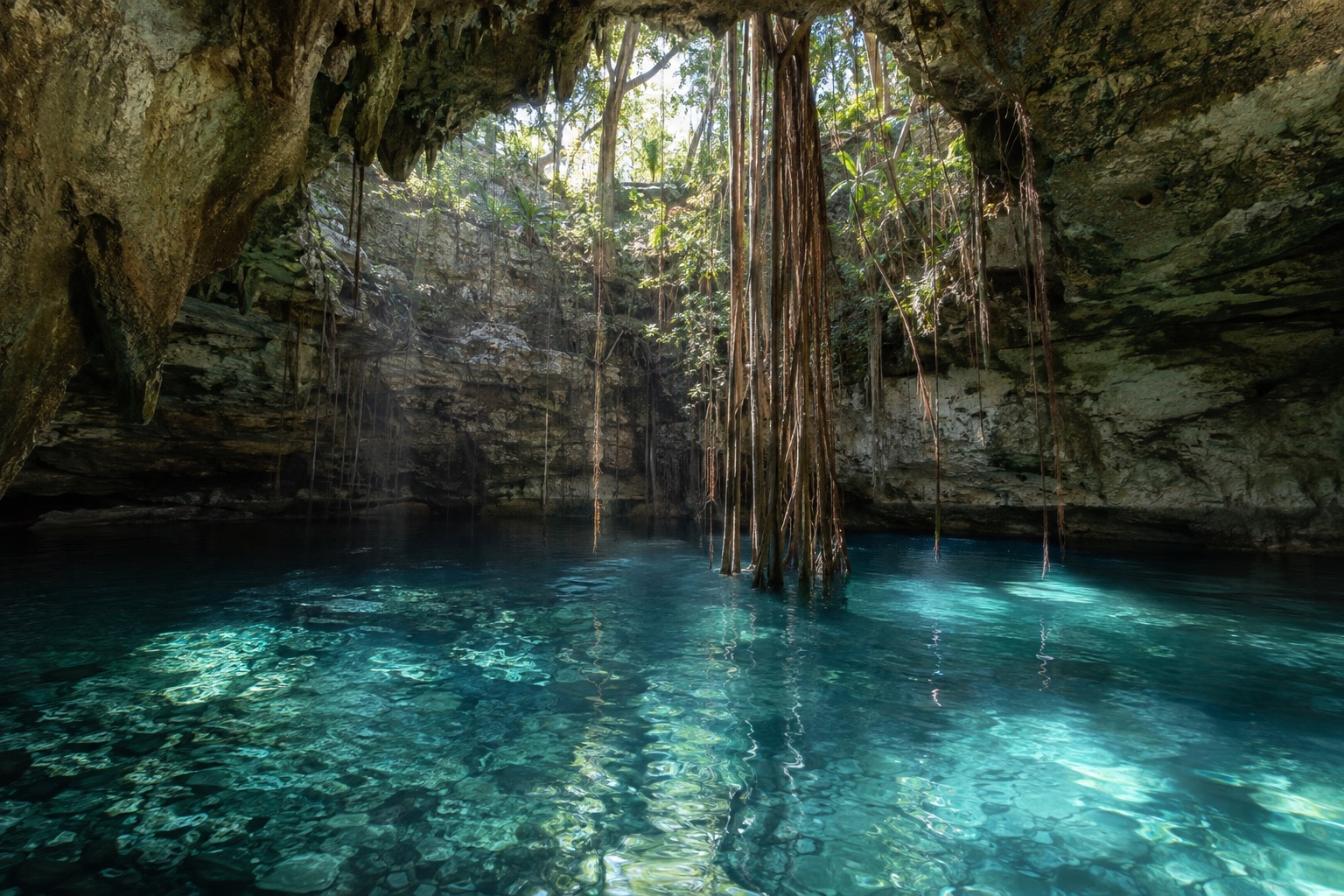
The coast is limestone, with almost no surface rivers, so the rain drains underground and surfaces as cenotes: sinkholes ranging from open sky-lit pools to caves hung with stalactites. Gran Cenote and the Dos Ojos system, both near Tulum, are among the best known, and several smaller ones sit toward Puerto Morelos.
Each cenote is run independently by its own operator, with its own hours and entry price, so decide on a couple and plan around them. Go in the morning, when the light shafts through the openings and the water is clearest. Rinse off sunscreen and repellent before you get in, as the water is delicate.
Reefs, snorkeling and Cozumel
Puerto Morelos has a protected reef close enough to shore that the boat ride out is short, which suits first-time snorkelers. The reef here is part of the Mesoamerican system that runs down the coast, and a trip rewards you with parrotfish, sea fans and the occasional ray.
Cozumel is the dive island, reached by ferry from Playa del Carmen. Its western reefs, including Palancar, Colombia and Santa Rosa, lie in a protected marine park and are visited mostly by boat. The island’s west coast is calmer, while the east coast faces open water with rougher surf and a stronger undertow.
Day trips in the Riviera Maya
Sian Ka’an biosphere reserve
South of Tulum, Sian Ka’an protects a huge sweep of coast, mangrove, wetland and tropical forest, and it has been a UNESCO World Heritage site since 1987. The reserve is wild: herons, crocodiles, manatees and dolphins live in its channels and lagoons.
Car access is limited and the interior roads are unpaved, so most visitors go with boat and kayak tours run by local cooperatives from Muyil or Punta Allen. Tours usually include a drift through the narrow channels and a stop at old Maya canals. Go in the morning, when wildlife is most active, and bring binoculars and a hat.
Cozumel
The ferry from Playa del Carmen is the easy way over, with several companies sailing the crossing, and the island town of San Miguel greets you right at the pier. Spend the day diving or snorkeling the leeward reefs, then wander the waterfront for lunch. San Gervasio, a sanctuary to the goddess Ixchel with buildings from the Late Postclassic period, has had temporary closures, so confirm it is open before you plan around it.
A day suits divers and snorkelers best. Take the morning crossing so you have the calm hours on the water, and leave the east coast for a scenic drive rather than a swim.
Xcaret
Xcaret is a private park on the coast south of Playa del Carmen, built around underground rivers, an aviary, a butterfly pavilion and a coral reef aquarium. It is a full day of swimming, wandering and Mexican culture, ending with the evening show, Xcaret Mexico Espectacular, with more than 300 performers.
The park opens in the morning and stays open into the night, so arrive early and stay for the show. Tickets are priced dynamically, and the operator advertises a discount for buying online in advance. It suits families and groups who like to have a lot in one place.
What to eat in the Riviera Maya
Yucatecan food is the heart of the table here, built on achiote, sour orange and slow roasting. Cochinita pibil, pork marinated and cooked until it falls apart, arrives in tacos with pickled red onion and habanero on the side. Panuchos and salbutes, fried tortillas topped with turkey, beans and avocado, make a perfect snack.
Along the coast, seafood takes over: ceviche, grilled fish with garlic, shrimp tacos and fresh lobster in season. Sopa de lima, a bright chicken soup with lime, is worth ordering on a hot day. Drink agua fresca of horchata or jamaica, or a cold Mexican beer, and finish with marquesitas, crisp rolled crepes filled with cheese and sweet spreads, sold from street carts. The best meals are often in simple family places a few blocks back from the beach, in the town centers of Playa del Carmen and Puerto Morelos, where tables spill onto the sidewalk and the menu is on a chalkboard.
Things to do in the Riviera Maya at night
Evenings in Playa del Carmen center on Quinta Avenida, where the shops stay lit, street musicians play and the beach clubs turn their music up. Bars and clubs fill the stretch toward the north end, and the crowd runs late. The mood is lively and international.
Quieter options are plenty. Puerto Morelos has a relaxed plaza with waterfront dinners, and Akumal offers a calm, early-to-bed feel. Xcaret’s evening show is the big theatrical option, and a taco crawl or a late seafood dinner by the sea works well in any town.
Things to do in the Riviera Maya with kids
Children usually love Xcaret, with its aviary, butterfly pavilion, aquarium and river floats, and it is easy to fill a whole day there. Snorkeling with turtles in Akumal Bay and the short reef trips from Puerto Morelos are other favorites for those who can swim, with an adult close by.
The sun is strong and the coast is flat and open, so hats, reef-safe sunscreen and plenty of water matter. At the ruins, shade is scarce and walking distances can be long, so an early start works well, and children under 13 get free entry at the federal archaeological sites. Check the beach flags before swimming in open water, since waves can be strong.
Good to know before you go
A rental car, taxi or colectivo van links the coastal towns, and the highway runs the length of the Riviera Maya. Dollars are not legal tender in Mexico, so businesses may or may not take them, and pesos are the safer choice.
Foreign visitors need an FMM, delivered digitally as a QR code, and the fee is collected by the airline for arrivals by air. The Atlantic hurricane season runs from June 1 to November 30, and the coast sometimes sees seaweed wash up on the beaches.
Sources
- Secretaria de Turismo federal, page for "Riviera Maya" (sectur.gob.mx), confirmed by the Consejo de Promocion Turistica de Quintana Roo, checked September 29, 2026
- fait de geographie administrative de notoriete publique
- Healthy Reefs for Healthy People Initiative / The Nature Conservancy, checked September 29, 2026
- common geographic knowledge
- NOAA National Hurricane Center, "Tropical Cyclone Climatology", nhc.noaa.gov, checked September 29, 2026
- common knowledge
- sourcing reserve (web research budget exhausted on September 29, 2026), no figure asserted.
- Wikipedia, "Coba", en.wikipedia.org, checked September 29, 2026 (source secondaire)
- INAH, official for the Coba archaeological zone, inah.gob.mx/zonas/515-zona-arqueologica-de-coba, checked September 29, 2026
- INAH, inah.gob.mx/zonas-arqueologicas, checked September 29, 2026
- Wikipedia, "Sian Ka'an" infobox, en.wikipedia.org, checked September 29, 2026 (secondary source ; official UNESCO whc.unesco.org not reached that day, 403)
- Wikipedia, "Sian Ka'an", en.wikipedia.org, checked September 29, 2026
- Wikipedia, "Tulum", en.wikipedia.org, checked September 29, 2026 (source secondaire)
- Xcaret (operator), xcaret.com/en/xcaret-park/, checked September 29, 2026
- Wikipedia, "Playa del Carmen", en.wikipedia.org, checked September 29, 2026 (source secondaire)
- Ultramar (exploitant), ultramarsales.ultramarferry.com/en/ferry-cozumel.php, checked September 29, 2026
- Xcaret (exploitant), xcaret.com/en/parque-xcaret/, checked September 29, 2026
- reserve de sourcage, aucun chiffre affirme
- INAH, official for the Tulum archaeological zone, inah.gob.mx/zonas/99-zona-arqueologica-de-tulum, checked September 29, 2026
- UNESCO World Heritage Centre, record 410, whc.unesco.org/en/list/410, checked September 29, 2026
- Wikipedia, "Tulum Municipality", en.wikipedia.org, checked September 29, 2026 (source secondaire)
- INAH, "Zona Arqueologica San Gervasio" (inah.gob.mx/zonas/zona-arqueologica-san-gervasio), checked September 29, 2026
- APIQROO, "Empresa" (apiqroo.com.mx), checked September 29, 2026
- Ultramar, "Ferry Cozumel" (ultramarsales.ultramarferry.com/es/ferry-cozumel.php), checked September 29, 2026
- Ley Federal de Derechos, art. 8-I ; Instituto Nacional de Migracion, gob.mx/inm, checked September 29, 2026
- Ley Monetaria de los Estados Unidos Mexicanos, art. 8
- Wikipedia, "Akumal", en.wikipedia.org, checked September 29, 2026 (secondary source ; CONAPESCA decree not reached that day, 404)