
On a July afternoon in Holbox, a late shower empties the sand streets for twenty minutes, then the sun comes back and everyone drifts out again, barefoot, with a coconut or a cold beer in hand. Boats head out at dawn toward the open water where whale sharks are feeding, and the lagoon behind the island fills with pink flamingos. July is the island in its green, steamy, wildlife-rich summer mode, with the most reliable reason of the year to get in a boat.
What is the weather like in Holbox in July?
In Holbox, July brings heat, humidity and scattered showers, along with intense sun in the morning and a decent chance of rain as the day goes on.
| Month | Average high (°F) | Average low (°F) | Rain (in) | Rain days | Sea (°F) | Daylight on the 15th |
|---|---|---|---|---|---|---|
| June | 93.0 | 68.2 | 8.33 | 10.9 | 81.1 | 13 hours 29 minutes |
| July | 93.2 | 68.7 | 6.69 | 11.7 | 81.2 | 13 hours 21 minutes |
| August | 93.4 | 69.3 | 8.08 | 14.2 | 82.8 | 12 hours 54 minutes |
Mornings are the best part of the day for being outside: bright, hot and usually dry, ideal for boat trips and a long walk on the beach. By afternoon clouds build, and the rain tends to arrive as a heavy shower that passes, though some days turn gray and stay that way. Once evening comes, it stays warm enough for a meal outdoors in a T-shirt, and the nights feel muggy.
The sea is bathwater-warm, according to the marine data, so swimming never feels like a decision. Daylight lingers into the evening, which gives you a long window for sunset at the water’s edge.
What to do in Holbox in July
July belongs to the whale sharks. Whale sharks come together in the sea around Holbox and nearby Isla Mujeres from about June through September, and snorkel outings are planned for when the sharks are there. The rest of the month is about slowing down: sand streets, golf carts, bicycles, seafood and the lagoon.
Snorkeling with whale sharks
Tours leave from the island’s beach in small boats, usually in the morning when the water is calmer and the light is good. The ride out takes you across open water, and the guides spot the sharks by their fins at the surface before you slip in.
What you see is difficult to describe to anyone who has not done it: a huge, slow, spotted fish gliding past with its mouth open, taking in plankton. It suits confident swimmers best, since you spend a while in open water with a life vest on, and it is a long morning with sun and some chop. Bring a rash guard and reef-safe sunscreen, and expect to share the water with a few other boats.
Flamingos and the lagoon
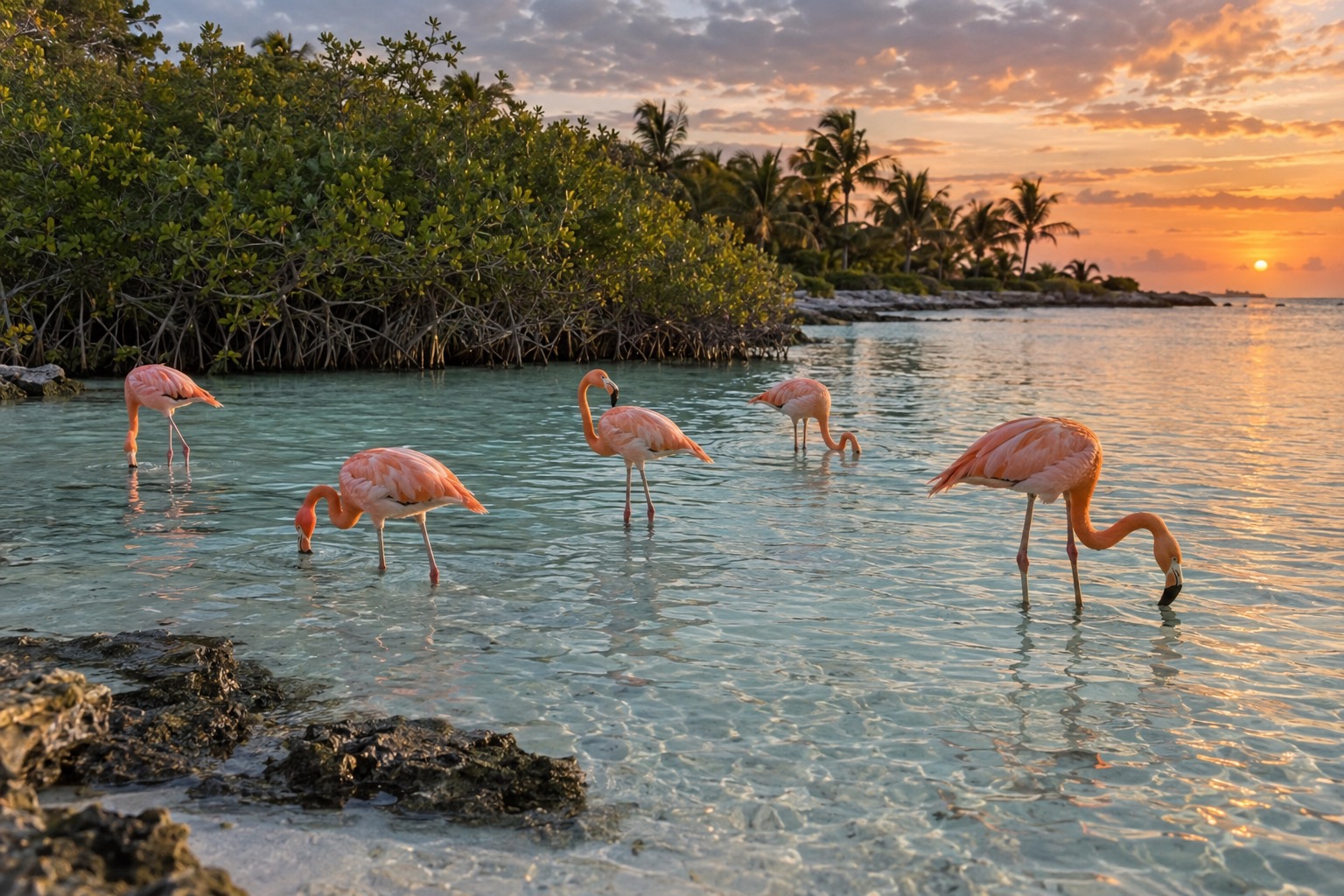
The Yum Balam reserve, a federally protected area, includes the shallow lagoon behind the island and the mangroves between Holbox and the mainland. In the shallows, flamingos and other wading birds eat, while a boat tour eases slowly along the edge, letting you observe them without bothering them.
Early morning is the most comfortable time, before the heat builds, and it fits neatly around a whale shark outing. Binoculars and a hat go a long way, and the mangrove channels are quiet and shady, which is a relief at midday in July.
Glowing water after dark
Some nights, when the air is warm and darkness settles in, the lagoon’s plankton glows if the water is stirred, so a hand or a paddle can leave a streak of blue-green sparks. Whether it happens comes down to the season, the weather, and the strength of the moonlight, so think of it as a wonderful maybe, never a sure thing. Nights around the new moon give the best chance, and clouds or rain can spoil it.
Eating and drinking in the heat
Seafood suits July: fresh ceviche, grilled fish, octopus tacos and the island’s famous lobster pizza, a Holbox oddity that locals and visitors both order. Cold coconut water, aguas frescas and a michelada under a palapa are what the weather asks for. Dinner tables go out on the sand streets once the day cools, and the mood is relaxed, barefoot and unhurried.
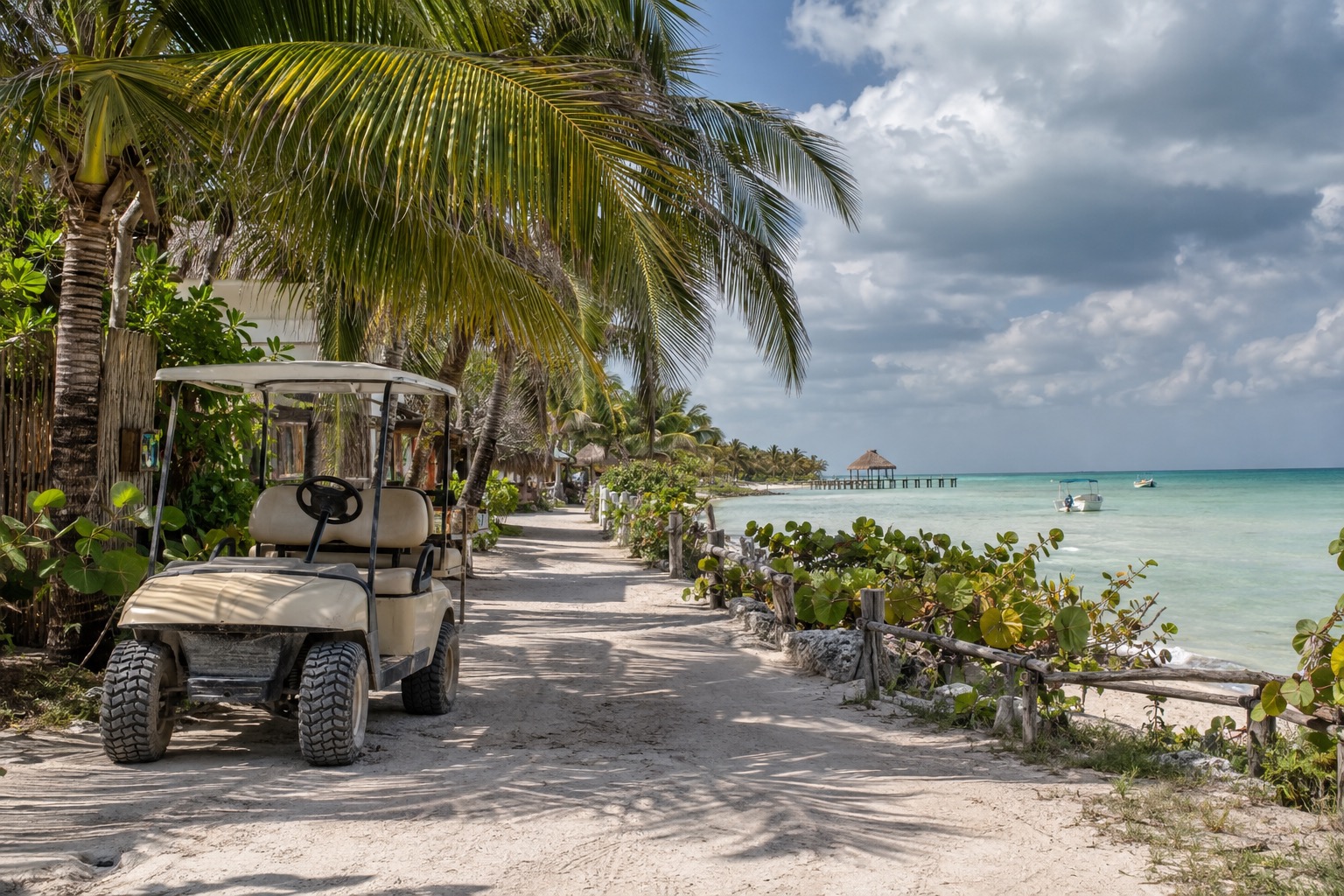
When the rain takes a break, get around the island by bicycle, golf cart, or on foot, because it has no paved roads for cars. Beach time is best early or late, and a rainy afternoon is a good excuse for a long lunch and a hammock.
Is Holbox busy in July?
Holbox is moderately busy in July, lively but not at its winter peak. During school break, Mexican families and U.S. travelers occupy a large share of the beachfront accommodations, while whale shark tours draw a regular stream of overnight guests and day-trippers.
The main beach in front of town and the best-known restaurants fill up first, particularly at sunset. Quieter stretches are easy to find by walking or cycling away from the center.
The rain and humidity keep some travelers away, so rooms and tables are usually easier to find than in the dry winter months, though weekends and the best-reviewed places still fill. The ferry from Chiquilá runs roughly every hour through the day, and boats tend to be fuller on weekend mornings.
What to pack for Holbox in July
Pack for heat, sun and sudden showers, with clothes that dry quickly.
- A light rain jacket or poncho for afternoon downpours
- Reef-safe sunscreen and a rash guard for the whale shark tour
- Sandals that can get wet, since the streets are sand and puddles linger
- Insect repellent for evenings near the lagoon and mangroves
- A dry bag for your phone and camera on boat trips
Good to know before you go
The U.S. State Department rates Quintana Roo Level 2, ‘Exercise increased caution’.
The Atlantic hurricane season, which lasts from June 1 to November 30, includes July, but its busiest stretch comes later, between mid-August and mid-October. Keep your plans flexible in case a storm system moves through.
| Fee | Amount | Who pays |
|---|---|---|
| Visitax (state visitor fee) | 2.50 UMA, about 293 pesos | Every foreign visitor entering Quintana Roo |
| Lodging tax (Impuesto Sobre Hospedaje) | 5% of the billed accommodation value, or 6% when a host or booking platform collects payment for a short-term rental | Guests, added to the lodging bill |
| Ferry, Chiquilá to Holbox (one way) | 330 pesos adult, 200 pesos child, 230 pesos Quintana Roo resident with valid ID | Each passenger |
Is July a good time to visit Holbox?
Yes, July is a good time for travelers who want wildlife and warm water and don’t mind some rain, and less so for anyone who wants guaranteed dry beach days.
Compared with June, July feels very similar, with a touch more rain. August is the wetter one, with more rainy days and a slightly warmer sea, and the hurricane season builds as it goes on.
July sits comfortably in the middle: the whale sharks are in, the lagoon is full of birds, and the island is green. What makes July special on Holbox is the mix of a morning spent beside a whale shark and an evening on a sand street with a cold drink, waiting to see whether the lagoon glows.
Sources
- Servicio Meteorologico Nacional (CONAGUA), normales climatologicas 1991-2020, estacion 23011 (Kantunilkin, Lázaro Cárdenas), checked September 29, 2026
- Open-Meteo Marine API, average 2015-2024, checked September 8, 2026
- sunrise-sunset.org, sunrise and sunset on the 15th of the month, checked September 8, 2026
- NOAA National Hurricane Center, checked September 6, 2026
- Holbox Express, "Holbox Ferry Rates and Departures Timetable" (holboxexpress.com), checked September 29, 2026
- Congreso del Estado de Quintana Roo, Ley del Impuesto al Hospedaje del Estado de Quintana Roo, art. 8, congresoqroo.gob.mx, checked September 29, 2026
- Ley de Derechos del Estado de Quintana Roo, art. 51-Octies, congresoqroo.gob.mx, checked September 29, 2026
- U.S. Department of State, travel.state.gov, checked September 29, 2026