
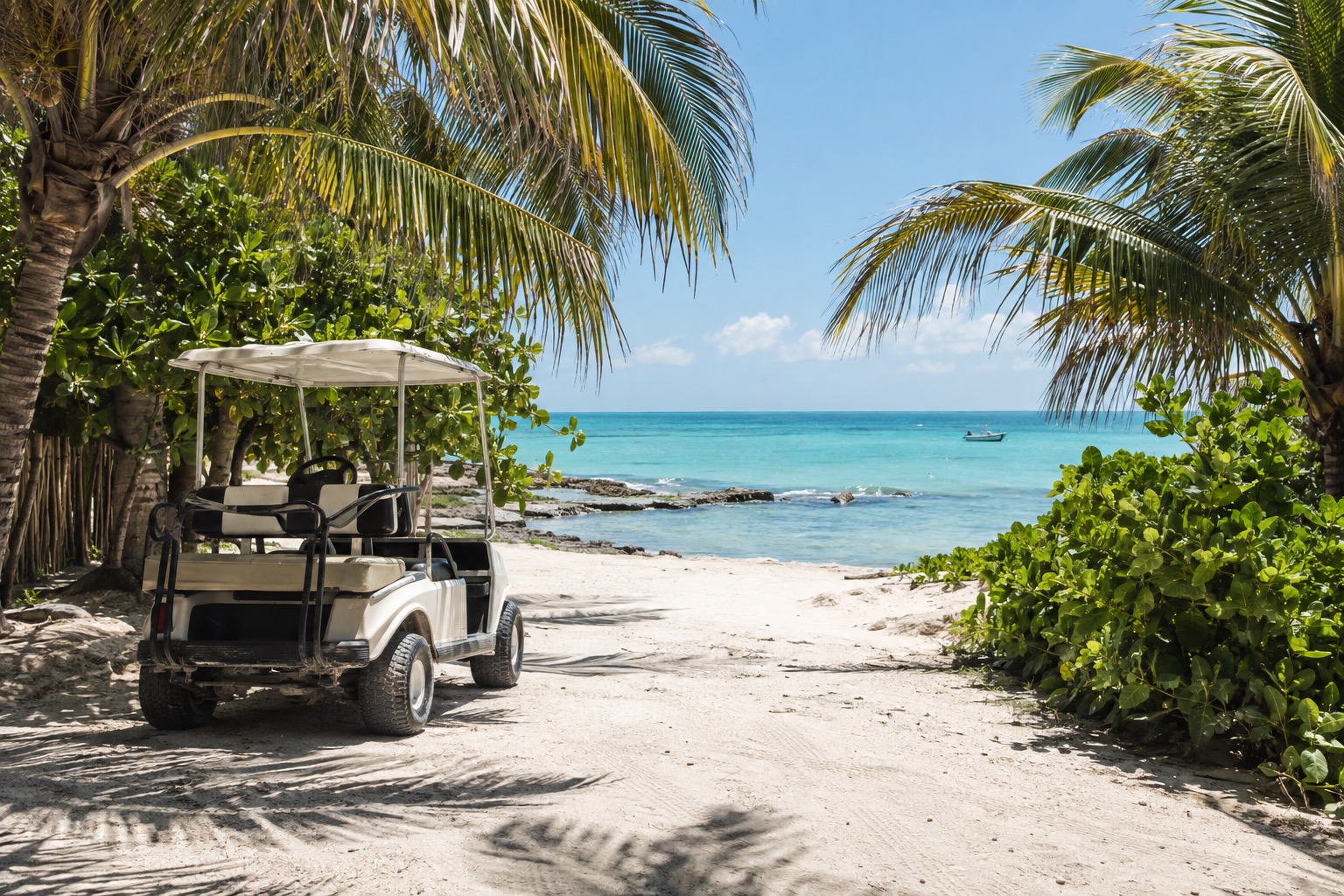
Late in the afternoon on Holbox, golf carts putter down the sand streets, kids pedal past with towels over their shoulders, and the whole island drifts toward the shore to watch the sky turn orange over the Gulf. Nobody is in a hurry, and shoes are optional. This is a barefoot island for couples, families and anyone who wants boats, birds, beaches and good seafood without a single paved road.
What are the best things to do in Holbox?
The best things to do in Holbox are slow ones: long beach walks, a boat out to the mangroves and birds, a seafood lunch with sand under your feet, and a sunset you plan the whole evening around.
- Walk the long, shallow beach at sunrise, when the shells and the birds have it to themselves.
- Take a boat toward the mangroves and small islets of the Yum Balam reserve.
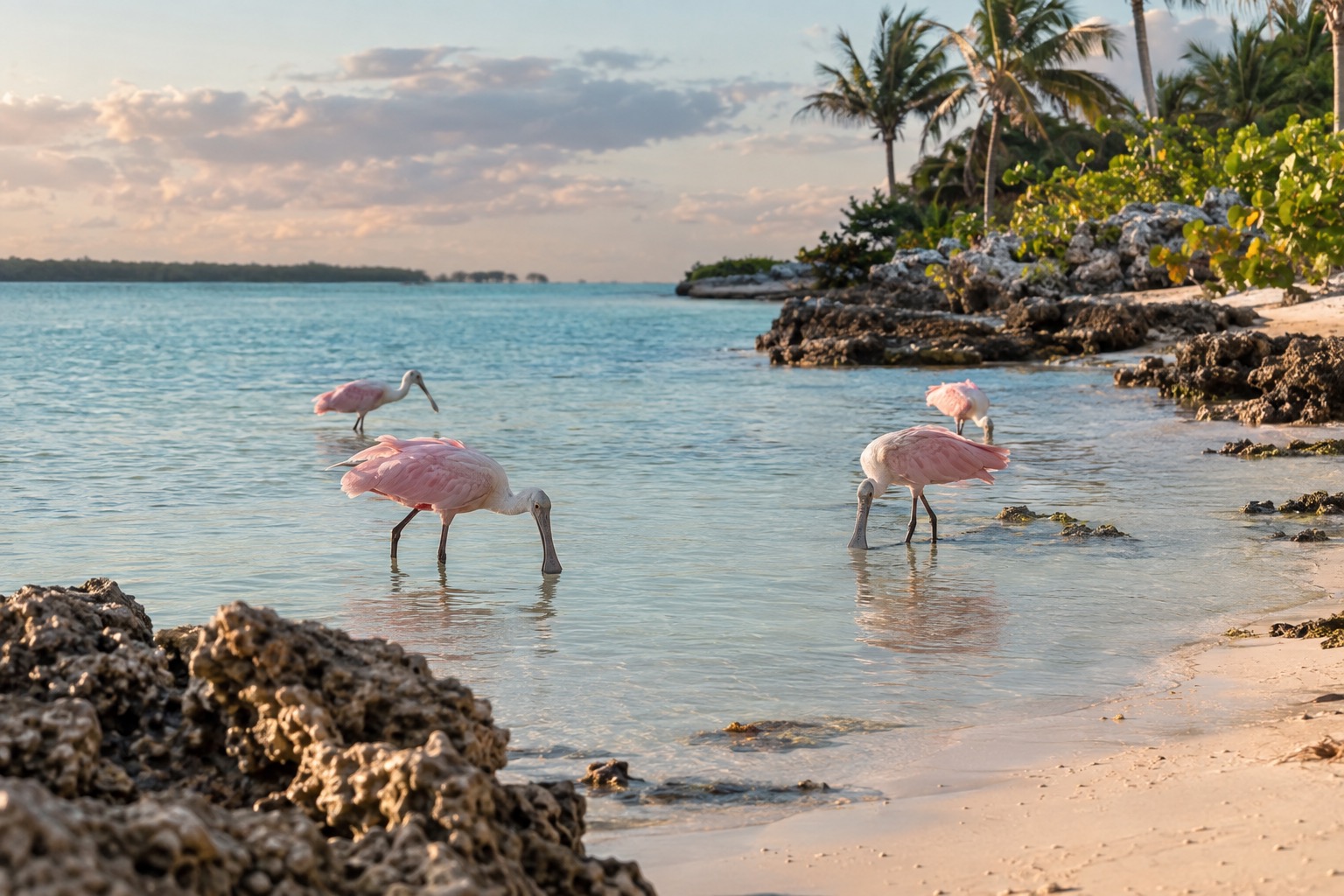
- Look for pink flamingos from the boat in the shallows behind the island.
- Join a whale shark snorkel tour in summer, when the giants gather offshore.
- Eat grilled fish, lobster pizza and fresh ceviche in sand-floor restaurants.
- Cycle or ride a golf cart along the sand streets to the murals and the plaza.
- Watch the sunset from the western shore, then stay for the night sky.
- Look for glowing plankton on a warm, dark night.
Sights and landmarks in Holbox
Holbox has no ruins and no grand museum. Its landmark is the town itself, a grid of sand streets, pastel houses and hand-painted murals that makes strolling the main activity.
The central plaza and the town
Everything gravitates to the plaza, with its small church, shaded benches and the evening bustle of food carts and ice cream sellers. Fishermen’s families, visitors and island kids all end up here once the heat drops. It is the easiest place to get your bearings, since most restaurants, shops and hotels are within a few blocks.
Go late afternoon, when the light softens and the square fills with music and chatter. Walk the side streets afterward, because the best murals and the quietest cafés are a block or two off the plaza. Cars do not exist here, so wandering on foot or by bicycle is the natural way to see it all.
Murals and street art
Painted walls turn up on corners, shop fronts and side lanes: sea turtles, whale sharks, mermaids and bright geometric patterns. The art gives the island a playful, bohemian feel and makes a good excuse for an unhurried bike ride.
Early morning is best for photographs, with soft light and empty streets. Families and couples both enjoy it as a loose treasure hunt, stopping for a fruit juice whenever the sun gets strong.
The lighthouse area and the fishing docks
At the edge of town, the working docks show the island’s older life: small boats, pelicans waiting for scraps and fishermen sorting the morning catch. It is a pleasant detour on the way to the beach, and it explains why seafood here tastes the way it does.
Come in the early part of the day, when boats return and the birds gather. The sand paths here are rough for strollers, so a bicycle or sturdy sandals work better.
Beaches and outdoor things to do in Holbox
Holbox’s beach is a long, pale strip of sand that runs the length of the island, with warm, shallow, usually gentle water and very little surf. Part of the island lies inside the Yum Balam protected area, which also covers the mangroves and the shallow waters between Holbox and the mainland, so nature is never far away.
The main town beach
The beach in front of town is calm, wide at low tide and dotted with hammocks, swings in the water and beach bars. The sea is shallow and mild, so it suits wading, floating and lazy afternoons rather than waves or serious swimming. Shells and seaweed wash up in places, and the sand can be soft and a bit muddy near the edges.
Sunrise and sunset are the moments to be here. Walk east or west along the shore to leave the beach clubs behind and find open space. Sun is strong, so bring a hat and shade.
Whale sharks and boat tours
Whale sharks gather in the waters off Holbox and nearby Isla Mujeres roughly from June to September, and snorkel tours are timed to that season. These gentle giants filter plankton near the surface, and seeing one pass is a highlight for many visitors.
Outside those months, boat tours turn to the reserve itself: mangrove channels, bird islets and open water with dolphins now and then. Pick a morning departure for calmer water and better light.
Flamingos, birds and glowing nights
Flamingos and other wading birds feed in the shallows behind the island, part of the Yum Balam reserve. Seen from a boat, the pink flocks against green mangroves are one of Holbox’s signature scenes, along with pelicans, herons and frigatebirds overhead.
On some warm, dark nights, plankton glows blue when the water is disturbed. It depends on the season, the weather and how much moonlight there is, so it is a bonus, never a promise. Cloudy, moonless evenings give it the best chance.
Day trips from Holbox
Most people stay on Holbox and take boat outings from it, but a few trips reach beyond the island.
Whale shark snorkel trip
From June to September, boats leave Holbox for open water where whale sharks feed. The trip is a half-day on the sea, with a short ride out, then snorkeling in small groups beside the animals. Waters off nearby Isla Mujeres also host the gathering.
Choose an early departure when the sea is calmer. It suits confident swimmers and older children, and the boats stop at sandbars or the reserve on the way back, so the outing doubles as a nature tour.
Mangroves and bird islets by boat
A guided boat circuit heads into the shallow waters between the island and the mainland, through mangroves and past small islets where birds roost. You see flamingos, pelicans and herons, and the guide stops where the birds are feeding.
The ride is relaxed and shaded in parts, so it works for all ages. Go in the morning or late afternoon, when birds are active and the heat is gentler.
Crossing to Chiquilá and the mainland
Holbox Express ferries cross from Chiquilá to the island roughly every hour, from early morning to late evening. Chiquilá is a small fishing town, and the crossing itself is a short scenic ride over shallow green water.
Some travelers use the mainland side as a springboard toward inland towns and Maya sites, but that makes for a long day. For most visitors, the ferry is simply the way in and out, best caught with some margin before the last boat.
What to eat in Holbox
Eating on Holbox means seafood, grilled or raw, served at tables set in the sand. Lobster is the island’s star, showing up in tacos, grilled whole with garlic butter and, famously, on pizza.
Look for ceviche with lime and chile, shrimp and octopus cocktails, and grilled catch of the day with rice and plantains. Street carts near the plaza sell marquesitas (crispy rolled crepes with cheese and sweet fillings), elote and fruit cups. Fresh juices, coconut water and cold Mexican beer fit the heat.
Yucatecan dishes appear too, like cochinita pibil and panuchos, and small breakfast spots serve chilaquiles and eggs under palm roofs. Beach clubs mix cocktails at sunset, while family-run places keep the simplest, freshest plates.
Things to do in Holbox at night
Nights on Holbox are laid-back: dinner by candlelight, a drink with your toes in the sand and a walk under a big sky. The plaza stays lively with music, food carts and families out for ice cream.
A few beach bars have live music or DJs, and some restaurants host fire shows, but nothing rivals the mainland’s mega-clubs. Without street lights beyond town, stars are bright, and on the right dark night the plankton in the water may glow when you step in. Streets are sand, so bring a small flashlight or use your phone, and ride a golf cart if you are heading far from the plaza.
Things to do in Holbox with kids
Children love Holbox because it works like a giant playground: sand streets, golf carts, bicycles and a calm, shallow beach for building castles and splashing at the edge. Boat rides to see pelicans and flamingos keep young ones curious, and the murals make a fun scavenger hunt. Ice cream and marquesitas near the plaza are favorite rewards at the end of the day.
Keep in mind the strong sun and heat, so plan beach time early or late, with hats, reef-safe sunscreen and water. Sand slows strollers, so a carrier or a bike seat is easier. Whale shark tours suit older children who swim well.
Good to know before you go
The U.S. State Department rates Quintana Roo Level 2, ‘Exercise increased caution’.
You reach Holbox by ferry from Chiquilá, and once on the island you walk, bike or ride a golf cart along sand streets, since there are no paved roads for cars. The Atlantic hurricane season runs through the second half of the year and shapes the weather, so keep an eye on forecasts when you plan. The following fees apply.
| Fee | Amount | Who pays |
|---|---|---|
| Holbox Express ferry, one way (adult) | 330 pesos | Every adult passenger |
| Holbox Express ferry, one way (child) | 200 pesos | Every child passenger |
| Holbox Express ferry, one way (Quintana Roo resident with valid ID) | 230 pesos | Quintana Roo residents |
| Visitax state fee | 2.50 UMA (about 293 pesos) | Every foreign visitor entering Quintana Roo |
| Lodging tax (Impuesto Sobre Hospedaje) | 5% of the billed accommodation value, or 6% when a host or booking platform collects payment for a short-term rental | Guests, through their accommodation |
Sources
- Holbox Express, "Holbox Ferry Rates and Departures Timetable" (holboxexpress.com), checked September 29, 2026
- Congreso del Estado de Quintana Roo, Ley del Impuesto al Hospedaje del Estado de Quintana Roo, art. 8, congresoqroo.gob.mx, checked September 29, 2026
- Ley de Derechos del Estado de Quintana Roo, art. 51-Octies, congresoqroo.gob.mx, checked September 29, 2026
- U.S. Department of State, travel.state.gov, checked September 29, 2026
- NOAA National Hurricane Center, nhc.noaa.gov, checked September 29, 2026