
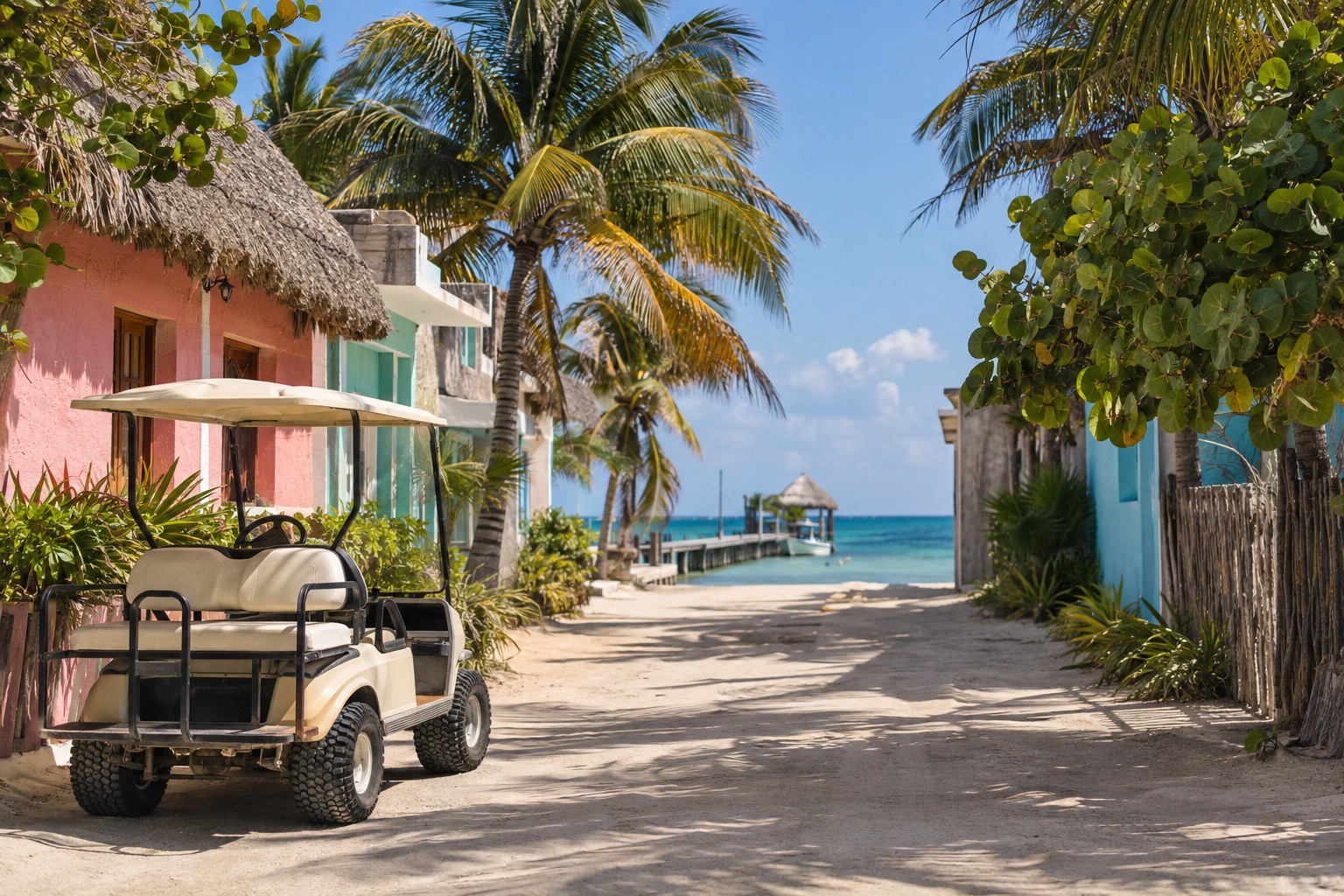
On an August morning in Holbox, boats slide out from the beach before the sun gets hard, and the sand streets are still damp from the night’s downpour. Pelicans drop into the shallows, golf carts hum past shuttered shops, and the smell of grilled fish starts drifting from the plaza kitchens by late morning. It is the island in its green, wet, warm-water season, a month for swimming with giant sharks, watching birds and letting storms set the rhythm of the day.
What is the weather like in Holbox in August?
August in Holbox is hot, humid and wet, with sunny mornings, stormy afternoons and a sea as warm as the air is heavy.
| Month | Average high (°F) | Average low (°F) | Rain (in) | Rain days | Sea (°F) | Daylight on the 15th |
|---|---|---|---|---|---|---|
| July | 93.2 | 68.7 | 6.69 | 11.7 | 81.2 | 13 hours 21 minutes |
| August | 93.4 | 69.3 | 8.08 | 14.2 | 82.8 | 12 hours 54 minutes |
| September | 92.5 | 69.1 | 10.00 | 17.3 | 85.1 | 12 hours 18 minutes |
Rain falls on more than half the days, usually as a short, heavy burst or a stormy afternoon that clears the streets and leaves puddles in the sand. Mornings are often the brightest stretch, so boat trips and beach time fit best before lunch.
The heat does not break much after dark, and evenings stay muggy enough for dinner outside. The sea is bathtub-warm, so a swim is pleasant at any hour, though lightning sends everyone back to shore.
What to do in Holbox in August
Swimming with whale sharks
The big draw of the month is the whale shark, the gentle, spotted giant that feeds in the plankton-rich waters north of the island. August sits squarely in the season, so tour boats leave daily from the beach whenever the weather allows. Guides spot the dark shapes near the surface, and small groups slip in one after another to swim alongside.
The sharks are filter feeders and pay swimmers little attention, which is part of the magic: you kick along beside a creature longer than the boat, mouth open, calm as a cow in a meadow. The ride out is bumpy on windy days, and some trips are called off when storms build. Morning departures usually have the better light and flatter water.
Flamingos, pelicans and the lagoon
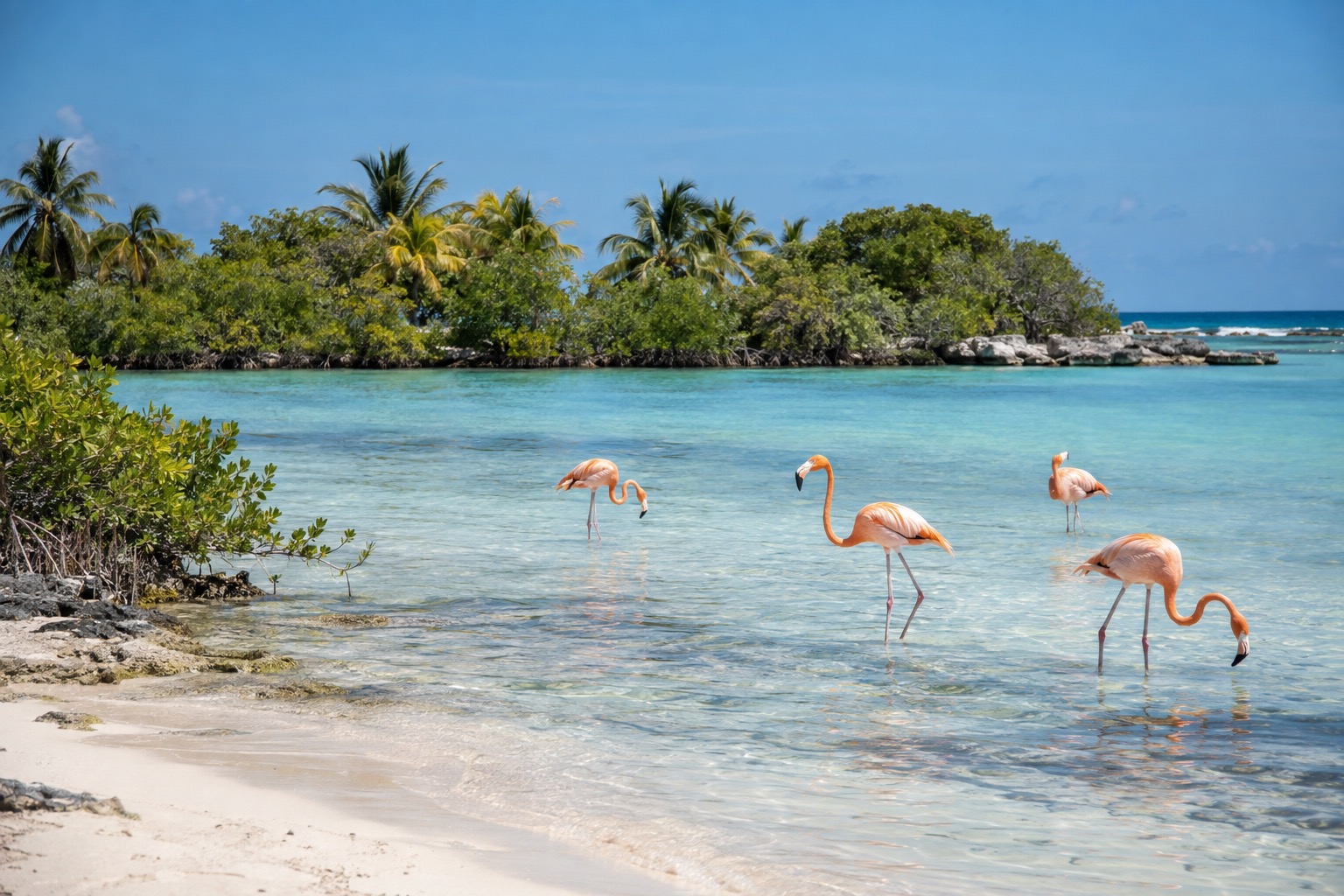
Holbox sits inside a protected lagoon and wetland reserve, and the summer rains turn the mangroves lush. Boat tours wind through the channels to see flamingos, herons, ibises and frigatebirds, and many stop at Isla Pájaros, the bird island, and at the freshwater spring called Yalahau.
Early morning is the time for birds, when the water is still and the light is soft. The tours also pass the shallow sandbar flats at low tide, where you can wade far from shore with pink wings overhead. Bring patience for a passing shower, since the birds hardly seem to mind.
Bioluminescence after dark
Some warm, dark nights, tiny organisms in the lagoon flash blue-green when you trail a hand through the water. It depends on the moon and the conditions, so a moonless night after a clear spell gives the best odds, and no guide can promise it.
Even without the glow, evenings are for the plaza. Families gather around the square, kids chase each other past the colorful Holbox sign, and the beach bars play music late. Summer storms often pass by dinner, leaving the sky washed and the air a little lighter.
Eating on the island in the rainy season
Seafood rules the tables: octopus, ceviche, grilled fish, shrimp and the lobster pizza the island is known for. Fresh coconut water, a chilled michelada or a mezcal-based cocktail goes down easily in this humidity.
Many places sit under palapa roofs, so a downpour only adds atmosphere. A few smaller restaurants and shops keep shorter hours or close for a stretch in the slower months, so the plaza and beachfront places are the safe bet for a late meal.
Is Holbox busy in August?
Yes, August is a busy month on the island, though it feels more relaxed than the winter peak.
Mexican families and American travelers on summer break fill the beachfront hotels, and the whale shark season keeps the boats busy. Weekends bring day-trippers and holiday crowds from the mainland. Rooms near the beach go first, while posadas a few streets back are easier to find, and restaurants on the plaza can have waits at dinner.
Quieter corners remain: the far end of the beach past the main strip, and early mornings anywhere. Rain scatters crowds fast, so a stormy afternoon can leave the streets nearly empty.
What to pack for Holbox in August
Pack for heat, humidity and sudden downpours, with gear that dries overnight and keeps bugs and sun off your skin.
- A lightweight, packable rain shell, since umbrellas lose to island wind
- Insect repellent for dusk, when mosquitoes come out near the mangroves
- Quick-dry swimwear and a rash guard for long hours on the boat
- Flip-flops or water shoes for flooded sand streets
- A waterproof phone pouch or dry bag
Good to know before you go
The U.S. State Department rates Quintana Roo Level 2, ‘Exercise increased caution’.
The Atlantic hurricane season, which includes August, stretches from June 1 to November 30. Most days bring only passing storms, but a tropical system can reshape plans, so keep your itinerary loose and watch the forecast as your dates approach. Two charges apply to visitors:
| Fee | Amount | Who pays |
|---|---|---|
| Visitax (state visitor fee) | 2.50 UMA, about 293 pesos | Every foreign visitor entering Quintana Roo |
| Lodging tax (Impuesto Sobre Hospedaje) | 5% of the billed accommodation value, or 6% when a host or booking platform collects payment for a short-term rental | Guests staying in paid accommodation |
Is August a good time to visit Holbox?
Yes, August suits travelers who care more about the water and wildlife than about dry skies, and who can shrug off a daily shower.
Compared with July, it is a touch wetter and the sea a little warmer, with the same lively crowds. September brings still more rain and the warmest water, but the island quiets down and the storm risk grows. What August gives Holbox is a full cast at once: whale sharks offshore, flamingos in the lagoon, a chance of glowing water at night and a village that still feels like a fishing town between downpours.
Sources
- Servicio Meteorologico Nacional (CONAGUA), normales climatologicas 1991-2020, estacion 23011 (Kantunilkin, Lázaro Cárdenas), checked September 29, 2026
- Open-Meteo Marine API, average 2015-2024, checked September 8, 2026
- sunrise-sunset.org, sunrise and sunset on the 15th of the month, checked September 8, 2026
- Congreso del Estado de Quintana Roo, Ley del Impuesto al Hospedaje del Estado de Quintana Roo, art. 8, congresoqroo.gob.mx, checked September 29, 2026
- Ley de Derechos del Estado de Quintana Roo, art. 51-Octies, congresoqroo.gob.mx, checked September 29, 2026
- U.S. Department of State, travel.state.gov, checked September 29, 2026
- NOAA National Hurricane Center, nhc.noaa.gov, checked September 29, 2026