
Under the cherry trees of Ueno Park in spring, whole offices spread blue tarps on the ground and settle in for hanami, the flower-viewing picnic, with cans of beer and boxes of bento. Outside blossom season the wide paths fill with strollers heading for the museums, the zoo and the lily-covered pond. Ueno Park is a big, open green space in Tokyo’s Taito ward, and it suits a slow day of walking and wandering between collections.
Is visiting Ueno Park worth it?
Yes, especially if you like to mix fresh air with museum-going and you want a day that does not need a tight plan. The park is a spacious public green space in the Ueno district, and it is celebrated in spring for its cherry blossoms and hanami. That reputation alone draws people, but the park earns a visit in other months too, because its paths link a pond, a zoo and a cluster of museums.
What sets it apart from other green spaces in Tokyo is how much sits inside one boundary. You can start with a stroll along the water at Shinobazu Pond, drift toward the Tokyo National Museum, look in on the zoo, and still be walking under trees the whole time. Many city parks offer a lawn and a bench.
It is a good fit for couples who like to wander, for families who want room to roam, and for anyone who prefers to sample culture in small doses between stretches outdoors. Travelers who want a single headline sight may find it more diffuse than a temple or a tower, since the pleasure is in the combination. Treat it as a place to spend hours rather than a stop to tick off.
What to see at Ueno Park
The cherry blossoms and hanami
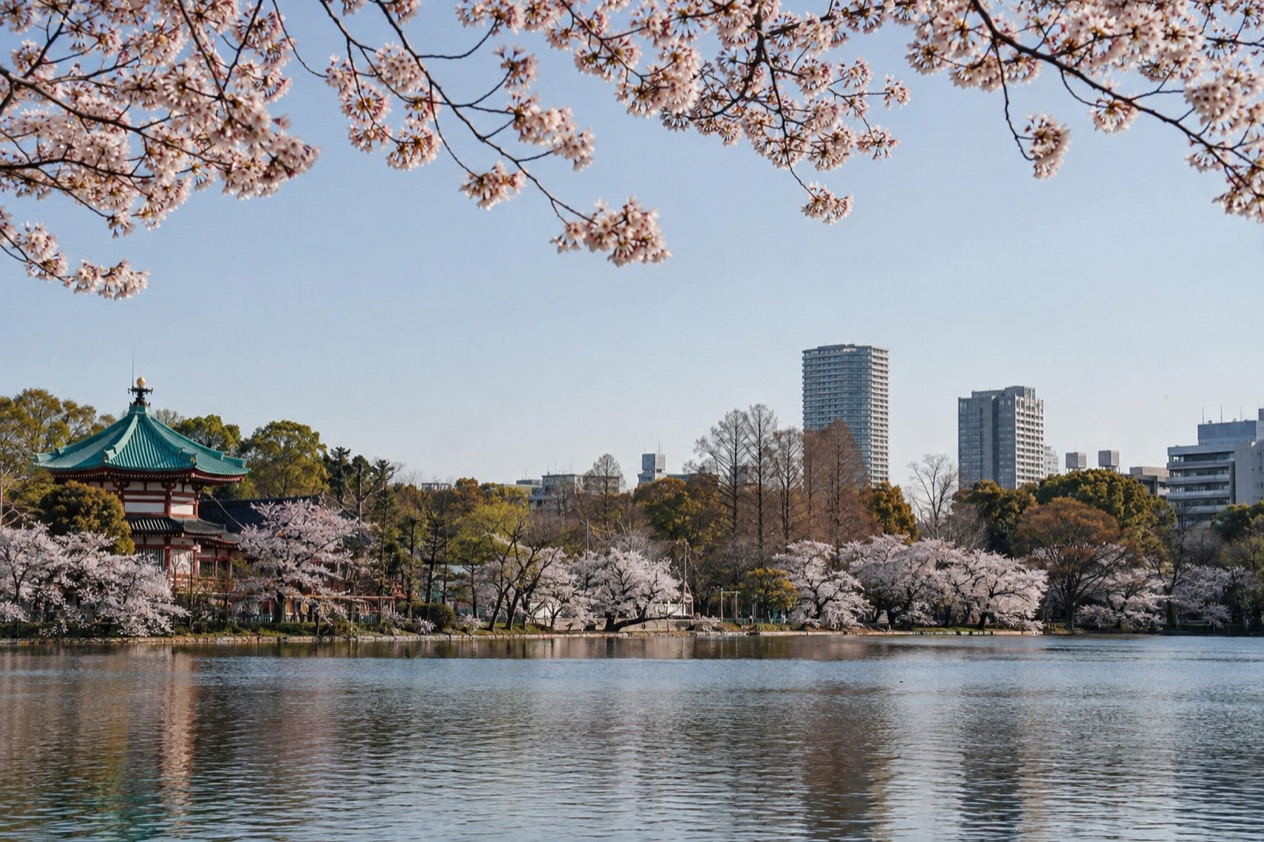
Spring is when the park becomes a festival ground in everything but name. The cherry trees line the main paths, and when they open, the walkways turn pale pink and the ground beneath them fills with groups sharing food and drink. Hanami is an old custom of gathering under blossoms, and Ueno is one of the places in Tokyo where it is celebrated with the most enthusiasm.
Even if you cannot time a visit for the bloom, the trees give the park its character, with a canopy that shades the avenues in other seasons. Look for the people at work on their picnic spots, the paper lanterns and the snacks sold nearby, all part of the show. Bring a patient mood, because the blossoms keep their own calendar from one spring to the next.
Shinobazu Pond
The pond sits at the southern end of the park and gives the walk its calmest stretch. Water, reeds and wide paths make it a place to slow down, watch the birds and look back at the city rising around the edges. It can be reached from Keisei Ueno Station to the southeast, from Yushima Station to the southwest and from Nezu Station to the northwest.
Walk the edge of the water rather than cutting across, and you will pass food stalls, benches and small shrines tucked among the trees. It is a pleasant place to sit with a drink after the museums, and a gentle contrast to the busy streets just outside the park.
Ueno Zoo
The zoo is part of the park complex and is reached from Nezu Station on the northwest side. It is the draw for many families, and the animals give a younger crowd a reason to keep walking after the quieter attractions have lost their appeal.
If you are traveling with children, the zoo can anchor the middle of the day, with the pond before it and a museum afterward. Pace the visit according to the mood of the group, and let the park’s open spaces serve as a place to rest between enclosures.
The museums around the park
Ueno Station gives access to the main park and most of its museums from the east, and Uguisudani Station serves the Tokyo National Museum from the north. The museums are the park’s cultural backbone, and together they let you turn a green walk into a day of art, history and objects.
Pick one or two rather than trying to cover them all. A single museum, a long lunch and a loop around the pond is a fuller day than a rushed sweep of every door. Between buildings, the open plazas and tree-lined paths make the transitions part of the experience.
How to get to Ueno Park
Five stations serve the park, each one opening onto a different side. Tokyo itself sits on Tokyo Bay, and its nearest airports are Haneda Airport (officially Tokyo International Airport) and Narita Airport, Japan’s largest international airport. From either, you reach the city and then choose the station that matches the part of the park you want first.
Ueno Station is the entry for the main park and most museums from the east. Keisei Ueno Station lies beneath the park itself and leads to the main park and Shinobazu Pond from the southeast. These two are the ones to choose if you want to step straight into the central paths.
| Station | Side of the park | Leads to |
|---|---|---|
| Ueno Station | East | Main park and most museums |
| Keisei Ueno Station | Southeast | Main park and Shinobazu Pond |
| Yushima Station | Southwest | Shinobazu Pond |
| Nezu Station | Northwest | Shinobazu Pond and Ueno Zoo |
| Uguisudani Station | North | Tokyo National Museum |
Choosing by destination saves steps. Yushima and Nezu bring you to the pond without crossing the whole park, Nezu is the one for the zoo, and Uguisudani puts you near the Tokyo National Museum before you have walked anywhere. If you plan to cover everything, enter at one side and leave by another so the day becomes a line rather than a loop.
When to visit Ueno Park
Spring is the season the park is known for, when the cherry blossoms open and hanami fills the grounds. The exact days shift from one spring to the next, so think of it as a window rather than a date. April in Tokyo brings highs in the mid-60s and rain on about nine or ten days, so a light layer and an umbrella both make sense.
| Month | Average high (°F) | Average low (°F) | Precipitation (inches) | Days with rain (1 mm or more) | Sunshine (hours) |
|---|---|---|---|---|---|
| January | 49.6 | 34.2 | 2.35 | 4.5 | 193 |
| April | 66.9 | 49.6 | 5.26 | 9.5 | 179 |
| July | 85.8 | 72.3 | 6.15 | 10.5 | 151 |
| October | 71.6 | 58.6 | 9.24 | 10.5 | 129 |
Winter is crisp and bright, with clear sunshine and a lot less rain, and snow is a rare visitor in January. The bare branches give the park a stripped, spare look, and the museums feel especially welcoming after a cold walk by the pond. It is a good season for those who prefer open paths without the spring gathering.
Summer arrives hot and humid, so the shade under the trees and the water of the pond matter more. October brings mild highs in the low 70s, but it is also the wettest of the four months in the table, so the museums and the zoo make useful fallbacks when showers roll in. Whatever the month, a day split between outdoor stretches and indoor stops handles most weather.
Tips for your visit
Wear comfortable shoes, because the park rewards walking and the paths between sights are long enough to add up. Bring a layer that suits the season and a small umbrella for the months with frequent rain. In spring, a picnic sheet and some food from a nearby shop put you in the spirit of hanami.
Plan the day as a sequence rather than a checklist. A reasonable shape is a morning at the museum of your choice, lunch in or near the park, then the pond and the zoo as the afternoon winds down. Choose your entrance station to match, using Uguisudani for the Tokyo National Museum, Nezu for the zoo and Yushima or Keisei Ueno for the pond.
Families do well with the zoo and the open spaces, since children can burn off energy between exhibits. Travelers who tire easily can break the visit into pieces, resting at the pond and letting the museums provide indoor pauses. Leave a little slack in the schedule so that a bench, a snack stall or a stretch of cherry trees can pull you off course for a while.
Good to know before you go
Tokyo is a big city and Ueno is one of its busiest districts, so keep your belongings close in the stations and carry a little cash and a card for the stalls and shops around the park. Rain falls on many days in the wetter months, so an umbrella earns its place in your bag. The pond, the museums and the zoo all reward an unhurried pace, so give yourself room to linger.
Sources
- Wikipedia, Ueno Park (https://en.wikipedia.org/wiki/Ueno_Park), checked October 11, 2026
- Japan National Tourism Organization, Tokyo (https://www.japan.travel/en/destinations/kanto/tokyo/), checked October 11, 2026
- Japan Meteorological Agency (JMA), Normal values 1991-2020, monthly (https://www.data.jma.go.jp/stats/etrn/view/nml_sfc_ym.php?prec_no=44&block_no=47662), station Tokyo, elevation 25 m, checked October 11, 2026
To plan your stay
- Best Time to Visit Japan: Cherry Blossoms, Autumn Colors, Weather and Festivals
- Where to Stay in Japan: Ryokan, Temple Stays, Capsule Hotels and the Best Cities to Base In
- Sending Luggage from the Airport in Japan: Hands-Free Travel, Hotel Delivery and Coin Lockers
- Know Before You Go to Japan: Entry, Money, Etiquette and Getting Around