
Under a cherry tree in a Tokyo park, a blue tarp is spread across the grass, a grandmother unwraps rice balls, and petals drift into someone’s cup. That scene is hanami, the Japanese custom of gathering to enjoy blossoms. It follows the flowers from the far south to Hokkaido, and it is as much about eating and talking with people you like as it is about the trees.
What is hanami?
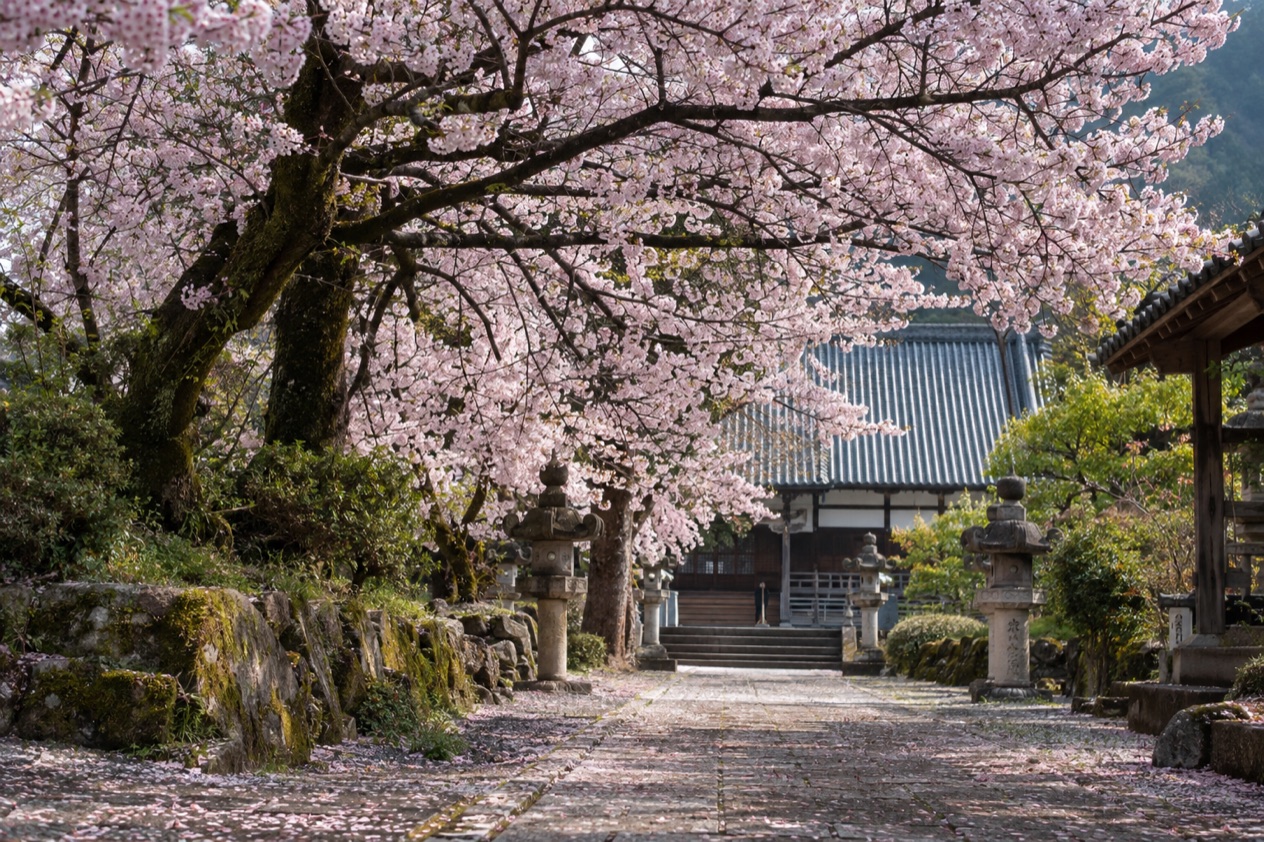
Hanami is the centuries-old practice of holding feasts or parties under blooming sakura (cherry) or ume (plum) trees. The word means, quite literally, looking at flowers, and in practice it means sitting down beneath them with food and company. The cherry blossom is considered the national flower of Japan and sits at the center of the custom, which is why spring in Japan is so closely tied to it.
Because the flowers are so short-lived, the whole country watches for them, and the Japan Meteorological Agency announces a blossom forecast, the sakura-zensen, each year. The trees are not a backdrop for a quick photo. They set the calendar for office outings, school farewells and family weekends.
How the blossom front moves north
The cherry blossom front travels up the archipelago as the weather warms, and both the agency and ordinary people follow it closely. The agency records the first bloom as the day five or six flowers are open on a sample tree, and the full bloom as the day about 80 percent of the buds have opened. The tree it watches is mainly the Somei-Yoshino, with local species standing in where that tree does not grow.
Because the front keeps moving, a trip can be planned around where it will be, not around a single date. Kyoto and Tokyo usually see the flowers at the beginning of April, though recent years have leaned toward the end of March. In Kyoto, the peak bloom in 2021 fell on March 26, the earliest since record-tracking began in 812. Hokkaido gets its blossoms a few weeks after Kyoto and Tokyo.
| Area | Usual cherry blossom timing |
|---|---|
| Okinawa and Amami | Around mid-January |
| Kawazu cherry (a early variety) | Late February to early March |
| Kyushu, Chugoku, Shikoku, Kinki, Tokai and Kanto | Late March |
| Hokuriku and southern Tohoku | Around April 10 |
| Northern and eastern Hokkaido | Mid-May |
In Fukuoka, around the turn from March into April, the places to look for blossoms are Nishi Park, Shiranoe Botanical Gardens and Katsuyama Park. Each tree is in full flower only briefly. The Yoshino cherry blooms and usually falls within a week, before the leaves come out, so a single park can look completely different from one visit to the next.
Evenings, lanterns and winter blossoms
Hanami does not stop at sunset. In Ueno Park in Tokyo, temporary paper lanterns are hung for yozakura, which is hanami at night, and the pale petals glow against the dark branches. On Okinawa, decorative electric lanterns light the trees for evening enjoyment, such as those climbing Mt. Yae near Motobu Town or at Nakijin Castle.
Not every cherry blooms in spring. Some trees, called fuyuzakura, flower between October and December, and the Kawazu cherry opens from late February to early March. These are smaller, quieter versions of the big spring event, and they show that the sakura calendar is longer than the famous few weeks.
The custom abroad
Americans may already know a version of hanami. In 1912 Japan gave 3,000 sakura trees to the United States as a gift celebrating the friendship between the two nations, and they were planted in Washington, D.C. Another 3,800 trees were donated in 1965. The National Cherry Blossom Festival there takes place every year when the trees bloom in early spring.
Other North American cities have their own versions. Macon, Georgia, calls itself the Cherry Blossom Capital of the World, with 300,000 trees and an International Cherry Blossom Festival each spring.
Branch Brook Park in Newark, New Jersey, has over 5,000 cherry trees of 18 varieties, and High Park in Toronto closes its streets to cars during the week of peak bloom. Seeing the original in Japan means seeing the custom in the setting it grew from.
How do Japanese families celebrate it?
Families celebrate hanami with a picnic under the trees, with several generations sharing food on the ground and watching the petals fall. It is a day out built around eating, talking and staying put for hours, more than around walking from sight to sight. The flowers last only a week or two, so people tend to make the most of the days when they are open.
The picnic under the branches
A typical spread starts with a plastic tarp, often blue, laid out beneath a tree. Then come the bento boxes, rice balls, fried chicken, pickles, sweets and drinks, with sake or beer for the adults and tea for children. Dango, the chewy rice dumplings on skewers, and sakura-flavored sweets often show up too, and convenience stores and department store food halls fill their shelves with spring versions of familiar snacks.
Children run around the trunks, catch petals in the air and, in the general spirit of the day, play on the grass while the adults talk. Sakura parties usually involve younger people and can be very crowded and noisy, with groups of friends and coworkers singing and laughing late into the evening. That lively mood is part of the tradition, not something to avoid.
Plum blossoms for a calmer outing
There is a quieter version of the same custom. Umemi, or plum-blossom viewing, is popular among older people because it is calmer than sakura parties. Plum trees flower before the cherries, so for many families, grandparents’ hanami comes first and the louder gatherings follow.
If the idea of a crowded, noisy picnic is not appealing, plum viewing is a way to enjoy the same pleasure of eating, tea and blossoms at a slower pace. Garden paths, shrine grounds and temple courtyards are the kinds of places where people go for it.
Blossoms beyond the cherry
Once the cherries are done, families and visitors move on to other flowers. In Toyota, Aichi Prefecture, a kilometer-long stretch of weeping peach trees shows white, red and pink. Tonami Tulip Park in Toyama has 3 million tulip bulbs, and at Grinpa, 200,000 tulips stand in front of Mount Fuji. Hitachi Seaside Park is praised by CNN in spring for its blue nemophila flowers set against the sea and sky.
Wisteria follows, with tunnels of purple, blue and white flowers extending for over 100 meters at Kawachi Fujien Wisteria Garden and a celebrated display at Ashikaga Flower Park in Tochigi Prefecture. Early summer brings hydrangeas to temple gardens, with Hasedera Temple in Kanagawa among the prime spots. The same urge to sit and look at flowers continues through the year, right up to the cosmos fields of Tonami in early to mid-October.
What are the etiquette rules?
Hanami etiquette is mostly about sharing a limited space with many other people and leaving the place as you found it. Nothing here is a law, but these are the habits that make the day pleasant for everyone under the trees.
Sharing the ground and the mood
People tend to claim a spot with a tarp, and groups often send one person ahead to hold it for the others. Sitting on that tarp with shoes off at its edge keeps the cloth clean for everyone. Neighboring groups are often only a few steps apart, so a friendly nod and keeping the music low are the ordinary courtesies.
Since sakura parties can be very crowded and noisy, the mood is relaxed about laughter and singing. If you want something calmer, plum blossom viewing is the quieter alternative, and visitors find that an older garden or shrine suits that slower rhythm. The tone changes from park to park, so watching what the people around you are doing is the best guide.
Taking care of the trees
The flowers last a week or two, and the Yoshino cherry usually falls within a week. That is part of what makes them precious, and visitors generally admire the blossoms where they hang. Branches are left on the trees, petals are enjoyed as they fall, and roots are not trampled by feet or heavy gear.
At night, lanterns hung for yozakura, as in Ueno Park, are part of the display for everyone, so people keep to the lit areas and leave the decorations alone. Photographers and picnickers share the same space, which is easier when nobody blocks a path for a perfect shot.
Leaving no trace
Japanese parks usually have few trash cans, and the habit is to take rubbish away or sort it carefully when it is collected. Bags are packed with the empty bento boxes and bottles, and the tarp is folded before anyone leaves. A tidy picnic spot is a point of pride, especially when thousands of people have used the same lawn in a single week.
Pollen is another practical matter. Cherry blossom flowering produces a lot of pollen in spring, causing many allergic reactions, so travelers prone to hay fever may want to bring their own remedies. A light jacket or a simple sweater is enough for spring travel in much of the country.
Good to know before you go
Spring in Japan is comfortable with a light jacket or a simple sweater, since much of the country averages 12°C. The end of April marks the start of Golden Week, a series of consecutive public holidays when much of the country goes on vacation, and visitors should plan to avoid peak times.
Dates for the blossoms shift from one spring to the next, so the forecast from the Japan Meteorological Agency is worth a look as your trip approaches. Yen amounts for food and drinks at a picnic are small, and a bento from a food hall or convenience store is part of the experience.
Sources
- Japan Meteorological Agency, sakura2020.pdf (https://www.data.jma.go.jp/sakura/data/sakura2020.pdf), checked October 11, 2026
- Japan National Tourism Organization, spring in Japan (https://www.japan.travel/en/guide/spring-guide/), checked October 11, 2026
- Japan National Tourism Organization, flowers by season: cherry blossom, plum, wisteria, hydrangea, where and when (https://www.japan.travel/en/see-and-do/flowers/), checked October 11, 2026
- Wikipedia, Cherry blossom (https://en.wikipedia.org/wiki/Cherry_blossom), checked October 11, 2026
- Wikipedia, Hanami (https://en.wikipedia.org/wiki/Hanami), checked October 11, 2026
To plan your stay
- Japan Rainy Season (Tsuyu): Dates, Regions and How to Plan Your Trip
- Seasons in Japan: Blossoms, Fall Color, Snow Festivals and Summer Matsuri
- Typhoon Season in Japan: When It Hits, Which Regions Take the Brunt and How the Warning Alerts Work
- Autumn Leaves Dates by City: Usual Maple Dates, 2025 Results and How Much They Shift