
Under a cherry tree in a Japanese park, a blue sheet is spread across the grass, shoes line up at its edge, and a bento box is passed from hand to hand while petals land in the cups. Hanami, the custom of gathering to look at blossoms, has its own small courtesies. They come down to sharing the ground kindly, leaving no trace and remembering that the trees are the guests of honor.
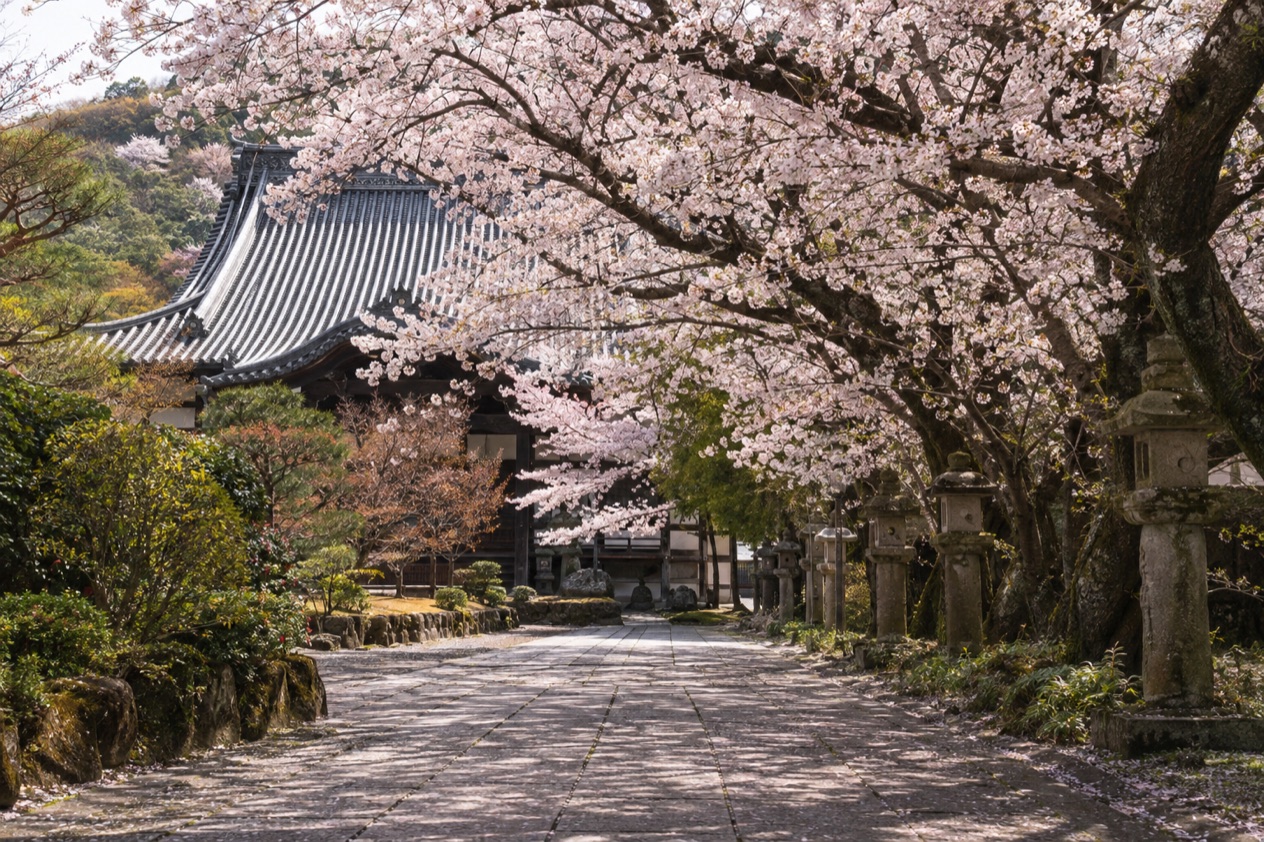
What are the rules for hanami?
Hanami runs on habit rather than on a written code: you gather under the blossoms, you look, you eat and drink together, and you leave the place as you found it. The few facts that frame the custom are practical ones. Cherry blossoms last only a week or two, so the whole ritual is built around timing and a certain urgency.
That brevity explains much of the mood. A party that would be an ordinary picnic in July becomes an occasion in spring because the trees will not wait. People talk about the blossoms as they would a visiting friend, and they make time to see them while they are there.
The forecast sets the calendar
Each year the Japan Meteorological Agency announces the blossom forecast, known as sakura-zensen, and it is followed closely, with the front moving up the country like weather news. Dates differ from city to city and from one spring to the next. In Kyoto in 2021, the peak bloom day, March 26, was the earliest since record-tracking began in 812, a reminder that no calendar date is a promise.
For a traveler, this means treating any plan as flexible. A friendly local habit is to look at the forecast, pick the day when the trees are open, and be ready to change the afternoon if the blossoms arrive early or linger late.
The sheet, the shoes and the spot
The core of a hanami party is a sheet laid on the ground, most often a plastic tarp in blue, big enough for a group. It marks a small private room in a public park. The habit is to take your shoes off before stepping onto it, the same way you would at the entrance of a home, and to leave them neatly at the edge.
Spots under the best trees are claimed early. Office groups have long sent a junior colleague ahead to hold a place with a sheet, and the whole afternoon is built around that patch of grass. If you arrive and a neighbor’s sheet is already touching yours, the usual response is a small bow and a smile, not a complaint. Keep your own sheet within its edges so the walkways stay open for others.
Food, drink and sharing
What goes on the sheet is a matter of taste. Hanami bento boxes, rice balls, fried chicken, sweet dango on skewers and sakura-flavored sweets all turn up, along with tea, beer and sake. Seasonal treats wrapped in pickled cherry leaves, such as sakura mochi, appear in shops with the blossoms and make a good picnic companion.
The custom is to share. Offering a neighbor a piece of something, or pouring a drink for the person next to you before filling your own, is the gesture that fits the occasion. Drinking is part of many parties, and the habit is to keep it cheerful and to be mindful of the people on the next sheet.
Yozakura, or blossoms after dark
Yozakura means hanami at night, and the same habits carry over into the evening. Lanterns turn the trees pale and glowing, the sheet stays where it is, and conversation tends to drop a little with the light. Keep lights, music and voices to a level that suits the neighbors, since sound travels easily among the trunks.
Where can you picnic?
Parks put up lanterns for the evening, towns add their own seasonal touches, and plum orchards offer a gentler alternative.
Ueno Park in Tokyo
In Ueno Park, temporary paper lanterns are hung for the purpose of yozakura. After dark they glow among the branches, and the park turns from a daytime picnic ground into an evening gathering place. Sheets spread beneath the trees are the habit here, as at most of Japan’s blossom parks, and food and drinks are brought along or picked up from stalls on the spot.
A walk through the park before you choose a place to sit lets you see how the groups arrange themselves. Large parties take the broader patches of grass, couples and small groups tuck in along the edges, and nobody expects a stranger to move for them. Pick a place that leaves room around you and leave the paths clear.
Okinawa: Mt. Yae and Nakijin Castle
Okinawa’s blossom season has its own character, with decorative electric lanterns hung in the trees for evening enjoyment. The lanterns light the trees ascending Mt. Yae near Motobu Town, and they are also hung at Nakijin Castle. The setting is a hillside or a castle site rather than a flat city park, so what you see and do is a walk among lit blossoms.
Because these are lit trees on a slope and in castle grounds, the pleasure is in strolling and looking. Think of the evening as a walk with a view, and keep any picnic spread modest where the ground is not a broad lawn.
Plum blossoms: umemi
Umemi, or plum-blossom viewing, is the older cousin of the cherry party. It is popular among older people because it is calmer than sakura parties, which usually involve younger people and can be very crowded and noisy. If you would rather look at flowers than join a festive crowd, a plum grove is a place to do it.
The rhythm is slower. Visitors stroll, sit with tea and snacks, and stop to look at a branch for a while. The same courtesies apply, with shoes off on a sheet, no trash left behind and no branches touched.
Cherry blossom parks back home
You can bring the habit home. In 1912 Japan gave sakura trees to the United States to celebrate the nations’ friendship, and they were planted in Washington, D.C., where the National Cherry Blossom Festival takes place every year when the trees bloom in early spring. Macon, Georgia, calls itself the Cherry Blossom Capital of the World and holds its International Cherry Blossom Festival every spring.
Branch Brook Park in Newark, New Jersey, has over 5,000 cherry trees of 18 varieties for its annual festival, and High Park in Toronto closes its streets to auto traffic during the week of peak bloom to let people look at the trees. The same sheet, the same sharing and the same care for the ground apply there.
What should you not do?
The things to avoid at hanami are all ways of treating the trees or your neighbors carelessly: harming the blossoms, leaving rubbish and letting a party grow louder than the setting. Etiquette here is a set of habits, and these are the ones that regulars keep.
Leave the trees alone
The blossoms last a week or two, which is why people guard them. The habit is to look and photograph without touching: no snapping off a twig for a souvenir, no shaking a branch to bring down petals, no climbing into the tree for a picture. Roots near the surface are fragile as well, so a sheet is spread on the open grass rather than dug in around the trunk.
Falling petals are the reward of the season, and you can catch one as it drifts down. Photographers set up in a way that does not block the path, and the courteous ones step aside after a few frames so others can have the view.
Take your trash with you
Leaving a clean patch of grass is the central courtesy of the picnic. Cans, bottles, wrappers and disposable chopsticks are gathered into a bag, and the habit in Japan is often to carry rubbish out of the park when no bin is at hand. Bring a bag of your own for the purpose, and sort things as the park signs ask.
A tidy sheet at the end of the day is also a small point of pride. Groups fold the tarp, check the ground around them and take a last look before they go.
Keep the noise and the crowd in proportion
Sakura parties usually involve younger people and can be very crowded and noisy, and that liveliness is part of the fun. The habit that makes it work is awareness of the neighbors: music at a level that stays on your own sheet, no shouting across a lawn and no spreading into the walkways.
If you would rather not join a loud party, a plum grove or a lit castle slope gives a calmer way to see the blossoms. At night, the same advice holds under paper lanterns, where a low voice carries well.
Do not step on someone else’s space
A sheet is a room, even in the open. Walking across another group’s tarp in shoes, cutting through a circle of friends or setting your bag on their edge is the sort of lapse that annoys people.
Spots may have been held since early in the day, so claiming a place that seems empty is where mistakes happen. A sheet with shoes lined up beside it is occupied, even when no one is there at the moment.
Good to know before you go
Blossoms come and go within a week or two, so the forecast matters more than any fixed date, and a plan that can move with the trees works best. Evening parties, lantern displays and plum groves all follow their own schedule from one spring to the next. Bring a bag for your trash, a sheet if you intend to sit on the grass, and a readiness to share a bite with the people next to you.
Sources
- Wikipedia, Hanami (https://en.wikipedia.org/wiki/Hanami), checked October 11, 2026
To plan your stay
- Japan Rainy Season (Tsuyu): Dates, Regions and How to Plan Your Trip
- Seasons in Japan: Blossoms, Fall Color, Snow Festivals and Summer Matsuri
- Typhoon Season in Japan: When It Hits, Which Regions Take the Brunt and How the Warning Alerts Work
- Autumn Leaves Dates by City: Usual Maple Dates, 2025 Results and How Much They Shift