
On a late-March afternoon in Kobe, the first pale pink buds open on branches above sidewalks and park benches, and people start glancing upward on their way to lunch. Office workers spread blue tarps, convenience stores stock pink-wrapped sweets, and the port city takes on a lighter mood. Kobe’s blossoms usually open in the final days of March and reach full bloom in the first days of April, which is the window to aim for.
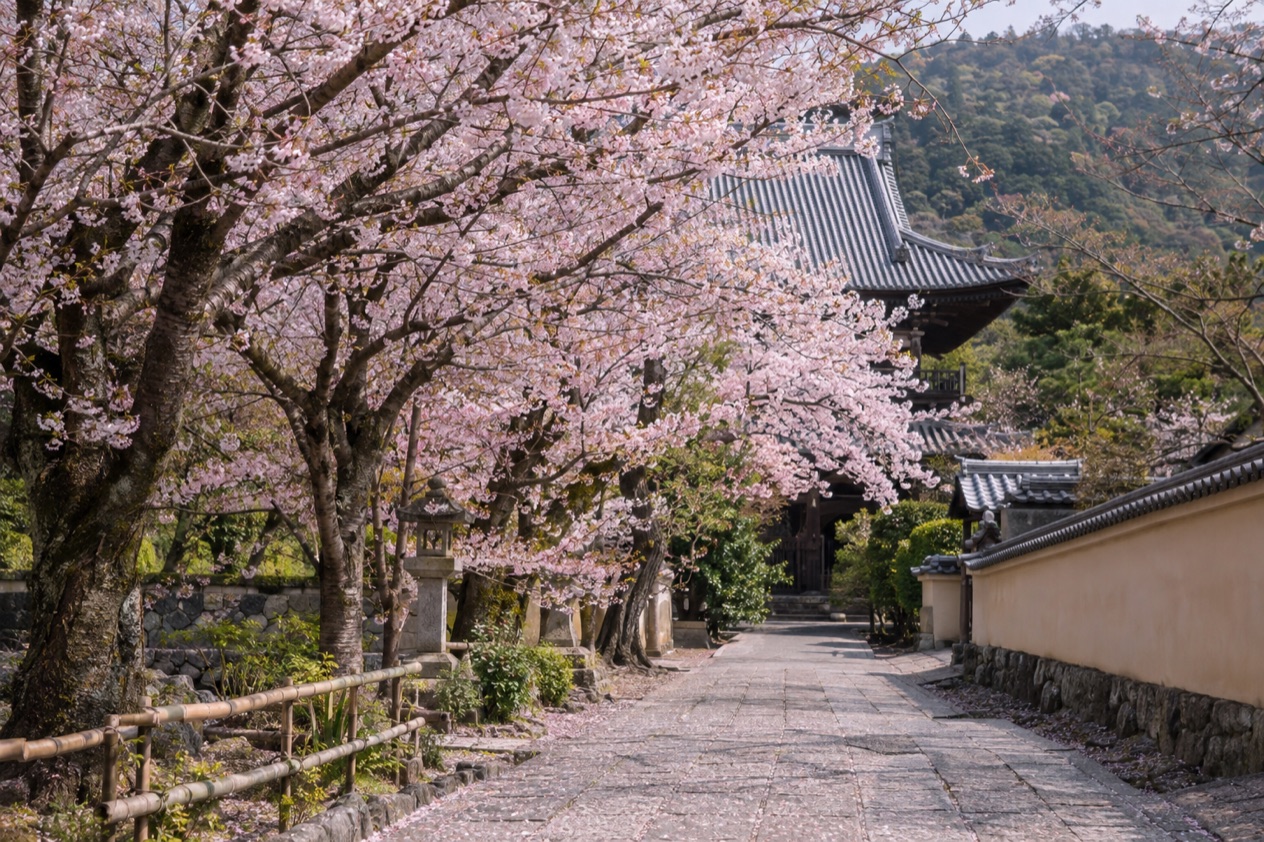
When do the cherry blossoms bloom in Kobe?
Kobe’s cherry blossoms usually begin to open in the last week of March and reach full bloom in the first days of April. In Japan the two moments have their own names: kaika, when the first blossoms open, and mankai, when the trees are in full bloom.
| Stage | Usual date | Range in recent springs |
|---|---|---|
| First bloom (kaika) | March 27 | March 24 to April 1 |
| Full bloom (mankai) | April 5 | March 30 to April 7 |
The gap between the two stages is about nine days in a usual spring, and that is the stretch when branches look fullest. Before full bloom you find trees half in flower, and the days right after it bring the first petals falling, which many Japanese admirers love just as much.
How much the dates move from year to year
The usual dates are a landmark, not a promise. In recent years the first flowers have appeared on dates spread across about a week, and full bloom has shifted by a similar margin from one spring to the next. A warm early March pulls everything forward, while a cool spell holds the buds closed a little longer.
For a trip, that means thinking in terms of a window rather than a single day. Arriving in the final days of March and staying into the first week of April gives you the first buds, the full display and, with some luck, the first petals on the pavement.
What the weather feels like while the trees flower
Spring in Kobe, from March to May, runs between 10°C and 20°C on average, which means cool mornings and comfortable afternoons. That is jacket weather with a light layer underneath, and a scarf is welcome after sunset when you sit outside under the trees.
Blossom days often come with changeable skies. A bright morning can turn into a gray afternoon, and a wind that shakes petals loose is part of the scene. People tuck a small umbrella into a bag, since a soft drizzle over pink branches makes for some of the most atmospheric walks of the season.
How people watch the blossoms: the habit of hanami
Hanami, literally flower viewing, is the custom of sitting under blooming trees with food and friends. Families and coworkers unfold sheets on the ground, set out bento boxes, rice balls, fried chicken and sweets, and stay for hours. Some groups send someone ahead early to claim a spot, a ritual in its own right.
Seasonal treats appear in shops as the trees open: sakura-flavored mochi wrapped in a salted cherry leaf, pink dango on skewers, and drinks and ice creams scented with blossom.
Where can you see them in Kobe?
You can see cherry blossoms across Kobe, in its parks and along its streets, in a city that sits on a bay and rises toward the hills behind it. Kobe is the capital of Hyogo Prefecture, home to around 1.5 million people, and across the bay from Osaka. That mix of water, port and slope shapes where the blossoms feel most striking.
Around the port and the waterfront
Kobe is the third-largest port city in Japan after Tokyo and Yokohama, and the harbor is part of its character. In blossom season, the idea is to pair the water with flowering branches: a stroll where ships, cranes and the bay form the backdrop, and pink petals add color to a view that is usually gray and blue.
A waterfront walk works well when the trees are in full bloom and the sky is clear, and it also works on a cloudy day, when the pale flowers stand out against the muted tones of the port. Cafés, bakeries and bars in the harbor area give you somewhere to warm up afterward, and Kobe’s reputation for coffee and pastries makes the break part of the outing.
Parks and quiet streets in town
As in every Japanese city, cherry trees line riverbanks, school grounds, temple and shrine precincts and neighborhood parks, and Kobe is no exception. You do not need a plan to find them. Walking between districts in late March or early April, you will pass flowering trees on residential lanes and around small playgrounds, where local families gather in the evenings.
Shrines and temples add a frame to the blossoms: a red torii gate or a tiled roof behind a branch makes a photograph that feels unmistakably Japanese.
Reaching Kobe to see them
Kobe is directly connected to Tokyo by the JR Tokaido/Sanyo Shinkansen, and the journey from Tokyo to Shin-Kobe Station takes between 2 hours 40 minutes and 3 hours 15 minutes. Shin-Kobe is the bullet train station of the city, so a trip from the capital can be built around a single ride.
Because Kobe lies across the bay from Osaka, the city also pairs naturally with an Osaka stay for travelers who plan to see blossoms in both places. The two cities share a bay but not an identical bloom, so each deserves its own look at the trees rather than a single stop that stands in for both.
What should you know before you go?
The main thing to know is that the blossoms follow the weather, not the calendar, so a flexible plan serves you better than a fixed day.
Plan around a window, not a day
If your dates are fixed, choose a stay that straddles the usual full bloom rather than hoping for a single perfect afternoon. Spending several days in Kobe lets you walk out each morning, see how far the buds have opened and adjust. A cool week can leave trees mostly in bud, while a warm one can bring petals down early.
If you are traveling on from Tokyo, remember that cherry blossoms in each city have their own timing. Watching the trees open in one place does not tell you what they are doing in Kobe, so treat each stop on its own terms and enjoy whatever stage you find.
What to wear and carry
Spring temperatures in Kobe stay mild, but sitting still under a tree in the evening feels cooler than walking at noon. Layers solve this: a light jacket or sweater over a shirt, comfortable shoes for park paths and pavements, and a small umbrella for the showers that sometimes sweep through.
If you plan a hanami picnic, a small sheet to sit on and a bag for your trash fit the habit. Japanese picnickers typically take their rubbish with them, and shoes come off at the edge of a tarp, so a tidy spot leaves the grass as you found it.
Making the most of the days around bloom
Kobe rewards a slow rhythm in spring. Mornings suit a walk among the trees, midday suits a bakery or a coffee stop, and the evening can end in a casual izakaya, a Japanese pub where small plates arrive one after another. Seasonal menus often feature sakura touches, from pink-tinted sweets to dishes decorated with a salted blossom.
Beyond the trees, Kobe’s port, its cafés and its streets give you plenty to do if a rainy day dims the blossoms. Treat the flowers as the thread of the trip and let the city fill in the rest, so that a gray morning becomes a museum or shopping hour rather than a lost day.
Good to know before you go
Spring brings changeable skies to Kobe, so a light rain layer and flexible plans go a long way during blossom days. Dates from one spring to the next shift by about a week, and the petals can fall quickly after a windy or rainy spell. Carry some yen in small amounts for park snacks and seasonal sweets, and keep your itinerary loose enough to follow the trees.
Sources
- Japan Meteorological Agency, cherry blossom first-bloom dates 2021-2026 and 1991-2020 normal (https://www.data.jma.go.jp/sakura/data/sakura003_07.html), checked October 11, 2026
- Japan Meteorological Agency, cherry blossom full-bloom dates 2021-2026 and 1991-2020 normal (https://www.data.jma.go.jp/sakura/data/sakura004_07.html), checked October 11, 2026
- Japan National Tourism Organization, Kobe (https://www.japan.travel/en/destinations/kansai/hyogo/kobe-and-around/), checked October 11, 2026
- Visit Kobe, the official travel guide (https://www.feel-kobe.jp/en/), checked October 11, 2026
- Wikipedia, Kobe (https://en.wikipedia.org/wiki/Kobe), checked October 11, 2026
- Japan Meteorological Agency, maple color-change dates 2025-2026 with difference from the 1991-2020 normal (https://www.data.jma.go.jp/sakura/data/phn_014.html), checked October 11, 2026
To plan your stay
- Japan Rainy Season (Tsuyu): Dates, Regions and How to Plan Your Trip
- Seasons in Japan: Blossoms, Fall Color, Snow Festivals and Summer Matsuri
- Typhoon Season in Japan: When It Hits, Which Regions Take the Brunt and How the Warning Alerts Work
- Autumn Leaves Dates by City: Usual Maple Dates, 2025 Results and How Much They Shift