
By the time the pink has faded from the trees in Tokyo and Kyoto, photos of petals on riverbanks have stopped filling the feeds, and a traveler with a free week starts to wonder whether the show is really over. It is not, because the cherry front keeps moving up the map and Hokkaido gets it last. Plan for spring in the far north, not for the usual early-April window.
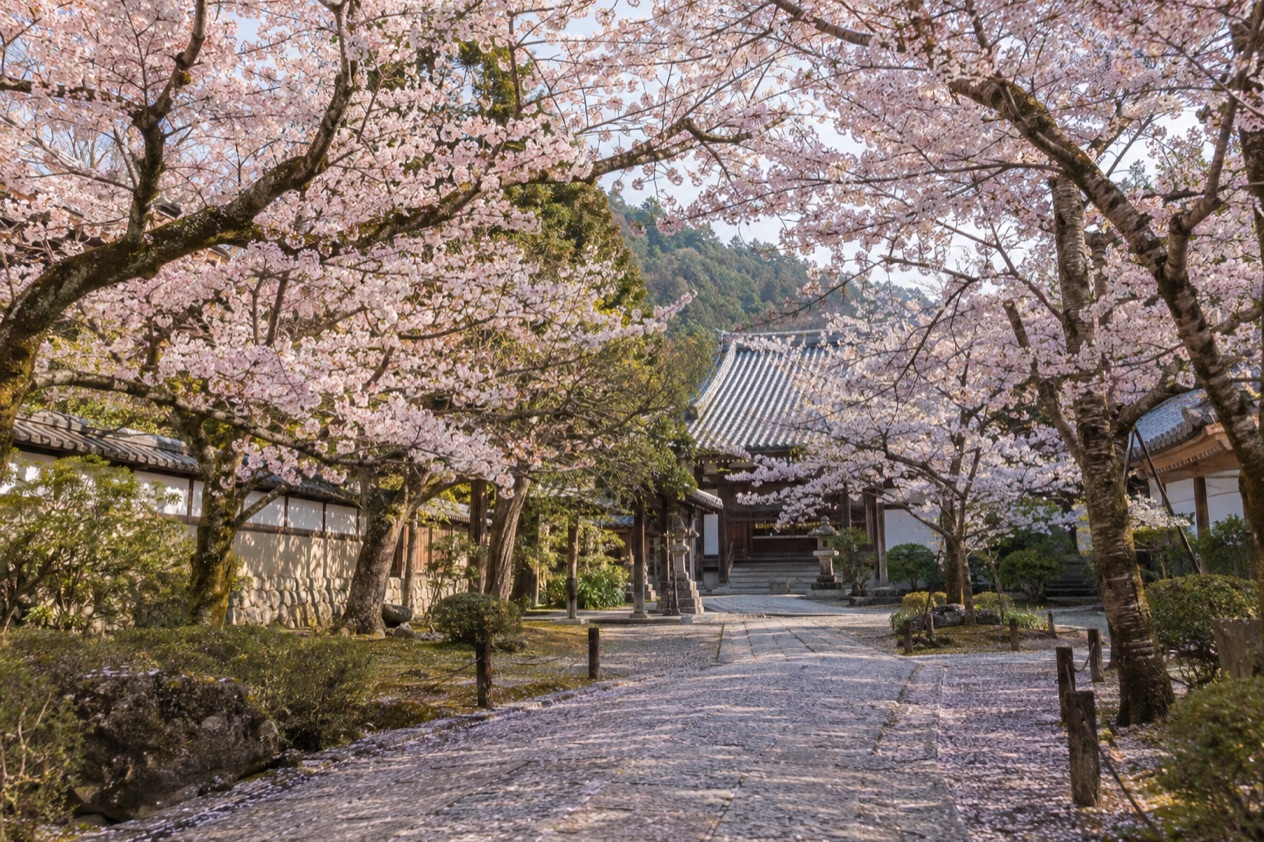
When do the cherry blossoms bloom in Hokkaido?
Hokkaido blooms late in spring, after nearly every other region has finished, and the northern and eastern parts of the island are the final stop of the Somei-Yoshino front. The trees do not all open together across the country. The blossoms start in the far south, climb through Honshu over several weeks, cross the strait and arrive here when the rest of Japan is already thinking about early summer.
| Region | Usual first flowers or arrival of the Somei-Yoshino |
|---|---|
| Okinawa and Amami (Hikan-zakura) | Around mid-January |
| Kyushu, Chugoku, Shikoku, Kinki, Tokai and Kanto | Late March |
| Hokuriku and southern Tohoku | Around April 10 |
| Northern and eastern Hokkaido | Mid-May |
What the dates mean
The first is kaika, the first bloom, counted on the first day that five or six flowers are open. The second is mankai, full bloom, when about 80 percent of the buds have opened. Full bloom is the moment people mean when they say the cherry trees are at their peak.
These are usual dates, and they shift from one spring to the next. A warm stretch brings the flowers forward and a cold snap holds them back, so treat any date as a landmark, not a promise. Plan a few spare days on the island if blossoms are the reason for the trip.
Which tree is observed in Hokkaido
The Somei-Yoshino is the tree behind most of the cherry blossom images from Tokyo and Kyoto, and it is the one the agency follows in most places. Where it does not grow, the agency watches another species. In Hokkaido that is the Ezo-yamazakura, a wild mountain cherry. The Okinawa and Amami islands, at the other end of the country, have their own tree, the Hikan-zakura.
For a visitor this means the Hokkaido spring can look a little different from the postcards. Local species and the tree types planted in parks do not follow one single calendar, so you may find one grove in bloom and another still in bud. That uneven rhythm is part of the pleasure of a trip so far north.
Fitting Hokkaido into a longer spring trip
Because the front moves from south to north, Hokkaido works well as the last chapter of a spring in Japan. A traveler can see the blossoms in the warm south in late March, watch them climb through Honshu and then fly north when the show is just arriving. It is a second chance for anyone who missed the main window, or a way to stretch the season over several weeks.
Flowers are not the only thing the island offers at that time of year. The ski season belongs to winter, and the Sapporo Snow Festival is a winter event, so neither is part of a blossom trip. What you get instead is a landscape turning green, with outdoor activities, hot springs and a food culture built on the island’s farms and seas.
Where can you see them?
You can look for cherry blossoms in every part of Hokkaido, and the island divides into areas that each make a natural base: Sapporo and its surroundings, Asahikawa and northern Hokkaido, Hakodate and southern Hokkaido, and Kushiro and eastern Hokkaido. The blossom front arrives at its own time in each, so the area you pick shapes your trip as much as the week you choose.
Sapporo and its surroundings
Sapporo is the city visitors use as a base, and New Chitose Airport lies near it. Direct flights from Tokyo take about 1 hour 30 minutes, so a spring weekend in the north is within reach. The city has parks and tree-lined streets, and in blossom season people gather under the trees for hanami, the custom of picnicking beneath the flowers.
Hanami in Hokkaido has its local flavor. Grilled lamb cooked at the table, known as Genghis Khan, is the dish people link with outdoor eating on the island, and a cold Sapporo beer goes with it. Whatever you bring, the habit is to sit under a tree, take your time and let the petals fall where they will.
Hakodate and southern Hokkaido
Hakodate and the south form another area of the island. The train from Tokyo reaches this part first: the JR Tohoku/Hokkaido Shinkansen runs to Shin-Hakodate-Hokuto, and the limited express Hokuto continues from there to Sapporo. The whole trip from Tokyo to Sapporo takes about 8 hours, so it suits travelers who like to watch the country change outside the window.
A rail route like this gives a different view of the blossom season. You can leave Honshu with trees in full bloom, or already green, and watch the landscape shift as the line moves toward the north. Stopping in the Hakodate area on the way lets you add a seaside town with its own food, built around seafood.
Asahikawa, Kushiro and the north and east
Asahikawa and northern Hokkaido, along with Kushiro and eastern Hokkaido, are where the front ends its journey. These are the parts of the island that see the Somei-Yoshino last, in the middle of spring’s long march. They are also the areas where wild landscapes, trekking and outdoor activities define a visit, so blossoms become one more reason among several to come.
Hokkaido is also home to Ainu culture, and travelers interested in it find that the island’s seasonal views and its history sit side by side. Nature, outdoor activities and local cuisine are what visitors come to enjoy here, with the flowers adding a colorful layer.
Why does it bloom later?
Hokkaido blooms later because it is the northernmost prefecture of Japan, and the cherry front moves north step by step across the country. The flowers open first in the warm islands of the south, then in Kyushu and the main island’s heartland, and only after that does the front cross to the north. By the time it arrives, other regions are finished.
A front that travels the length of the country
The order of the dates tells the story. Hikan-zakura begin in Okinawa and Amami around the middle of January, long before any Somei-Yoshino stirs. The Somei-Yoshino then take over, reaching Kyushu, Chugoku, Shikoku, Kinki, Tokai and Kanto in late March, with Hokuriku and the southern Tohoku region following. After that the front moves through northern Tohoku and reaches the north and east of Hokkaido.
What looks like a single event is really a slow wave, and Hokkaido sits at the far end of it. The same tree, planted from south to north, simply meets spring at a different moment. That is why a traveler can chase blossoms across several weeks, and why Hokkaido is where the chase finishes.
Why the tree is different in the north
The far north does not only differ in timing. The Somei-Yoshino does not grow everywhere, and in Hokkaido the agency follows the Ezo-yamazakura instead. This wild cherry is a reminder that the island has its own natural character, with its own plants, its own seasons and its own pace, separate from the rest of Japan.
For a visitor, the practical meaning is simple. Do not use a Tokyo or Kyoto calendar for a Hokkaido trip, and do not assume the northern spring will copy the southern one. Look instead for the dates that belong to the area you plan to visit, and keep the schedule loose enough to follow the blossoms when they come.
Getting north when the front arrives
Two routes lead from Tokyo to Hokkaido. By air, you land at New Chitose Airport near Sapporo after a flight of about 1 hour 30 minutes. By rail, the Shinkansen goes to Shin-Hakodate-Hokuto and the limited express Hokuto goes on to Sapporo. Both give a view of the island from a different angle, one from above and one from the ground.
Once you are there, the island rewards slow travel. Gourmet food, hot springs and outdoor activities are part of why people visit, and the blossoms add a seasonal reason to go. Because the front ends here, a late arrival is often the right one, and a spring that has finished elsewhere can still be unfolding in the north.
Good to know before you go
Hokkaido’s blossom season belongs to late spring, so think of it as a trip of its own, planned around the area of the island you choose and the dates the trees follow from one year to the next. Spring is also well after the winter sports season, so ski resorts such as Niseko are not the draw at that time. Carry yen for the small purchases of a picnic or a market stop, and keep your days flexible so you can move with the flowers.
Sources
- Japan Meteorological Agency, sakura2020.pdf (https://www.data.jma.go.jp/sakura/data/sakura2020.pdf), checked October 11, 2026
- Japan National Tourism Organization, Hokkaido (https://www.japan.travel/en/destinations/hokkaido/hokkaido/), checked October 11, 2026
- Hokkaido Love, the official Hokkaido tourism site (https://www.visit-hokkaido.jp/en/), checked October 11, 2026
To plan your stay
- Japan Rainy Season (Tsuyu): Dates, Regions and How to Plan Your Trip
- Seasons in Japan: Blossoms, Fall Color, Snow Festivals and Summer Matsuri
- Typhoon Season in Japan: When It Hits, Which Regions Take the Brunt and How the Warning Alerts Work
- Autumn Leaves Dates by City: Usual Maple Dates, 2025 Results and How Much They Shift