
In Hakone, cherry blossoms draw visitors to Hakone Gora Park, Hakone Kowakien Horai-en and Onshi Hakone Park. The blossoms reach their peak in late March in the spring the records show, and a handful of named spots are the places to go.
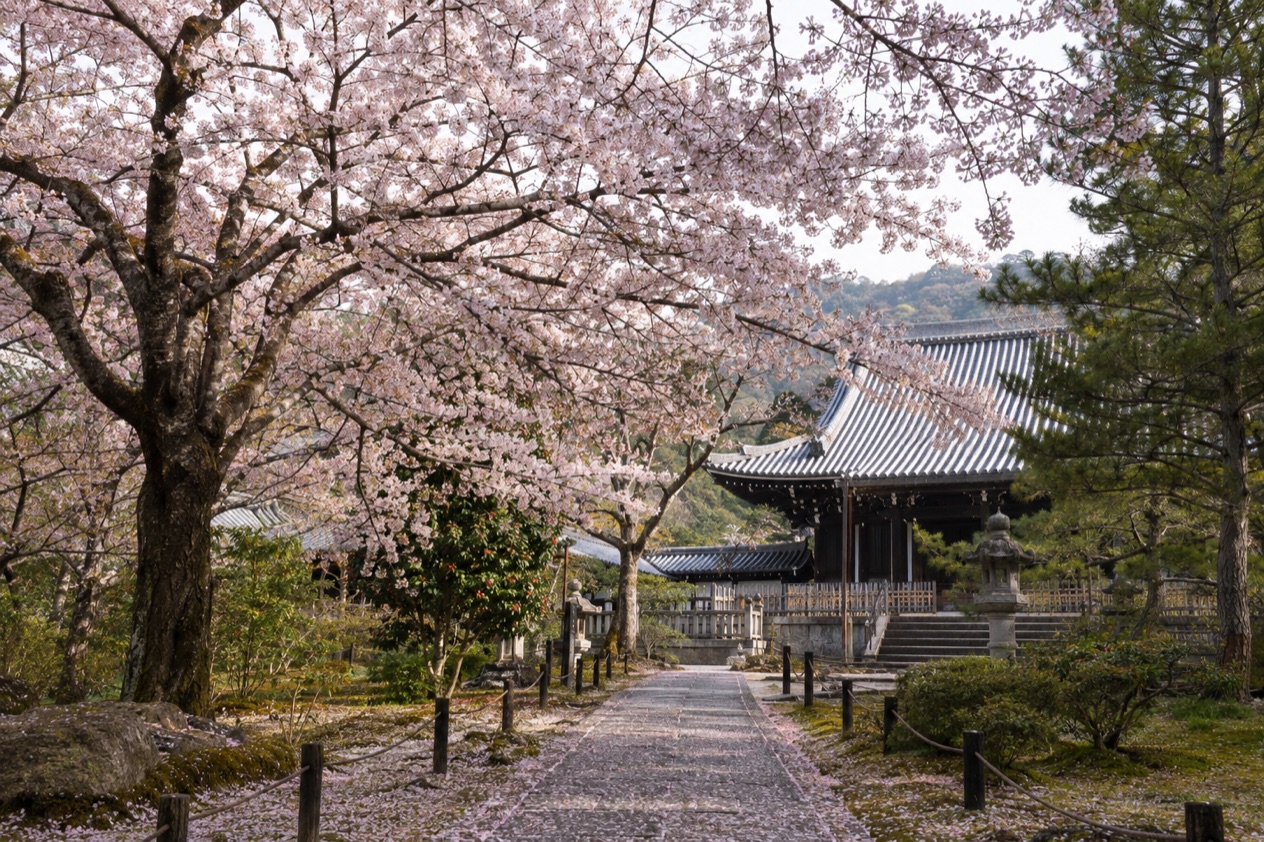
When do the cherry blossoms bloom in Hakone?
Hakone’s cherry trees reached peak bloom at the end of March in the one spring for which dates are recorded, and the three spots below all peaked on the same day. Peak bloom is the moment when the trees are at their fullest, the branches heavy with flowers and only a few petals starting to fall.
| Spot | Peak bloom reached |
|---|---|
| Hakone Gora Park | March 27, 2024 |
| Hakone Kowakien Horai-en | March 27, 2024 |
| Onshi Hakone Park | March 27, 2024 |
How to read that date
A single spring is a landmark, not a promise. Cherry trees follow the weather, so the peak slides earlier or later from one spring to the next, and a cool or warm spell in March can nudge it by days. Treat the end of March as the part of the calendar to aim for, and expect the exact week to move.
The trees do not all open at once. A flower first opens on a few branches, then the whole tree fills out, and a few days later the petals begin to drift down. That sequence means a spot can look quite different on two visits a few days apart, from half-open buds to a carpet of pink on the path.
Because Hakone is a mountain area with several separate valleys, parks and lakeshores, it is natural to see the blossoms in more than one place over a stay. Moving between the gardens at Gora, the bus stops near Horai-en and the park by the old barrier road gives you three different settings for the same flower.
Planning around the bloom
Hakone is close to Tokyo and Mount Fuji, which makes it an easy name to add to a spring itinerary, but the blossoms are only one layer of the place. The same trip can include a soak in a hot spring, a ride on the Hakone Sightseeing Cruise across Lake Ashi, where views of Mount Fuji open up, and a stop at the art museums of Sengokuhara.
If the trees are not yet open or have already dropped their petals, those other pleasures keep the day full. Hakone-Yumoto has its restaurants and gift shops, Owakudani has its black eggs said to prolong life, and the open-air art installations at Japan’s first open-air museum make a walk worthwhile in any weather. A blossom visit here is best held loosely, as one part of a Hakone day rather than the whole of it.
Where can you see them in Hakone?
You can see cherry blossoms at Hakone Gora Park, Hakone Kowakien Horai-en and Onshi Hakone Park, all three of which reached peak bloom on the same day in 2024, and at smaller spots such as Hakone-en, Ohiradai and Miyagino. Most of the routes below start at Hakone-Yumoto Station.
| Spot | From | Transport | Time | Then |
|---|---|---|---|---|
| Hakone Gora Park | Hakone Yumoto Station | Hakone Tozan Railway to Gora Station | About 40 minutes | Walk 5 minutes |
| Hakone Gora Park (alternative) | Gora Station | Hakone Tozan Cable Car bound for Sounzan to Koen-shimo Station | About 3 minutes | Within walking distance |
| Hakone Kowakien Horai-en | Hakone-Yumoto Station | Hakone Tozan Bus (Line H) to Horai-en | About 19 minutes | Within walking distance |
| Onshi Hakone Park | Hakone Yumoto Station | Hakone Tozan Bus (Line H) to Onshi-koen-mae | About 40 minutes | Within walking distance |
| Hakone-en | Hakone-Yumoto Station | Hakone Tozan Bus (Line T) to Togendai, then Odakyu Hakone Highway Bus | About 35 minutes, then about 16 minutes | Within walking distance |
| Hakone-en | Shinjuku Station | Odakyu Hakone Highway Bus | About 143 minutes | Within walking distance |
| Ohiradai | Hakone-Yumoto Station | Hakone Tozan Train to Ohiradai Station | About 15 minutes | Walk 5 minutes |
| Ohiradai (alternative) | Hakone-Yumoto Station | Hakone Tozan Bus (T or H lines), get off at Ohiraidai | About 8 minutes | Walk 5 minutes |
| Miyagino | Hakone-Yumoto Station | Hakone Tozan Bus (Line T) | About 17 minutes | Walk about 5 minutes |
Hakone Gora Park
The Hakone Tozan Railway climbs from Hakone Yumoto Station to Gora Station, and the ride itself is part of the outing, with the line taking you up into the hills. From the station you walk to the park.
A second way in uses the Hakone Tozan Cable Car, which runs from Gora Station toward Sounzan and stops at Koen-shimo Station, with the park within walking distance. Either way, the blossoms here were at peak on March 27, 2024, which makes Gora a reference point for the rest of the area.
Hakone Kowakien Horai-en and Onshi Hakone Park
Both of these are reached on the Hakone Tozan Bus Line H from Hakone-Yumoto Station, which makes them easy to compare in a single plan. Horai-en is the nearer stop, and you get off at the stop of the same name, with the spot within walking distance.
Onshi Hakone Park lies farther along the same line. The bus is bound for Hakonemachi-ko or Hakone-sekisho-ato, and you get off at Onshi-koen-mae. A park beside the lake area gives the blossoms a different setting from the garden at Horai-en, and both reached their peak on the same day in 2024.
Hakone-en, Ohiradai and Miyagino
Three more places are reached by bus or train from the same station. Ohiradai can be reached either by the Hakone Tozan Train or by the Hakone Tozan Bus on the T or H lines, and in both cases a walk finishes the trip. Miyagino is on Line T, with a walk of about the same length from the stop.
Hakone-en is the most distant, reached by Line T to Togendai and a transfer to the Odakyu Hakone Highway Bus. It can also be reached straight from Shinjuku Station on the Odakyu Hakone Highway Bus, which lets a traveler staying in Tokyo head directly to the spot.
What should you know before you go?
Know that Hakone runs on its own web of trains, cable cars, buses, a ropeway and boats, and that the Hakone Freepass is the ticket built around it. It offers unlimited rides on eight different transportation means in Hakone, including the Hakone Tozan Train, the Hakone Ropeway and the Hakone Sightseeing Cruise.
The Freepass and its Hako Ticket Plus version
The Hakone Freepass Hako Ticket Plus goes a step further. It combines the Digital Hakone Freepass, with its eight modes of transport, and the Hako Ticket, which gives unlimited use of applicable art museums, hot springs and activity facilities.
The Hako Ticket Plus is valid for two days or three days. A version with an Odakyu Line ticket includes one return trip on the Odakyu Line between the departure station and Odawara Station. That ties the town to the wider rail network, since travelers can take the Shinkansen to Odawara and continue from there.
Finding your way and what may be closed
The route search and the timetable finder on the Hakone Navi website work only for transfers within Hakone or to the Odakyu Line or the Odakyu Highway Bus. They are tools for moving around the area, so for a trip that starts elsewhere the search covers only the Hakone portion.
Maintenance can also change a plan. During scheduled maintenance, replacement bus service operates on sections of the Hakone Ropeway, which matters if your day includes that ride. The Hakone Sightseeing Cruise Ship Royal II has been newly renovated, a detail for anyone who wants to add a Lake Ashi crossing to a blossom day.
A stop at Odawara
Odawara is the Shinkansen stop for Hakone, and Odawara Castle stands in the city, in Kanagawa Prefecture. Fortifications have stood on or near the site since the Kamakura Period, and the previous keep was torn down in the Meiji Period. The current keep was built of reinforced concrete in 1960 on the stone foundation of the former one.
The top floor of the rebuilt keep is an observatory. The grounds were made into Odawara Castle Park in 1950, with an art museum, a local history museum, a city library, an amusement park and a zoo, and the castle was remodelled from July 2015 until April 2016 to improve earthquake resistance and modernise its exhibits. It makes a stop on the way to or from the mountains.
Good to know before you go
Hakone sits inside the Fuji-Hakone-Izu National Park, in the western part of Kanagawa Prefecture, and it is known for its hot springs and its views of Mount Fuji. A day of blossoms, a boat on Lake Ashinoko and an evening bath fit together naturally. Hakone-Yumoto, with its many restaurants and gift shops, is a base for meals and souvenirs, and Gotemba and Mishima are also fun to visit. Bring the plan, not a fixed date: the blossoms follow the spring, and the transport details above are what hold the day together.
Sources
- Hakone Tourist Association (Hakone Navi), Hakone (https://www.hakonenavi.jp/international/en/), checked October 11, 2026
- Hakone Tourist Association (Hakone Navi), cherry blossoms in Hakone (https://www.hakonenavi.jp/international/en/special/sakura/), checked October 11, 2026
- Wikipedia, Odawara Castle (https://en.wikipedia.org/wiki/Odawara_Castle), checked October 11, 2026
- Japan National Tourism Organization, Hakone (https://www.japan.travel/en/destinations/kanto/kanagawa/hakone-and-around/), checked October 11, 2026
- Hakone Tourist Information (https://www.hakonenavi.jp/international/en/), checked October 11, 2026
To plan your stay
- Japan Rainy Season (Tsuyu): Dates, Regions and How to Plan Your Trip
- Seasons in Japan: Blossoms, Fall Color, Snow Festivals and Summer Matsuri
- Typhoon Season in Japan: When It Hits, Which Regions Take the Brunt and How the Warning Alerts Work
- Autumn Leaves Dates by City: Usual Maple Dates, 2025 Results and How Much They Shift