
In Hakodate the blossoms arrive late, after much of Honshu has already shed its petals and the port city at the southern tip of Hokkaido is still shaking off winter. The first buds open as the harbor wakes up, and the trees seem to hurry once they start.
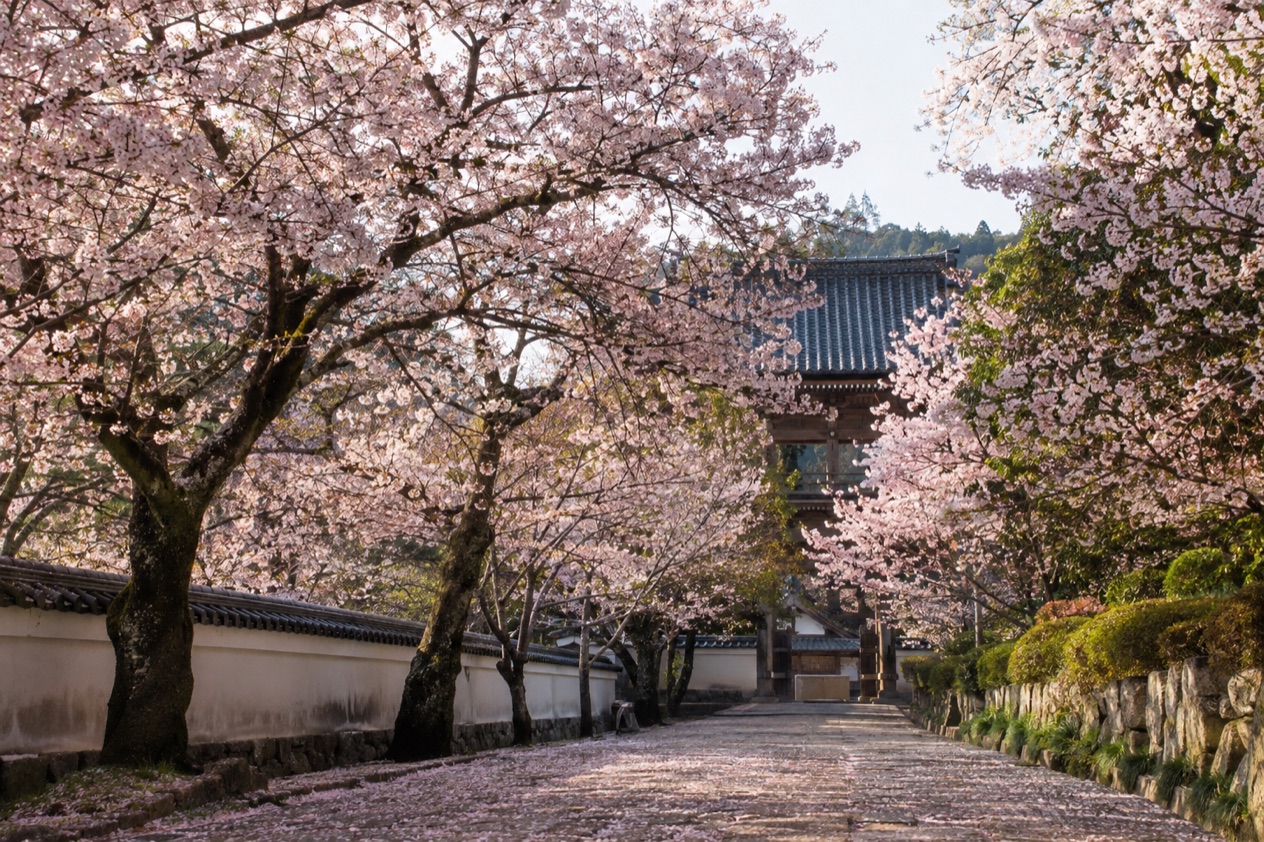
When do the cherry blossoms bloom in Hakodate?
Cherry blossoms in Hakodate usually begin to open in the last days of April and reach full bloom in the first days of May. That puts the city well into the Golden Week stretch that Japanese travelers use for spring trips, though the exact timing moves with the weather.
The usual first bloom (kaika, the day the first flowers open on the reference trees) falls on April 28. Full bloom (mankai, when most of the buds on those trees are open) usually comes on May 2. Those are the usual dates for the city, not a forecast, and a single spring can look very different.
| Stage | Usual date | Recent springs (2021-2026) |
|---|---|---|
| First bloom (kaika) | April 28 | April 14 to April 23 |
| Full bloom (mankai) | May 2 | April 20 to April 28 |
Why the dates move from year to year
In recent springs the blossoms have opened earlier than the usual dates, with first bloom landing in mid to late April and full bloom following within about a week. That is a useful hint, but not a promise. A warm spell pulls the flowers forward, and a cold, damp stretch holds them back.
Cherry trees in a single park do not all open on the same day. Trees in sunnier, more sheltered corners open first, and shaded slopes follow, so the show in a large park stretches over several days around the full bloom date.
Planning around the blossoms
Because the window is short, a trip built around the flowers works best with a few spare days. Arriving a little before the usual full bloom date lets you catch the buds opening, while staying a few days after gives you the moment when petals begin to fall and drift across paths and moats.
Look at the local bloom reports as your dates come closer, since they track the real progress of each spring. The usual dates above are a starting point for choosing a week, nothing more.
After the petals: what comes next
When the blossoms fade, the city turns green and the harbor air warms up. The next color show comes in autumn, when maple leaves change around the usual date of November 2. For a trip in cherry season, the point is simply that the flowers are the first big color event of the year in Hakodate.
Where can you see them in Hakodate?
You can see cherry blossoms around Hakodate, a port city at the southern tip of Hokkaido that sits across the Tsugaru Strait from Honshu. The city covers a wide area, so the trees are spread through the town rather than packed into one spot.
That size means there are parks, riverbanks, temple grounds and quiet residential streets where a cherry tree may be in flower, and walking between them is part of the pleasure of the season.
Parks and open grounds
In Japan, the classic way to enjoy cherry blossoms is hanami, sitting under the trees with food and drink and simply looking up. Parks are where this happens, with groups of friends, families and coworkers laying out sheets under the branches. In Hakodate the cool air of early May means a warm layer is welcome while you sit.
Pack a simple picnic of onigiri (rice balls), a few pieces of fried chicken or a box of bento from a shop, and let the afternoon pass. As the petals fall, they gather on the grass and paths, and a light breeze turns them into a slow pink snowfall.
Streets, slopes and the harbor
A port city gives blossoms an unusual backdrop. Pink branches against the water of the strait and the ships in the harbor make a different picture from the temple gardens of Kyoto. Walking uphill from the waterfront, you can look for trees that frame the harbor between their branches.
Wander without a fixed plan and you will probably find your own spot, a tree beside a shrine gate, a row along a small road, or a single old trunk in a corner of a neighborhood. Those small discoveries are often what people remember best.
What should you know before you go?
The main things to know are how to reach Hakodate and how to time the visit, since the blossoms last only a short while. Hakodate is a port city separated from Honshu by the 20-km long Tsugaru Strait, so you arrive either by air or by bullet train.
Getting there by air
Hakodate Airport has direct flights from Sapporo (Okadama by JAL, Shin-Chitose by ANA), Tokyo-Haneda, Nagoya-Centrair, Osaka-Itami and Taipei-Taoyuan. Flights also connect from Chitose, Okadama and Okushiri airports within Hokkaido.
For travelers coming from the United States, that usually means flying into Japan first and then continuing on a domestic flight, or taking the train from Tokyo. The choice depends on where you are staying before the blossom trip.
Getting there by Shinkansen
The JR Tohoku/Hokkaido Shinkansen from Tokyo to Shin-Hakodate-Hokuto Station takes 4 hours. The station is 11 miles north of Hakodate Station and is the northernmost terminal for the bullet train, so the Shinkansen ride is followed by a further connection into the city itself.
Riding the train lets you watch the landscape change as you head north, with spring arriving later the farther you go. By the time you reach Hokkaido, many trees that finished flowering around Tokyo weeks earlier are just waking up.
Timing and expectations
Plan for a window rather than a day. With first bloom usually at the end of April and full bloom in early May, a stay of several days around those dates gives you the best chance of catching the flowers at their fullest. Recent springs have run earlier, so leaning toward the later part of April is reasonable if you want to see the trees in flower.
Expect cool spring air in the evenings, and bring layers you can add or remove during a long day outdoors. Rain or wind can shorten the show, so keep a flexible plan and spend a sunny day under the trees when it comes.
Good to know before you go
Cherry blossom week is a busy time for domestic travel in Japan, so spring itineraries benefit from a little slack. Cards and cash both have a place on a trip like this, and a small amount of yen is handy for snacks at a park picnic. Early May weather in Hokkaido stays cool, and a warm jacket makes evening walks along the harbor more pleasant.
Sources
- Japan Meteorological Agency, cherry blossom first-bloom dates 2021-2026 and 1991-2020 normal (https://www.data.jma.go.jp/sakura/data/sakura003_07.html), checked October 11, 2026
- Japan Meteorological Agency, cherry blossom full-bloom dates 2021-2026 and 1991-2020 normal (https://www.data.jma.go.jp/sakura/data/sakura004_07.html), checked October 11, 2026
- Japan National Tourism Organization, Hakodate (https://www.japan.travel/en/destinations/hokkaido/hokkaido/hakodate-and-hokkaido-south/), checked October 11, 2026
- Wikipedia, Hakodate (https://en.wikipedia.org/wiki/Hakodate), checked October 11, 2026
- Wikivoyage, Hakodate (https://en.wikivoyage.org/wiki/Hakodate), checked October 11, 2026
- Japan Meteorological Agency, maple color-change dates 2025-2026 with difference from the 1991-2020 normal (https://www.data.jma.go.jp/sakura/data/phn_014.html), checked October 11, 2026
To plan your stay
- Japan Rainy Season (Tsuyu): Dates, Regions and How to Plan Your Trip
- Seasons in Japan: Blossoms, Fall Color, Snow Festivals and Summer Matsuri
- Typhoon Season in Japan: When It Hits, Which Regions Take the Brunt and How the Warning Alerts Work
- Autumn Leaves Dates by City: Usual Maple Dates, 2025 Results and How Much They Shift