
In late March, Tokyo’s office workers carry folded tarps to the parks, friends claim a patch of grass under the branches, and convenience stores fill their shelves with pink sakura sweets. Hanami, the custom of sitting beneath the blossoms, turns the whole city into a picnic. Tokyo has plenty of places to do it, from a canal-like river lined with trees to big parks and garden lawns, and the Meguro River is the one to build a day around.
Where are the best cherry blossom spots in Tokyo?
The strongest single answer is the Meguro River, a waterway that passes through three Tokyo wards and is described as a popular venue for cherry blossom viewing in spring. Beyond it, the city’s large parks and the old moat around the Imperial Palace grounds give you broader, more open places to settle under the trees. Each type of spot offers a different kind of hanami: strolling along water, spreading out on a lawn, or walking beneath a tunnel of branches.
What follows is a way of choosing between them, starting with the river, since its access is the best documented, and then moving to the parks.
The Meguro River
The river runs 4.86 miles through Setagaya, Meguro and Shinagawa wards, and its source lies in Setagaya. Its banks are extensively landscaped, which is why it works as green space for the neighborhoods along its length. In blossom season that means the trees planted beside the water become the reason to walk it, with branches reaching out over the surface and petals gathering on the current.
Because the river is long, you can pick your stretch rather than treat it as one fixed spot. The riverside walking paths can be reached from four stations, so you can start at one end and finish at another, stopping for a coffee or a snack in the neighborhoods you pass through. The table gives each station and the lines that serve it.
| Station | Lines |
|---|---|
| Ikejiri-Ōhashi | Tōkyū Den-en-toshi Line |
| Naka-Meguro | Tōkyū Tōyoko Line, Tokyo Metro Hibiya Line |
| Meguro | JR East Yamanote Line, Tokyo Metro Namboku Line, Toei Mita Line, Tokyu Meguro Line |
| Gotanda | JR East Yamanote Line, Toei Asakusa Line, Tokyu Ikegami Line |
Meguro and Gotanda sit on the Yamanote Line loop, which makes them natural links if you are already moving around the city by JR.
Parks and moat-side walks
Tokyo’s big parks and gardens are the other half of the answer. In these places the blossoms are a canopy rather than a ribbon along a river. You walk under rows of trees, then look for a patch of lawn where groups lay out their sheets with bento boxes, rice balls, fried chicken, sweet dango on skewers and cans of tea or beer.
Ueno Park, Shinjuku Gyoen and the moat at Chidorigafuchi are the names travelers put on a list. Each one gives a different feel: a broad promenade of trees at Ueno, a landscaped garden with lawns at Shinjuku Gyoen, and branches leaning over still water at Chidorigafuchi. A river walk and a park afternoon complement each other well, so visitors pair one of each rather than choosing a single place.
Which are best known?
The Meguro River is the spot the record calls a popular venue for cherry blossom viewing in Tokyo, and alongside it three other places carry most of the conversation: Ueno Park, Shinjuku Gyoen and Chidorigafuchi. Together they cover a river, a public park, a landscaped garden and a historic moat, four settings that show how varied a Tokyo spring can be.
Meguro River, from Naka-Meguro downstream
The river’s appeal is its shape. It is narrow, framed by landscaped banks, and the trees on either side lean toward each other over the water. Walking beside it, you pass houses, small bridges, cafés and shops, so the blossoms feel woven into everyday streets rather than set apart in a park.
Naka-Meguro Station gives access to the walking paths, and from there you can follow the water toward Meguro Station or step back onto a train at one of the other stations. The river suits a slow wander with stops, and a sakura-flavored sweet or a drink from a neighborhood shop fits the mood of the walk.
Ueno Park
Ueno Park is a large public park that also holds museums, a zoo and temples and shrines among its paths. In spring, the trees along its main walkways bloom into pink corridors, and groups gather beneath them for long, noisy hanami parties with food spread out on tarps. It is the kind of place where the picnic is as much the event as the flowers.
You can look at the blossoms, step into a museum when you want a break, and return to the trees afterward. Street stalls and snacks add to the festival feeling during the blossom days.
Shinjuku Gyoen
Shinjuku Gyoen is a garden rather than a simple park, with wide lawns, ponds, and carefully tended trees in several styles of landscaping. The layout lets you drift from one patch of blossoms to the next, with open grass for sitting and winding paths for walking.
It suits a visitor who wants the blossoms framed by a garden’s design, with water, lawns and clipped greenery around them. Photographers like the way branches arch over ponds and paths, and the garden gives a different rhythm from the river’s long ribbon.
Chidorigafuchi
Chidorigafuchi is a stretch of the old moat near the Imperial Palace grounds. The cherry branches hang over the still water of the moat, and the reflections double the pink overhead. A footpath follows the edge, so you walk under the trees with the water beside you.
The setting combines blossoms with the history of the palace grounds, stone embankments and the city’s skyline in the distance. Of the four, it is the one that feels most like a postcard, and a good counterpart to the more informal picnic atmosphere at Ueno.
What should you know before you go?
The main thing to know is that the blossoms follow their own calendar, and it shifts from one spring to the next, so your plans should leave room for the trees to decide. The Japan Meteorological Agency tracks the cherry blossom with two markers: the first bloom (kaika), when five or six flowers are open on a sample tree, and the full bloom (mankai), when about 80 percent of the buds are open.
When the trees bloom
The species the agency watches is mainly the Somei-Yoshino, the variety that defines the Tokyo spring. It reaches the Kanto region in late March, and Tokyo sits within Kanto. Bloom dates move north across the country in the weeks that follow, so late March is the starting point for Tokyo planning, with the exact days varying in recent years.
The distinction between the two markers is useful. First bloom means the show is starting, with branches only partly dressed. Full bloom is when the trees look completely pink. Trips are often built around the stretch between the two, since a walk along the river is a different experience at each stage.
How hanami works
Hanami is a social ritual. Groups of friends, families and coworkers sit under the trees with food and drinks, often on a tarp laid out on the ground. Common treats include bento boxes, onigiri, dango and sakura mochi, a rice cake wrapped in a pickled cherry leaf. Seasonal products with cherry-blossom flavor appear in cafés and shops during the same weeks.
Along the Meguro River the experience is more of a stroll than a sit-down picnic, with the walking paths following the banks. In the parks, the lawns are where groups settle. As a habit, people take their rubbish home or sort it into the bins provided, and keep their voices at a level that suits the shared space.
Choosing your day and your spot
A day built around the Meguro River can start at Naka-Meguro, follow the banks toward Meguro Station, and continue by train to another part of the city. A day built around a park or a garden can run longer, with a picnic in the middle. Linking the two in one trip gives you both the narrow, tree-framed river and the broad lawns.
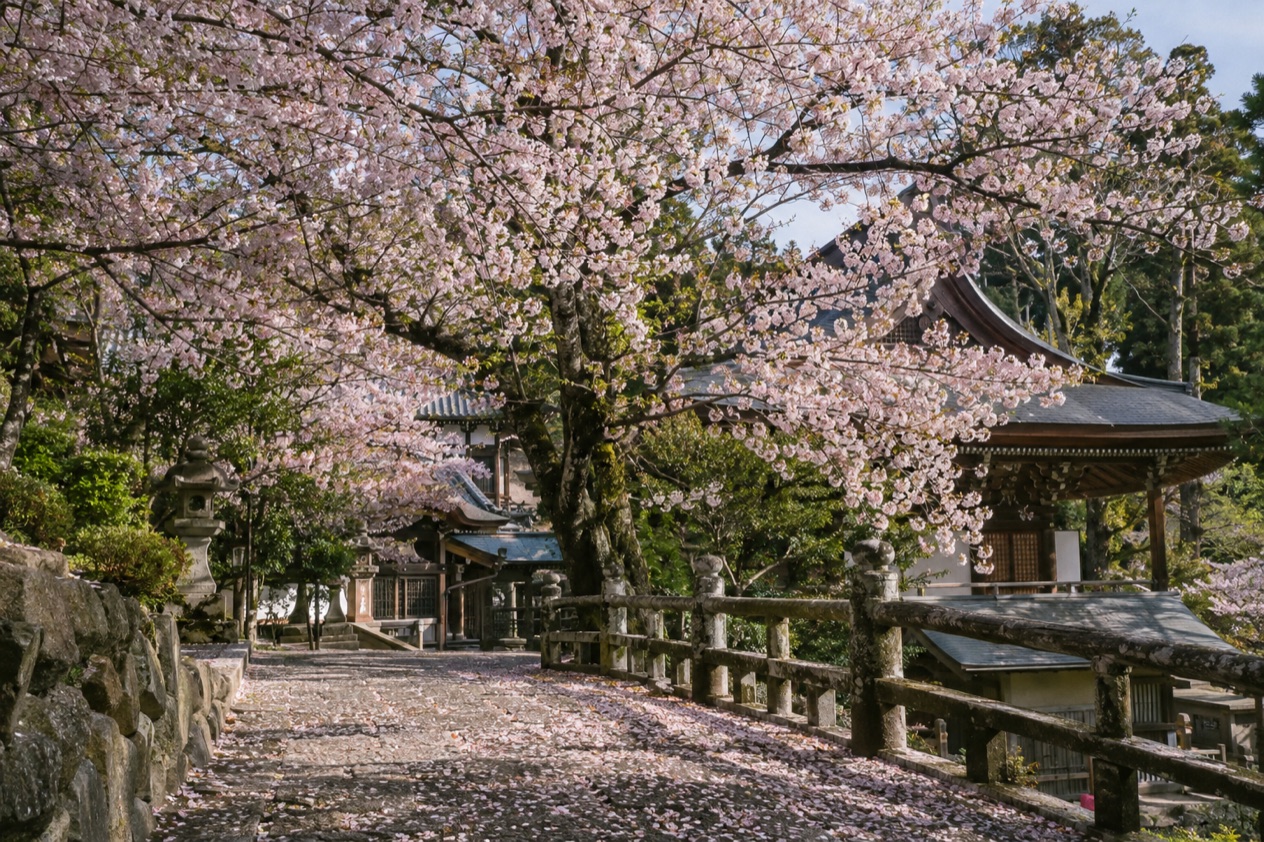
Rain and wind change the picture. A shower can leave petals scattered on the water and the paths, a sight the Japanese call hanafubuki, or a blossom blizzard. The blossoms do not last long, so a plan with a few possible days leaves you the chance to catch them at their fullest.
Good to know before you go
Blossom season is a good moment to carry a light layer, since spring days in Tokyo can change from sun to a cool breeze when you are sitting still under the trees. A refillable bottle and a small bag for your own rubbish fit the habits of the parks, and a tarp or sheet is what groups bring for lawn picnics. Because bloom timing shifts from one spring to the next, check the latest local blossom reports as your dates approach.
Sources
- Japan Meteorological Agency, sakura2020.pdf (https://www.data.jma.go.jp/sakura/data/sakura2020.pdf), checked October 11, 2026
- Wikipedia, Meguro River (https://en.wikipedia.org/wiki/Meguro_River), checked October 11, 2026
To plan your stay
- Japan Rainy Season (Tsuyu): Dates, Regions and How to Plan Your Trip
- Seasons in Japan: Blossoms, Fall Color, Snow Festivals and Summer Matsuri
- Typhoon Season in Japan: When It Hits, Which Regions Take the Brunt and How the Warning Alerts Work
- Autumn Leaves Dates by City: Usual Maple Dates, 2025 Results and How Much They Shift