
Under the cherry trees of an Osaka park, groups spread out tarps, unpack bento boxes and pass around sakura-flavored sweets while petals drift onto the picnic. It is hanami, the custom of sitting beneath the blossoms, and the city gives it plenty of room. For cherry blossoms in Osaka, the answer starts with the castle grounds, the tree-lined road beside the Japan Mint and the wide lawns of Expo ’70 Commemorative Park.
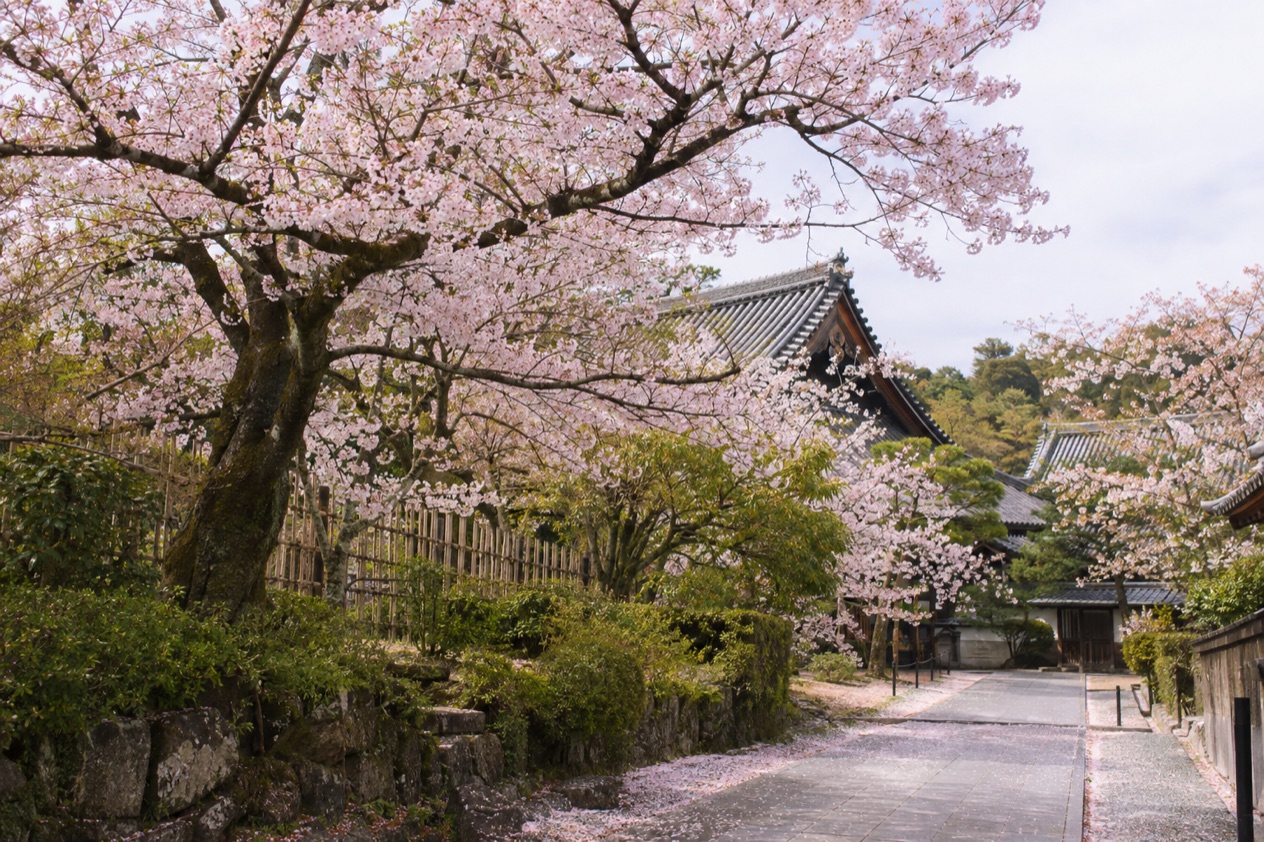
Where are the best cherry blossom spots in Osaka?
The best cherry blossom spots in Osaka are its big public parks and one celebrated tree-lined road: Osaka Castle Park, the cherry blossom tunnel near the Japan Mint, and Expo ’70 Commemorative Park in Suita. Each offers a different kind of hanami. One is set among stone walls and moats, one is a ribbon of pink to walk beneath, and one is a landscape of lawn and forest where you can spread out.
Choosing between them is mostly a matter of mood. If you want blossoms with history behind them, head for the castle. If you want to stroll and photograph, the Mint road suits that. If you want a long day outdoors with a picnic, the Expo park is built for it.
Osaka Castle Park: blossoms among gates and moats
Osaka Castle Park is a public urban park and historical site in Chuo-ku, and it is where visitors set their hanami plans. The park lists plum blossom viewing from January to March, peach blossom in March and cherry blossom in April, so the grounds flower in a sequence rather than all at once. A visit in early spring can mean plum and peach first, with the cherry trees following.
The setting is part of the appeal. Pink branches hang over the Inner Moat and the Outer Moat, and the old gates and turrets give photographs a frame that few parks can match. Among the monuments are the Sakura Gate, Tamon Gate, Ote Gate and Aoya Gate, along with the Inui Turret and Sengan Turret.
Buskers and bands perform and rehearse here, and the sound of a guitar or a horn often drifts across the lawns while people eat under the branches.
The Japan Mint cherry blossom tunnel
The Japan Mint in Osaka is famous for the nearby road lined with cherry trees, a prime spot to see the annual blossom. The branches meet overhead and form a tunnel of pink, so this is a place for walking rather than settling in with a picnic. You move slowly along the road with the petals above and around you.
This kind of blossom tunnel is prettiest in the days when the trees are fully open and the first petals begin to fall. People tend to arrive with cameras and keep a leisurely pace, stopping to look up.
Expo ’70 Commemorative Park for a full day outside
Expo ’70 Commemorative Park lies in Suita, about 9.3 miles (9.3 mi) north of Umeda in Osaka. Cherry blossoms against that unusual modern monument make an image you will not find elsewhere in the city.
The Japanese Garden inside the park gives a more traditional setting for spring walks, while the Natural and Cultural Gardens hold a great many trees. Because the park is so large, it suits a day of wandering, a long picnic and a slow route between garden areas, with blossoms as one thread among many.
| Park or garden | Area |
|---|---|
| Osaka Castle Park | 105.6 hectares (261 acres) |
| Expo ’70 Commemorative Park | 264 hectares (650 acres) |
| Natural and Cultural Gardens (Expo ’70) | 98 hectares |
| Japanese Garden (Expo ’70) | 26 hectares |
Which are best known?
The castle park is the second largest park in the city of Osaka, and it has been open to the public since 1931. That long life as a public park is part of why spring picnics here feel like a tradition.
Osaka Castle and its grounds
The castle keep is a ferroconcrete reconstruction, not an original structure, and its interior is a late twentieth century building with display cases of artifacts related to the original. Most of the pleasure lies outside, in the moats, the stone walls and the trees. From the top of the keep tower, the view stretches from Osaka Bay to Mount Ikoma, which gives you a sense of how the city lies around the park.
A good rhythm for a blossom day is to walk the grounds first, pass under the gates, circle the moat and then decide whether to climb the keep. The Osaka Museum of History stands near the castle and gives you somewhere indoors to go when a spring shower sends the picnickers scrambling. Along the paths you will pass the Gold Storehouse and the other turrets, each a small stop on the way.
The Mint road and Expo ’70 beside it
The Mint’s blossom tunnel earns its reputation through shape rather than size. A single road, trees on both sides, a canopy overhead. It is the image people keep from a short stretch of walking, and it fits easily into a day that also takes in the castle area.
Expo ’70 Commemorative Park is the opposite in scale, a place defined by room. The Tower of the Sun gives it a face, and the lawns and forest give it breathing space. It is the park to pick when your priority is a relaxed afternoon with food, friends and trees rather than a quick photograph.
Other Osaka places to pair with the blossoms
Osaka offers plenty of sights to fill the rest of a spring day. Sumiyoshi Shrine, south of the city center, is one of Japan’s oldest Shinto shrines and is famous for a bridge arching over a pond. Shitennoji temple near Tennoji station is regarded as maybe the first Buddhist temple in Japan, although the current building is a reconstruction.
In Shinsekai, the Tsutenkaku tower has an observation platform at 91 meters, and the Kamigata Ukiyoe Museum in Namba is dedicated to woodblock prints. The Open Air Museum of Old Farmhouses sits in Ryokuchi Park, north of the city center. None of these is a blossom spot in itself, but they give a spring itinerary some variety.
What should you know before you go?
The main thing to know is that cherry blossoms follow their own calendar, so the timing of your visit matters more than any other choice. Dates shift from one spring to the next, and the flowers last only a short while, so a flexible plan serves you better than a fixed one.
How blossom timing is defined
The first bloom is the first day on which five or six or more flowers are open on the sample tree, and the full bloom is the first day on which about 80 percent or more of the buds are open. The species observed is mainly the Somei-Yoshino, the tree behind most of the pink you see in photographs.
For the region that includes Osaka, the Somei-Yoshino reach Kinki in late March, along with Kyushu, Chugoku, Shikoku, Tokai and Kanto. Osaka Castle Park itself places its cherry blossom viewing in April. Read together, those two statements say the season sits around the turn from March to April, and a trip across those weeks gives you the best chance of seeing trees in flower.
Getting to the parks
Osaka Castle Park has several stations nearby, so you can choose the approach that suits your route. The Mint road and the castle grounds lie close enough in the city that they pair well on a single day. Expo ’70 Commemorative Park sits farther out, in Suita, and is reached on the monorail or the Hankyu Senri Line.
| Park | Nearby stations |
|---|---|
| Osaka Castle Park | Temmabashi, Tanimachi Yonchome, Morinomiya, Osakajokoen |
| Expo ’70 Commemorative Park | Banpaku-Kinen-Koen (Osaka Monorail Main Line), Koen-higashiguchi (Osaka Monorail Saito Line), Yamada (Hankyu Senri Line) |
Osaka Castle Park also has Morinomiya Parking and Jonan Bus Parking, which matters if you are arriving by road or with a group.
Hanami habits and a spring in Osaka
Hanami is a social ritual, and most of its habits are simple. People bring food and drink, sit on a sheet beneath the trees and linger for hours. Seasonal sweets such as sakura mochi and hanami dango, and snacks from stalls, are part of the occasion, and the fallen petals on the ground are as admired as the flowers on the branches.
Spring in Osaka also brings the Sumo Spring Grand Tournament, usually held in mid-March at the Osaka Prefectural Gymnasium. It falls just before the trees open, so a trip that begins with sumo and ends under the blossoms makes a natural pairing for travelers whose dates are flexible.
Good to know before you go
Spring days under the trees can run from sunny to showery, and the flowers drop quickly after a rainy spell, so it helps to keep a few indoor stops in reserve, such as the Osaka Museum of History near the castle. Carry what you need for a day outdoors, and keep your picnic spot tidy, taking your rubbish with you as is the habit in Japanese parks. Evenings under the trees are a pleasure of their own, with lanterns, music and the sound of conversation carrying across the lawns.
Sources
- Japan Meteorological Agency, sakura2020.pdf (https://www.data.jma.go.jp/sakura/data/sakura2020.pdf), checked October 11, 2026
- Wikipedia, Expo '70 Commemorative Park (https://en.wikipedia.org/wiki/Expo_%2770_Commemorative_Park), checked October 11, 2026
- Wikipedia, Osaka Castle Park (https://en.wikipedia.org/wiki/Osaka_Castle_Park), checked October 11, 2026
- Wikivoyage, Osaka (https://en.wikivoyage.org/wiki/Osaka), checked October 11, 2026
To plan your stay
- Japan Rainy Season (Tsuyu): Dates, Regions and How to Plan Your Trip
- Seasons in Japan: Blossoms, Fall Color, Snow Festivals and Summer Matsuri
- Typhoon Season in Japan: When It Hits, Which Regions Take the Brunt and How the Warning Alerts Work
- Autumn Leaves Dates by City: Usual Maple Dates, 2025 Results and How Much They Shift