
Charcoal smoke drifts down a narrow lane, paper lanterns glow red over the doorways, and the smell of grilled chicken skin and soy glaze reaches you before you see the first counter. Omoide Yokocho is a tight web of alleys in Shinjuku, Tokyo, where small eateries open straight onto the walkway and diners sit shoulder to shoulder. A visit here is less sightseeing than an evening spent eating, drinking and watching a very old style of Tokyo nightlife carry on.
Is visiting Omoide Yokocho worth it?
Yes, if you like the idea of eating in a place the size of a walk-in closet, and it suits curious travelers, solo diners and anyone who wants a night out that feels nothing like a polished restaurant. It does not suit people who need a roomy table, a long menu in several languages or a quiet corner to talk. The charm is the closeness: elbows, steam, the clink of glasses and a cook who is grilling skewers a foot from your face.
What you get here is a snapshot of how Tokyo ate and drank after the war, when small stalls grew into shacks and the shacks into permanent bars. The alleys kept that scale while the towers of Shinjuku rose around them. You eat on wooden stools under low beams, with wiring and signboards overhead, and the menu is built around yakitori, offal skewers, grilled vegetables, simple noodles and a steady flow of beer, highballs and sake.
It also differs from the other drinking lanes in Tokyo. Ginza, which the Japan National Tourism Organization describes as an upscale downtown area with high-end restaurants and luxury shops, sits at the polished end of the city’s dining.
Omoide Yokocho is its opposite: no white tablecloths, no tasting menus, just a counter, a grill and a few regulars who may nod at you when you squeeze in. The name means something like Memory Lane, and the nickname fits, because the whole place feels like a memory of an older Tokyo that someone refused to tear down.
There is a trade-off. Seats are few, so you may walk the lanes twice before finding a stool, and each counter has its own rhythm and its own regulars.
Some visitors find that part of the fun, a small hunt that ends with a skewer in your hand. Others would rather choose a larger izakaya (a Japanese pub that serves food) with a proper table. Know which kind of evening you want, and the answer to the question in the title becomes clear.
What to see at Omoide Yokocho
The lanes and the lanterns
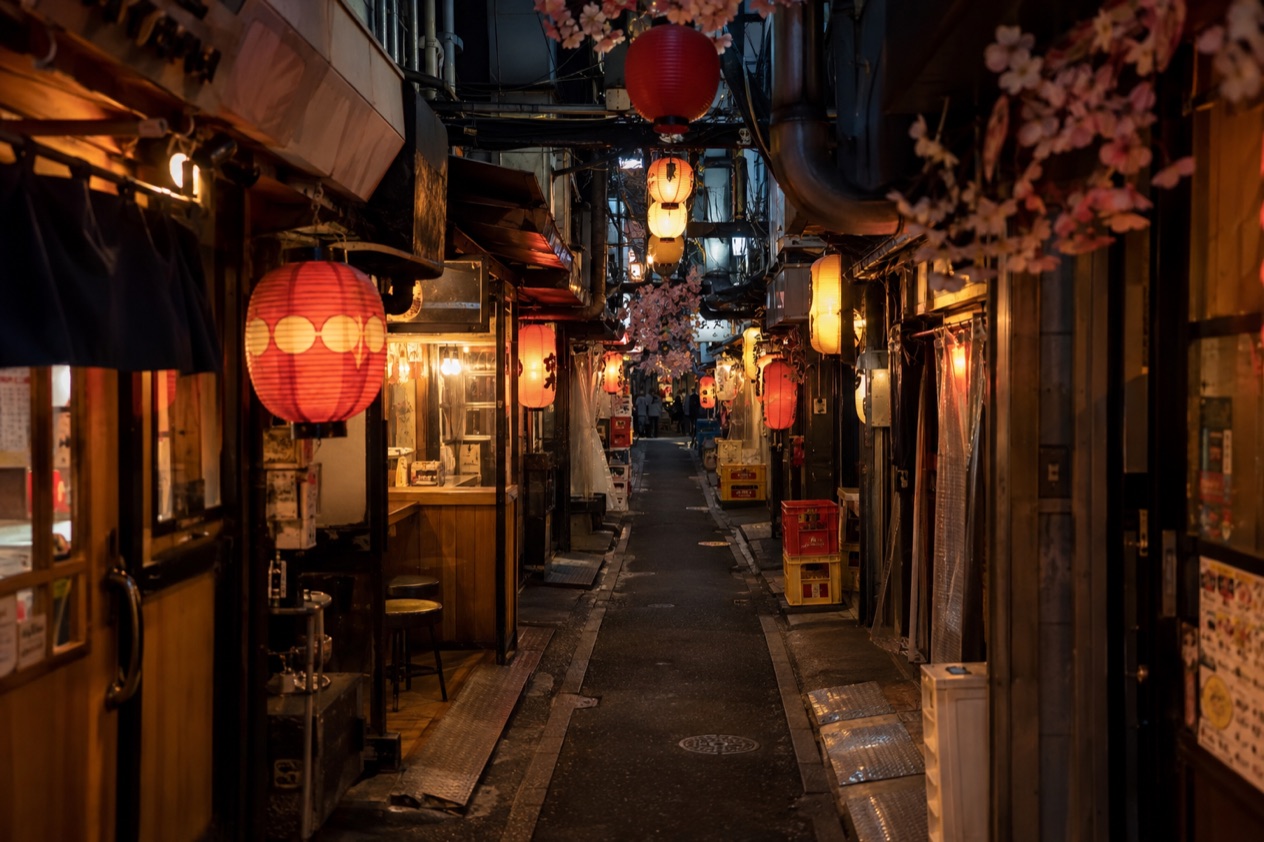
The first thing is the shape of the place. Two or three parallel lanes run side by side, linked by even narrower cross-passages, and every frontage is crowded with signs, noren curtains (the short cloth banners hung in doorways), menu boards and strings of lanterns. Walls are blackened by years of grill smoke, and the awnings overlap above your head so that the alley feels almost roofed.
Walk it slowly once without stopping. You will notice how each doorway has its own personality: one with a hand-painted sign, one with a cluster of beer crates, another with a single stool spilling into the passage.
After dark the lanterns turn the whole scene amber and red, and the smoke catches the light. It is the image people have in mind when they picture a Tokyo alley at night, and it works best as something you stroll through before you choose where to sit.
The yakitori counters
Yakitori is the backbone of the alley. Cooks fan charcoal grills behind a low counter, turning skewers of thigh meat, chicken skin, liver, gizzard, meatballs (tsukune) and leeks, brushing them with tare, a sweet soy sauce, or seasoning them with salt. You order a few at a time, and they arrive on a plate or straight onto a leaf, still sizzling.
Look for the grill itself. Watching the cook work is half the pleasure, since the counter is often just an arm’s length from the fire.
Pair the skewers with a cold beer, or with a highball (whisky and soda), and if you are curious, ask for one of the less familiar cuts. Many counters also bring a small dish of shredded cabbage to start, which is an old and well-loved habit of the yakitori bar.
Beyond skewers: offal, seafood and noodles
Not every doorway is a yakitori bar. Some counters specialize in grilled offal and organ meats (motsu), others serve small plates of simmered dishes, fried items, pickles or grilled fish, and a few are better known for a bowl of ramen or soba when the drinking slows down. Seafood bars and sake counters sit among them, so a stroll can turn into a progression from one tiny room to the next.
This mix is what makes the lanes worth exploring on foot first. Read the menu boards, glance at what the person next to you is eating, and choose by smell. A traditional night here is often a short stay at one counter, then a move to another for a second round, rather than a single long dinner in one seat.
The tiny seats and the people in them
The interiors are part of the sight. Many bars seat only a handful of people, often along a single counter, and some have a steep stair to a cramped second floor. Cooks, owners and regulars all share the same small space, and conversation flows easily across it. A salaryman in a suit may be sitting beside a tourist with a camera bag, both eating off the same style of plate.
Notice the small habits. A drink usually arrives first, an oshibori (a rolled hot towel) is handed over for your hands, and people tend to speak softly so the room stays friendly. You can point at what you want, smile and say thanks (arigato), and that goes a long way even without Japanese.
When to visit Omoide Yokocho
The alley is built for evenings. Dusk is when the lanterns come on, the grills heat up and the smoke starts to drift, and the atmosphere is the most lively once the office day ends and people head for a drink and a skewer. A daytime stroll shows you the architecture and the worn signs, but the place is really about the food and the glow, so travelers plan it as a dinner or a round of small stops after dark.
Because the lanes are open to the street and many counters have only partial shelter, the weather shapes the night more than it would in a restaurant. A cool dry evening makes the smoky warmth of a grill feel welcoming, while a hot, humid night turns the narrow lanes close and sticky. A rainy evening has its own mood, with wet pavement reflecting the lanterns, though the passages are tight and umbrellas get in the way.
The season matters mostly for comfort. These are the figures for Tokyo across four representative months:
| Month | Average high (°F) | Average low (°F) | Rain days | Precipitation (inches) |
|---|---|---|---|---|
| January | 49.6 | 34.2 | 4.5 | 2.35 |
| April | 66.9 | 49.6 | 9.5 | 5.26 |
| July | 85.8 | 72.3 | 10.5 | 6.15 |
| October | 71.6 | 58.6 | 10.5 | 9.24 |
January evenings are cold but mostly dry, so a hot skewer and a warm drink are exactly what the weather asks for, and a coat is welcome even in the shelter of the lanterns. Snow is possible in that month, though it is a small chance rather than a pattern. It is a good reason to choose a counter with a heater and stay a while.
April brings mild air that makes it pleasant to wander between counters, with showers now and then. July is hot and humid, and the tight lanes can feel warm even after dark, so a cold beer goes a long way.
October is mild enough to stroll comfortably, but it is also one of the wetter months, with gray, rainy evenings as common as clear ones. Carry a compact umbrella and be ready to duck into a doorway.
Weekday evenings and weekend nights have a different feel. Weekdays bring after-work regulars, while weekends bring a mix of locals, groups of friends and visitors, so the lanes tend to have more of a festive buzz. No special festival date is tied to the alley itself, and its appeal is the steady, everyday ritual of an evening out.
Tips for your visit
Come hungry but pace yourself. The style of eating here is a few skewers and a drink at one counter, then another round elsewhere, so a visit works best as a short crawl rather than a sit-down dinner. Choosing a spot is easy to overthink. Look for a counter with a free stool, a menu you can read or point at, and a cook who looks up and smiles, and settle in.
Bring a light layer, since the alley is open to the air and the grills make some spots warm while others stay cool. Wear shoes that handle uneven pavement and wet patches, and travel light, because bags and large backpacks are awkward in a room with so little space. A small bag you can keep on your lap or tucked under the stool is easier than anything bulky.
You can reach Tokyo through Haneda Airport and Narita Airport, the two nearest airports, and the alley sits in Shinjuku, a district with plenty of other things to see and eat. An evening here pairs easily with a walk among Shinjuku’s bright signs, a late snack or a nightcap elsewhere in the area.
Eating and drinking in small spaces
Small counters have small habits. Groups of two or three fit best, and a larger party may need to split across several bars. Order a drink first, then a few skewers, and add more as you go, since the cook grills in short batches. Keep your voice low, keep your elbows in, and be ready to shuffle along if someone needs to pass.
It helps to stay curious. If a menu is only in Japanese, point at a neighbor’s plate or choose a set of mixed skewers if one is offered.
Ask the cook what the house favorite is, in simple words or with a gesture, and most will happily show you. Leave when your drink is finished and others are waiting, since the point of the alley is to keep the stools moving and the evening flowing.
Families and mobility
The alley is a smoky, close-quarters place built around drinking, so it is better suited to adults than to small children. The lanes are narrow, the floors are uneven, and many bars sit up a step or behind a tight doorway. Anyone using a wheelchair or a stroller, or who has trouble with steps and stools, should expect limited room to move.
You still catch the look and the smell of the place, without having to find a row of seats together.
Good to know before you go
Keep some yen in your pocket, since small counters are small businesses and each stop adds up bite by bite. Hold your phone and wallet close in the tight lanes, as you would in any busy nightlife area, and mind the cooks and the grills when you move through narrow gaps. October brings frequent rain, so an umbrella is worth carrying, and the same lanes that glow after dark stay slick underfoot when it rains.
Sources
- Japan National Tourism Organization, Tokyo (https://www.japan.travel/en/destinations/kanto/tokyo/), checked October 11, 2026
- Japan Meteorological Agency (JMA), Normal values 1991-2020, monthly (https://www.data.jma.go.jp/stats/etrn/view/nml_sfc_ym.php?prec_no=44&block_no=47662), station Tokyo, elevation 25 m, checked October 11, 2026
To plan your stay
- Best Time to Visit Japan: Cherry Blossoms, Autumn Colors, Weather and Festivals
- Where to Stay in Japan: Ryokan, Temple Stays, Capsule Hotels and the Best Cities to Base In
- Sending Luggage from the Airport in Japan: Hands-Free Travel, Hotel Delivery and Coin Lockers
- Know Before You Go to Japan: Entry, Money, Etiquette and Getting Around