
You step out of arrivals on an island built in the middle of Osaka Bay, and the city you came for, Nara, is still a few connections away, among old temple roofs and deer that stroll across the lawns of the park. Two railway stations in Nara answer to two different companies, and the way you take from the airport shapes which one you reach first.
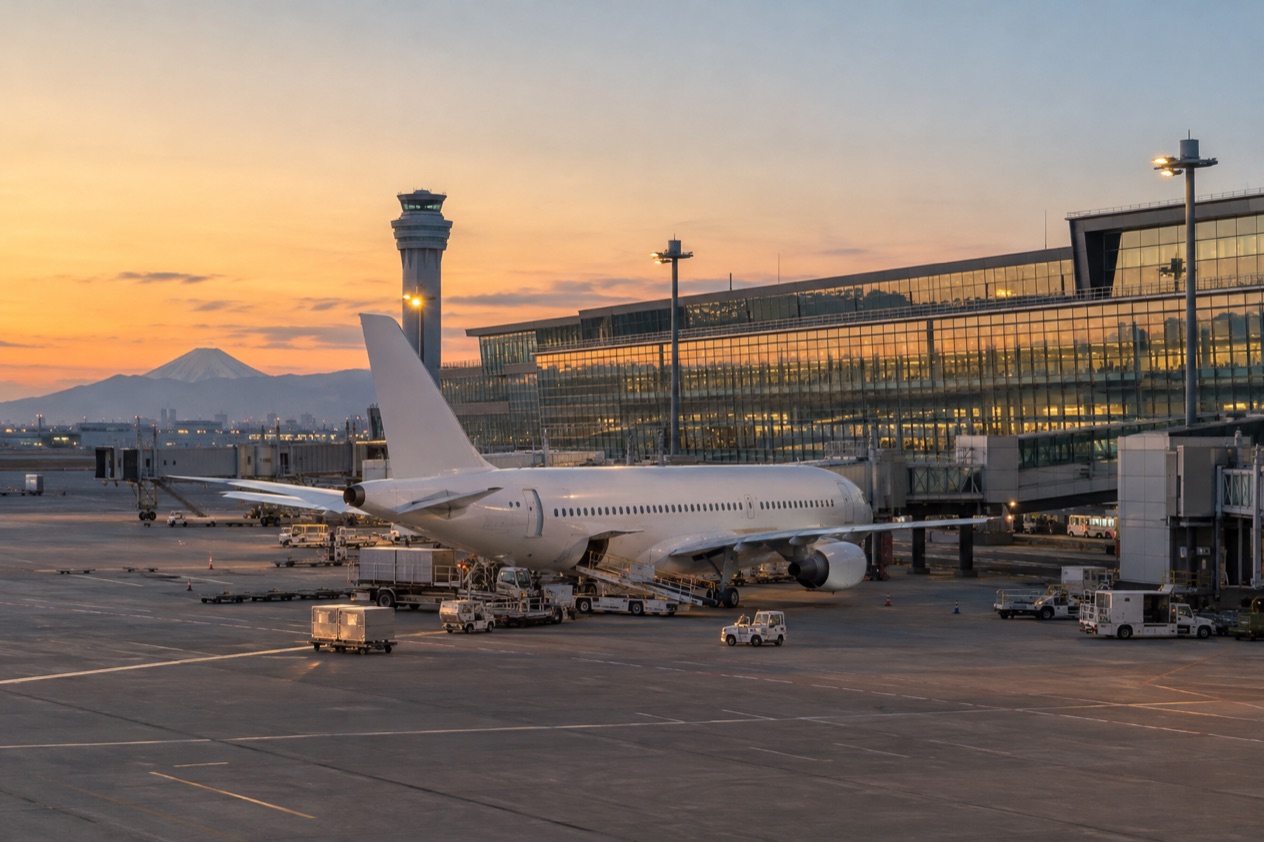
How do you get from the airport to Nara?
The route the Japan National Tourism Organization describes is a combination of bus and train, and it takes about an hour and a quarter from Kansai International Airport to Nara. Kansai is one of the two airports closest to the city, the other being Osaka International Airport, known as Itami, and both sit in Osaka Prefecture. Nara itself lies east of Osaka and south of Kyoto, so every route runs through the Osaka side of the Kansai region.
What you choose, in practice, is the station where you want to end up. Nara has two main ones, JR Nara Station and Kintetsu Nara Station, and both open onto the old part of the city.
From either one you reach Nara Park and the lanes of Naramachi, the former merchant quarter with its wooden townhouses. The JR Yamatoji rapid train serves JR Nara Station directly from Osaka. The Kintetsu line, which starts from Osaka-Namba Station, runs into Kintetsu Nara Station, a stop that places you close to the deer and the temples of the park.
If your plans include a first night in Osaka, the same trains simply become your onward ride the next morning. If you head straight to Nara, the airport transfer and the rail ride join into one longer day of travel, which is worth keeping in mind when you picture your first evening among the lanterns and the pagoda silhouettes.
Your options from the airport
Bus and train via Osaka
This is the combination the tourism authorities point to when they speak of the two airports near Nara. You leave the island by bus or by rail toward Osaka, then continue by train to one of the two Nara stations. The whole trip comes to about an hour and a quarter.
It suits anyone who wants to reach Nara in one go and then settle in around the park, the Naramachi lanes or the streets near the station. The airport sits 24 miles from Osaka Station, so the first leg crosses the bay and the port districts before the countryside of the Kansai plain opens toward Nara. The IC cards described in Good to know work on both trains and buses, which keeps the changeover simple in your pocket.
JR Yamatoji rapid train to JR Nara Station
From Osaka, the JR Yamatoji rapid train goes to JR Nara Station directly. That detail matters for anyone carrying bags, since a direct ride means no change of train between the big city and Nara.
JR Nara Station is one of the two stations from which Nara Park and Naramachi can be reached. It is the stop to aim for if your hotel or your plans lie on the JR side of town, and it is the natural pairing for a traveler who already holds a JR-based plan for the rest of the Kansai region.
Kintetsu limited express to Kintetsu Nara Station
From Osaka-Namba Station, the Kintetsu limited express reaches Kintetsu Nara Station in 35 minutes. The regular express runs the same way and takes five minutes longer, and the limited express costs 520 yen more than the regular one.
Kintetsu Nara Station is the other door into Nara Park and Naramachi. A traveler who likes the idea of stepping out near the deer, the crackers sold along the roadside and the first paths toward Mount Wakakusa will find this ending of the journey suits the plan. Choosing between the two Kintetsu trains is a question of five minutes against a supplement.
Airport transfer options compared
| Option | From | To | Time |
|---|---|---|---|
| Bus and train | Kansai International Airport | Nara | About 1 hour 15 minutes |
| Kintetsu limited express | Osaka-Namba Station | Kintetsu Nara Station | 35 minutes |
| Kintetsu regular express | Osaka-Namba Station | Kintetsu Nara Station | 5 minutes longer than the limited express |
The trade-off is mostly about where you end your journey. The Kintetsu trains from Osaka-Namba bring you to Kintetsu Nara Station, and the limited express buys a few minutes at a supplement of 520 yen. The JR Yamatoji rapid train brings you directly to JR Nara Station from Osaka, a service with no change of train on that leg.
Neither line is better in itself. A hotel near the park draws you toward the Kintetsu side, while a plan to continue by JR to other cities draws you toward JR Nara. Whichever you pick, the airport leg is the same bus and train combination that gets you to Osaka first.
Arriving at the airport
Kansai International Airport stands on an artificial island in Osaka Bay, 24 miles from Osaka Station, and it opened in 1994 as the first airport in Japan to run around the clock. Terminal 1 is the longest airport terminal in the world, 1.1 miles end to end, so the walk to the right exit can feel like a small journey of its own.
Terminal 2 is used only by Peach, Spring Airlines and Jeju Air. If you land there, you are in a different building from the main one. Free shuttle buses run between Terminal 1 and Terminal 2, and between Terminal 2 and the railway and ferry stations, which links the smaller terminal to the trains that lead toward Osaka and then Nara.
Terminal 1 has a small diversion for those with time to spare. A game area called Nintendo Check In offers free play on Nintendo Switch, a pleasant way to pass a layover, wait for a companion or let children burn off the energy of a long flight before the rail ride east.
The airport handled a large number of travelers in 2025, 34.1 million passengers in all, 27.5 million of them on international flights. The second runway, opened in 2007, is among the reasons the island works as a gateway for the whole Kansai region, Nara included. In September 2018, Typhoon Jebi led to all flights being canceled until the 6th, a reminder that the airport sits in open water.
Good to know before you go
An IC card is the simplest thing to carry for the transfers between airport, Osaka and Nara. These cards work on trains, buses and boats, and also in vending machines, convenience stores and some taxis.
Each region has its own card with its own name and character, but the cards can be used throughout Japan, so a card picked up on one trip carries over to the next city. In Nara, the walk from either station to the deer and the temples starts as soon as you step out.
Sources
- Wikipedia, Kansai International Airport (https://en.wikipedia.org/wiki/Kansai_International_Airport), checked October 11, 2026
- Japan National Tourism Organization, Nara (https://www.japan.travel/en/destinations/kansai/nara/), checked October 11, 2026
- Japan National Tourism Organization, IC cards, Suica, Pasmo, ICOCA, how to use (https://www.japan.travel/en/plan/ic-card/), checked October 11, 2026