
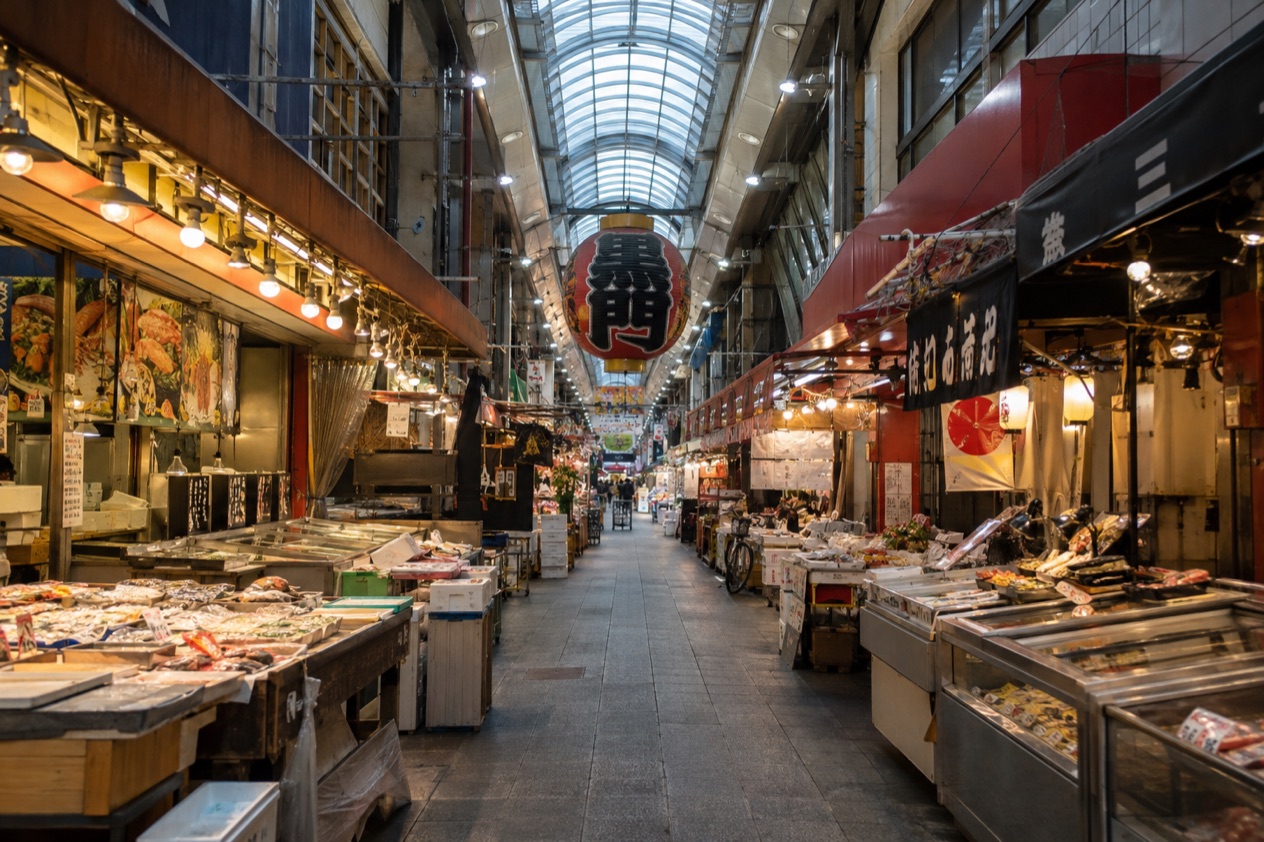
Steam rises from a grill where scallops hiss in their shells, a vendor calls out over a tray of glistening tuna, and the covered lanes smell of soy, charcoal and sweet egg. Kuromon Market is a food market in the heart of Osaka, a city known for its eating and its easygoing spirit. It suits travelers who like to graze, point at something delicious and eat it on the spot.
Is visiting Kuromon Market worth it?
Yes, if you enjoy food and like to wander without a fixed plan, and it fits best travelers who would rather taste ten small things than sit down to one large meal. Osaka has long been known for its food, entertainment and nightlife, and a market lined with seafood, produce, pickles and snacks is one of the most direct ways to taste that reputation.
The market is a place to eat as you walk, not a sightseeing stop with a monument at the end. You come for the stalls: fresh seafood sliced and served within minutes, skewers, tamagoyaki (the layered, slightly sweet rolled omelet), fruit cut into neat portions, and sweets made on the spot. Couples, solo travelers and groups of friends tend to enjoy it, since everything is small enough to share.
What sets it apart from the other places to eat nearby is the kind of food. Dotonbori, a short hop away on the same side of the city, is about neon, signboards and big street-side classics such as takoyaki and okonomiyaki.
Kuromon is closer to the source: it is where ingredients are sold, then turned into snacks you can eat right there. The two make a natural pairing, one for the produce and the other for the nightlife, and together they give a fuller picture of how Osaka eats.
It is also a good fit if you want a flexible visit. You can graze for a short time or settle in for a long, slow tasting walk, and you can stop whenever something looks good. Travelers who dislike seafood will still find grilled meats, vegetables, tofu, pickles and desserts, so a mixed group will not run out of options.
What to see at Kuromon Market
The seafood stalls
Seafood is the heart of the market, and the stalls show it in trays of crab legs, sea urchin, oysters, eel and thick slices of tuna laid out on ice. Many stalls will prepare something to eat right away, such as grilled scallops, a skewer of shrimp or a few pieces of sashimi on a small tray. Watching the cutting is half the pleasure, since the knife work is quick and precise.
Look for the grilled items, where the smell of soy and butter carries well down the lane. Take your time deciding, because the choices repeat from stall to stall and the displays change with what is in season. Pair a few bites of seafood with something warm from a nearby stand to balance the meal.
Street snacks and sweets
Between the fish counters sit the snack stands, and this is where the market feels most like a festival. Expect skewered meats, croquettes, rice balls, fried items and takoyaki, the octopus dumplings that Osaka is closely tied to. Tamagoyaki is easy to find and easy to share, and the sweeter versions make a fine bridge between savory stops.
For dessert, look for fruit cut on a stick, soft mochi and other sweets made for walking. A cold drink from a stand helps when the lanes are warm. These small plates add up, so pace yourself and keep a little room for the last stall that catches your eye.
Produce, pickles and kitchen goods
Away from the grills, the market works as a real neighborhood larder. You will see tsukemono (Japanese pickles) in every color, dried goods, tea, seasonings, tofu and seasonal vegetables arranged with care. These stalls are quieter to browse and give a sense of what home cooks and restaurant kitchens in the city buy.
Shops selling knives, cookware and tableware also sit among the food stalls, which makes the market a good place to look for a practical souvenir. A small bottle of sauce, a packet of tea or a set of chopsticks is easy to carry home and recalls the visit better than a trinket would.
The covered lanes themselves
The market is a long, roofed arcade, which means the walk itself is part of the experience. Signs, hanging lanterns and hand-written price cards give each stall its own character, and the whole place hums with calls from vendors and the clatter of grills.
Walk the full length once to see what is on offer, then turn back and buy. That simple habit saves you from filling up at the first stall you pass and lets you compare the grilled items, the sashimi and the sweets before committing.
When to visit Kuromon Market
The market is covered, so rain does not stop a visit, and each season brings a different feel to the stalls. Autumn is a pleasant time for the walk to and from the market, and October in Osaka brings highs in the mid-70s, mild enough to eat outdoors in comfort. Rain falls on a number of days that month, usually in showers, and the covered lanes keep you dry between stops.
Spring is another gentle season. April highs sit in the high 60s, with lows in the low 50s, which suits a long grazing walk without sweating or shivering. Showers appear on several days, but the arcade offers shelter, and the sunshine hours are generous enough for a stroll in the surrounding streets before or after.
Summer asks for more planning. July is hot and humid, with highs near 90 and warm nights, so cold drinks, shaved ice and fruit become the best stops. A covered market helps with the rain, but the air can feel heavy, so move slowly and take breaks in shade.
Winter has its own appeal, because warm food tastes better in the cold. January brings cool days with highs near 50 and lows a little above freezing, and the grilled and steamed items feel especially welcome. The table gives a quick sense of the seasons in Osaka.
| Month | Average high (°F) | Average low (°F) | Precipitation (inches) | Days with rain (1 mm or more) |
|---|---|---|---|---|
| January | 49.5 | 37.4 | 1.85 | 5.6 |
| April | 67.8 | 51.6 | 4.01 | 9.2 |
| July | 89.2 | 76.3 | 6.87 | 10.0 |
| October | 74.7 | 60.8 | 5.35 | 8.3 |
Tips for your visit
Come hungry and travel light. A small bag is easier to manage in a busy covered lane, and you will want a free hand for skewers and cups. Bring a small pack of tissues or a handkerchief, since many snacks are eaten standing and a little sauce tends to go astray.
Plan the market as a long snack stop rather than a quick look. Graze in small portions, share plates with your companions and save the heavier items for the end. Compare a few stalls before choosing, since the same dish can look quite different from one counter to the next.
Combine it with the nearby districts. Dotonbori and Shinsaibashi are reached from Osaka or Umeda Station on the Midosuji Line, getting off at Shinsaibashi Station, or staying on until Namba Station for Dotonbori. That gives you a day built around eating, shopping and the city’s lively streets, with the market in the middle.
If you are coming from Tokyo, the Tokaido-Sanyo shinkansen runs to Shin-Osaka Station, and from there a JR local line goes to Osaka Station. From either Osaka or Umeda, the Midosuji Line continues into the Namba and Shinsaibashi area, which is the part of the city where the market sits among the main eating streets.
Families can enjoy the market by sharing small plates and letting children pick a sweet or a skewer. Mobility can be a consideration in any busy arcade, so go at a relaxed pace and stop when you need to. If you plan an evening afterward, the lights and signs of nearby Dotonbori make a lively end to the day.
Good to know before you go
Bring some yen for the small stalls and keep small amounts handy, since snacks are bought one at a time. Keep an eye on your belongings in the busy lanes, as in any crowded market, and carry an umbrella in the rainier months. The market is covered, but the walk to and from it is not.
Sources
- Japan National Tourism Organization, Osaka (https://www.japan.travel/en/destinations/kansai/osaka/), checked October 11, 2026
- Japan Meteorological Agency (JMA), Normal values 1991-2020, monthly (https://www.data.jma.go.jp/stats/etrn/view/nml_sfc_ym.php?prec_no=62&block_no=47772), station Osaka, elevation 23 m, checked October 11, 2026
To plan your stay
- Best Time to Visit Japan: Cherry Blossoms, Autumn Colors, Weather and Festivals
- Where to Stay in Japan: Ryokan, Temple Stays, Capsule Hotels and the Best Cities to Base In
- Sending Luggage from the Airport in Japan: Hands-Free Travel, Hotel Delivery and Coin Lockers
- Know Before You Go to Japan: Entry, Money, Etiquette and Getting Around