
The day starts in the underground bustle of Namba, with commuters, vending machines and the rumble of Nankai trains pulling out toward the hills. Somewhere along the way the city thins out, the platforms get smaller and the air through the doors turns cooler. At the end of the line a temple town waits among cedars, wrapped in incense and the sound of bells.
This is the route from Osaka up to Koyasan, the mountain headquarters of Shingon Buddhism, and the pieces that make it work: the railway, the cable car, the bus and a few ideas for the day.
How do you get to Koyasan from Osaka?
You go by rail from Namba Station in Osaka on the Nankai Koya Line, which runs to Gokurakubashi Station at the foot of the mountain, and then continue up by cable car and bus. Koyasan lies in Wakayama Prefecture, to the south of Osaka, and the Nankai Electric Railway is the way the mountain is reached primarily. Nankai owns and operates the line, so one railway company carries you from the city to the base of the climb.
What decides the journey is the last stretch. The railway ends at the bottom, and the temple settlement sits on a high plain surrounded by eight peaks.
From the cable car station on the mountain, a bus takes you into town, and the ride lasts between 5 and 15 minutes depending on where you get off. So the trip has three parts: the train from Namba, the cable car up, and the bus to the temples. Each one hands off to the next, and thinking of it that way makes the day easy to picture.
The line itself is a long one, about 40 miles of track linking the Osaka area with the mountain. It opened at the very end of the nineteenth century, in January 1898, and trains on it run at up to 60 mph. That is a commuter railway doing double duty as a pilgrim route, and you notice it in the mix on board: office workers near the city, then backpacks and walking shoes as the stops get smaller.
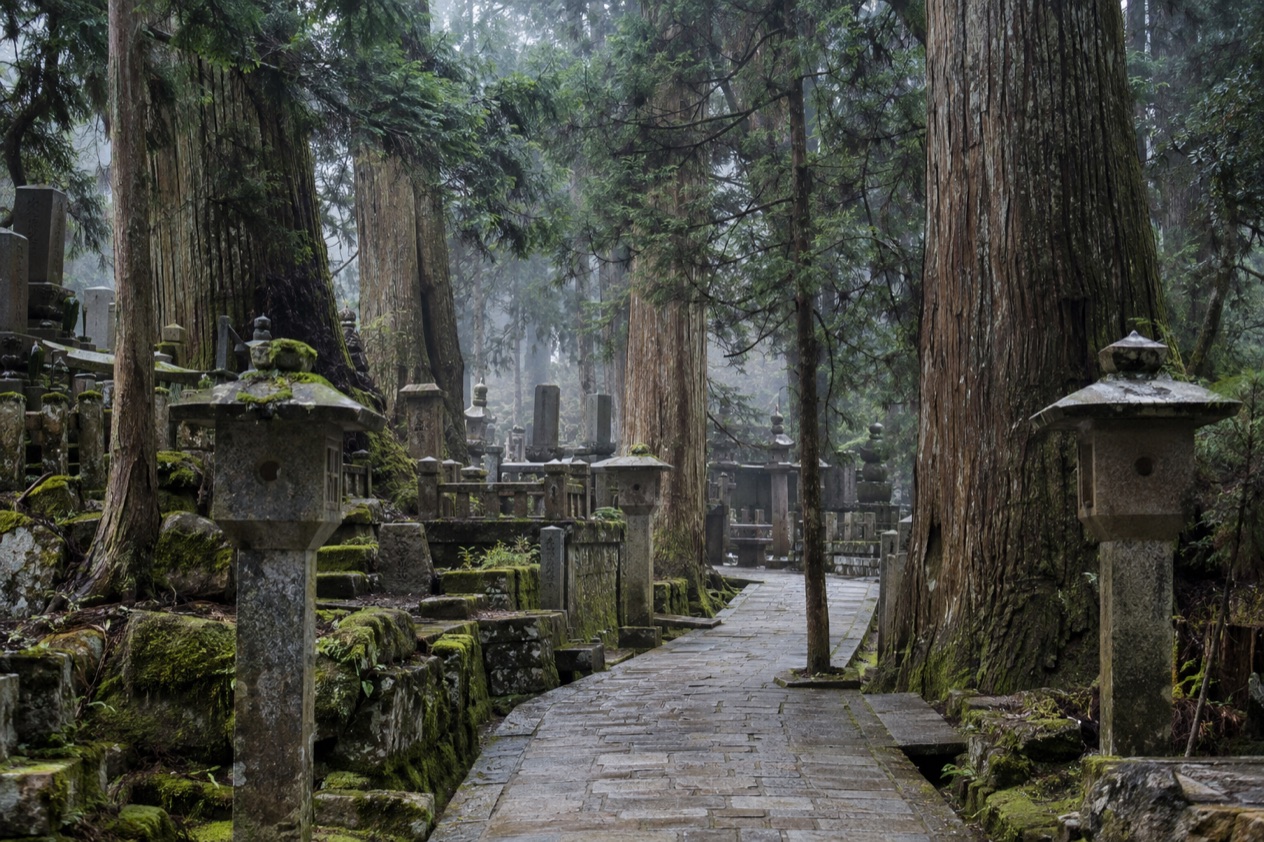
Koyasan was first settled in 819 by the monk Kukai, and it is still known as the world headquarters of the Koyasan Shingon sect. The town is a working monastic community, not a museum, which shapes how the day feels once you arrive. Mornings and evenings are marked by chanting and bells, and the streets are lined with temple walls and gates.
Ways to get to Koyasan from Osaka
The Nankai Koya Line from Namba
This is the main route, and the one that links the two places directly. You board at Namba Station in Osaka and ride the Koya Line to Gokurakubashi Station, where the railway stops at the foot of the mountain. The Nankai Electric Railway runs the whole line, which crosses from Osaka Prefecture into Wakayama Prefecture along its length.
The ride suits anyone who likes to watch the landscape change from window seats: the dense city gives way to suburbs, then to hills and wooded valleys as the line climbs. Japanese trains have a reputation for being on time, so you can plan the connection at the bottom of the mountain to the minute. One practical habit worth keeping in mind is to treat Gokurakubashi as a change of mode, not a final stop, since the cable car is the next step.
Local and rapid trains on the way
Local trains in Japan stop at every station, which makes them best suited to shorter distances. Rapid trains skip the smaller stations and do not require a supplement. On a line like the Koya Line, which runs through towns and then into the hills, the type of train you board changes how many stops you make between the city and the base of the mountain.
If you ride a stopping service, you will see more of the small stations and the neighborhoods around them, with the platform signs, the school groups and the sleepy shopping streets that rarely show up in guidebooks. Pick the type of service based on how much of the line you want to watch go by.
Cable car and bus up the mountain
The railway does not reach the temples. From Gokurakubashi you continue by cable car up the slope, and at the cable car station on the mountain you switch to a bus into town. The bus ride takes between 5 and 15 minutes depending on whether you are heading to the first temple streets or farther along.
This last leg is where the day changes character. You leave the railway behind and step into a mountain settlement on a high plain, with cedar forest pressing in on all sides. Mount Koya is noticeably cooler than Osaka, by about three to five degrees Celsius, so a layer for the cable car platform and the bus stop is useful even when the city was warm when you left.
Arriving in Osaka by Shinkansen
If you are coming from farther away, the Tokaido Shinkansen is the bullet train that reaches Osaka. It opened in 1964 and connects Tokyo, Yokohama, Nagoya and Osaka, with its final stop at Shin-Osaka Station. The line runs at a maximum speed of 177 mph, and Japanese trains keep to their schedules closely enough that a transfer can be planned with confidence.
From Shin-Osaka you continue within Osaka to Namba and the Nankai platforms. The Shinkansen is the way to get into the city, though, not the way up the mountain: no bullet train goes to Koyasan, and the last stretch is always the Nankai line, the cable car and the bus.
Options compared
| Leg | Line or operator | What to know |
|---|---|---|
| Osaka to the base of the mountain | Nankai Koya Line, Namba to Gokurakubashi | Run by the Nankai Electric Railway, the main rail link between the two places |
| Base of the mountain to the plateau | Cable car from Gokurakubashi | Ends at the cable car station on Mount Koya |
| Cable car station to the temple town | Bus | Takes 5 to 15 minutes depending on the stop |
| Into Osaka from farther away | Tokaido Shinkansen to Shin-Osaka | Connects Tokyo, Yokohama, Nagoya and Osaka |
| Along the line | Local and rapid trains | Locals stop at every station, rapids skip smaller ones with no supplement |
Namba is the starting point, the Koya Line carries you to the foot of the mountain, and the cable car and the bus finish the climb. Which train type you ride on the first leg is the only real decision, and it is a matter of how much of the line you want to watch from the window.
Think of the day as a relay. Each handoff, from train to cable car to bus, puts you a little higher and in a cooler, quieter setting, and by the time you step off the bus the city feels a long way behind.
Making a day of it
The best use of the trip is to give the temple town itself the main part of the day. Koyasan is a temple settlement on an 800-meter-high plain, and what you do there is walk among temple compounds, gates and cedar-lined paths, pausing where something catches your eye. The mood is monastic, with incense, chanting and the quiet that comes from a community built around devotion.
What the season brings
October brings fall colors, which are a major draw on Mount Koya. Maple and other trees along the temple paths and around the compounds turn through the month, and the cooler air on the mountain suits long walks. In spring, cherry blossom season typically comes around mid-April, a few weeks later than in the lowlands, so the mountain can still be blooming when the cherry trees in Osaka have finished.
Because the plateau is cooler than the city, bring an extra layer whatever the month. A light jacket or sweater makes the bus stops and shaded temple grounds more comfortable, and good walking shoes are worth the space in a day bag.
Pairing the mountain with the ride
The route is half the experience, so leave room to enjoy it. The change from the Namba platforms to the cable car is a small adventure in itself, and the bus ride into town is a good moment to look out at the forest. Many travelers also like to stay in a temple lodging on the mountain, a long-standing tradition in a place that has welcomed pilgrims for centuries, and that can turn the trip into more than a single outing.
If you stay for the day only, plan your return with the same chain in mind, bus to the cable car, cable car to the railway, and the Koya Line back to Namba. Walking between temples takes time, so give yourself room at the end rather than leaving the last connection to chance.
Good to know before you go
Koyasan is a place of worship and a working monastic community, so travelers tend to dress modestly, keep voices low in temple grounds and follow the signs posted at each compound. The mountain is cooler than Osaka, and rain can arrive in the mountains whatever the season, so a light rain layer is a sensible companion. Typhoon season in Japan brings heavy rain and wind to many regions, and a stormy day can slow any outing, so keep some flexibility in the plan.
Sources
- Wikipedia, Nankai Kōya Line (https://en.wikipedia.org/wiki/Nankai_K%C5%8Dya_Line), checked October 11, 2026
- Wikipedia, Mount Kōya (https://en.wikipedia.org/wiki/Mount_K%C5%8Dya), checked October 11, 2026
- Wikivoyage, Koyasan (https://en.wikivoyage.org/wiki/Koyasan), checked October 11, 2026
- Japan National Tourism Organization, trains and buses (https://www.japan.travel/en/guide/how-to-travel-by-train-and-bus-in-japan/), checked October 11, 2026
- Japan National Tourism Organization, traveling by rail (https://www.japan.travel/en/guide/traveling-by-rail/), checked October 11, 2026
- Japan National Tourism Organization, getting around Japan: trains, subways, buses, taxis (https://www.japan.travel/en/plan/getting-around/), checked October 11, 2026
- Wikipedia, Shinkansen (https://en.wikipedia.org/wiki/Shinkansen), checked October 11, 2026
- Wikipedia, Tōkaidō Shinkansen (https://en.wikipedia.org/wiki/T%C5%8Dkaid%C5%8D_Shinkansen), checked October 11, 2026