
The ship slides in past hillsides crowded with houses, and the first thing you hear from the rail is the clatter of a working harbor. Nagasaki is a seaport city at the western edge of Kyushu, and cruise passengers step off into a place where the water has shaped everything, from the food to the churches. The harbor is the Port of Nagasaki, and this is how the docking, the city and a day ashore fit together.
Where do cruise ships dock in Nagasaki?
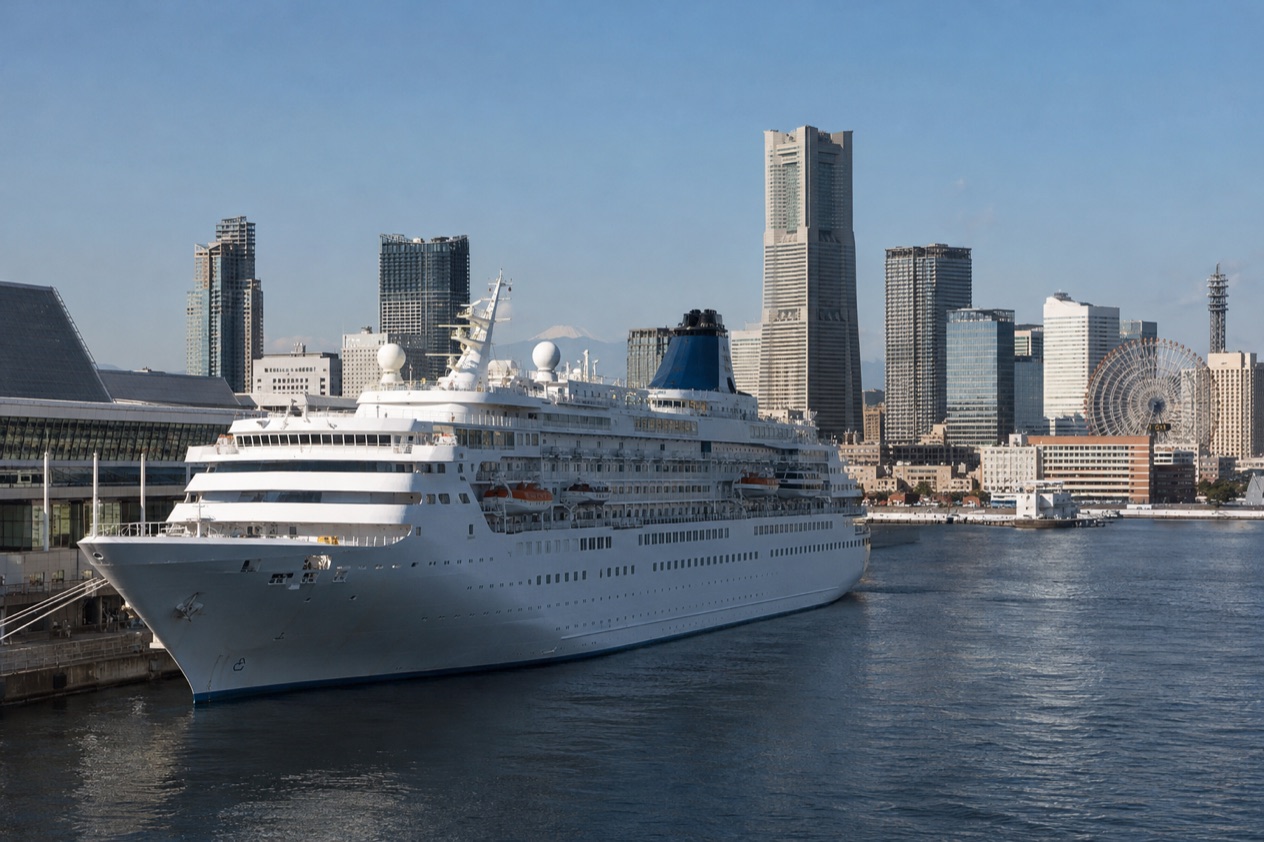
Cruise ships dock at the Port of Nagasaki (Nagasaki-kō), the seaport of Nagasaki city in Nagasaki Prefecture, and the prefecture itself operates it. A Nagasaki Port Terminal is tied to the port, and that is the name to look for on your ship’s port information when you read about the call.
The harbor is not a resort dock built for visitors alone. It is listed among the major ports of Japan, grouped with the ports of Northern Kyushu, so you share the waterfront with a city that lives from the sea and always has. Cargo, ferries and working boats are part of the scene as you come alongside, and the city rises right behind the water.
What the port is like
Nagasaki sits at the western extremity of Kyushu, and the port reflects that position. Hills close in around the harbor, so houses, schools and small shrines seem to climb the slopes in layers. From the deck you read the city before you set foot in it: a working waterfront at the bottom, a dense town in the middle and green ridgelines above.
The prefecture runs the port, which is a useful detail when you sort out whose signs and notices you are looking at. Terminal information, shuttle arrangements and any welcome events are set by your cruise line and the port, so rely on what your ship tells you for berth numbers and gangway times. The details of a particular berth are not something to guess at from a guidebook.
What to expect when you step off
Dining on almost all cruise ships is included in the cruise price, so a meal ashore is a choice rather than a necessity. In Nagasaki that choice is a good one. The city has its own noodle dishes, a long tradition of sweet sponge cake and a harbor-town habit of mixing Chinese, Dutch and Japanese cooking, and a port day gives you room to try some of it.
Think of the dock as the start of a loop through a city that is built on a slope, with the water always in sight. Whatever you decide to do, the harbor is the fixed point you come back to, so keep an eye on the ship’s all-aboard time and the hillside streets will take care of the rest.
If your cruise starts or ends in Nagasaki
Some travelers join or leave a ship here rather than just visiting for a day. The nearest airport to Nagasaki is Nagasaki Airport, which stands in the nearby city of Omura, and from the airport buses run to the Shinchi bus terminal in the city center. From there you are in town and can plan the last stretch to the terminal.
Another way in is by rail. JR Kyushu runs the Nishi Kyushu Shinkansen and the Nagasaki Main Line, and Nagasaki Station is the end of the line. A traveler coming from Fukuoka can also use the buses that leave Fukuoka Airport for Nagasaki every hour, a one-way trip of about 2 hours 30 minutes. These are the ways the city itself welcomes people arriving from elsewhere in Kyushu.
How do you get around the city?
Within Nagasaki you move by the city’s own transport and on foot, and what the sources describe most clearly are the links that bring people into the city from outside: buses from the airport, buses from Fukuoka and the JR Kyushu trains that end at Nagasaki Station. The city is the capital of the prefecture and the center of its life, so its stations and bus terminals are where things connect.
Buses and the Shinchi terminal
The Shinchi bus terminal is the city-center stop for the airport buses, so it works as a landmark for anyone who has arrived by air. It sits in the middle of town rather than out on the edge, which means you step off the bus already surrounded by shops, restaurants and the streets that lead to the sights.
Buses also connect Nagasaki with Fukuoka. They depart from Fukuoka Airport every hour, and a one-way trip takes about 2 hours 30 minutes. For a traveler combining Nagasaki with the rest of Kyushu before or after a cruise, that is a clear option, and it ends in the city rather than leaving you at a distant station.
Trains to Nagasaki Station
Nagasaki Station is the terminal of the Nagasaki Main Line, which JR Kyushu operates, and the same company runs the Nishi Kyushu Shinkansen. If you arrive by rail, the trip ends here, in the heart of the city. That makes the station an easy point to place on your mental map, since every train you see is arriving or beginning at the end of the line.
Hakata is the main station of Fukuoka, so the route links the two cities directly. Travelers without a pass can use the same rail network, and the Shinkansen and the Main Line are simply part of how Kyushu is stitched together.
On foot in a city of hills
However you reach the center, much of Nagasaki is felt on foot. The city climbs from the harbor into steep neighborhoods, with stairways between houses, small temples at the turns and views that open without warning over rooftops and water. Comfortable shoes matter more here than in a flat city, because the streets are built on slopes.
Walking also lets you notice what the city is made of: a Chinese-style gate here, a Western-looking house there, a shrine tucked behind a stairway. Give yourself time to stop, since the pleasure of Nagasaki lies in these changes from one street to the next. Use the terminal name in your cruise documents when planning your return to the ship.
What can you do in a port day?
A port day in Nagasaki can combine the city’s memory of the atomic bombing, its centuries as a window onto the outside world and a good meal, in whatever proportion suits you. The city is the capital and largest city of Nagasaki Prefecture, so it holds a lot, and choosing two or three things will serve you better than trying to see everything.
Peace Park and the atomic bomb story
Visitors begin with the Nagasaki Peace Park, the Atomic Bomb Museum and the hypocenter marker, which together tell what happened to the city in 1945. The experience is somber and deserves unhurried attention. You walk past statues, a fountain and monuments left by people from many countries, and the museum explains the event through objects, photographs and personal accounts.
Allow this part of the day to set the tone. After the museum, people sit for a while before moving on, and the city’s calm streets around it suit that. Check the museum’s current opening hours and admission before your visit.
Glover Garden, Oura Church and the old foreign quarter
Nagasaki was long the place where Japan met traders from China and Europe, and that history survives in the hillside streets. Glover Garden holds Western-style houses from the days of the foreign settlement, and nearby Oura Church recalls the Christian community that endured here. You climb to reach them, with views across Nagasaki’s harbor.
The Hidden Christian Sites in the Nagasaki Region have been recognized and included in the UNESCO World Heritage Sites list. That recognition covers the wider region and its communities of believers who practiced in secret, and it is a reason this corner of Kyushu has a different feel from other Japanese ports.
Dejima, Chinatown and the harbor streets
Dejima, the former trading post where the Dutch lived and worked, is a reminder of how the city connected Japan to the wider world. Nearby streets hold Nagasaki’s Chinatown, where red lanterns hang over the lanes and the smell of steamed buns and frying noodles drifts out of doorways. It suits a wander with no fixed plan, stopping where something smells good.
The Megane Bridge, a stone bridge named for the pair of reflections it casts in the river, is another stop that rewards a few minutes. Together these places give you a picture of a port town that mixed cultures for generations, and they sit among the shops and cafes of the center rather than apart from them.
What to eat in Nagasaki
Champon is the dish to look for, a bowl of thick noodles in a milky pork and seafood broth loaded with vegetables, born from Chinese cooking in the harbor town. Sara udon is its crisp cousin, with fried thin noodles under a thick sauce of the same ingredients. Both are meals in themselves and suit a midday stop between sights.
For something sweet, castella is the sponge cake Nagasaki is known for, moist and golden and a legacy of the city’s long contact with Europe. Kakuni manju, a soft bun filled with braised pork belly, is a snack to eat as you walk. A full meal on board is included in the cruise price, so these are a way to taste the place rather than a need.
Good to know before you go
Keep the ship’s all-aboard time in mind, since Nagasaki’s hillside streets and long stops at museums and cafes can quietly use up the hours. Carry yen for small purchases at stalls and snack counters, and wear shoes made for stairs and slopes.
The city can see rain, so a light rain layer sits easily in a day bag. Where a site posts its own rules, such as at memorials and churches, follow them, and keep your voice low in the places that carry the weight of the city’s history.
Sources
- Wikipedia, Port of Nagasaki (https://en.wikipedia.org/wiki/Port_of_Nagasaki), checked October 11, 2026
- Wikipedia, Cruise ship (https://en.wikipedia.org/wiki/Cruise_ship), checked October 11, 2026
- Wikipedia, Port of Kobe (https://en.wikipedia.org/wiki/Port_of_Kobe), checked October 11, 2026
- Japan National Tourism Organization, Nagasaki (https://www.japan.travel/en/destinations/kyushu/nagasaki/nagasaki-city-and-around/), checked October 11, 2026
- Wikipedia, Nagasaki (https://en.wikipedia.org/wiki/Nagasaki), checked October 11, 2026
- Wikivoyage, Nagasaki (https://en.wikivoyage.org/wiki/Nagasaki), checked October 11, 2026
To plan your stay
- Japan Cruise in March: Weather by Port, Cherry Blossom Timing and What You See
- Celebrity Japan Cruises: Asia Voyages, Hiroshima and Tokyo Sights, and the Port of Kobe
- How Much Does a Japan Cruise Cost?: What the Fare Covers, Drinks and Shore Excursions
- Japan Cruise in April: Cherry Blossoms, Spring Weather and What You See From Port