
The ship slides under the bridge toward the pier, the itinerary is folded open on the cabin desk, and one line on it keeps drawing the eye: Kyoto. Temple roofs, lantern-lit lanes and bowls of green tea feel a long way from a container port. Kyoto can be reached from the ports that serve Tokyo, Yokohama and Kobe, but only by rail through Kyoto Station, so the day is built around the train and the hours your ship stays in port.
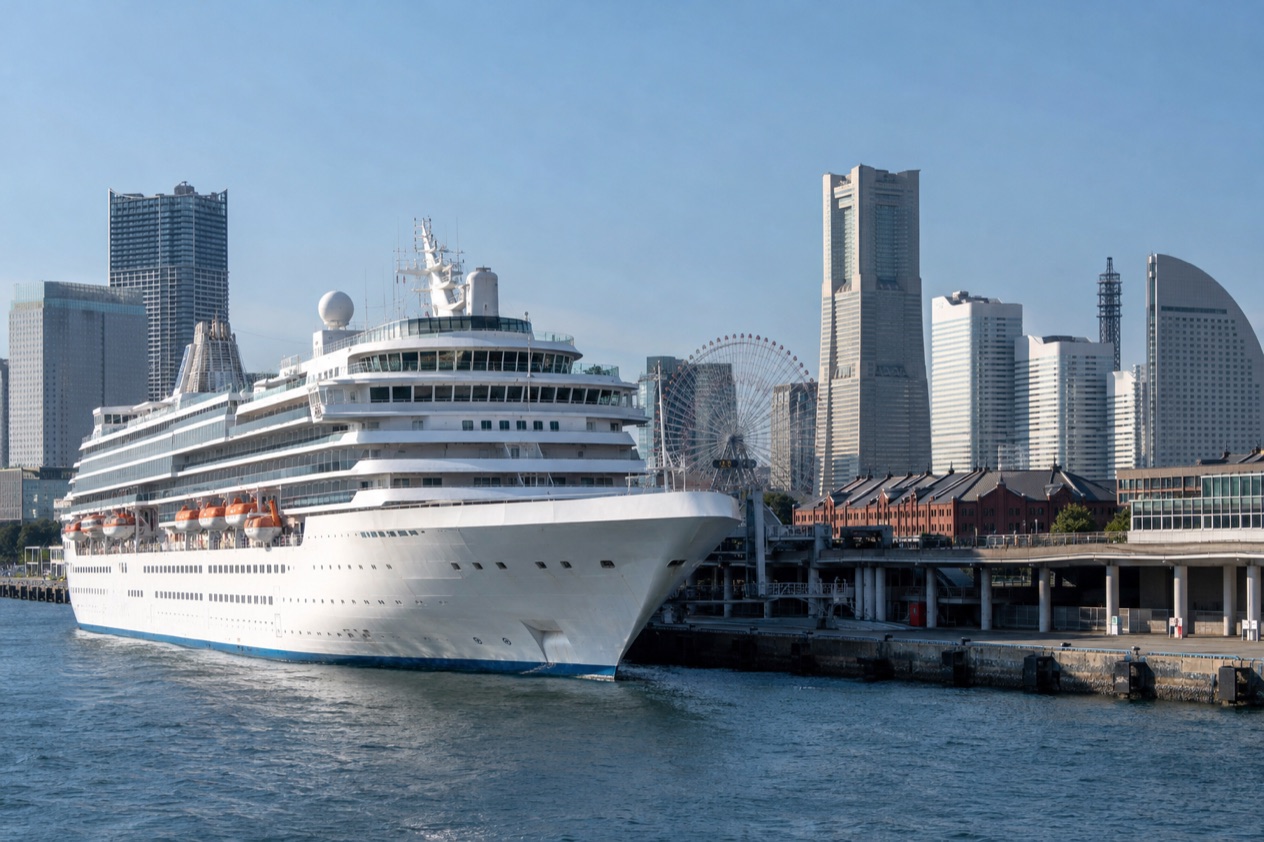
Can you visit Kyoto from a cruise port?
Yes, Kyoto can be a goal for a day away from the ship, but it is reached by train from a port rather than on the water, and the ship’s hours in port decide how much of it you see. Every route runs through Kyoto Station, so that is where the day really begins.
Kyoto is a city of temples, shrines, gardens and old wooden streets, and a call of a few hours can only sample it. Choosing a small number of places and doing them well matters more than the length of the list.
Kyoto Station is the hinge
Kyoto Station connects the Tokaido Shinkansen bullet train line with five JR West lines, a Kintetsu line and a municipal subway line. For a visitor stepping off a bullet train, this means the station is both the arrival point and the place where the rest of the city begins, whether by rail or by subway.
The Kyoto Municipal Subway has two lines, the Karasuma Line and the Tozai Line, which are linked at Karasuma Oike Station. Beyond that, the rail lines that leave the station open up more of the city, and the choice depends on which temple or district you want.
What Kyoto offers a visitor off a ship
Kyoto served as the capital of Japan from 794 until the imperial court moved to Tokyo in 1869, and it was largely spared large-scale destruction in World War II. That is why so much of its older heritage still stands, and why walking from one temple to the next feels like reading a long history in stone and cedar.
In 1994, 17 historic monuments in Kyoto were inscribed on the UNESCO World Heritage List. Among the temples and shrines people look for are Kiyomizu-dera with its wooden stage, Kinkaku-ji with its gold-leafed pavilion beside a pond, and Fushimi Inari, where rows of vermilion torii gates climb a wooded hillside.
Food belongs in the plan too. Kyoto is known for kaiseki, the multi-course meal built around the season, and for matcha sweets, tofu and pickles. A bowl of noodles or a tea stop between temples can be as memorable as any monument.
Seasons that change the day
Kyoto has a humid subtropical climate, with hot, humid summers and relatively cold winters that bring occasional snowfall. A summer day of temple-hopping is a different experience from a winter one, so pack accordingly for the month your ship calls.
The rainy season typically begins around mid-June and lasts until the end of July. In July the Gion Matsuri, one of Japan’s three great festivals, culminates in a massive parade in Kyoto on July 17, a day when the city’s streets belong to floats and festival crowds.
Which ports are closest?
Three ports come up on itineraries that mention Kyoto: Yokohama, Tokyo and Kobe, and each has its own terminal, its own setting and its own story.
| Port | Terminal | Location |
|---|---|---|
| Yokohama | Osanbashi Pier, Yokohama International Passenger Terminal | Naka Ward, Yokohama |
| Tokyo | Tokyo International Cruise Terminal | Aomi area, Tokyo |
| Kobe | Port of Kobe | Kobe, Hyogo |
Yokohama and Osanbashi Pier
Osanbashi Pier is the main international passenger pier at the Port of Yokohama. It is the oldest pier in Yokohama, first built between 1889 and 1896, and it stands on the site of the two small stone wharfs that served visiting ships when the port opened in 1859. After World War II it was renamed South Pier and stayed under occupation forces control until 1952.
The current terminal opened in 2002. Arrival and departure lobby, ticketing booth, customs, immigration, a large multipurpose hall, shops and a cafe are all on the second floor, and a parking facility sits on the first. On the rooftop, a gently curving observation deck with planted grass is open to the public.
Osanbashi is known as one of the best places to see the Yokohama Three Towers, called the King, the Queen and the Jack. The pier can hold two 70,000-ton class ships at once, or four ships of the 30,000-ton class. The very largest ships, such as MS Queen Elizabeth, are often obliged to use nearby container terminals instead.
Tokyo International Cruise Terminal
The Tokyo International Cruise Terminal sits in the Aomi area and opened on 10 September 2020. It is operated by the Tokyo Port Terminal Corporation on behalf of the Tokyo Metropolitan Government. The four-story building has a roof that rises well above the quay, and the quay offers one berth.
On foot, the terminal is approximately an eight-minute walk from Tokyo International Cruise Terminal Station on the Yurikamome line. Its short history already has milestones. The German ship MS Amadea became the first foreign-flag cruise ship to call there on 2 March 2023, and MSC Bellissima made its first call on 12 March 2024, the largest cruise ship ever to enter Tokyo Port at the time. The terminal is also set to become the home port of Disney Cruise Line, with service scheduled to begin in 2029, as announced by Oriental Land Company.
Kobe and its island terminals
The Port of Kobe is a maritime port in Kobe, Hyogo, in the Keihanshin area, backed by the Hanshin Industrial Region. Flat land is limited there, so the city has built artificial islands to make room, among them Port Island, Rokko Island and the island that holds Kobe Airport.
A Kobe call places you on the Kansai side of the country, and from there Kyoto is reached through Kyoto Station like every other route. Kansai International Airport also connects to the city by a direct train, which matters if your cruise starts or ends with a flight there.
How much time do you need?
The time you need begins with the train, since the rail leg to Kyoto is the fixed piece of the day and everything else is added to it.
| Rail link | Time |
|---|---|
| Tokyo to Kyoto by Shinkansen | Around 2.5 hours |
| Kansai International Airport to Kyoto Station by Haruka limited express | 73 minutes |
Building the day from Tokyo or Yokohama
The Shinkansen ride from Tokyo is the figure to start from. To it you add the trip between the pier and the bullet train station and the return to the ship, because the day only works if you are back aboard when the ship sails.
With that rail leg taking up a good part of a ship’s day in port, the hours left in Kyoto are the ones to spend carefully. One temple, a walk through an old district and a meal can fill them, while a long list of sights will not.
When the cruise starts or ends at Kansai
The Haruka limited express, operated by JR West, carries passengers from Kansai International Airport to Kyoto Station. A cruise that begins or ends near that airport can add Kyoto before or after the voyage, with the ship out of the schedule and the day set by the traveler.
That arrangement trades the hurry of a port call for a slower visit. A night in the city lets you see the same lanes at different hours, take in a second temple and eat at a table without watching the clock for the gangway.
Choosing what to see
A short visit rewards a single theme. You might spend it on the temples of the east side, on Fushimi Inari and its torii, or on one garden and a long lunch. The subway’s two lines, the Karasuma Line and the Tozai Line, help you move between districts once you are out of the station.
Season shapes the plan too. In the rainy season from mid-June to the end of July, an umbrella and a covered stop for tea can matter as much as the sights, and on the day of the Gion Matsuri parade the city’s streets are given over to the festival.
Good to know before you go
Dining on almost all cruise ships is included in the cruise price, so a day ashore is where you spend yen on lunch, a snack, tea or a souvenir. Kyoto’s weather swings from hot, humid summers to cold winters with occasional snow, and the rainy season in the summer months brings wet days in the city. Dress for the month you call, keep an eye on the hour of your ship’s departure, and let the day be built around a few good stops.
Sources
- CruiseMapper, Yokohama cruise port (https://www.cruisemapper.com/ports/yokohama-port-1), checked October 11, 2026
- Wikipedia, Kyoto (https://en.wikipedia.org/wiki/Kyoto), checked October 11, 2026
- Wikipedia, Osanbashi Pier (https://en.wikipedia.org/wiki/Osanbashi_Pier), checked October 11, 2026
- Wikipedia, Tokyo International Cruise Terminal (https://en.wikipedia.org/wiki/Tokyo_International_Cruise_Terminal), checked October 11, 2026
- Wikipedia, Cruise ship (https://en.wikipedia.org/wiki/Cruise_ship), checked October 11, 2026
- Wikipedia, Port of Kobe (https://en.wikipedia.org/wiki/Port_of_Kobe), checked October 11, 2026
To plan your stay
- Japan Cruise in March: Weather by Port, Cherry Blossom Timing and What You See
- Celebrity Japan Cruises: Asia Voyages, Hiroshima and Tokyo Sights, and the Port of Kobe
- How Much Does a Japan Cruise Cost?: What the Fare Covers, Drinks and Shore Excursions
- Japan Cruise in April: Cherry Blossoms, Spring Weather and What You See From Port