
JAMAICA · PORT ANTONIO IN JULY · 18.18° N
Port Antonio in July brings warm water, long evenings and the green north-eastern corner of Jamaica in full leaf. Daytime highs average 84.9°F, nights hold at 77.2°F, and the sea off the coast runs warmer than the air. On July 15, daylight lasts 13 hours and 9 minutes, enough for a morning in the hills and an afternoon swim before dinner.
Rain comes with this corner of the island. Even so, July is the lightest of the three midsummer months we compare: 4.13 inches, against 5.01 in June and 5.20 in August. That makes it a sound month for a first vacation here or a return trip, provided you book a room that stays cool at night and keep one indoor plan in reserve. For the journey in, start with our guide to flights from the US and our airport transfer options.
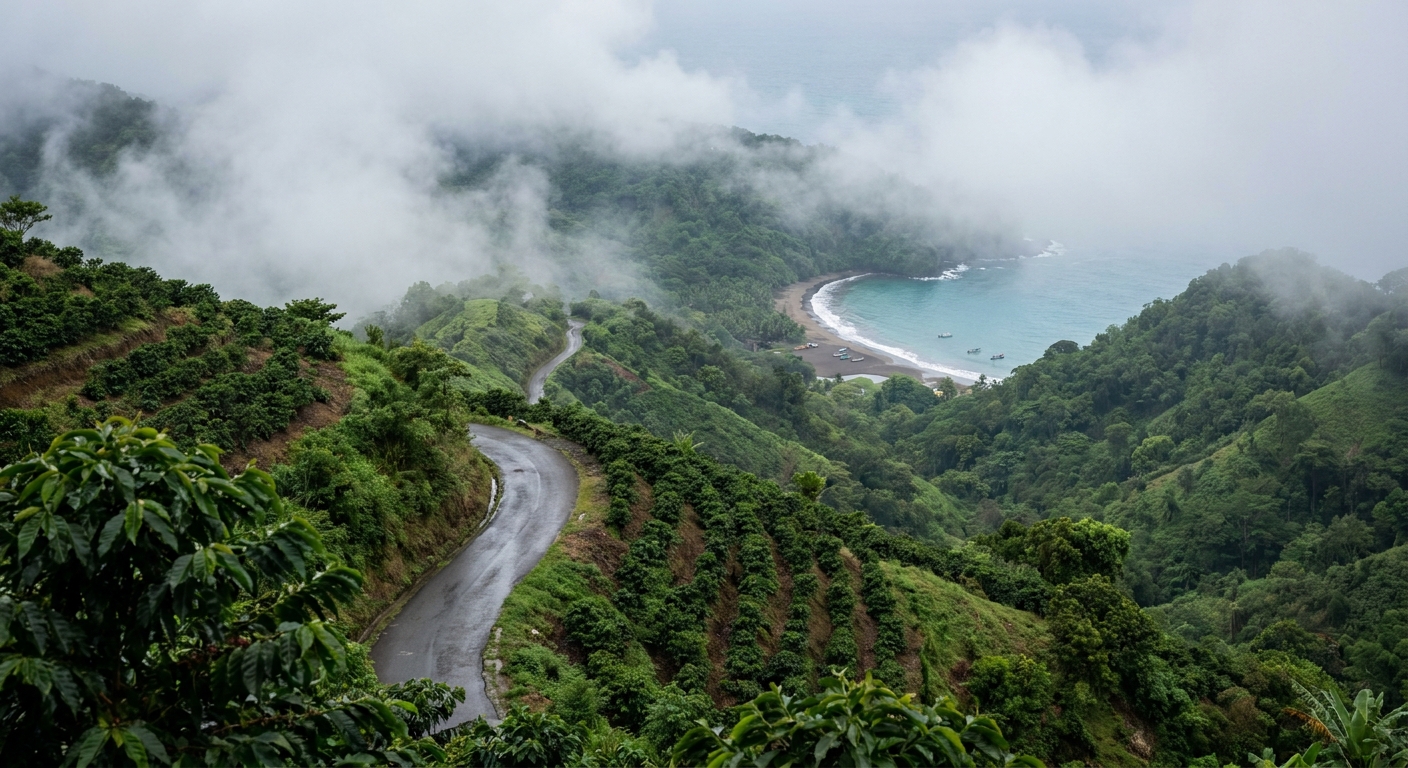
JULY AT A GLANCE · PORT ANTONIO
July is the driest of Port Antonio’s three midsummer months, with a sea averaging 85.7°F in daily maxima, so book it for swimming and early heritage walks and expect rain on a little more than one day in three.
HIGHS 84.9°F · 11.4 RAIN DAYS · SEA 85.7°F · ERA5 REANALYSIS 1991-2020
Go for: warm-water swims, 13 hours of daylight, the heritage streets of the Titchfield Peninsula and the Maroon country around Moore Town.
Think twice before: planning a trip that needs dry skies every day, since measurable rain falls on 11.4 days of an average July here.
Climate: Open-Meteo / ECMWF ERA5 reanalysis · Sea: Open-Meteo Marine API · Heritage: JNHT, UNESCO · full sources at the end
On this page
- Port Antonio weather in July84.9°F highs and 11.4 rain days
- Sea temperature in July85.7°F off the coast, in daily maxima
- Crowds and prices in JulyBooking advice, lodging tax and air conditioning
- Things to do in JulyTitchfield Peninsula, Moore Town, Blue and John Crow Mountains
- Two days in Port AntonioTwo days that start at the 5:37 a.m. sunrise
- July vs June and AugustRain, air and sea for three months
- Is July a good time to go?Who should book July and who should wait
Every figure here comes from one grid cell of the ECMWF ERA5 reanalysis, centered at 18.18° N, 76.45° W over Port Antonio and averaged for 1991 to 2020. It is a model reconstruction rather than a reading from an airport station, and the cell sits at the wet north-eastern end of Jamaica, the rainiest corner of the island. Before you apply these numbers to Montego Bay, Negril or the south coast, check our island-wide best-time guide.
Port Antonio weather in July: average highs, lows and rain days
| July normal (1991-2020) | Port Antonio |
|---|---|
| Average high | 84.9°F (29.4°C) |
| Average low | 77.2°F (25.1°C) |
| Precipitation | 4.13 in |
| Days with 0.10 in or more | 11.4 |
| Days with 1 in or more | 0.3 |
| Daylight on July 15 | 13 h 09 min |
| Sunrise · sunset, July 15 | 5:37 a.m. · 6:46 p.m. |
Open-Meteo computes the July normals from the ECMWF ERA5 reanalysis for the grid cell over town: an average afternoon of 84.9°F (29.4°C) and an average night of 77.2°F (25.1°C), with 4.13 inches of precipitation over the month. Read them as a smoothed thirty-year average for the area around Port Antonio. A single hot, still afternoon on the waterfront can run above it.
Measurable rain, 0.10 inch or more, falls on 11.4 days of an average July, a little more than one day in three. Most of those days bring modest totals: spread over 11.4 wet days, the month’s 4.13 inches average about a third of an inch each. A downpour of an inch or more turns up 0.3 times a month, roughly one day every three Julys. For a seven-night stay, expect two or three wet days and plan beach time around them.
Day and night sit only 7.7°F apart, so evenings never cool enough to call for a sweater. Pack for heat around the clock: loose cotton or linen, a light rain shell for walking, quick-dry shoes for wet streets and trails, and insect repellent for dinner outdoors. Our Jamaica packing list has the full kit.
On July 15 the sun rises at 5:37 a.m. and sets at 6:46 p.m. Jamaica time, giving 13 hours and 9 minutes of daylight. Walking and photography go best in the two hours after sunrise, before the heat climbs toward the afternoon average, and again in the last hour of light. Book dinner for after 7 p.m. if you want to swim until sunset.
Can you swim in Port Antonio in July? Sea temperature and what it feels like
The Open-Meteo Marine API puts the sea surface off Port Antonio at 85.7°F (29.8°C) in July, averaged over 2015 to 2024. That figure is a mean of daily maxima, the warmest reading of each day, so a 24-hour average would come out a shade cooler. The period also differs from the air normals: ten recent years for the sea against thirty for the air.
Water in the mid-80s allows long swims and slow snorkels with no wetsuit. The 85.7°F daily-maximum average sits 0.8°F above the 84.9°F average air high, so stepping out of the sea brings no chill. Families with young children can plan beach sessions at any hour of daylight.
We found no wind or swell series for Port Antonio in July, so we give no wave heights or wind speeds. Ask at your hotel or a beach attendant before swimming off an unguarded stretch, and follow tropical forecasts in the days before you fly. Our hurricane-season guide explains how to track storms, and our safety guide covers the rest.
How busy is Port Antonio in July? Crowds and prices
We found no occupancy series and no monthly room-rate data for Port Antonio, so we crown no month cheap or expensive. July does fall in the US school summer break, the window when American families with school-age children can travel. For daily budgets in tiers, see our Jamaica trip-cost guide.
We have no lead-time data either, so we give no number of weeks. With rain on 11.4 days of the month, choose a refundable rate when the price gap is small. Lock in flights before the room, because your landing time decides whether the first night belongs in Port Antonio or near the airport. Our where-to-stay guide compares the bases.
We could not verify a lodging tax or any nightly guest fee for Port Antonio, so we quote no amount. Before paying, ask whether the rate includes taxes and fees, and compare the final total on the confirmation with the price you were first shown.
Nights average 77.2°F in July, so the upgrade worth paying for is a room with air conditioning. A ceiling fan alone can mean a warm, humid night, and a cool room is what makes the early starts around a 5:37 a.m. sunrise pleasant.
Things to do in Port Antonio in July
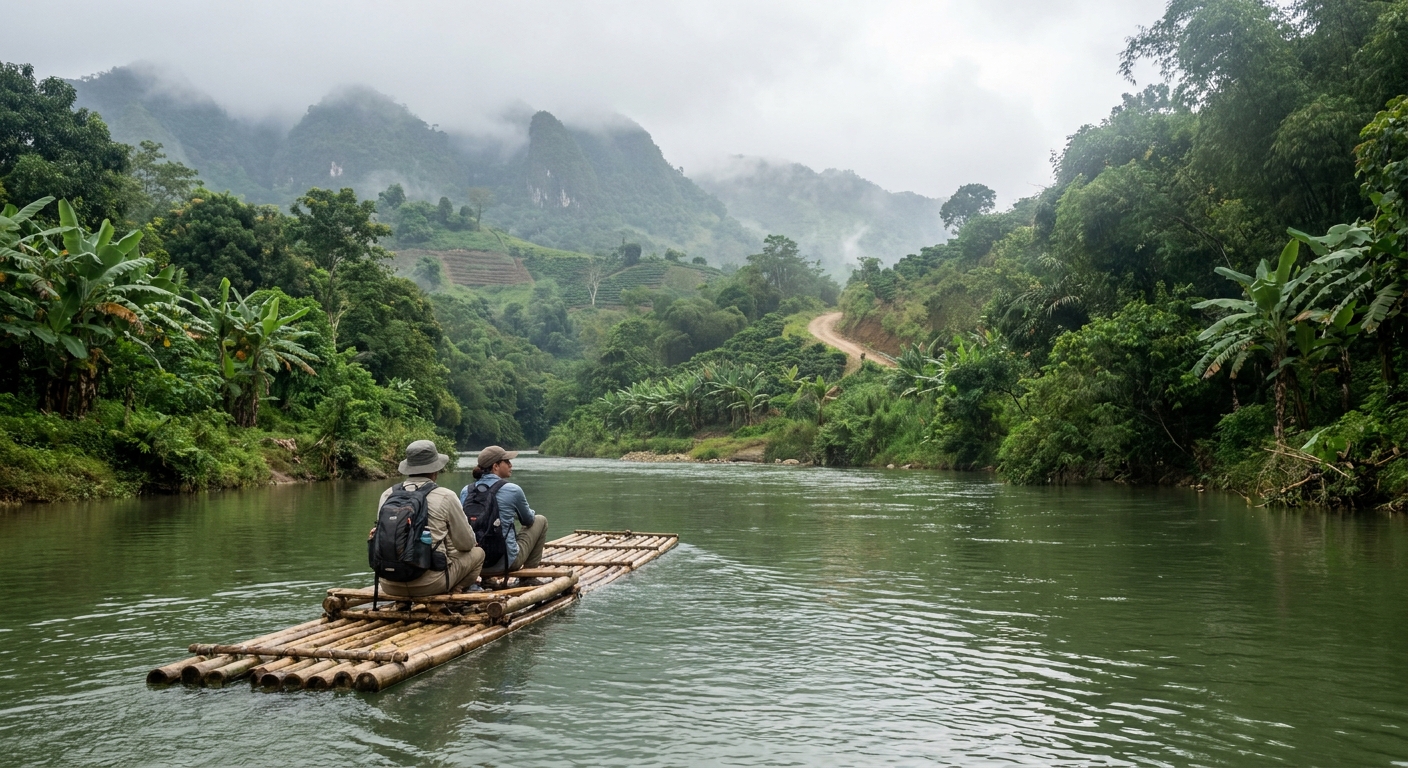
July pairs 13 hours and 9 minutes of daylight with the lowest rainfall of the three midsummer months, 4.13 inches. A full day outdoors is easier to hold together than in June or August, and a morning in the hills followed by an afternoon in the sea fits comfortably between sunrise and sunset.
Start on the Titchfield Peninsula, the first place in the area the English settled and the oldest part of Port Antonio, where Fort George and the eclectic Victorian DeMontevin Lodge stand. The Port Antonio Court House went up in 1895 on the Colonial Secretary’s direction. Inland, Moore Town is still governed by a Colonel, an honorary title his ancestors won, and its Maroon heritage joined UNESCO’s intangible heritage list in 2008. Above it, the Blue and John Crow Mountains became Jamaica’s first World Heritage site in 2015: 26,251.6 hectares between 850 and 2,256 meters (about 2,790 to 7,400 feet). The Heritage Trust publishes no hours, fees or Rio Grande raft rates, so call ahead.
Stone and timber stay the same all year, but July air does not. The 84.9°F average high is a coastal figure for the grid cell over town, so schedule the peninsula walk for the hour after sunrise. Rain on 11.4 days also leaves inland tracks slick, so keep the mountains and the drive toward Moore Town for a dry morning with a local guide. Our driving guide covers the roads.
Walking the streets of the Titchfield Peninsula costs nothing, and the facades of DeMontevin Lodge and the Court House can be admired from the road. Drivers heading west can add Orange Bay Railway Station, with its Jamaica Georgian features, and Seaman’s Valley, home to the ruins of a great house and the first European cemetery in the area. We could not confirm entry rules or charges for either stop.
Port Antonio in July: a two-day itinerary
Day one. Be out by 6 a.m., half an hour after sunrise, for Fort George and DeMontevin Lodge on the Titchfield Peninsula, then breakfast. Swim from late morning and spend noon to 3 p.m. in the shade or indoors. After a mid-afternoon stop at the Court House, head to Folly Point for the last hour of light before the 6:46 p.m. sunset, and book dinner from 7:15.
Day two heads inland: leave early for Moore Town and the edge of the Blue and John Crow Mountains with a local driver or guide, and be back on the coast by early afternoon for a last swim. If the morning opens wet, reverse the order, starting with Christ Church, the Portland Parish Church, and the Court House in town, then go up if the sky clears. Our seven-day Jamaica itinerary shows how to fold Port Antonio into a longer trip.
Port Antonio in July vs June and August
| Normal | June | July | August |
|---|---|---|---|
| Average high | 84.1°F | 84.9°F | 85.4°F |
| Average low | 76.9°F | 77.2°F | 77.4°F |
| Precipitation | 5.01 in | 4.13 in | 5.20 in |
| Days with 0.10 in or more | 13.0 | 11.4 | 12.9 |
| Sea surface (daily max, 2015-2024) | 84.8°F | 85.7°F | 87.1°F |
Air temperatures barely shift across the three months: highs climb from 84.1°F in June to 84.9°F in July and 85.4°F in August, while lows stay between 76.9°F and 77.4°F. July pulls ahead on rain, with 4.13 inches over 11.4 wet days, against 5.01 inches over 13.0 days in June and 5.20 inches over 12.9 days in August. The sea, from the Marine API’s 2015-2024 daily maxima, warms steadily from 84.8°F to 85.7°F, then 87.1°F.
Moving four weeks earlier into June adds 0.88 inch of rain and 1.6 wet days, with a sea 0.9°F cooler. Shifting later into August brings the warmest water of the three, 1.4°F above July, along with 1.07 inches more rain and 1.5 more wet days. The full breakdowns are in Port Antonio in June and Port Antonio in August.
Is July a good time to visit Port Antonio?
Yes for swimmers, snorkelers and heritage walkers who can accept rain on a little more than one day in three and like early starts. July also suits families on the US school calendar who want warm water for the children. It is a weaker fit for travelers who need a guaranteed dry day for a beach ceremony or a long mountain hike, and for anyone who sleeps badly in warm nights without air conditioning.
For drier weather, neither neighbor helps, since June and August both carry more rain here. Look instead at the drier months in our best-time guide for Jamaica, and read our update after Hurricane Melissa before you book any month.
Among June, July and August, only July pairs a sea above 85°F with the lowest rainfall of the three, 4.13 inches.
The last word
Book July if the sea is the point of your trip, and put air conditioning ahead of a sea view when you choose the room. Keep your last evening for Folly Point Lighthouse: built in 1888, its masonry tower was made fireproof, and it makes a fine final stop before the 6:46 p.m. sunset and a late dinner in town.
Sources & data for this guide
- July, June and August air normals, precipitation and rain days · Open-Meteo / ECMWF ERA5, 1991-2020, grid cell 18.1789 N, 76.4522 W · model reanalysis, not a station reading · checked Sep 24, 2026
- Sea surface temperature, July, June and August · Open-Meteo Marine API, mean of daily maxima 2015-2024 · checked Sep 24, 2026
- Daylight, sunrise and sunset on July 15 · sunrise-sunset.org, converted from UTC to Jamaica time (UTC-5) · checked Sep 24, 2026
- Titchfield Peninsula, Fort George, Court House, Folly Point, DeMontevin Lodge, Christ Church, Moore Town, Orange Bay, Seaman’s Valley · Jamaica National Heritage Trust, Portland Heritage Sites · checked Sep 24, 2026
- Blue and John Crow Mountains and Moore Town Maroon heritage · UNESCO World Heritage Centre, property 1356 · checked Sep 24, 2026
- We found no opening hours, admission fees or Rio Grande raft rates for any Port Antonio site, and no occupancy, room-rate, lodging-tax, wind or swell data. Call operators before you go.