
JAMAICA · APRIL · 18.49° N
April closes Jamaica’s dry stretch at the Luminous Lagoon. The normals for the grid cell over Falmouth put the month at an average high of 85.7°F and a low of 73.6°F, with 3.23 inches of rain spread across nine wet days. The sea off the lagoon runs 82.7°F. Six weeks later, the same cell records 7.60 inches over 17.4 wet days, and that single contrast explains why April fills up first.
Sunset lands at 6:28 p.m. on April 15, and a boat has no reason to leave the dock before full dark, so a lagoon evening starts late and the 19-mile drive back west to Montego Bay ends later still. On money we stay quiet: we found no room-rate or occupancy series for Falmouth, so no month here gets called cheap or expensive.
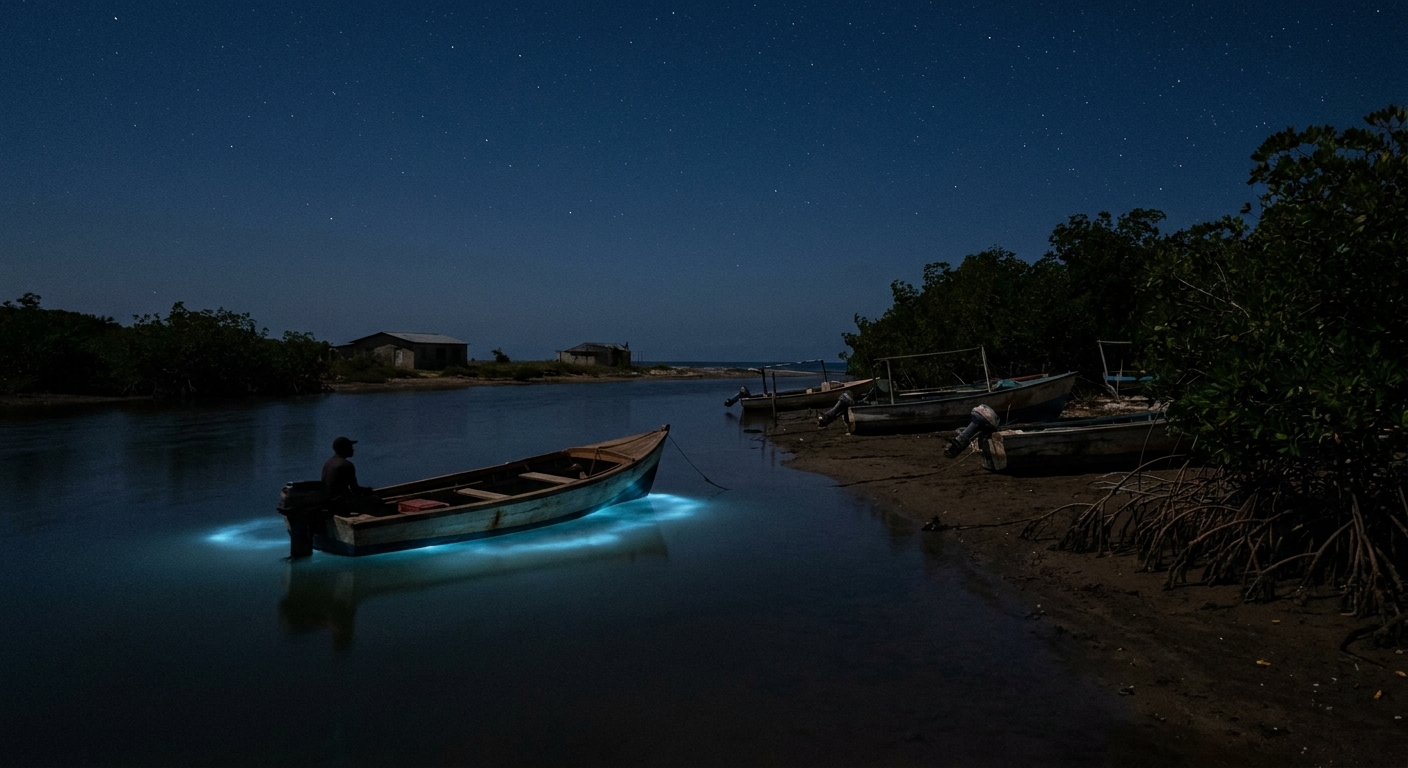
THE MONTH AT A GLANCE · LUMINOUS LAGOON · APRIL
April keeps March’s dry weather and adds warmth on land and in the water: 3.23 inches of rain over nine days, a sea at 82.7°F, and full dark shortly after 6:28 p.m. for the boat.
AVG HIGH 85.7°F · 9 RAIN DAYS · SEA 82.7°F · SUNSET 6:28 P.M. ON APRIL 15
Go for: a dry month with warm water, inland day trips that hold up, and a night boat that only needs the sun to be gone.
Think twice before: committing to a budget in advance, because we could not verify boat fares, departure times or any lodging-tax rate.
Air normals: Open-Meteo / ECMWF ERA5 grid cell over Falmouth · Sea: Open-Meteo Marine API · Sun times: sunrise-sunset.org · full sources at the end
On this page
- April weather at the lagoon85.7°F days, 9 rain days, 12 h 37 min of light
- Sea temperature and swimming in April82.7°F, read as a mean of daily maxima
- Crowds, prices and booking in AprilWhat we can date, and what we cannot price
- Things to do at the lagoon and around FalmouthFalmouth, Montego Bay, Dunn’s River, the Blue Mountains
- A two-day plan for the lagoonTwo days built around a 6:28 p.m. sunset
- April, March or MayHow the three months differ, month by month
- Is April the right month?Who should come now, who should shift
- Getting to Falmouth from the airportJamaica airport transfers
Everything below is measured at the lagoon’s own coordinates, 18.49°N on the Trelawny coast, rather than at Montego Bay’s airport 19 miles west. For the flight, the transfer and the car, we hand you to our flights guide and getting around Jamaica, neither of which changes with the month.
The Luminous Lagoon weather in April: average highs, lows and rain days
| April at the lagoon | Figure |
|---|---|
| Average high | 85.7°F |
| Average low | 73.6°F |
| Precipitation | 3.23 in |
| Days with 0.10 in or more | 9.0 |
| Days with 1 in or more | 0.1 |
| Sea surface (daily maxima) | 82.7°F |
| Daylight, April 15 | 12 h 37 min |
Every figure here comes from one source: Open-Meteo’s ECMWF ERA5 reanalysis, 1991-2020 normals computed for the grid cell at 18.4936°N, 77.6559°W. That cell sits over Falmouth, where the lagoon is, about 19 miles east of Montego Bay. It is a model field rather than a thermometer on an airport apron, and a station reading a few miles inland can differ by a degree or two. For April it gives 85.7°F by day, 73.6°F at night, 3.23 inches of rain.
Nine days in an average April record at least 0.10 inch, roughly one day in three. A monthly normal cannot tell you which three, and we found no daily distribution for this cell, so treat any single afternoon as a coin toss weighted toward dry. Keep one indoor hour in each day and stop budgeting for the other twenty-three.
Between the 85.7°F peak and the 73.6°F low sits 12.1 degrees, and the gap opens after sunset, which is precisely when the boat goes out. Add a wet deck and moving air and the shirt that felt heavy at 3 p.m. feels thin at 8. One light long sleeve, a dry bag for the phone, shoes you can wear soaked. The rest of the kit is in our Jamaica packing list.
April 15 carries 12 hours 37 minutes of daylight, with sunrise at 5:52 a.m. and sunset at 6:28 p.m. local time. Jamaica stays on UTC-5 all year, so no clock change interferes with an evening plan. Full dark follows roughly half an hour after sunset (est.). Morning is the generous half of this month: by 9 a.m. you have had three hours of light and the heat has not arrived.
Can you swim in the Luminous Lagoon in April? Sea temperature and what it feels like
The sea surface off the lagoon averages 82.7°F in April, from the Open-Meteo Marine API over 2015-2024. Read the fine print on that number: it is the mean of daily maxima, the warmest reading of each day, so it sits a shade above a 24-hour average. Tables that publish a 24-hour mean will show slightly cooler water for the same coast, and neither figure is wrong.
At 82.7°F the water runs 9.1 degrees warmer than an average April night on land. Getting in is not the shock. Getting out, wet, into 73-degree air is the moment people reach for a towel, which is why the long sleeve travels in the boat rather than in the hotel room. No wetsuit, no shortie, and children last as long as their attention does.
We found no wind or wave series for Falmouth, so we publish no figures for either. What holds is a calendar fact rather than a daily one: April falls outside the Atlantic storm months, and the risk window and what it does to refundable bookings sit in our hurricane-season guide.
How busy is the Luminous Lagoon in April? Crowds, prices and the demand peak
Where April sits in the price year, we cannot tell you with numbers. No occupancy series and no monthly room rates for Falmouth came out of our sources, so we crown no month expensive. The dated fact stands alone: April is the last month before rainfall more than doubles, 3.23 inches against May’s 7.60, and the dry half of the year is the half every guide recommends, ours included in the best time to visit Jamaica.
Lead time we leave blank too: we could not verify operator capacity or how far ahead the night boats fill. Two constraints are fixed regardless. The trip happens after 6:28 p.m., so it belongs to an evening when you are already on the north coast, and the road back to Montego Bay is 19 miles in the dark, which our driving guide treats seriously. Book the airport leg before the boat, because transfers from MBJ are the piece most people leave last.
We could not verify a lodging-tax rate for Jamaica, so we quote no percentage and no nightly add-on. The budget lines we can point to live in what a Jamaica trip costs, and the paperwork side, visas and arrival forms included, is in entry requirements.
One upgrade changes April more than any other: a bed within a few minutes of the lagoon instead of a room back in Montego Bay. The boat cannot leave before dark, the drive west is 19 miles, and paying for proximity converts a late night of headlights into a short walk. Where to stay in Jamaica lays the coast out, resort by resort.
Things to do at the Luminous Lagoon in April: Falmouth, Montego Bay and the inland day trips
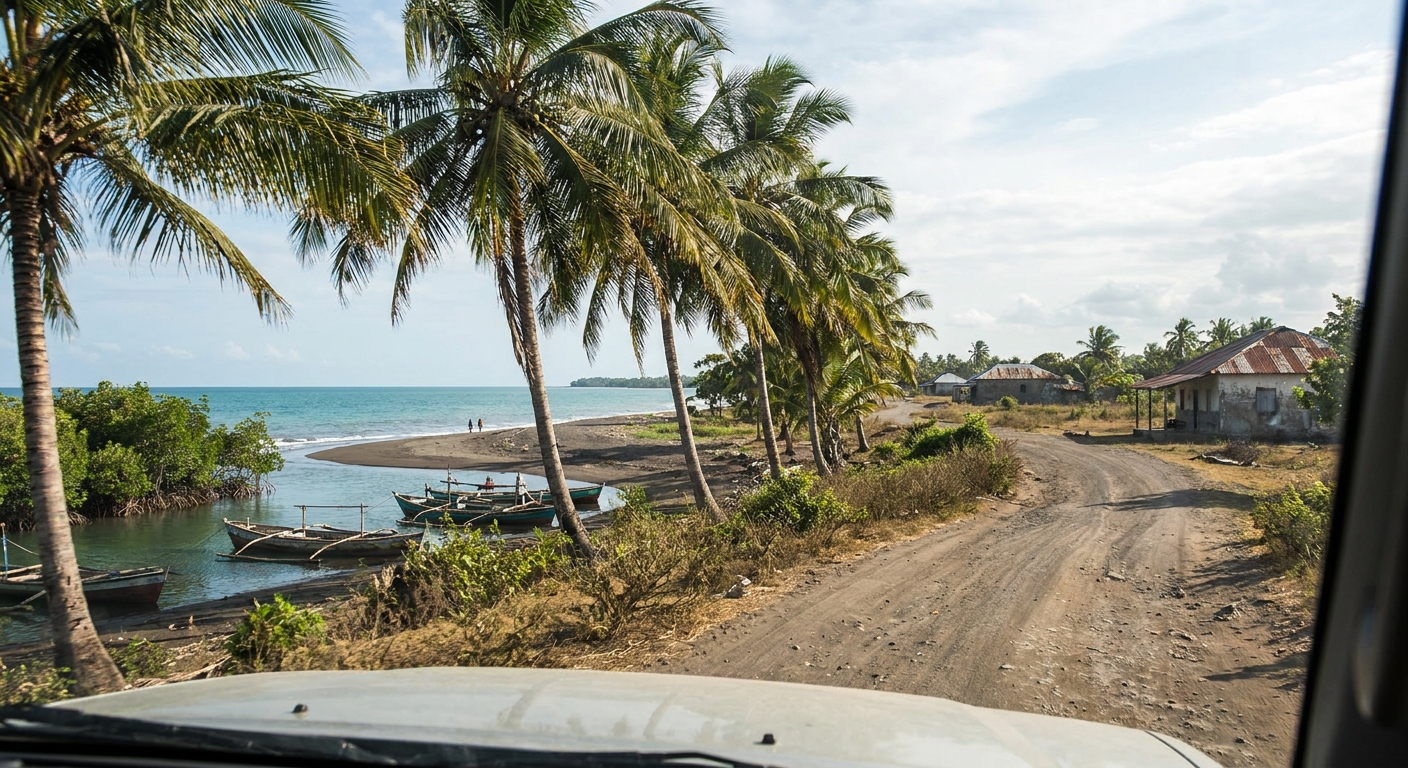
April is the month when the inland days still work. With 3.23 inches of rain against May’s 7.60, and nine wet days against 17.4, a morning at Dunn’s River Falls or a walk in the Blue Mountains is a fair bet rather than a gamble, and the lagoon still gets its dark night at the end of it.
The lagoon itself sits at Falmouth, 18.49°N, about 19 miles east of Montego Bay on the north coast road. We could not verify current boat fares or departure times for any operator on the water, so none appear above, and anyone quoting a fixed price should be quoting a schedule with it. Montego Bay’s own list of half-days is in our Montego Bay guide, and Ocho Rios holds the other end of this coast.
The glow in the water keeps no calendar. The air around it does: 73.6°F at night in April against 72.3°F in March and 75.5°F in May, with the sea at 82.7°F against March’s 81.7°F. Across four weeks that is barely a degree and a half, enough to notice on a wet deck at 9 p.m. and not enough to move a single plan.
We could not verify any free-admission day or resident-rate program for April, so we list none. What costs nothing is the hour before the boats: the Falmouth waterfront at 6:28 p.m. on April 15, light going, hulls still tied up. The island-wide list sits in things to do in Jamaica.
The Luminous Lagoon in April: a two-day itinerary
Day one runs early and ends late. Sunrise at 5:52 a.m. buys a cool beach or a Falmouth market hour before nine. Keep noon to 3 p.m. under a roof or in the water, since the 85.7°F peak lands there. Eat at five, reach the dock by 6:15, and let the 6:28 p.m. sunset do the waiting. Back on land before nine, into 73-degree air, with that long sleeve finally earning its place in the bag.
Day two goes inland: the falls, a river, or the road east, all of it finished by mid-afternoon so the evening stays free. If the sky turns, and roughly one day in three brings measurable rain, move the morning to Montego Bay indoors and keep the evening plan untouched, because the boat only needs darkness. Our seven-day itinerary hangs the rest of the week off these two days.
The Luminous Lagoon in April vs March and May
| March | April | May | |
|---|---|---|---|
| Average high | 84.0°F | 85.7°F | 86.4°F |
| Average low | 72.3°F | 73.6°F | 75.5°F |
| Precipitation | 2.27 in | 3.23 in | 7.60 in |
| Days with 0.10 in or more | 6.1 | 9.0 | 17.4 |
| Sea surface (daily maxima) | 81.7°F | 82.7°F | 84.7°F |
March runs cooler and drier: 84.0°F by day, 2.27 inches of rain over 6.1 wet days, a sea at 81.7°F. April adds 1.7 degrees of daytime heat, one degree of water and 0.96 inch of rain. May breaks the pattern with 86.4°F, 7.60 inches, 17.4 days at 0.10 inch or more, and the warmest water of the three at 84.7°F. The air normals share one ERA5 cell and one period across all three columns, while the sea figures come from the marine API on 2015-2024.
Shift four weeks earlier and you trade 1.0°F of sea warmth for three fewer wet days, the better swap for anyone building the trip around beaches and hills. Shift four weeks later and you gain 84.7°F water while inheriting rain on more than half the days. April sits between them, closer to March on rain and closer to May on heat, and March at the lagoon makes the drier case in full.
Is April a good time to visit the Luminous Lagoon?
Yes for most travelers, on the numbers. A dry month at 85.7°F, water at 82.7°F and a boat that leaves once the light has gone is about as easy as this trip gets. No for anyone whose entire reason to fly is the warmest possible sea, and no for anyone who needs a confirmed fare before committing, since we could not verify one.
When the answer tips to no, March is the month to look at rather than the month after. It is drier at 2.27 inches over 6.1 days and a degree cooler by day and by night, which suits a week that pairs the lagoon with hiking or long drives. Skip it if 81.7°F water sounds thin to you, because that degree shows up on a night swim.
April alone holds the overlap: a sea above 82°F with rainfall still under three and a half inches, a combination March cannot match in the water and May cannot match in the sky.
The last word
Book the boat for your first night rather than your last. A full inch of rain in a single day turns up in roughly one April in ten, and only a first-night booking leaves you a spare evening when it does. The rest of the month forgives easily: 12 hours 37 minutes of daylight on the 15th, water that stays nine degrees warmer than the air after dark, and 19 miles of coast road between the lagoon and the airport you fly home from.
Sources & data for this guide
- April air normals (85.7°F / 73.6°F, 3.23 in, 9.0 days at 0.10 in, 0.1 day at 1 in) · Open-Meteo / ECMWF ERA5 reanalysis, 1991-2020, grid cell 18.4936°N 77.6559°W over Falmouth · a model field, not a station reading · checked Sep 21, 2026
- March and May air normals · same ERA5 cell and same 1991-2020 period · checked Sep 21, 2026
- Sea surface 82.7°F in April (81.7°F March, 84.7°F May) · Open-Meteo Marine API, mean of daily maxima 2015-2024 · checked Sep 21, 2026
- Daylight 12 h 37 min, sunrise 5:52 a.m. and sunset 6:28 p.m. on April 15 · sunrise-sunset.org, converted from UTC to Jamaica time (UTC-5, no seasonal change) · checked Sep 21, 2026
- We could not verify boat fares, departure times, operator capacity, occupancy figures or any lodging-tax rate, so no price appears above. Schedules and prices change · confirm with operators when you book.
To plan your stay
- Best Time to Visit the Luminous Lagoon: Rain, Sea Temperature and the Quiet Months
- The Luminous Lagoon in March: Weather, Sea Temperature and Rain Days
- The Luminous Lagoon in May: Weather, Sea Temperature, Rain Days and How It Compares to April and June
- The Luminous Lagoon in February: Weather, Sea Temperature and How It Compares to January