
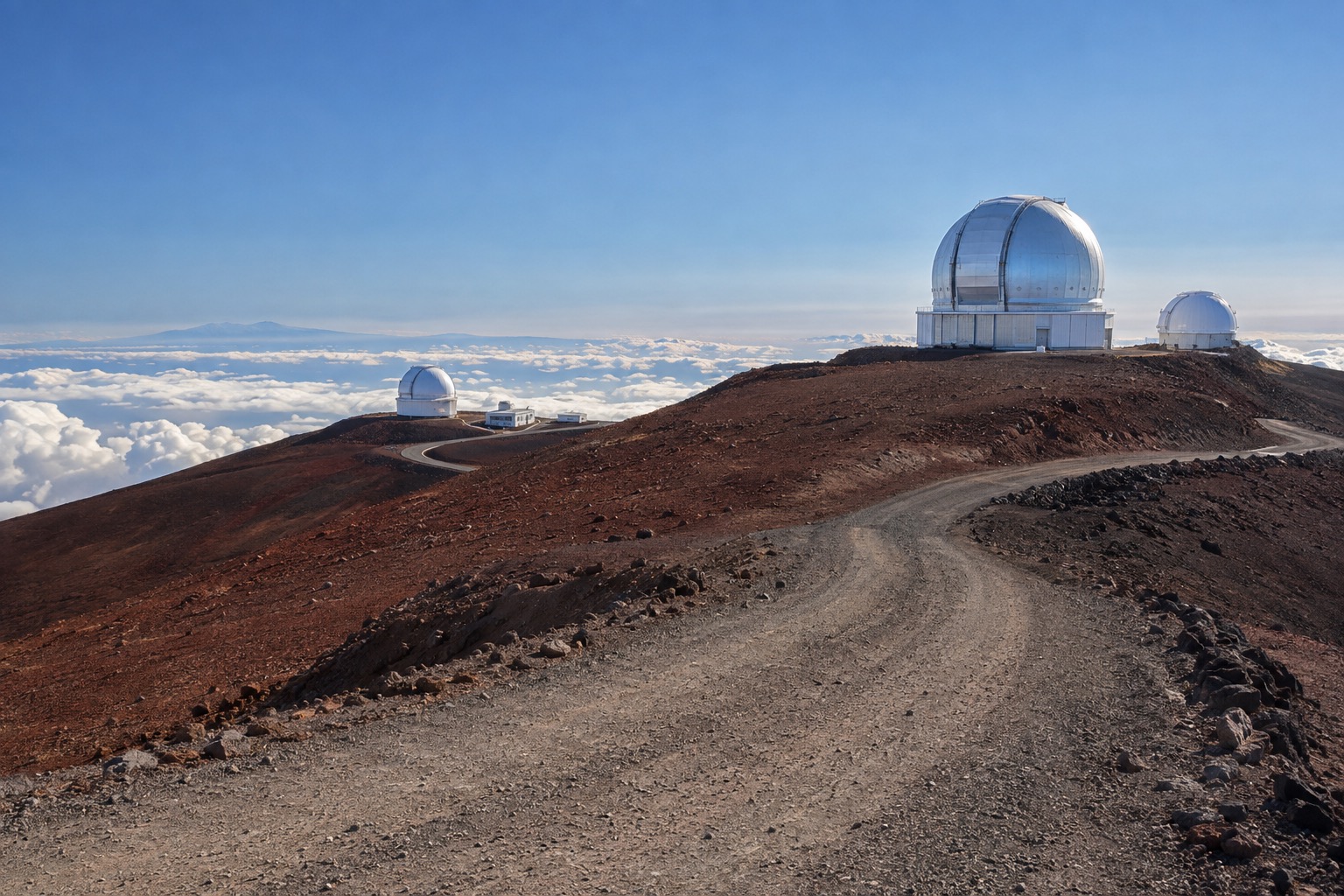
At sunset on Mauna Kea, the clouds spread out far below like a white sea, the white domes of the observatories turn pink, and the air gets sharp enough to make everyone zip up. Down on the Hilo side it may be raining, while on the Kona coast people are still lingering on the beach. The mountain has its own calendar, a warm and nearly snow-free stretch, a winter of wind and occasional snow, and island events that fill the towns at its feet.
When is the best time to visit Mauna Kea?
Late spring through September is the best window for most visitors, when the summit is at its mildest and snow is least likely. The stars are still brilliant in every other month, but winter brings colder, windier days and a real chance of snow on the road.
For sightseeing and stargazing, the warm months give you the easiest mountain. The summit is still bitterly cold after dark, but the trade-wind inversion keeps the clouds below you and the sky above stays dry and clear. September is the warmest month up high, and it falls in a quieter stretch of the year, which makes it a favorite for people who plan around the mountain.
For beach days, think about which coast you sleep on. The Kona and Kohala sides are dry and sunny nearly year-round, while Hilo and the windward coast stay green because they are rainy. Plan the beach time on the leeward shore and the summit trip as a separate outing.
Families should know that spring break in March is loud and busy, and it also falls in the months when snow is most frequent on the summit. Because children younger than 13 should not head above the Visitor Information Station whatsoever, families with little ones often pause at that spot, enjoying its vistas and its stargazing, the centerpiece of the trip.
Mauna Kea weather by month
Summit temperatures hover around freezing for much of the year, so the swing between seasons is small but it matters when you are standing in the wind.
| Month | Mean summit air temperature (°F) |
|---|---|
| February | 32.5 |
| September | 40 |
The coldest stretch comes in winter, with February the lowest, while September is the warmest. June runs a little warmer than July and August. Snow falls most often from January through March and rarely in the warm months, and when it does come in summer it seldom stays. Winter is also when the wind swings most from day to day.
Humidity is highest in November and driest in April, so spring skies tend to feel especially crisp. Rain is a coastal story here, with showers on the Hilo side and mostly dry weather on the Kona side, while the summit sits above the clouds whenever the trade winds hold.
When is Mauna Kea cheapest and least crowded?
The quietest times are late April and May, and then September through mid-November. Rooms in Hilo, Waimea and on the Kona coast are easier to find in those weeks, and the Visitor Information Station gets calmer in the afternoons.
The busy weeks are the ones everyone knows. Mainland spring break fills the island in March, Easter week brings crowds to Hilo for the hula festival, summer is the season of family vacations, and Christmas through New Year is the highest of high seasons. At those times, expect peak-season rates and a lot of company at sunset on the mountain.
Which months should you avoid in Mauna Kea?
No month is off limits, but the winter months from December to March call for the most caution on the mountain, and the hurricane season shapes the rest of the year.
The Central Pacific hurricane season runs from June 1 to November 30. Hawaii is rarely hit, but a tropical system can still bring heavy rain and rough surf, so it is smart to stay flexible if you travel then.
On the summit itself, winter is when the wind blows hardest and the snow arrives, and a white-out can turn a clear afternoon into zero visibility in minutes. Snow and ice make the road dangerous, and the Rangers can close the way up.
If the mountain is the point of your trip, a warmer month gives you far better odds. On the coast, winter is the wet season on the Hilo side and brings big surf to north-facing shores, and since conditions change from morning to afternoon, read the posted warnings and the day’s surf and currents before going in the water and swim near a lifeguard only where one is on duty.
Festivals and events in Mauna Kea through the year
Spring: Lei Day, Merrie Monarch and Kamehameha Day
Lei Day on May 1 is a gentle island celebration, with fresh flower leis for sale at market stalls and schools and towns holding their own contests and performances. Kamehameha Day on June 11 is a state holiday, marked with parades and floral decorations in towns across the island, and it is a good moment for a Kona or Kohala drive.
The Merrie Monarch festival in Hilo comes in the week after Easter, and it is the biggest hula competition in the islands. The town fills with dancers, families and chanting, and rooms in Hilo go early. The mountain is usually still cold and sometimes snowy, so many visitors combine it with a sunset stop at the Visitor Information Station.
Fall: Ironman in Kona and clear-sky evenings
In October, Kona turns into the center of the triathlon world when the Ironman World Championship takes over the coast. Cyclists line the highway at dawn, runners fill the oceanfront, and the town buzzes for days. It is a lively time to be on the leeward side, and a hotel booked late will be hard to find.
The mountain itself is quiet in fall. September is the warmest month on the summit, and the skies are often clear and starry. Between the race week and the winter holidays, the island has a calmer stretch that suits anyone who wants a quieter sunset on the mountain.
Winter: snow on the summit and the holiday season
From December through March, the summit can turn white, and locals will often look up at the snowcapped peak from Hilo or Waimea. It is a striking sight, and for many it is the reason to visit in winter. The mountain is sacred in Hawaiian tradition, and the same respect applies to snow, so stay on the marked areas.
Christmas and New Year fill the island with mainland families and holiday lights in Hilo and Kailua-Kona. Big winter surf rolls onto the north shores of the island chain, and the Honolulu Marathon draws runners to Oahu in December. On the Big Island, the pace is slower, so winter days often mean a morning on the coast and an afternoon looking up at the snow.
Sources
- Center for Maunakea Stewardship (University of Hawaii), « Important Things to Know », hilo.hawaii.edu/maunakea/visitor-information, checked September 25, 2026
- Center for Maunakea Stewardship, « Visiting Maunakea Safely and Responsibly », hilo.hawaii.edu/maunakea/visitor-information/public-safety, checked September 25, 2026
- Center for Maunakea Stewardship, public-safety and « Important Things to Know », checked September 25, 2026
- Center for Maunakea Stewardship, public-safety and visitor information pages, checked September 25, 2026
- Center for Maunakea Stewardship, « Important Things to Know », checked September 25, 2026
- Center for Maunakea Stewardship, visitor information, checked September 25, 2026
- Center for Maunakea Stewardship, « Geology and Climate », hilo.hawaii.edu/maunakea/environment/geology-climate, checked September 25, 2026
- Maunakea Weather Center, « Climatological analysis of meteorological observations at the summit of Mauna Kea » (2006), mkwc.ifa.hawaii.edu/guide/presentations/climate/MKclimatology.pdf, checked September 25, 2026
- Maunakea Weather Center, MKclimatology.pdf (2006), checked September 25, 2026
- NWS Honolulu / Central Pacific Hurricane Center, « 2026 Central Pacific Hurricane Season Outlook », weather.gov/hfo/hurricaneOutlook2026, checked September 24, 2026