
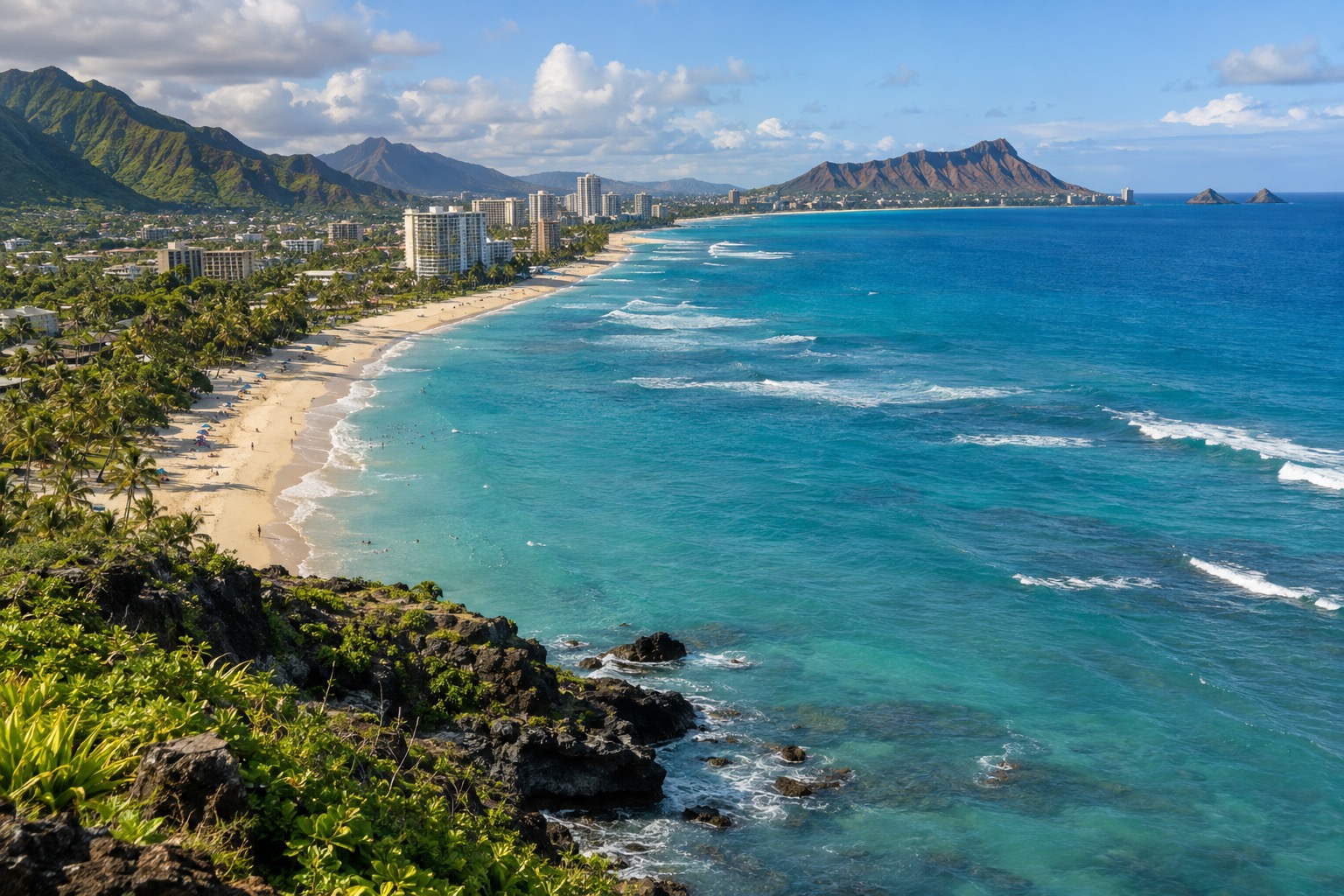
On a January morning in Kailua, the trade winds rattle the ironwood trees along the beach, a few kayakers push off toward the twin islets, and the smell of coffee and malasadas drifts out of the shops on Kailua Road. The sand is quiet, the light is soft and golden, and a passing shower often leaves a rainbow over the bay. This is a month for a relaxed windward-side beach town on Oahu, for travelers who like to swim, paddle and wander without a schedule.
What is the weather like in Kailua in January?
January in Kailua is mild and breezy, warm enough for the beach by day and cool enough for a light layer at night, with showers that blow through quickly.
| Month | Average high (°F) | Average low (°F) | Rain days | Sea (°F) |
|---|---|---|---|---|
| December | 78.9 | 68.6 | 9.3 | 77.8 |
| January | 78.4 | 66.3 | 8.1 | 77.0 |
| February | 77.9 | 66.5 | 6.8 | 75.5 |
Kailua sits on the windward side of Oahu, so the trade winds carry clouds in from the ocean and drop them in short, passing showers. They tend to come in the early morning or in the evening and move on quickly, and a gray hour is often followed by sun. Few days are soaked all the way through, and the rain rarely lasts long enough to cancel a plan.
Mornings feel fresh and a little cool, which suits a walk on the sand or a paddle before the wind picks up. Afternoons are comfortable in a T-shirt and shorts, and the breeze keeps the sun from feeling heavy. Evenings call for a light sweater or a thin rain jacket, especially if you eat outside.
Daylight lasts a little over eleven hours, so the sun goes down in the early evening and dinner plans start earlier than in summer. The low winter sun gives the bay a soft, golden color in the late afternoon, and photographers like that hour.
Can you swim in Kailua in January?
Yes, the sea is warm enough for a comfortable swim, though it is a touch cooler than in summer, and some people will want to keep a rash guard on for a long time in the water.
Kailua Beach is a broad, gently sloping stretch of white sand, and it is usually a favorite for swimmers, kayakers, windsurfers and kitesurfers. The trade winds are steady in winter, so the surface is often choppy, which suits wind sports more than quiet floating. Waves vary from day to day. Neighboring Lanikai is a narrow strand with a reef-protected look and fine views of the islets, and it tends to be popular for a calm-looking dip, but conditions still change, so look before you go in.
Winter swells can bring bigger surf to the northern and eastern shores of Oahu, and rip currents can form even on a pretty day. Check the beach signs and the flags, talk to the lifeguard where one is posted, and keep children close. Bring a snorkel mask if you like, but expect visibility to depend on the wind and the swell. Wear a rash guard or a light shirt, because the sun is still strong.
What to do in Kailua in January
January is a quiet, local-feeling month in Kailua. There is no single big festival to plan around, so the pleasure is in the rhythm of the town: coffee at the farmers market, long hours on the sand, and sunsets that come early. Winter is also humpback whale season around Hawaii, and you may spot spouts or breaches from a high lookout or a boat when the sea is clear, though sightings are never certain.
The cooler, breezier weather is good for moving around. It suits hiking, paddling and walking through town better than lying flat in the sun for hours. Showers are short, so it helps to keep a plan flexible and take advantage of the dry windows.
Kailua Beach and the twin islets
The beach is the center of life here. A long arc of soft sand runs beside a shallow, clear bay, with ironwood trees behind it for shade and picnic tables at the park. Locals come early to walk dogs, run, or launch paddleboards, and by mid-morning families spread out towels.
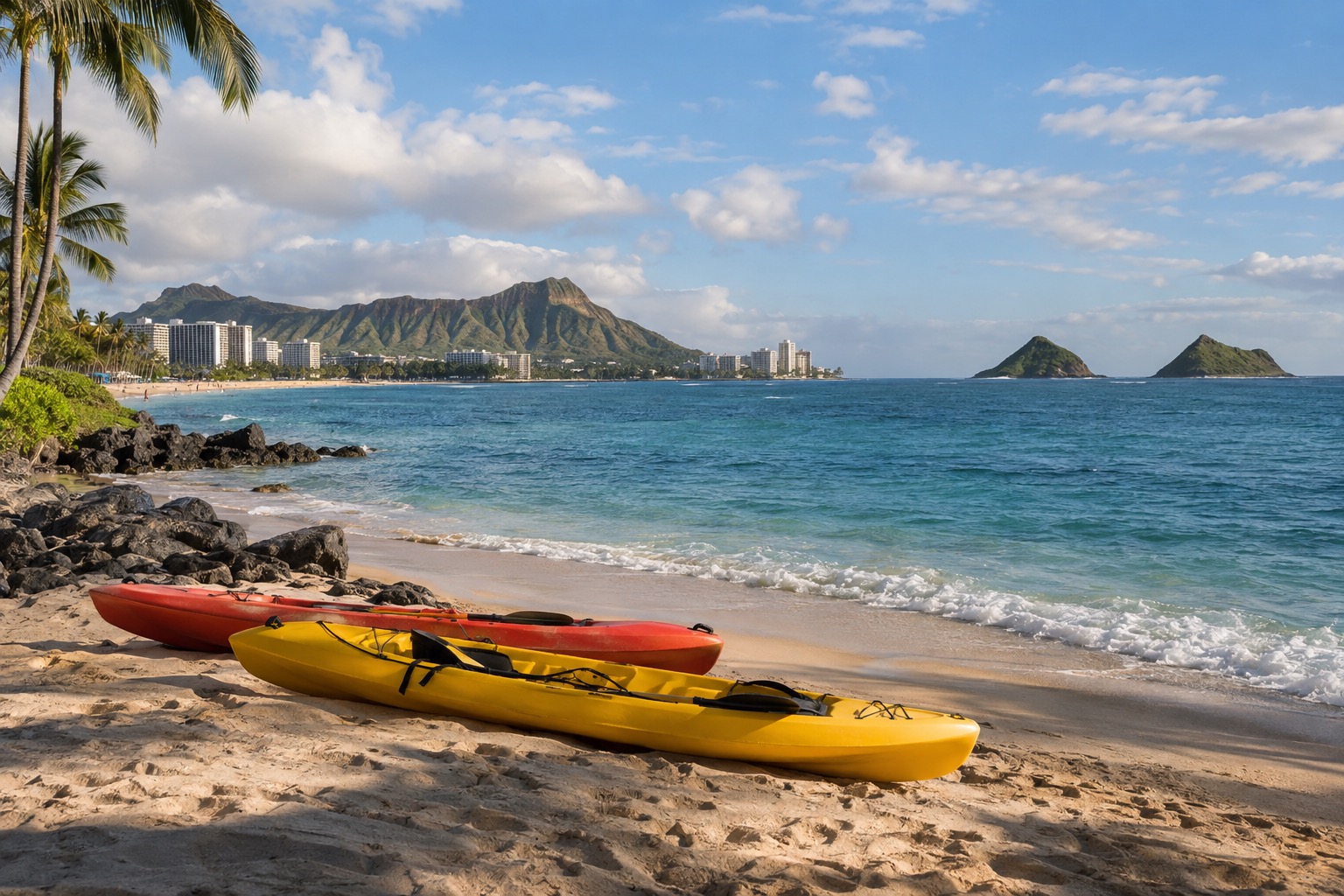
Kayaking to the Mokulua islets is the classic outing, using a rented kayak or a guided trip from town. The paddle takes a good part of a morning, and the wind and swell decide how comfortable it is. Landing on the islets is a matter of rules and bird nesting, so ask the outfitter what is allowed and stay offshore if told to.
Go early, when the wind is lighter and the water is smoother, and save the afternoon for the shade. Pack water, sun protection and a dry bag for your phone. The parking lots near the beach fill fast on sunny weekends.
Lanikai and the shoreline walk
Lanikai is the quiet neighbor to the south, a residential strip with a pale beach that looks out at the islets. Sunrise is the moment here, when the sky turns pink behind the islands and a few walkers and photographers line the sand. Access is through narrow public paths between homes, and parking in the neighborhood is tight, so many people arrive on foot or by bike from Kailua.
The neighborhood is quiet and people live here, so keep your voice down, stay on the public paths and take your trash with you. In January the morning air is cool, which makes the walk along the shore pleasant, and the soft light is lovely for photos. A short stroll is all you need, and then you can head back for breakfast in town.
Kailua town: markets, shops and shave ice
Kailua town is relaxed and walkable, with surf shops, small boutiques, bakeries and cafés. Local bakeries fill the morning with malasadas and fresh bread, and plate lunches and poke bowls keep things easy at midday. A cold shave ice is a perfect afternoon reward after a salty morning, even in the cooler month.
The farmers market is a good place to taste the winter produce, pick up fruit for the beach and chat with growers. Browse the shops in the afternoon, and when the breeze turns cool, settle into a café or a casual restaurant for dinner. Rainy spells are a good excuse to wander through the bookstores and craft shops.
Hikes and lookouts nearby
The Koolau mountains rise right behind Kailua, and the green, misty ridges are at their lushest in the wetter months. Trails in the area climb to views over the bay and the coast, though they can be muddy and slippery after showers. Start early, wear shoes with grip, and turn around if the clouds close in.
From the higher viewpoints you can sometimes watch for whale spouts out at sea in winter. Bring water and a rain layer, and be respectful of the land, which is important to Native Hawaiians. Stay on the marked path and do not climb on any stone structures you may see.
A two-day itinerary for Kailua in January
Day 1 starts early, with sunrise at Lanikai when the light is soft and the air is cool. Walk the shore, then return to town for coffee and a pastry. By mid-morning, rent a kayak or a paddleboard at Kailua Beach and head out while the wind is still gentle.
Have a casual lunch at a poke or plate lunch spot, then spend the afternoon on the sand with a swim between showers if clouds pass. Sunset comes early, so by late afternoon the light turns golden. Dinner in town at a relaxed restaurant fits the evening, and a light sweater is useful once the breeze picks up.
Day 2 begins with a morning hike in the hills behind town, when the air is coolest and the trails are quietest. Come down for brunch and a visit to the farmers market if it is running that day. Spend the afternoon browsing the shops and cafés, with a stop for shave ice.
If the weather turns, spend the rain hours in bookstores, galleries and cafés, and come back to the beach when the sun returns. Finish with a sunset walk along the shore, and dinner at a restaurant with an early table, since the day ends sooner in winter.
Is Kailua busy in January?
Kailua is moderately busy in early January, then calmer as the holiday weeks end.
The first days of the month still carry the winter holiday crowd, with families on the beach and rental homes full. After that, the town settles into a quieter rhythm, with more room on the sand and easier tables at restaurants. Weekends remain livelier, since Oahu residents also come to the beach.
Rental homes and rental cars are the first things to go, so book early for the holiday weeks and a little later for the quiet weeks that follow. Popular restaurants fill on weekend evenings, so reserve a table if you have a favorite. Parking near the beach is the real bottleneck, so arrive early or walk or bike in from town.
Kayak and paddleboard rentals are easier to find on weekdays, and a guided trip to the islets is better arranged the day before. Whale-watching boats leave from other parts of the island, so allow time for a drive if that is on your list.
What to pack for Kailua in January
Pack for warm days, cool evenings and short showers, with beach gear that works in a breeze.
- A light rain jacket, since showers blow through quickly.
- A sweater or thin fleece for breezy evenings.
- A rash guard, to stay comfortable in the slightly cooler sea and to cover from the sun.
- Shoes with grip for muddy hillside trails.
- Mineral sunscreen and a hat, because the winter sun is still strong.
- A dry bag for phones and cameras on the kayak.
Good to know before you go
January falls outside the official hurricane season, which runs from June 1 to November 30. The month is a good time for the beach, though winter swells can raise the surf on exposed shores, so check conditions each day. Parking and rental cars are worth sorting out early, and a car makes it easier to reach trailheads and other parts of Oahu.
| Fee | Amount | Who pays |
|---|---|---|
| State transient accommodations tax | 11% | Guests staying in Kailua lodging |
| Oahu county tax | 3% | Guests staying in Kailua lodging |
Kailua in January vs December and February
Moving the trip to December brings a slightly warmer sea and a bit more rain, along with the full holiday crowd. Rooms and rental cars are harder to find, and the town feels busier and more festive. Choose December if you want the holiday atmosphere and do not mind planning early.
February is a little drier and the sea is a touch cooler. Winter whale watching continues, and the crowds are usually lighter than at the holidays, though a long weekend can fill the beach. If you like a quieter town and fewer showers, February is a good choice.
January sits between the two. It is calmer than December, a bit warmer in the sea than February, and still has some showers to keep the hills green. Pick January if you want a relaxed week after the holidays, and shift to December for festivities or February for drier skies.
Is January a good time to visit Kailua?
Yes, January is a good time for travelers who like a quiet beach town, mild weather and outdoor activities, and less so for anyone who wants guaranteed sunshine and flat, glassy water every day.
It suits paddlers, walkers, families who like a slow pace and anyone who enjoys a beach without the summer crowds. Travelers who need hot, dry days all week, or who want a lively nightlife scene, may prefer another month or a leeward resort area.
On arrival, get your rental car or bike sorted, take a first walk on Kailua Beach and book a kayak or paddleboard for a calm morning. What makes January special in Kailua is the soft winter light on the bay, the passing showers that leave rainbows over the islets, and a beach town that feels like itself, with room to wander and time to linger over a shave ice.
Sources
- NOAA NCEI, monthly normals 1991-2020, station USC00513117, checked September 8, 2026
- Open-Meteo Marine API, average 2015-2024, checked September 8, 2026
- sunrise-sunset.org, sunrise and sunset calculated for the 15th of the month, checked September 8, 2026
- NWS Honolulu (HFO), Climate of Hawaii
- Hawaii Department of Taxation, Announcement 2025-03 ; City and County of Honolulu, OTAT FAQ, checked September 25, 2026
- NWS Honolulu / Central Pacific Hurricane Center, « 2026 Central Pacific Hurricane Season Outlook », weather.gov/hfo/hurricaneOutlook2026, checked September 24, 2026