
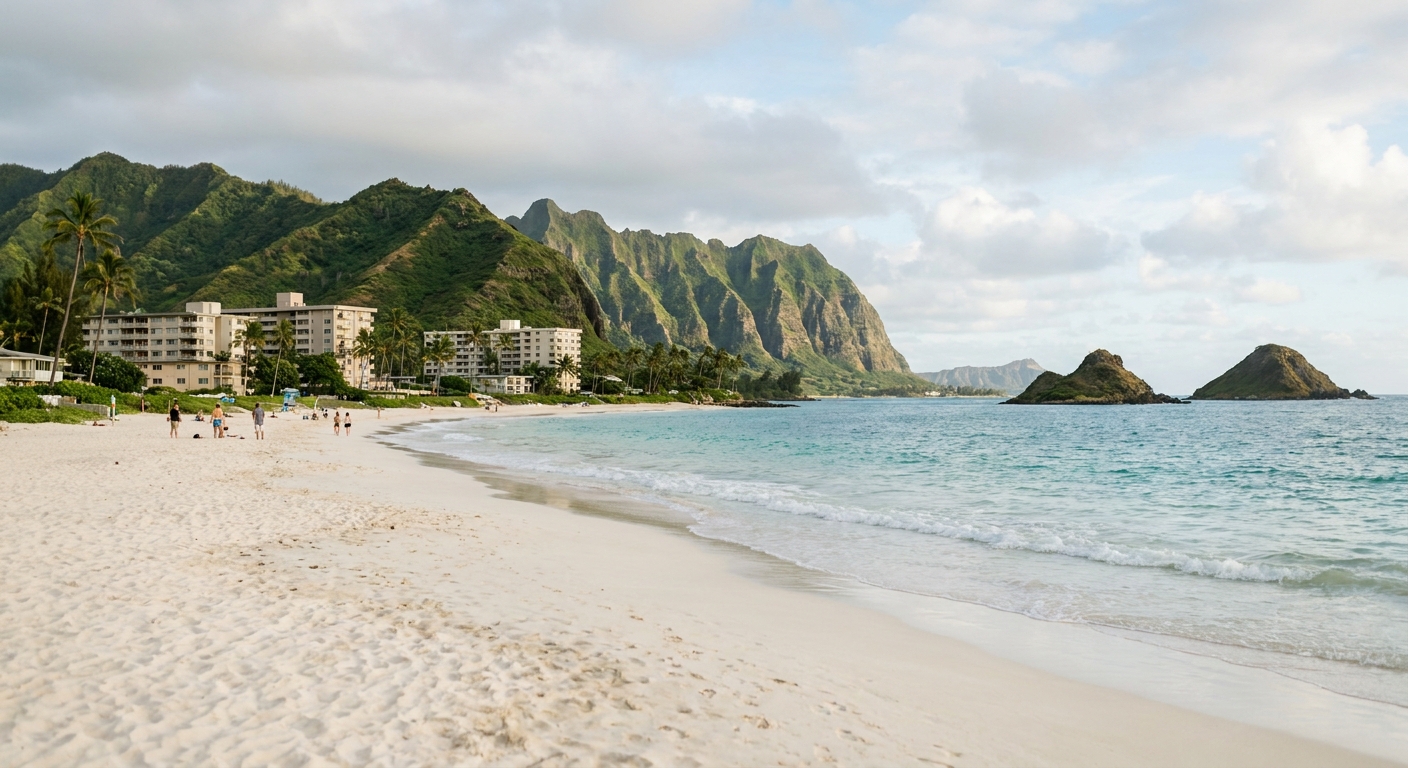
On a calm morning in Kailua, kayakers push off from the sand toward the two Mokulua islets while the trade winds rattle the ironwoods and the first windsurfers rig up on the bay. The year here swings gently between a hotter, drier summer and a cooler winter with more showers rolling over the Koolau mountains. Kailua is a beach town on Oahu’s windward coast, and nearly every month rewards a visit in a different way.
When is the best time to visit Kailua?
The sweet spot is late spring and early fall, roughly May to June and September to October, when the days are warm, showers are brief and the water is at its friendliest. Winter is lovely too, just a little greener and cloudier, and it suits travelers who care more about hiking and quiet mornings than about a long beach day.
For the beach and the sea, summer into early fall is the pick. Kailua Beach is long and soft, a base for kayaking and windsurfing, and the water is warmest from August through October. Lanikai, just south along the same bay, is a narrow strip reached by public paths between houses, and it is pretty at sunrise whatever the month.
For sightseeing, the cooler months are kind. The botanical gardens, the Pali Lookout and the film-location tours at Kualoa Ranch are all easier when the sun is softer, though a poncho in the bag helps on the wet side of the island. Budget travelers and anyone who likes elbow room should aim for the shoulder weeks of late April, May, early June and the autumn months before the holidays.
Families should know that spring break in March is loud and full, with the beach crowded by midday and parking at a premium. Summer is school vacation, so the sand is busy with local families too, but the long days make it easy to start early and be done before the afternoon crowd.
Kailua weather by month
Kailua stays warm all year, and the real difference between months is how often a shower drifts in off the mountains.
| Month | Average high (°F) | Average low (°F) | Rain (in) | Rain days | Sea (°F) |
|---|---|---|---|---|---|
| January | 78.4 | 66.3 | 4.42 | 8.1 | 77.0 |
| February | 77.9 | 66.5 | 5.45 | 6.8 | 75.5 |
| March | 78.6 | 67.1 | 6.52 | 8.5 | 75.5 |
| April | 79.9 | 68.6 | 3.23 | 6.7 | 76.1 |
| May | 81.8 | 70.3 | 3.26 | 6.5 | 76.6 |
| June | 83.0 | 72.1 | 2.68 | 7.1 | 78.1 |
| July | 83.8 | 73.2 | 2.54 | 7.8 | 79.1 |
| August | 84.3 | 73.9 | 3.15 | 7.5 | 79.4 |
| September | 85.4 | 73.9 | 3.50 | 8.5 | 80.4 |
| October | 84.0 | 72.3 | 4.61 | 8.3 | 80.6 |
| November | 81.2 | 70.9 | 5.97 | 10.2 | 78.9 |
| December | 78.9 | 68.6 | 5.57 | 9.3 | 77.8 |
Summer runs hot and bright, with the trade winds keeping the afternoons comfortable and showers that pass in minutes. From November to March the air is a few degrees cooler and the rain is heavier, with November the wettest stretch and a gray day now and then.
February and April are the driest-feeling of the cooler months. Windward Oahu catches the clouds the trades carry in, so Kailua is greener and a bit wetter than leeward Honolulu on the other side of the mountains.
When is Kailua cheapest and least crowded?
The quietest times are late April through early June and again from September into early November, when the school calendar is back in session and visitors thin out. Rooms and vacation rentals are easier to find then, and the beach has stretches of empty sand even at midday.
The busy weeks are spring break in March, the Easter week when it falls, the summer school vacation from June to mid-August, Thanksgiving week, and the stretch from Christmas through New Year. Holiday weeks bring peak rates and full rentals, and the small beach-access paths and parking near Lanikai fill early.
January and February, once the holiday crowds leave, are calmer than their reputation as high season suggests. The weather is mild, and visitors come mostly for the winter surf on the north shore, not for the windward bay.
Which months should you avoid in Kailua?
No month is a bad one, but the weeks around peak holidays and the wettest months deserve a second thought depending on what you want.
The Central Pacific hurricane season runs from June 1 to November 30. Hawaii is rarely hit, but late summer and early fall are the months to keep an eye on the forecast, and flexible bookings make sense for those dates. Outside that window, from December through May, the tropical-system question simply drops away.
November is the rainiest month in the table, with showers on most days and some gray stretches, and December and January are not far behind. They are still pleasant for walking, gardens and a lunch in town, but a beach-only trip may feel less sunny. The hottest weather arrives in September and October, when humidity rises and midday sun is strong, so shade and early starts matter.
Winter also brings big surf to the north and west shores of the island. Kailua’s bay is on the east side and usually feels it less, but the beach flags and lifeguard signs decide what is wise on any given day.
When can you swim in Kailua?
Swimming is comfortable all year, since the sea never drops into truly cold territory, and it is warmest from August to October.
From February to April the water is at its coolest, still fine for a dip but refreshing for a long soak. By summer it feels like bathwater compared with the winter months, and in early fall it is the warmest of the year. Trade winds can make the bay choppy, which is exactly why windsurfers and kayakers love it.
Conditions change with wind and swell, so how the water looks on the day matters more than the calendar. Check the signs and lifeguard guidance before heading in. Near the Mokulua islets, visitors need to stay beneath the high-water mark and stay away from nesting seabirds, and the islets are off-limits from sunset to sunrise. Give Hawaiian monk seals at least 50 feet and sea turtles 10 feet.
Festivals and events in Kailua through the year
Winter holidays and island celebrations
December in Kailua is low-key and warm. Houses string lights on palm trees, the farmers’ market and small shops fill with local crafts, and families gather on the beach on Christmas Day for picnics and a swim. New Year’s Eve is celebrated with fireworks across Oahu, and the sound carries over the bay.
Winter is also when big-wave surfing season starts on the North Shore, a drive over the island from Kailua. Humpback whales pass through the Hawaiian waters in the cooler months, and calm days can bring a spout offshore if you are watching. It is a good time for travelers who like to mix beach mornings with day trips.
Spring: Lei Day and Easter week
May 1 is Lei Day, and across Oahu schools, parks and community groups celebrate with lei-making, hula and music. In Kailua you will see fresh flower lei at local gatherings and market stalls, and it is a pleasant day to be on the island even if you are not at an official event.
Easter week and spring break bring more families to the beach, and the Merrie Monarch hula festival in Hilo on the Big Island the week after Easter is a draw for hula lovers. Kailua itself stays easygoing, with the greenest hills and the clearest mornings of the year.
Summer and fall: Kamehameha Day and the ocean season
June 11 is Kamehameha Day, a state holiday marked with parades, flower lei draped over statues and hula performances. Summer afternoons in Kailua are for paddling out to the Mokulua islets, windsurfing in the trades and long evenings on the sand.
In October, the Ironman World Championship is held in Kona on the Big Island, and Oahu enjoys the warmest water of the year. Autumn is a good time to visit for travelers who want the sea at its softest and thinner crowds before the holidays arrive.
Sources
- NOAA NCEI, monthly normals 1991-2020, station USC00513117, checked September 8, 2026
- Open-Meteo Marine API, average 2015-2024, checked September 8, 2026
- sunrise-sunset.org, sunrise and sunset calculated for the 15th of the month, checked September 8, 2026
- Hawaii DLNR, Division of Forestry and Wildlife, Oahu Offshore Islet Seabird Sanctuaries (dlnr.hawaii.gov/wildlife/sanctuaries/oahuoffshoreislets), checked September 25, 2026
- U.S. Fish & Wildlife Service, « United States Celebrates World Wetlands Day », February 2005 (fws.gov/story/2005-02) ; Ramsar site 1460, checked September 25, 2026
- Hawaii Tourism Authority, Go Hawaii, Windward Coast Oahu (gohawaii.com/islands/oahu/regions/windward-coast), checked September 25, 2026
- HVCB, map Driving Times from Waikiki (gohawaii.com, edition 2010), checked September 25, 2026
- NWS Honolulu (HFO), Climate of Hawaii
- NOAA Fisheries, Viewing Marine Wildlife in Hawaii, checked September 25, 2026
- Hawaii Department of Taxation, Announcement 2025-03 ; City and County of Honolulu, OTAT FAQ, checked September 25, 2026
- TheBus, fares effective January 7, 2024, checked September 25, 2026
- NWS Honolulu / Central Pacific Hurricane Center, « 2026 Central Pacific Hurricane Season Outlook », weather.gov/hfo/hurricaneOutlook2026, checked September 24, 2026