
Kalamata sits at the head of the Messinian Gulf, with the bulk of Mount Taygetus behind it and silver-green olive groves running down to the water. It's a working city of about 50,000 people, the second largest in the Peloponnese, with cafés, markets, nightlife and a long serviced beach along the seafront. That combination lets you see a castle and a museum in the morning, swim in the afternoon and still fit in an olive oil tasting before dinner.
Where should you stay in Kalamata?
Kalamata works as two halves. One is the Old Town and the central district, climbing toward the castle. The other is the beach and the marina. Between them lies a broad band of low, pleasant, unremarkable houses, and walking from the old center to the sea takes about 30 minutes. Base yourself in the half where you'll spend most of your time. Kalamata has a wide range of places to stay, including hotels, resorts, villas, boutique properties and plenty of vacation rentals.
The seafront and the marina
Stay here for a beach holiday. Breakfast comes at a beachfront café with the blue sea in front of you, and the promenade is right outside the door. Pharae Palace Hotel stands at the start of the east beach on Navarinou Avenue, close to plenty of tavernas, souvlaki houses and bars. Ostria offers inexpensive rooms facing a stretch of the east beach sheltered by the city's sea wall, and its café opens straight onto the sand. Locals stop in there for coffee after an early swim.
Horizon Blu is a locally owned boutique five-star hotel at the quieter end of the beach, a good pick if you want a resort feel. It has loungers with waiter service on the sand, a pool, a spa, some suites with private pools, and free on-site parking, a luxury in Kalamata. Elite City Resort, a modern beachfront hotel, has a breakfast room with beach views and its own sunbed area. Grecotel Filoxenia occupies the far end of the east beach, with its own beach club, a pool and substantial parking. A city bus runs along the seafront into the main square, so you're not stranded out there.
The Grand Hotel stands near the western end of the port, surrounded by cafés and bars that set tables out facing the sea. Vista Marina sits a block behind the marina, and breakfast comes with the room rate, which is very reasonable.
Central Square and the Old Town
Stay here if you like evenings on foot. Kalamata Art Rooms overlook Central Square, with its café terraces on the doorstep. IRA Hotel, just east of the square, has modern rooms and, for a little extra, a small sauna and jacuzzi. Both are close to Aristomenous, the main shopping street.
The Old Town's streets are mostly pedestrian, lined with old-fashioned shops selling local products by day. At night much of the city's nightlife happens here, in bars such as Kyttaro, known for its whisky collection, and in busy tavernas. The castle, the churches and the museums are all within walking distance.
What are the best things to do in Kalamata?
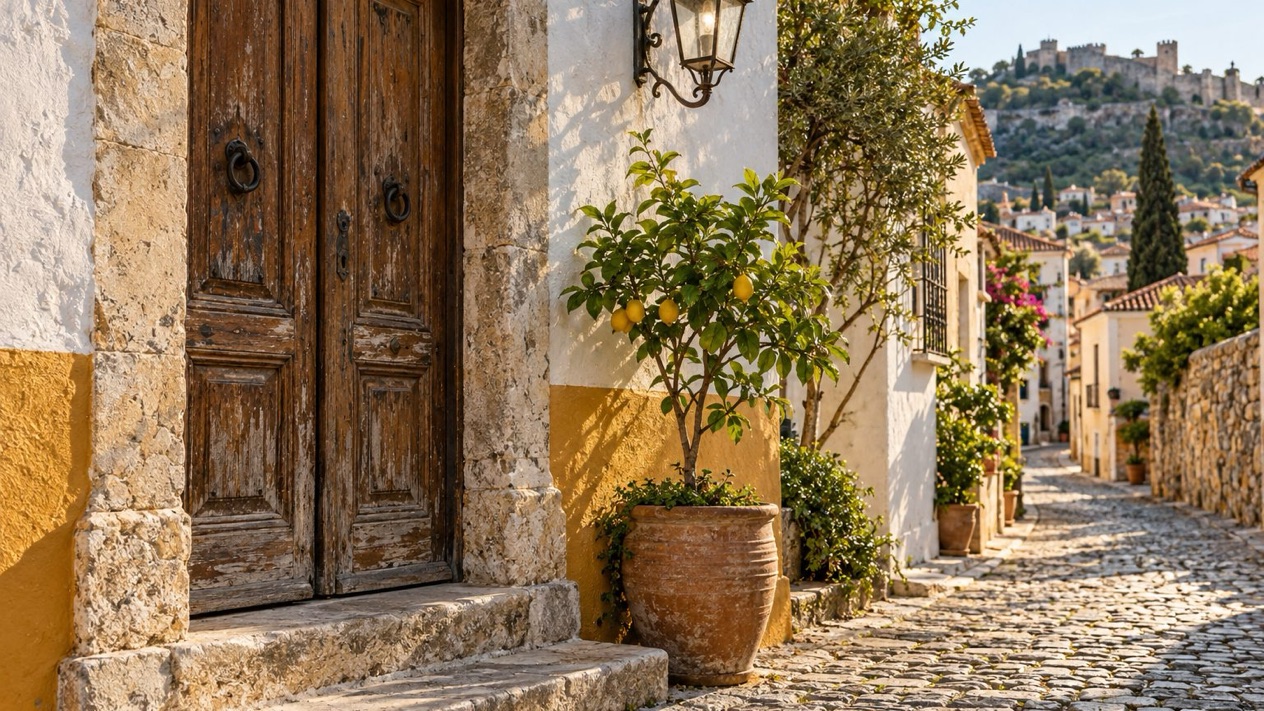
The Old Town rises gently toward the castle hill, and its cobbled streets are busy with cafés, souvlaki grills and small tavernas. The Church of the Holy Apostles anchors the area, and it goes back to the middle Byzantine period. Its stone Byzantine core gained later additions with Venetian touches, and in 1821 the revolution against Ottoman rule was declared here, making Kalamata the first city liberated in the Greek War of Independence. The church stands on 23rd of March Square, named for that date. The square fills with café tables and is a fine place for a coffee and some people-watching, especially in the evening.
Ypapanti, the Metropolitan church, rises above a large square south of the castle. Its two bell towers frame a church that holds the 7th-century icon of Panagia Ypapanti, the city's protectress, which pilgrims travel from all over Greece to venerate.
The Castle of Kalamata crowns the hill above. It began as a fortress, fell into disrepair, was rebuilt and for a time served as a monastery. Today it's a protected monument with a small park around it. The castle itself needs some repair, while the chapel is in good condition. From the top you see the rooftops, the coastline and the mountains at once, and the edge of the castle grounds gives the widest view. Wear sturdy shoes for the stairs and uneven ground. The castle's open-air theater hosts the Kalamata Dance Festival in July, so an evening visit can double as a night out.
The collection is arranged in four sections, Kalamata, Messene, Trifylia and Pylia, and the objects, from sculptures and pots to mosaics, coins and jewelry, run from the Bronze Age into the Byzantine era. Labels are in Greek and English, and everyday objects such as oil lamps and water jugs make the past feel close. The Historical and Folklore Museum, in an unassuming building, rewards a visit. The ground floor shows rural life through pottery, weaving, embroidery and soap-making.
The central district shows the modern city. Vasileous Georgiou Square, usually called Aristomenous or simply Central Square, is its heartbeat, with concerts and cultural events and pedestrian streets full of shops, cafés and restaurants. Aristomenous Street runs south from the Old Town to the Railway Park, 54 acres of green space with steam trains, old wagons and playgrounds, a good stop with kids.
The Central Farmer's Market runs on Wednesdays and Saturdays from early morning until the afternoon. The front sells clothes, shoes and household goods. Farther in, some 450 vendors offer produce, herbs, spices, honey, bread, nuts, olives and oil, with wild artichokes, giant cabbages and vivid red tomatoes piled high, plus separate sections for meat, fish and cheese. If your stay includes a Wednesday or Saturday, don't miss it.
Tours fill out a stay well. An olive oil tour, the classic outing, visits centuries-old olive trees, shows how the oil is made and ends with plenty of tasting. A food tour packs many local flavors into a short time. A walking tour of the castle and town suits a single free morning. For time on the water, a half-day private yacht cruise or a catamaran trip follows the coast and stops at beaches along the way.
What are the best beaches in Kalamata?
Kalamata Beach (east beach)
The main beach starts on Navarinou Avenue and runs about 1.5 miles (2.5 km), long, wide and serviced, with calm, clear water and Taygetus in the view. Two stretches, Anastasi and the far end of Navarino, have earned Blue Flags for clean water and good facilities. Expect water sports, beach bars, tavernas, ouzo bars and an amusement park, while walkers, cyclists and rollerbladers share the promenade. Seatrac equipment gives people with mobility problems independent access to the sea. The surface is rocky in places, so pack water shoes.
In summer the beach is busy and the nightlife lively. Off season it's a quiet place to stroll without crowds. The stretch around Horizon Blu, with traditional beach restaurants on one side and beach clubs such as Secada and Ego on the other, is where locals flock on weekends and holidays. Farther east of the city, more organized beaches are lined with lively beach bars.
Kordias and the west
About 0.9 miles (1.5 km) west of the port, Kordias is the other organized city beach with seatrac facilities. It has fine pebbles mixed with sand and a wide view across the Messinian Gulf. The western side is also where the marina and the port sit, with cafés and restaurants.
Voidokilia
For a beach day that feels special, head to Voidokilia, the beach stop on many tours from Kalamata. It has soft sand, hiking trails nearby and kayaking.
What should you eat in Kalamata?
Start with the olives. The city gave them its name, and Kalamata olives are a protected product known for their taste and texture, alongside the region's famous olive oil. Hotel breakfasts make a good first taste: Pharae Palace sets out local cheeses, honey and olives, and Horizon Blu adds homemade spinach and cheese pies and stuffed grape leaves.
West of that church, food shops sell sfella, a sharper cousin of feta, along with orange-flavored sausages and smoked pork. Look for diples, a fried pastry so light it vanishes, and lalangia, crunchy fried dough loops shaped like oversized paperclips. Frangeas Bakery is recognizable by the piles of wood outside, and the smell of fresh bread drifting out makes it worth seeking out.
Seafood is the move on the waterfront. To Limeni and Notias are local favorites by the marina, and the Yacht Club, open to all on the coast road, serves fresh fish with good local wine. Kastraki, perched on a cliff above the town, the mountain and the coast, is loveliest at sunset, so reserve ahead. Order the Messinian fried goat cheese, the crayfish bolognese or the zucchini risotto.
In town, Kreopolian sources its steaks from its own butcher shop, and Kardamo, near the old railway station, gives Greek classics a modern twist. Book ahead at both. Niketas, a busy traditional taverna at the south end of the market, can still be serving in the early hours on summer evenings. For quick meals, Ladolemono in the Old Town does traditional plates and burgers, and O Kritikos on Faron Street, near the port, adds Cretan touches. Souvlaki and gyros houses turn out cheap, tasty meals or takeaway. A little outside the city, where the road to Messene branches off, you will find rotisseries known for spit-roasted piglet, a well-loved local dish.
How many days do you need in Kalamata?
Day 1: Old Town and castle
Begin with a coffee on the square and a look inside the church, then wander the cobbled streets to the archaeological museum. After lunch at a souvlaki grill, climb to the castle. End with a sunset dinner at Kastraki or a drink in an Old Town bar.
Day 2: Market, center and beach
On a Wednesday or Saturday, go to the farmer's market early and graze. On other days, spend the morning in the folklore museum. Walk Aristomenous Street to Central Square for lunch, then give the afternoon to the east beach, with a swim and a stroll along Navarinou Avenue. Have seafood at the marina and walk past the boats afterward.
Day 3: Sea and olives
Spend the day on the water with a yacht cruise or catamaran, or on land with an olive oil tour and a food tour. Come back for a late swim and an unhurried dinner at a traditional taverna.
Day 4: Day trip
Voidokilia suits a beach day. Ancient Messene, one of the most impressive archaeological sites in the Peloponnese, is 17 miles (28 km) away, about 35 minutes by road. The Mani Peninsula lies 28 miles (45 km) out, about 45 minutes away.
How do you get to Kalamata and around?
Kalamata International Airport "Captain Vassilis Konstantakopoulos" (KLX) is about 5 miles (8 km) from the center, roughly 10 minutes by car. It's small, with a few shops, a cafeteria and an ATM. Buses and taxis run to the center, and the bus takes about 20 minutes including transfers.
Athens International Airport "Eleftherios Venizelos" is about 143 miles (230 km) away, and a connecting flight to Kalamata takes about an hour. By car, Kalamata is less than three hours from Athens. Travelers landing at Athens or at Thessaloniki, about 311 miles (500 km) away, should allow 3 to 6 hours for the onward trip by road. 2026 prices: the KTEL express bus from Athens costs 24 euro and takes a little under three hours, a bit longer on services with transfers. Buses on these routes make a 15-minute stop at the Tripoli bus station, and KTEL Messinias buses arrive at Kalamata Bus Station, Artemidos 58. Intercity buses also link Kalamata with Sparta and Patra.
In the center, distances are easy on foot. To cover the gap between the old center and the far end of the beach, city buses serve many tourist spots, and taxis are quite affordable within the city. Kalamata also has a bicycle rental system. To explore more of Messinia, rent a car.
What should Americans know before going?
The U.S. State Department says U.S. citizens may enter Greece without a visa for up to 90 days for tourism or business. Your passport should have at least three months of validity beyond your planned departure date, and you may be asked for proof of sufficient funds and a return or onward ticket.
Greece is generally safe, though petty crime such as pickpocketing is common at tourist sites and on public transportation. Strikes and demonstrations can happen with little notice and may disrupt buses, taxis and airports. Tremors occur regularly, and forest fires are common in the dry summer months, occasionally closing roads.
If you drive, Greek law requires a valid U.S. license, and insurance companies may require an international driver’s permit. Greece has one of the highest traffic fatality rates in the European Union, so drive with care, and since thieves break into rental cars looking for passports, valuables and luggage, it is wise to take them with you. Many care providers in Greece accept only cash, and private hospitals usually ask for proof of insurance or cash before admitting a patient.
Travelers in Greece should carry a passport or another photo ID at all times, and on public transportation it pays to have a valid, validated ticket, since riding without one can bring a fine of up to 60 times the basic fare.
Sources
- Visit Greece (GNTO) (https://www.visitgreece.gr/mainland/peloponnese/kalamata), checked October 18, 2026
- shesavesshetravels.com (https://shesavesshetravels.com/travel-destinations/things-to-do-in-kalamata-greece/), checked October 18, 2026
- foodtravelist.com (https://foodtravelist.com/what-to-see-and-do-in-kalamatas-greece/), checked October 18, 2026
- greecetravel.com (https://www.greecetravel.com/peloponnesos/kalamata/index.htm), checked October 18, 2026
- visitpeloponnese.com (https://visitpeloponnese.com/en/prdct/kalamata), checked October 18, 2026
- U.S. Department of State (https://travel.state.gov/content/travel/en/international-travel/International-Travel-Country-Information-Pages/Greece.html), checked October 15, 2026
- ktelmessinias.gr (https://www.ktelmessinias.gr/en/routes/athens/), checked October 15, 2026
- U.S. Department of State (https://travel.state.gov/content/tsg_aem/us/en/home/international-travel/travel-advisories/destination.grc.html), checked October 15, 2026