
SIESTA KEY · FLORIDA · SARASOTA COUNTY
Siesta Key Beach starts with a parking space. The Siesta Key Public Beach and Pavilion has 976 of them, and Visit Sarasota County’s guidance for the January to April peak season is blunt: the lots fill up fast, so arrive as early as possible. Plan the morning backward from that line: leave before breakfast rather than after it.
The rest is why people fly into Sarasota in the first place. The county’s tourism office describes world-famous quartz-crystal sand and soft turquoise waters, and U.S. News & World Report named Siesta Beach the Best Beach in the U.S. for 2026. One correction before you set a GPS: Crescent Beach and Turtle Beach are separate beaches on the same island, not other names for this one.
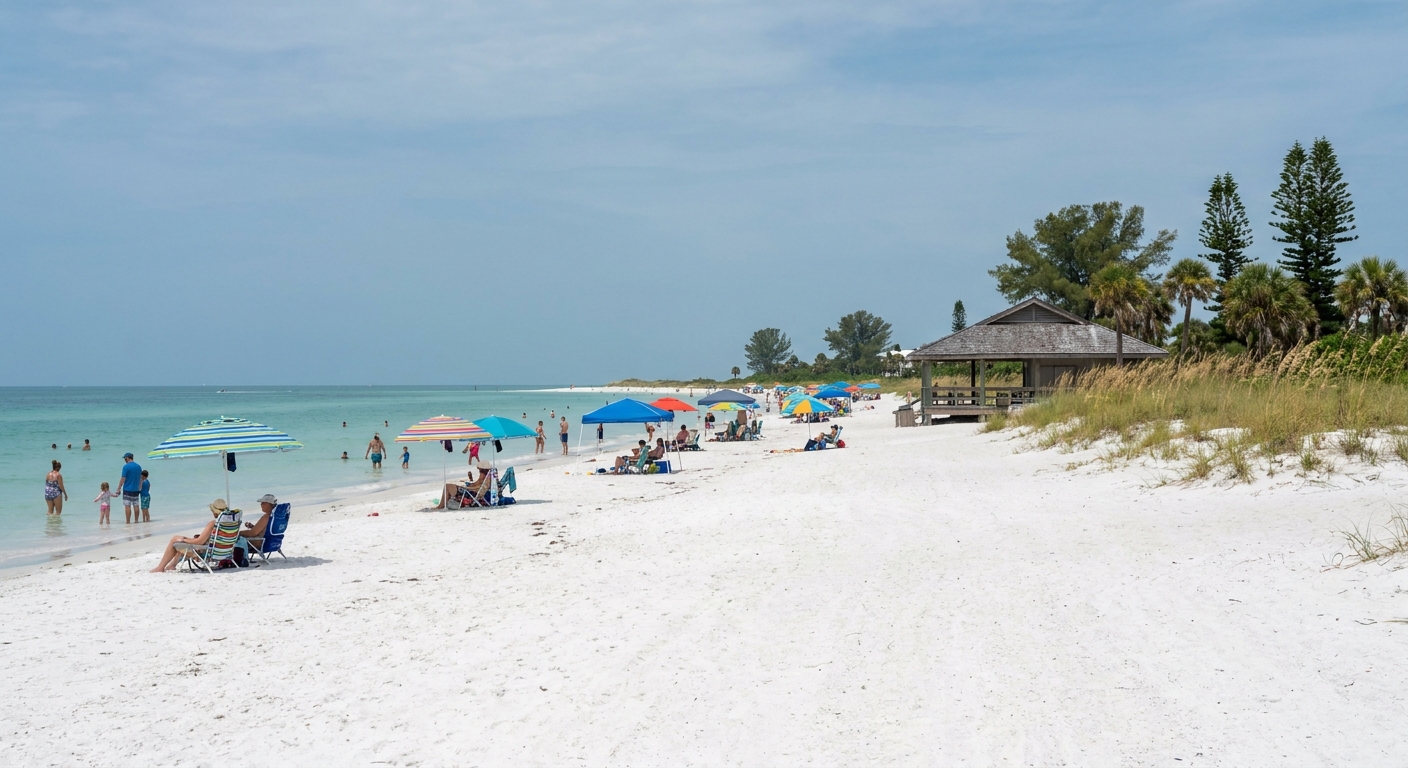
SIESTA BEACH · THE ESSENTIALS
Get to the 976-space public lot early in the January to April peak, or leave the car where you sleep and ride the free 77 Islander Siesta trolley.
976 SPACES · PEAK SEASON JANUARY TO APRIL · FREE TROLLEY DAILY
Go for: quartz-crystal sand that stays cool underfoot at midday, and one public beach where the parking, the pavilion and the water share an address.
Think twice before: driving up mid-morning between January and April, and before trusting a numbered access: several have no parking at all.
Parking and trolleys: Visit Sarasota County · Accesses: Sarasota County · Hurricane dates: NOAA · full sources at the end
On this page
- Siesta Key Beach parking976 spaces, and what to do when they’re full
- Getting to the beach without parking a carThe free 77 Islander Siesta trolley
- Siesta Beach vs Crescent Beach vs Turtle BeachThree separate beaches, one island
- Which beach accesses have no parkingAccess 2, 3, 10 and 13
- Best time to visit Siesta Key BeachPeak season and hurricane dates
- Is it really the best beach in the U.S.?U.S. News & World Report, 2026
- Is the sand really that white?Sand and water quality
- Which numbered access has parkingFacilities and accesses
Load the car the night before. In peak season the difference between a space and a slow lap around the lot is a few minutes, and the free trolley only starts its half-hourly run at 8 a.m., so an early arrival has to be an actual departure, not an intention.
Parking at Siesta Key Beach: 976 spaces, and what to do when they’re full
The count is 976, and it is not enough in March. The Siesta Key Public Beach and Pavilion carries that count, and
Visit Sarasota County states plainly that the lots fill up fast during peak times and peak season, January to April. For a family morning in March, the practical translation is simple: cooler, chairs and sunscreen go in the trunk the night before, and the car pulls out before anyone has eaten.
When the lot is full, your options are not equal. Driving off the key and coming back later means a second run through the same island traffic.
Waiting for a departing car pays off better in mid-afternoon than at 11 a.m. The cleaner answer is to not bring the car at all, and that is exactly what the free trolley exists for. For the longer driving day into Sarasota, our Florida road trip guide handles the longer driving day.
The free Siesta Key trolley: the 77 Islander and the BayRunner to Lido Key
The 77 Islander Siesta trolley is free, runs daily, and comes roughly every 30 minutes from 8 to 10 a.m., per Visit Sarasota County.
Park once where you are staying and let it handle the beach run. The BayRunner trolley to Lido Key is also free, every 20 to 30 minutes from 8 a.m. to noon. Neither charges a fare, so the parking problem disappears for a whole household.
Siesta Beach sand and water quality: the 2026 U.S. News ranking
Visit Sarasota County calls it world-famous quartz-crystal sand with soft turquoise waters.
What a first-time visitor notices is temperature: the sand stays cool enough to cross barefoot at midday, when other Gulf beaches turn the walk to the water into a sprint. It is also pale to the point of glare, so the sunglasses matter on the way down, not only in the water.
The ranking everyone quotes comes with a year and an author. U.S. News & World Report named Siesta Beach the Best Beach in the U.S. for 2026, and that award sits squarely inside the January to April crowd window.
You will also find a quartz purity percentage repeated across the internet. We don’t print one, because no official Sarasota County page we could cite carries that figure.
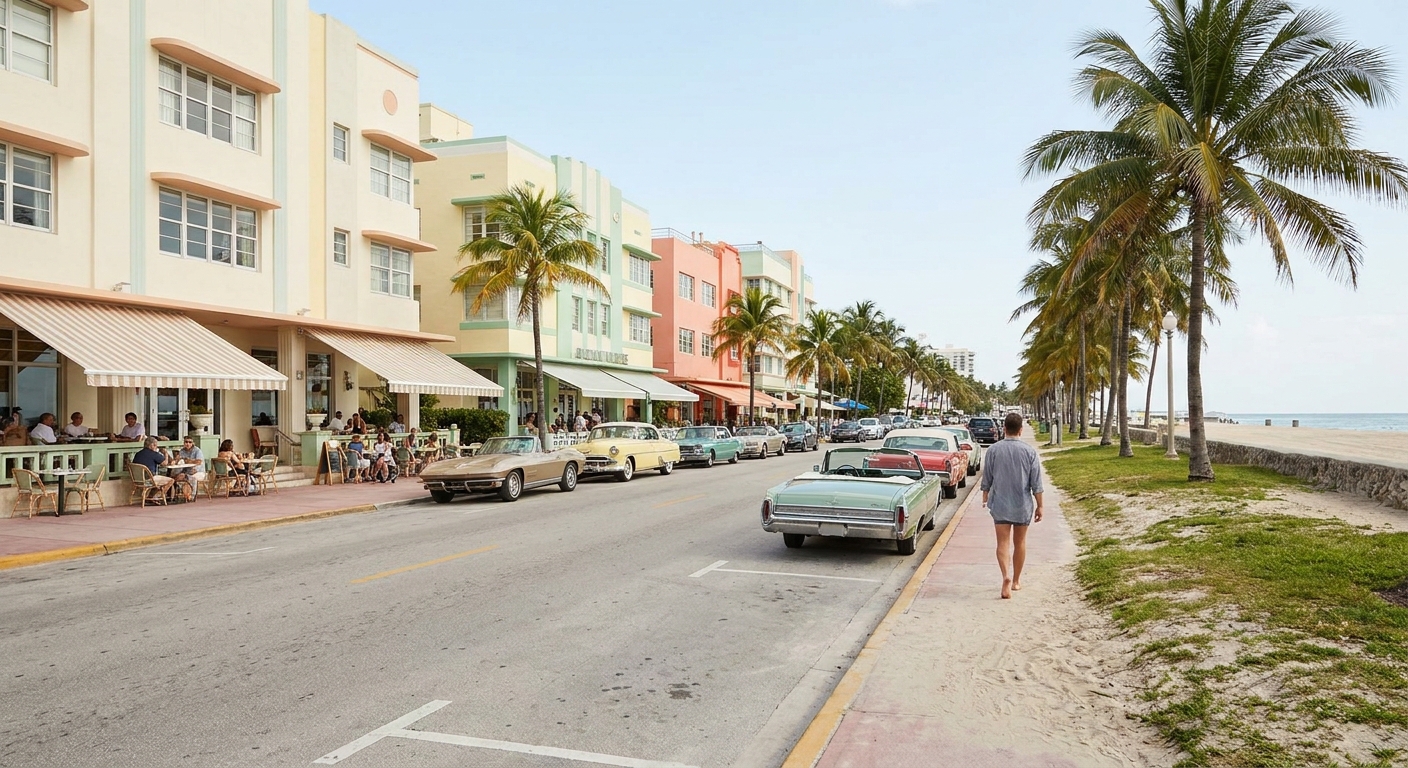
Siesta Beach vs Crescent Beach vs Turtle Beach
| Which one | What’s there | Who it suits | The drawback |
|---|---|---|---|
| Siesta Beach | The main public beach: the pavilion, the 976-space lot, and the quartz-crystal sand named Best Beach in the U.S. for 2026 by U.S. News & World Report | First visits, families who want facilities within sight of the car | The lot fills fast in peak season, January to April |
| Crescent Beach | A separate beach on the same key, reached by the numbered county accesses (est.) | Anyone who wants the sand without the pavilion crowd | Access 2, 3, 10 and 13 are pedestrian: no parking spaces at all |
| Turtle Beach | A third, separate beach farther south on the key (est.), with its own name and its own regulars | Repeat visitors, and drivers who found the pavilion lot full | It is a drive from the pavilion, and it is not the beach in the 2026 ranking |
The three names are easy to mix up, and a phone takes them literally. A phone set to “Siesta Key Beach” and a phone set to “Turtle Beach” send you to different parking lots, and only one of them is the beach that won the ranking. Confirm the beach name, not just the key.
With kids on a first visit, the main public beach is the default: one lot, one pavilion, one walk. Regulars trade facilities for elbow room at the other two, often after finding the pavilion lot full.
The free trolley makes that swap cheap, at least inside its morning window.
Siesta Key Beach facilities and numbered beach accesses: which accesses have parking
The county’s numbered accesses are where the classic mistake happens. Access 2, 3, 10 and 13 are pedestrian: no parking at all, or a single accessible space.
Punch one of those into a phone at 10 a.m. in March and you reach a sidewalk with nowhere to leave the car.
The public beach and pavilion is the address with facilities. For lifeguard coverage and hours, check Sarasota County before a swim day, since staffing shifts by season.
Best time to go to Siesta Key Beach: peak season and hurricane dates
January to April is the busy stretch, and Visit Sarasota County flags it for parking specifically. If your dates are locked inside that window, book lodging on the key or within trolley reach, then plan to be on the sand by eight. A rental within walking distance of the sand saves the parking problem every morning.
The second date pair to hold onto: the Atlantic hurricane season runs June 1 to November 30, per NOAA. That does not cancel a summer beach week on the Gulf, but it argues for refundable rates and insurance on anything booked in that half of the calendar. Our Florida orientation lays out the state’s wet and dry seasons in more detail.
Between the two windows, May falls after the peak ends and at the very start of hurricane season, while early December comes after that season closes and before the January rush. Neither guarantees an open space at 10 a.m. Both shorten the odds. For the Panhandle version of the same trade-off, see South Walton.
The last word
Everything difficult about Siesta Key happens before your shoes come off, in a 976-space lot between January and April. Solve the parking with an early alarm or a free seat on the 77 Islander and the rest of the day needs no planning.
What this beach gives that Lido, Crescent and Turtle do not is the combination: quartz-crystal sand still cool underfoot at midday, the pavilion and the parking at one address, and a 2026 U.S. News & World Report ranking, which is also why the lot fills. Arriving at eight rather than ten is what buys you the quiet version.
Sources & data for this guide
- 976 spaces, peak-season fill, 77 Islander Siesta and BayRunner trolleys · Visit Sarasota County · Beach Parking & Transportation Guide · checked Sep 14, 2026
- Quartz-crystal sand, turquoise water, Best Beach in the U.S. for 2026 (U.S. News & World Report), Crescent and Turtle as separate beaches · Visit Sarasota County · Siesta Key · checked Sep 14, 2026
- Pedestrian accesses 2, 3, 10 and 13 · Sarasota County · Facility Directory · checked Sep 14, 2026
- Atlantic hurricane season, June 1 to November 30 · NOAA National Hurricane Center · checked Sep 14, 2026
- Editorial note: the widely repeated quartz purity percentage appears on no official page we could cite, so this guide carries no figure. Lifeguard hours, trolley schedules and lot rules change · confirm with Sarasota County before you drive.