
MIAMI · JANUARY · 25.8° N
January is the month Miami sells hardest, and the numbers mostly back the brochure. Afternoons average 76.2°F, nights fall to 61.0°F, and the whole month collects 1.83 inches of rain. The Atlantic hurricane season closed on November 30, so nothing tropical is on the calendar. The Everglades are in their dry season an hour west, and the city is fully awake.
What January takes away is light and a degree or two of water. The sun sets at 5:52 p.m. mid-month, which ends beach afternoons early. The ocean averages 77.0°F at its daily high against December’s 79.1°F. And rooms already cost close to what they will cost in February, when the annual peak begins in earnest.
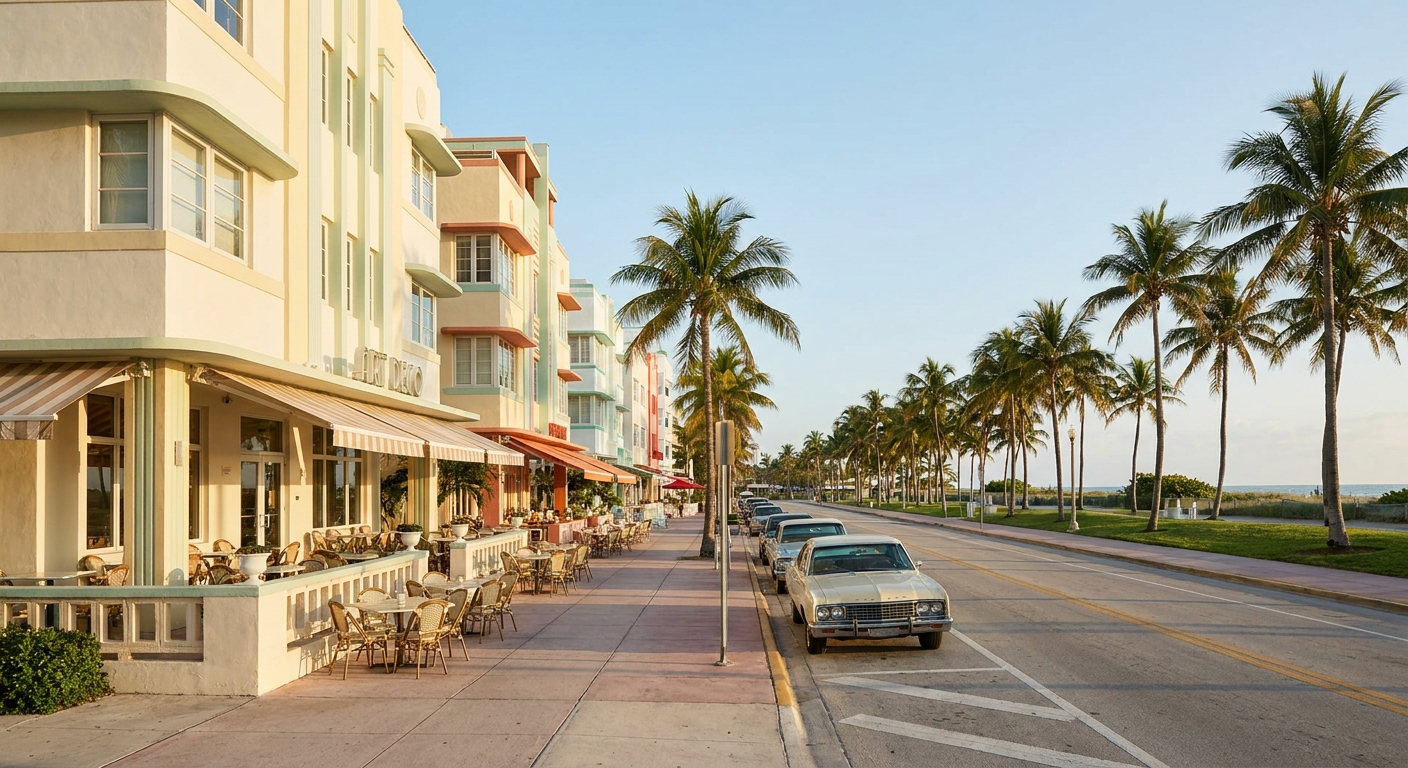
THE MONTH AT A GLANCE · MIAMI · JANUARY
January is Miami’s driest winter month, with 76.2°F afternoons and 1.83 inches of rain, and its price tag already sits close to the February peak.
NOAA 1991-2020 NORMALS · SEA 77.0°F AT DAILY PEAK · 10H45 OF DAYLIGHT · NO HURRICANE SEASON
Go for: dry, walkable 76°F days, free beaches with lifeguards, Everglades wildlife in the dry season, and an ocean at 77.0°F when the sun is on it.
Think twice before: booking January for swimming alone: December runs 2.1 degrees warmer in the water, and rates here already behave like the February to April high.
Normals: NOAA NCEI, station at Miami International Airport · Sea: Open-Meteo Marine · Tax: Florida DOR · full sources at the end
On this page
- Miami weather in JanuaryHighs of 76.2°F and 3.8 wet days
- Can you swim in January?Sea at 77.0°F, and what that figure measures
- Hotel prices and crowds in JanuaryPeak-adjacent rates, plus 12% room tax
- Things to do in Miami in JanuaryVizcaya at $20, PAMM free on Thursdays
- A two-day plan for a January weekendTwo days between 7:07 a.m. and 5:52 p.m.
- January vs December and FebruaryThree months of numbers, December to February
- Is January a good time to visit Miami?Yes for beach walkers, no for daily swimmers
For the parts that are not dated to the month: beds and neighborhoods in where to stay in Florida, buses, trains and rental cars in getting around Florida, and the statewide dry and wet season pattern in best time to visit.
Miami weather in January: average highs, lows and rain days
| Measure | January (1991-2020 normals) |
|---|---|
| Average high | 76.2°F (24.6°C) |
| Average low | 61.0°F (16.1°C) |
| Precipitation | 1.83 in |
| Days with 0.10 in or more | 3.8 |
| Days with 1 in or more | 0.4 |
| Sea surface, mean of daily maxima | 77.0°F |
| Daylight on January 15 | 10 hours 45 minutes |
These numbers come from a station record rather than a model grid: NOAA NCEI’s 1991-2020 monthly normals for station USW00012839, Miami International Airport. January there averages a high of 76.2°F, a low of 61.0°F and 1.83 inches of precipitation. The gauge sits beside the runway, roughly 12 miles from South Beach, so it is an inland reading of a coastal city, which is worth knowing when a beach app shows you something slightly different.
Rain in a Miami January is largely a statistic you never meet. An average January records 3.8 days with at least 0.10 inch, and 0.4 day with a full inch or more. Spread over 31 days, that puts measurable rain on about one day in eight, and a genuine soaking on two Januaries out of five. Build outdoor days without a fallback and you will usually be right, which is not the same as always.
The 15-degree gap between afternoon and dawn is the part visitors pack wrong. At 3 p.m. on the sand it is shorts weather. By 9 p.m., with the low heading for 61.0°F and the breeze off the water doing the rest, a sidewalk table wants long sleeves. One light layer per person, plus something that zips for a boat trip or an open-top ride, covers the whole month.
On January 15 the sun rises at 7:07 a.m. and sets at 5:52 p.m. local time: 10 hours 45 minutes of daylight. A short evening rearranges the day. Golden hour on the beach happens around five, not eight, and anything you wanted to photograph outdoors comes before dinner instead of after. The free Miami Beach trolley runs until 11 p.m., so the dark hours are still moving hours.
Can you swim in Miami in January? Sea temperature and what it feels like
The sea off Miami averages 77.0°F in January in the Open-Meteo marine record for 2015-2024. One qualifier belongs with that figure: it is the mean of daily maxima, the top of the daily curve rather than a 24-hour average, so the water at 7 a.m. sits under it. Other trackers put a Miami January nearer 72°F to 76°F. Read 77.0°F as the warm end of a range no source pins down to the tenth of a degree.
At that temperature nobody needs a wetsuit and few people need convincing, though the first ten seconds are honest about the season. The awkward moment is the exit: air at 61°F on a January morning feels colder than water at 77°F, so carry the towel you would leave behind in July. Lummus Park, the free beach fronting Ocean Drive between 5th and 15th Streets, is open 24 hours and has lifeguards, restrooms and picnic tables.
On wind and swell we have nothing dated to January. The station normals we use cover temperature and rain, the marine average covers water temperature, and neither carries a January wave height, so no figure is offered here. What the month does guarantee is the absence of tropical weather: the Atlantic hurricane season runs June 1 to November 30 and peaks around September 10.
How busy is Miami in January? Crowds, hotel prices and the 12% room tax
January sits on the ramp into the most expensive stretch of the Miami year. Market data relayed by local operators puts hotel rates at their lowest from August through October and their highest from February through April, which leaves January costing close to the peak without being it. The beach is busy by ten, the causeways are slow at six, and every restaurant with a sidewalk table is working.
Booking behaves accordingly. Six to eight weeks (est.) is our working lead time for a January room on Miami Beach at a rate you will not resent, and arrivals in the first days of the month, still inside the holiday weeks, need more than that. Rooms do stay available late. What sells out first is the combination people want most: walkable to the sand, a trolley stop nearby, no car.
The quoted rate is not the paid rate. Miami-Dade County levies a 6.0% transient rental tax, filed and paid with the 6% state sales tax, so 12% lands on the room before extras. On Miami Beach a nightly resort fee usually lands too, and published amounts diverge sharply, from about $25 on average up to $35 or $95 depending on the property. Ask for the all-in nightly total in writing.
One line item repays the extra money in January, and it is location rather than a view. With the light gone at 5:52 p.m., an hour spent driving is an hour of daylight lost, so a bed within walking distance of both the beach and a free trolley route buys daylight back. Transit costs little when you do need it: $2.25 a ride on Metrobus or Metrorail, capped at $5.65 a day, and the Metromover free through Downtown and Brickell.
Things to do in Miami in January: Vizcaya, PAMM and free beaches
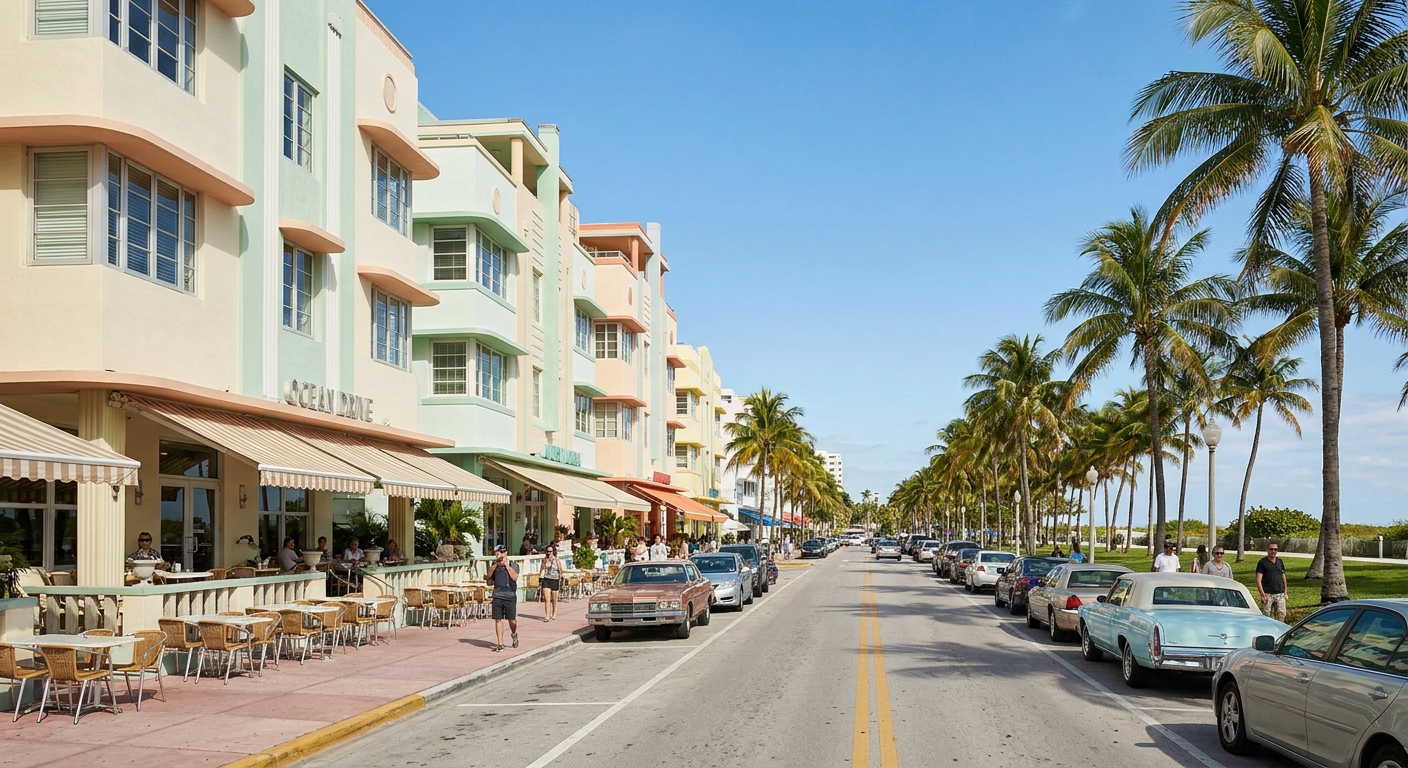
January hands back the middle of the day. Miami summers run to about 90°F with humidity between 85 and 90 percent and a near-daily afternoon thunderstorm cycle, June alone collecting 10.51 inches against January’s 1.83; a January noon at 76.2°F is walkable for hours on end. It is also the Everglades’ dry season, when wildlife concentrates along the boardwalks an hour west of the city, and our Everglades guide has the trails.
Named and priced: Vizcaya Museum and Gardens opens Wednesday to Monday at 9:30 a.m. with last admission at 4:30 p.m., closed Tuesdays, adults $20 during restoration work instead of the usual $25, ages 6 to 12 at $5 and under-6 free. It stands in north Coconut Grove, inside the City of Miami, a few minutes’ walk from Vizcaya Metrorail station. Parking is $7 on weekdays and $10 at weekends at Crandon Park on Key Biscayne.
Free is a real category here, and the short evening makes it more useful. Pérez Art Museum Miami is free from 5 to 9 p.m. every Thursday, which opens just before the 5:52 p.m. sunset, and free all day on the second Saturday of the month with art-making from 11 a.m. to 3 p.m. The Metromover costs nothing, every 90 seconds at rush hour and every three minutes off-peak. So does the Miami Beach trolley, five routes from 8 a.m. to 11 p.m. about every 20 minutes, and so does South Pointe Park, where only the lot charges: from $2 an hour, $20 flat on weekends and public holidays.
Miami in January: two-day itinerary and daylight hours
Day one runs with the light. Sunrise at 7:07 a.m. puts an empty Lummus Park within reach before breakfast, and the water at 77.0°F is warmer than the 61°F air around it. Mid-morning, cross to the mainland for Wynwood’s murals as the temperature climbs toward 76. Lunch and a coffee counter in Little Havana. Vizcaya at 3 p.m. leaves 90 minutes before the 4:30 cutoff, and you are outside again for the 5:52 sunset, with the free Metromover loop through Brickell after dark.
Day two goes to the water: park at Crandon Park for $7 on a weekday, swim mid-morning as the daily curve climbs toward its 77.0°F peak, then walk South Pointe Park in the afternoon. If one of the month’s 3.8 wet days lands on you, the substitute is indoors and mostly free. Pérez Art Museum Miami costs nothing from 5 to 9 p.m. on Thursday, or all day on the second Saturday, and the Metromover gets you there without a fare.
Miami in January vs December and February
| Measure | December | January | February |
|---|---|---|---|
| Average high | 78.2°F | 76.2°F | 78.2°F |
| Average low | 64.3°F | 61.0°F | 63.2°F |
| Precipitation | 2.44 in | 1.83 in | 2.15 in |
| Days with 0.10 in or more | 3.7 | 3.8 | 3.6 |
| Sea surface, daily maxima | 79.1°F | 77.0°F | 76.9°F |
Across the three winter months, January is the cool, dry one. Its 76.2°F average high sits 2.0 degrees under both December and February, which tie at 78.2°F, and its 61.0°F low is the coldest of the three by 2.2 degrees. On rain it wins outright: 1.83 inches against 2.15 in February and 2.44 in December, even though the wet-day counts barely move (3.8, 3.6 and 3.7). The water reverses the ranking, at 79.1°F in December against 77.0°F in January.
Shift four weeks earlier and you buy the warmest winter sea of the trio, 79.1°F, and pay for it with holiday-week rates and 0.61 inch more rain. Shift four weeks later and the air returns to 78.2°F while rooms enter their February to April high, so February is warmer and dearer at once. Each month carries its own figures in our December page and our February page.
Is January a good time to visit Miami?
Yes for the traveler who wants the city as much as the sea: walking at 76°F, museum afternoons, a free beach with lifeguards, no storm cycle to plan around. Less so for anyone whose vacation is counted in hours submerged. A 77.0°F daily peak reads warm on paper and cool at eight in the morning, and January asks close to February money, and February’s water is no warmer for it.
If that lands as a no, December is the nearer correction: the same city with the sea at 79.1°F and the air at 78.2°F, and the holiday weeks avoidable by arriving after the first ten days. If the objection is price rather than temperature, rooms are cheapest from August through October, with the plain caveat that this is hurricane season, peaking around September 10.
No other month puts these three together: the driest total of the winter trio at 1.83 inches, an ocean still averaging 77.0°F at its daily high, and zero tropical risk on the calendar.
The last word
Decide one thing before you book: whether this trip is about the water or about the city. January answers the second question better than the first, and the money follows that answer. Choose the city and put the budget into a bed you can walk out of, then skip the rental car. Route 150, the Miami Beach Airport Express, leaves the airport Metrorail station for Mid Beach roughly every 30 minutes from about 5 a.m. to midnight, $2.25 each way, luggage racks on board.
Sources & data for this guide
- January normals (76.2°F / 61.0°F / 1.83 in), rain-day counts and the December and February figures · NOAA NCEI monthly normals 1991-2020, station USW00012839, Miami International Airport · checked Sep 8, 2026
- Sea surface 77.0°F as a mean of daily maxima, 2015-2024 · Open-Meteo Marine API · checked Sep 8, 2026
- Daylight and sun times for January 15 (12:07 and 22:52 UTC, converted to America/New_York) · sunrise-sunset.org · checked Sep 8, 2026
- Hurricane season dates and the September 10 peak · NOAA National Hurricane Center · checked Sep 8, 2026
- 6.0% county transient rental tax with 6% state sales tax · Florida Department of Revenue, form DR-15TDT · checked Sep 8, 2026
- Vizcaya hours, closure day and admission ($20 during restoration) · vizcaya.org · checked Sep 8, 2026
- Free hours at Pérez Art Museum Miami · pamm.org · checked Sep 8, 2026
- Free trolley, Metromover, $2.25 fares, $5.65 daily cap, route 150, Lummus Park, South Pointe and Crandon parking · City of Miami Beach and Miami-Dade County · checked Sep 8, 2026
- Where we disagree with ourselves: other trackers (seatemperature.org, Current Results) put a Miami January between about 72°F and 76°F, against the 77.0°F daily-maxima average quoted above. We give both rather than pick a winner · checked Sep 8, 2026
- Metromover hours are published as 5:30 a.m. to 10 p.m. by Miami-Dade and as 5 a.m. to midnight by local guides; we have not resolved the difference · checked Sep 8, 2026
- Hotel rate seasonality (lowest August to October, highest February to April) is market trend relayed by local sources, not an official statistic. The six-to-eight-week booking lead time is our editorial estimate, and resort fees vary by property from roughly $25 to $95 a night · checked Sep 8, 2026