
FLORIDA · BISCAYNE NATIONAL PARK · MARCH
March brings the sea off Biscayne National Park to 78.4°F at its daily peak while Florida’s dry season still holds. Afternoons average 80.6°F, nights fall to 65.6°F, and a typical March logs just 3.5 days with a tenth of an inch of rain or more. You see this park from a boat deck, a snorkel mask or a kayak seat, so those three numbers shape almost every plan you make for it.
Most trips start with a flight into MIA or FLL (our Florida flights guide compares them) and a drive south to the park’s mainland edge near Homestead. March also lands inside spring break, so book the boat and the bed before anything else. Pairing Biscayne with the Everglades next door makes a natural two- or three-night southern loop.
MARCH AT A GLANCE · BISCAYNE NATIONAL PARK
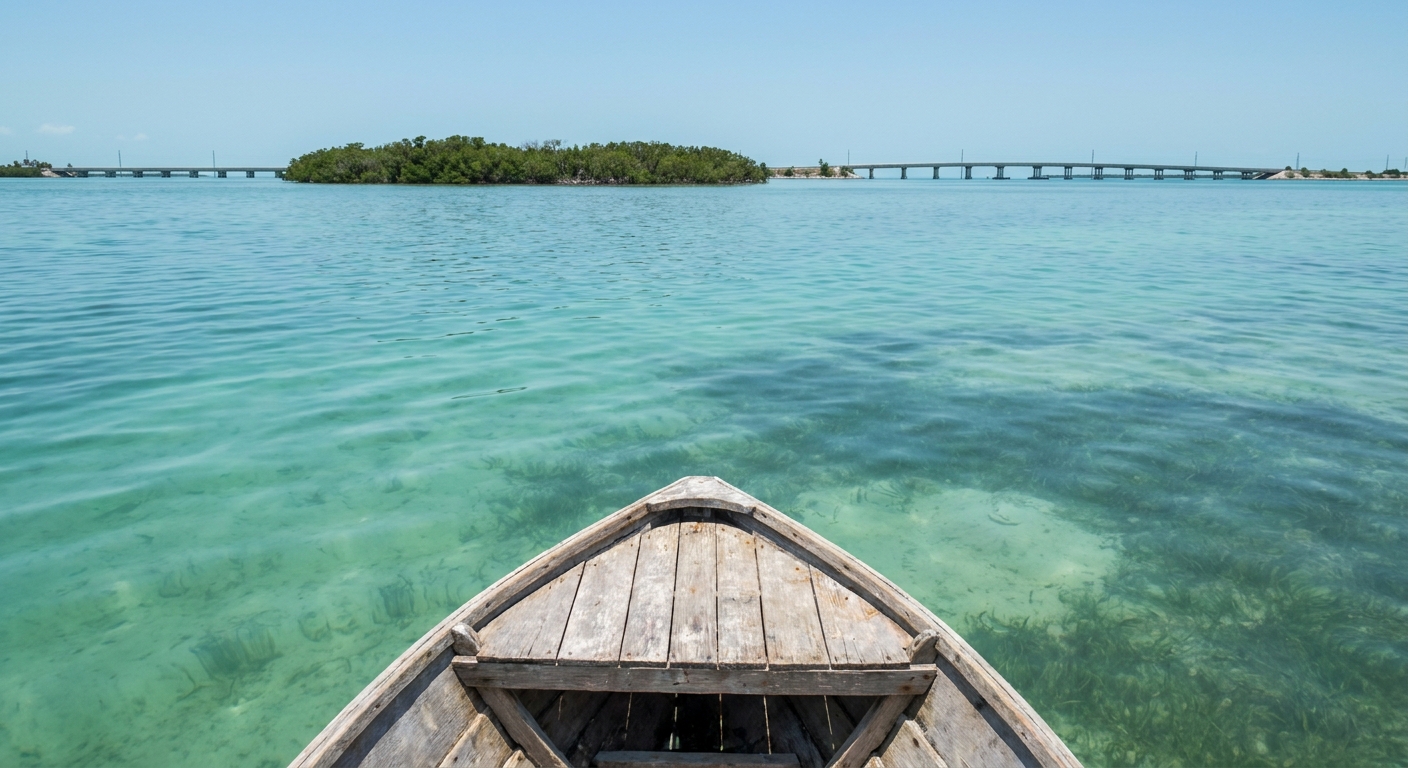
March is a strong month for Biscayne: warm enough water to snorkel, only 3.5 rain days, and a sunset late enough for an evening paddle, as long as you book around spring break.
DRY SEASON · SEA 78.4°F AT ITS DAILY PEAK · SUNSET 7:31 P.M. ON MARCH 15
Go for: snorkeling in water that has climbed past 78°F, island walks on Boca Chita and Elliott Key, and long evenings on the bay.
Think twice before: leaving the boat booking to the last week. March overlaps spring break across Florida.
Air: NOAA NCEI 1991-2020, Miami station · Sea: Open-Meteo Marine 2015-2024 · Light: sunrise-sunset.org · full sources at the end
On this page
- Biscayne weather in March80.6°F highs, 65.6°F lows, 3.5 rain days
- Is the water warm enough to swim?78.4°F sea, measured at the daily peak
- Crowds and prices in MarchSpring break, booking and the boat
- Things to do in Biscayne in MarchBoca Chita, Elliott Key and Stiltsville
- A two-day Biscayne itineraryTwo days planned around a 7:31 p.m. sunset
- March or April for Biscayne?How February, March and April compare
- Is March a good time to go?Who should go in March and who should wait
For the park’s layout and how its islands fit a wider Florida trip, see our Florida national parks guide. The state’s twelve-month picture sits in when to visit Florida, and car, toll and parking advice in getting around Florida.
Biscayne National Park weather in March: average highs, lows and rain days
| March in Biscayne | Value | Source |
|---|---|---|
| Average high | 80.6°F | NOAA NCEI, 1991-2020 |
| Average low | 65.6°F | NOAA NCEI, 1991-2020 |
| Precipitation | 2.46 in | NOAA NCEI, 1991-2020 |
| Days with 0.10 in or more | 3.5 | NOAA NCEI, 1991-2020 |
| Days with 1 in or more | 1.0 | NOAA NCEI, 1991-2020 |
| Daylight on March 15 | About 12 h 03 min | sunrise-sunset.org |
| Sunset on March 15 | 7:31 p.m. EDT | sunrise-sunset.org |
The air normals below come from NOAA’s National Centers for Environmental Information: official 1991-2020 monthly normals from station USW00012839 at Miami International Airport, a real thermometer on land just north of the park. March averages a high of 80.6°F, a low of 65.6°F and 2.46 inches of precipitation. Biscayne itself is almost all water, and open water swings less than a city in both directions. Out on the bay, expect middays a little cooler and pre-dawn hours a little warmer than every figure here.
An average March records 3.5 days with at least 0.10 inch of rain, about one day in nine. Only 1.0 day brings an inch or more, so a typical month holds one real downpour and a few passing showers. For a two- or three-night trip, the odds favor dry crossings. Build one spare morning into the schedule anyway, so a wet day moves the boat trip rather than cancels it.
From the 65.6°F low to the 80.6°F high, the day climbs about 15 degrees. On an early boat, with spray and a breeze, the cool end feels cooler than it reads. Pack a light long-sleeve layer or windbreaker for the morning crossing, a sun shirt and reef-safe sunscreen for midday, and a dry bag to keep that layer dry between stops.
On March 15 the park gets about 12 hours 3 minutes of daylight, according to sunrise-sunset.org. Converted from UTC, the sun sets at 7:31 p.m. Eastern Daylight Time. That leaves room for a full day on the water and a paddle along the mainland shoreline before dark, with dinner in Homestead afterward.
Can you swim in Biscayne National Park in March? Sea temperature and what it feels like
Open-Meteo’s Marine API puts the sea surface off Biscayne National Park at 78.4°F in March, averaged over 2015-2024. That figure is a mean of daily maxima, the warmest reading of each day, so it runs a shade warmer than a 24-hour average and warmer than the water at 8 a.m. It also comes from a different source and period than the NOAA air normals, and we have not cross-checked it against buoy records.
Yes, you can swim. Water in the upper 70s°F usually feels brisk for the first minute and comfortable after that. With the air high at 80.6°F sitting only a couple of degrees above the sea, a wet swimmer on a breezy deck cools off fast. Bring a long-sleeve rash guard or a thin shorty wetsuit if you plan an hour of snorkeling, and a towel or dry top for kids between stops.
Our sources carry no March wind or wave data for the bay or the outer reef, so we cannot say how often a front roughs up the crossing. Read the National Weather Service marine forecast for Biscayne Bay the evening before you go. On the morning itself, the boat operator’s decision to run or cancel is the one that counts.
How busy is Biscayne National Park in March? Crowds and prices
March sits inside Florida’s November-to-April dry season and overlaps spring break, the stretch our Florida orientation flags as the loudest weeks for beach towns and parks. We found no monthly hotel-rate or occupancy series for Homestead or south Miami-Dade, so we rank no month cheapest or dearest. Our Florida trip-cost guide covers the general price tiers.
We have no data on how many weeks ahead boat seats or rooms near the park sell out in March. Once your dates are fixed, reserve the boat trip first and a refundable room second, since the room is easier to change. Our where to stay in Florida guide sorts the bases between Miami and the Keys.
We could not verify the lodging-tax rate for hotels near the park, so we give no percentage. Ask for the total with taxes and any resort fee when you book, and compare that figure across properties.
The one line where spending more transforms a March visit is the boat. The islands, the reef and Stiltsville sit out in the bay, beyond the mainland visitor center, and a seat on a tour, a charter or a rental is what turns a shoreline stop into a day on the water. Check operators listed by the park for current tour or rental prices before you set a budget.
Things to do in Biscayne National Park in March
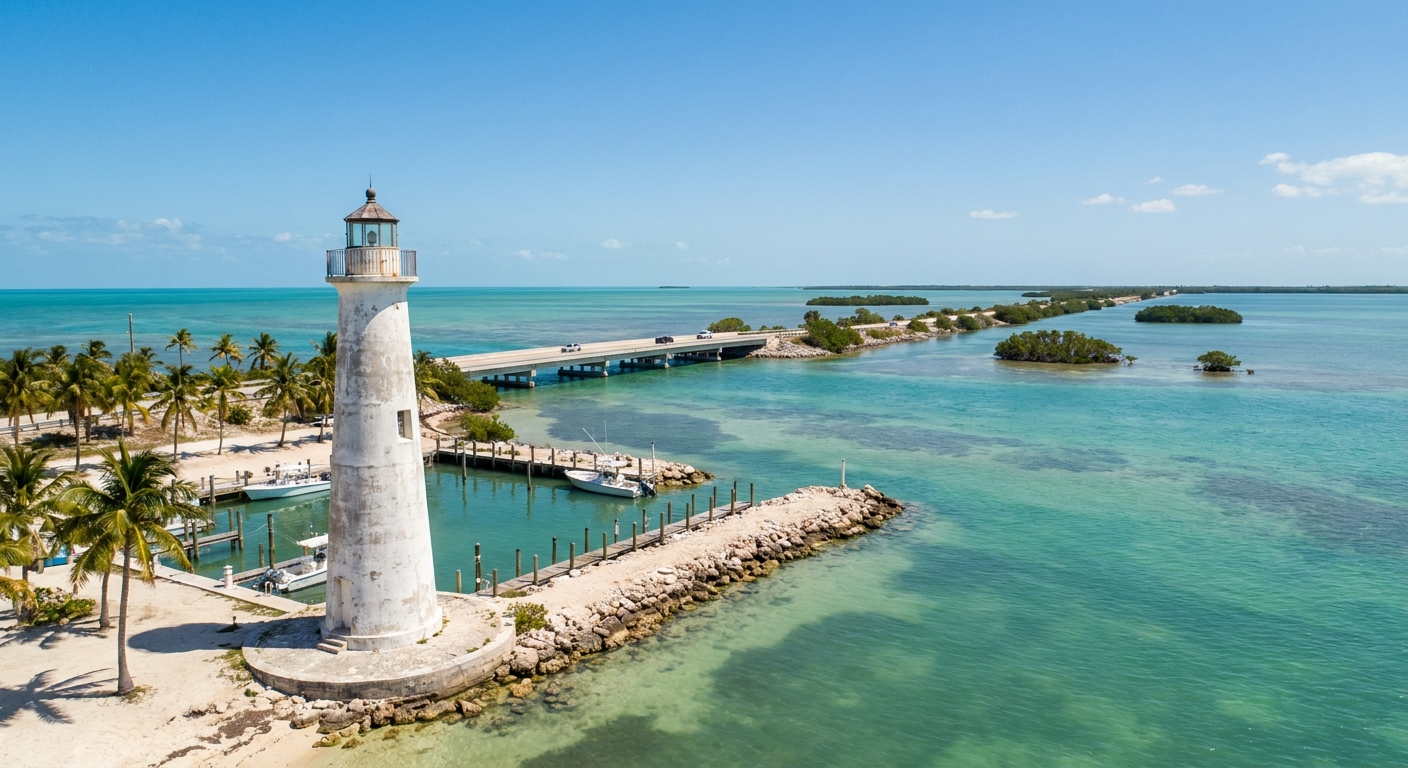
Among February, March and April, March is the first month where the average sea passes 78°F while nights still drop into the mid-60s. That means you can snorkel in the morning, walk an island at midday and sit out on deck at dusk without sweltering or shivering.
Trips start at the Dante Fascell Visitor Center at Convoy Point, on the park’s mainland edge near Homestead. Out in the bay, Boca Chita Key has its ornamental lighthouse and small harbor, Elliott Key has a campground and an island trail, the stilt houses of Stiltsville stand in the shallows toward Key Biscayne, and the Maritime Heritage Trail links shipwreck sites for snorkelers and divers. We could not verify current tour schedules, dock fees or trail lengths, so we give none. The park’s site at nps.gov/bisc carries them.
In March the sea at 78.4°F sits 2.2°F under the 80.6°F air high. February runs a 1.3°F gap on cooler numbers (76.9°F sea, 78.2°F air). April widens it to 4.0°F, with the sea at 79.6°F and the air at 83.6°F, and its rain total climbs to 3.36 inches.
We could not verify the park’s current fee schedule, including any entrance, dock or camping charge in March, so we name nothing as free. Confirm fees on nps.gov/bisc before you plan around them.
Biscayne National Park in March: a two-day itinerary
Day one. Reach Convoy Point soon after first light and take the earliest boat you can book, while the air is still near the 65.6°F end of the day. Around 10 a.m., snorkel a Maritime Heritage Trail site or the reef as the sea warms toward its 78.4°F peak. Spend the early afternoon ashore on Boca Chita Key, head back to the mainland as the day tops out near 80.6°F, and launch a kayak along the mangrove shoreline in time to finish before the 7:31 p.m. sunset. Departure times vary by operator, so fit the plan to your booking.
Day two. Book Elliott Key or a Stiltsville trip, depending on what your operator runs that day. If one of March’s 3.5 rain days lands, swap the crossing for the visitor center and a drive to the Everglades, then push the boat to the next morning. Longer routes that add the Keys are in our 7-day Florida itinerary.
Biscayne National Park in March vs February and April
| Normal | February | March | April |
|---|---|---|---|
| Average high | 78.2°F | 80.6°F | 83.6°F |
| Average low | 63.2°F | 65.6°F | 69.8°F |
| Precipitation | 2.15 in | 2.46 in | 3.36 in |
| Days with 0.10 in or more | 3.6 | 3.5 | 4.3 |
| Sea surface (daily max, 2015-2024) | 76.9°F | 78.4°F | 79.6°F |
The NOAA station normals put March 2.4°F warmer than February on both the high and the low, and April another 3.0°F warmer by day and 4.2°F by night. Rain rises from 2.15 inches in February to 2.46 in March and 3.36 in April, though February logs 3.6 rain days against March’s 3.5. Open-Meteo’s sea readings climb from 76.9°F to 78.4°F to 79.6°F.
Moving four weeks earlier costs you 1.5°F of sea and brings cooler dawns near 63.2°F, with slightly less rain overall. Moving four weeks later gains 1.2°F of sea and warmer nights near 69.8°F, but adds 0.90 inch of rain and nearly one more rainy day. Both neighbors stay in the dry season on the Florida calendar.
Is March a good time to visit Biscayne National Park?
Yes, for snorkelers, paddlers and couples who want water warm enough to linger in and days that rarely wash out. It suits families less well if school holidays pin them to spring break weeks and they book late. Travelers who dislike an early chill on the boat may find the 65.6°F mornings brisker than expected.
If March does not fit, choose April for warmer water at 79.6°F and nights near 69.8°F, accepting 3.36 inches of rain. If you care more about the drier total than the sea, February in Biscayne runs 2.15 inches with the sea at 76.9°F.
Of the three months, only March pairs a sea average past 78°F with nights that still fall into the mid-60s.
The last word
Lock in the boat, then build the rest of the trip around it. On March 15 the sun comes up at 7:27 a.m. Eastern Daylight Time, and the first boat out from Convoy Point gets the bay in the softest light of the day. Pack the windbreaker for that crossing and the rash guard for the reef, and check our Florida safety guide for sun and water basics before you go.
Sources & data for Biscayne in March
- March, February and April air normals, precipitation and rain days · NOAA NCEI monthly normals 1991-2020, station USW00012839 (Miami International Airport) · checked Sep 24, 2026
- Station location caveat: normals are measured on land in Miami, while the park is almost all open water · NOAA NCEI · checked Sep 24, 2026
- Sea surface temperature, mean of daily maxima, 2015-2024 · Open-Meteo Marine API · checked Sep 24, 2026
- Daylight, sunrise and sunset on March 15 (UTC, converted to EDT) · sunrise-sunset.org · checked Sep 24, 2026
- We could not verify park fees, tour schedules, trail lengths, wind or wave data, hotel rates or the local lodging-tax rate, and we give none. Confirm with the National Park Service at nps.gov/bisc and your operator when you book.
To plan your stay
- Best Time to Visit Biscayne National Park: Month-by-Month Weather, Sea Temperature and the Month to Skip
- Biscayne National Park in February: Weather, Sea Temperature, Crowds and a Two-Day Itinerary
- Biscayne National Park in April: Weather, Sea Temperature and Rain Days
- Biscayne National Park in January: Weather, Sea Temperature, Crowds and a Two-Day Plan