
FLORIDA · BISCAYNE NATIONAL PARK · JANUARY
January puts Biscayne National Park in the middle of Florida’s dry season, the November-to-April stretch our Florida orientation builds its winter case on. The park is mostly bay, reef and small keys, so January’s weather matters for the boat day. You want to know two things: whether the afternoon will be warm enough to swim, and whether the day will stay dry enough to go out. January gives mild, mostly dry days, and its water runs a couple of degrees cooler than December’s.
Fly into Miami (our flights guide covers the airport choice), drive south to the mainland shore at Convoy Point, and give the park two days: one on the water, one along the mangrove edge. Routes and tolls are in getting around Florida, and beds are in where to stay in Florida.
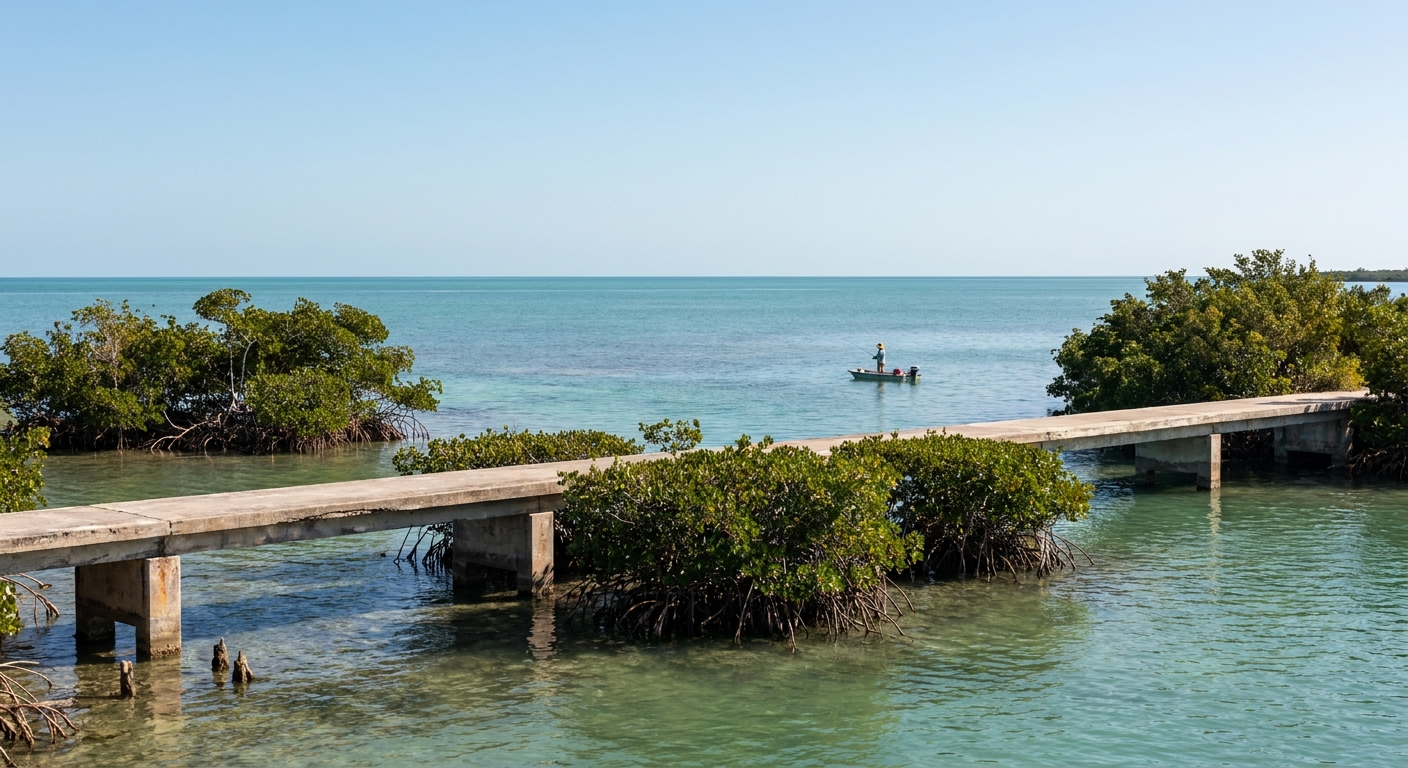
JANUARY AT A GLANCE · BISCAYNE NATIONAL PARK
January brings mild afternoons, 1.83 inches of rain and a sea near 77°F, which makes it a strong month for boating and paddling and a fair one for swimming.
DRY SEASON · NOAA MIAMI NORMALS 1991-2020 · SEA 77.0°F (DAILY MAX)
Go for: boat days to the keys, mangrove paddles and snorkeling in afternoons that top out near 76°F.
Think twice before: planning a dawn swim. Mornings average 61.0°F on the mainland, and the water is warmest in the afternoon.
Air: NOAA NCEI, Miami station · Sea: Open-Meteo Marine · Light: sunrise-sunset.org · full sources at the end
On this page
- Biscayne National Park weather in January76.2°F highs, 3.8 rain days
- Can you swim in January?Sea at 77.0°F, measured as daily maxima
- Crowds and prices in JanuaryDry season, booking and lodging tax
- Things to do in JanuaryConvoy Point, Boca Chita Key, Stiltsville
- A two-day January itinerarySunrise 7:07 am to sunset 5:52 pm
- January vs December and FebruaryAir, rain and sea for all three months
- Is January a good time to visit?Yes for boaters, less so for swimmers
The park’s history, its keys and how it fits among the state’s other parks are in our Biscayne National Park guide and Florida’s national parks. If you are pairing Biscayne with the sawgrass an hour west, our Everglades guide covers the other half of the trip.
Biscayne National Park weather in January: average highs, lows and rain days
| January normal | Value |
|---|---|
| Average high | 76.2°F |
| Average low | 61.0°F |
| Precipitation | 1.83 in |
| Days with 0.10 in or more | 3.8 |
| Days with 1 in or more | 0.4 |
| Daylight, January 15 | 10 h 45 min |
| Sunrise · sunset, January 15 | 7:07 am · 5:52 pm EST |
NOAA’s National Centers for Environmental Information put January at an average high of 76.2°F and a low of 61.0°F, with 1.83 inches of precipitation. These are official 1991-2020 station normals from a thermometer in Miami (GHCN station USW00012839), immediately north of the park. They are not a grid-cell reanalysis. The park is almost all water, and open water swings less than a city does in either direction. Every figure here describes the mainland, so expect bay afternoons a touch milder and bay dawns a touch warmer.
An average January records 3.8 days with at least a tenth of an inch of rain. That works out to measurable rain about one day in eight. A soaking of an inch or more comes on 0.4 days, so roughly two Januaries in five get one. Over a two-day trip, the odds favor two dry days. When rain does come, it tends to be a front passing through, so move the boat day and keep the paddle day.
The 15.2°F gap between the average low and high decides your bag. A 7 am departure starts near 61°F, and an open boat at speed adds wind chill. Pack a fleece or windbreaker you can stuff into a dry bag, and wear shorts and a sun shirt underneath for the 76°F afternoon. Bring reef-safe sunscreen and a hat as well, because a dry-season sky over open water leaves little shade.
On January 15 the park gets about 10 hours 45 minutes of daylight. Sunrise is at 7:07 am and sunset at 5:52 pm Eastern Standard Time, so the light is gone before 6 pm. Any boat trip, paddle or drive back north should finish by then. That also leaves a long evening for dinner in Homestead or on the way back to Miami.
Can you swim in Biscayne National Park in January? Sea temperature and what it feels like
The Open-Meteo Marine API gives the sea surface off the park an average of 77.0°F in January, based on 2015-2024. That number is the mean of each day’s maximum, so it runs a shade warmer than a round-the-clock average. A table built on 24-hour means will show a lower January figure, and both can be right. Ours describes the water at its warmest point in the day.
Yes, you can swim, and most people will feel it on the way in. Water in the high 70s feels cool for the first minute and comfortable once you are moving. For snorkeling sessions longer than a quick look, a thin wetsuit or a rash guard keeps you in the water longer. The colder moment is climbing back onto the boat in a breeze, so keep a towel and your fleece within reach.
We could not find a January wind or swell series for the bay, so we give no figure. Wind is what makes an open boat ride comfortable or rough, and it changes day to day. Check the National Weather Service Miami marine forecast the evening before your boat day, and pick the calmer of your two days for the water.
How busy is Biscayne National Park in January? Crowds and prices
January falls in Florida’s dry season, the stretch that built the state’s winter travel industry. Our Florida orientation names holiday weeks and spring break as the annual price peaks, and the New Year week opens January. We found no occupancy or room-rate series for Homestead or the park, so we call no January week cheap or expensive. For state-level budgeting, see what a Florida trip costs.
We could not verify booking lead times, so we name no number of weeks. Book the flight and the bed first, and keep the boat reservation flexible. With rain about one day in eight and wind that changes daily, being able to swap your boat day with your paddle day is worth more than booking early. If your dates can move, starting after the New Year week keeps you clear of the holiday peak.
We could not verify the lodging-tax rate for the Homestead and Florida City area, so we give no percentage. Check the full total, taxes and any resort fee included, on the booking screen before you pay.
The boat is the spend that changes a January visit. Without one, Biscayne is the mainland shore at Convoy Point: a visitor center, a jetty and a view across the bay. With a seat on a tour or a chartered boat, the day reaches the keys, the reef and the afternoon swim that January’s 77°F water supports. If you are cutting costs, cut the hotel before the boat.
Things to do in Biscayne National Park in January
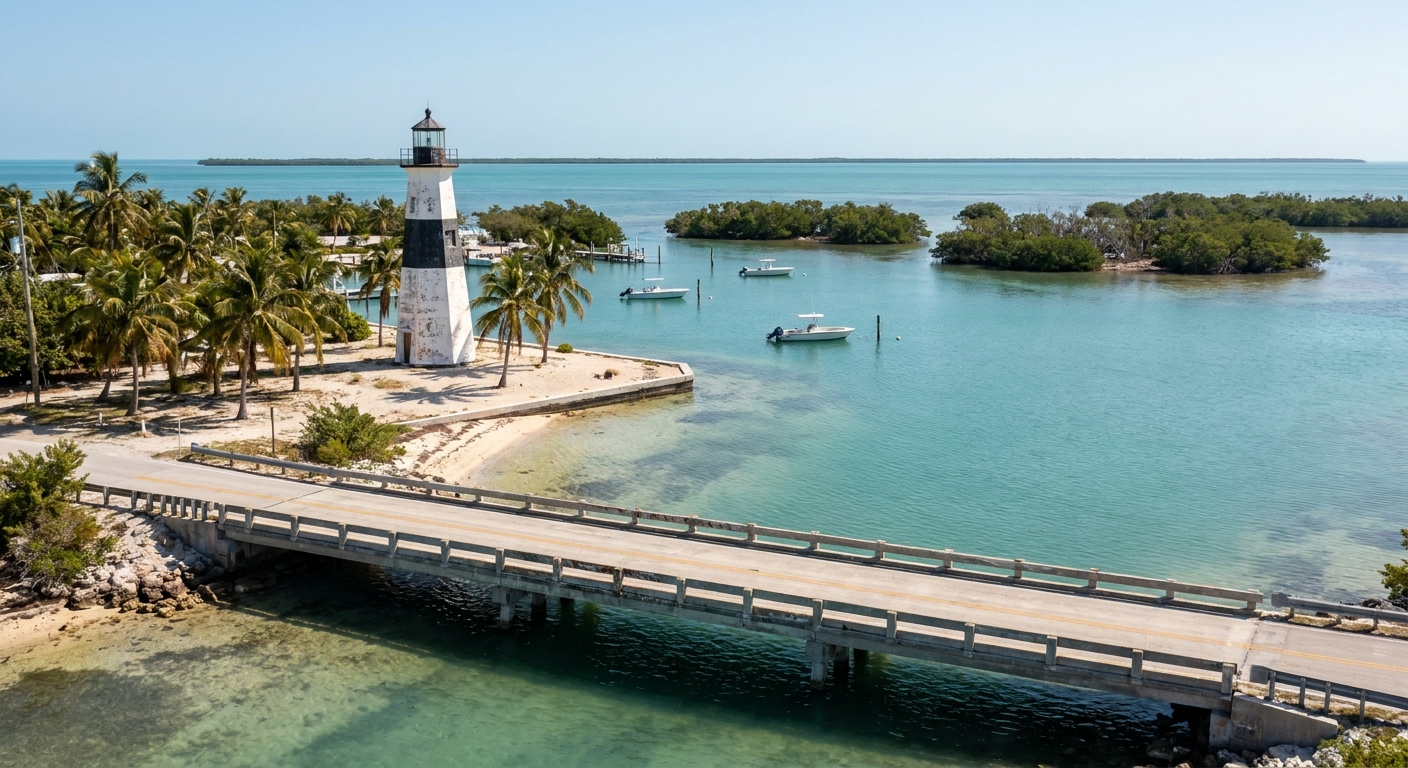
January suits the long days of exertion that Biscayne asks for. Afternoons average 76.2°F, two degrees cooler than December or February, and the month has the smallest rain total of the three. That combination favors a full morning of paddling along the mangroves, a hike across a key in the sun, or several hours on an open boat, all without the heat that comes later in the year.
On the mainland, the Dante Fascell Visitor Center at Convoy Point is the starting point, with the jetty and mangrove shoreline next to it. Offshore, Boca Chita Key has its small ornamental lighthouse and harbor, Elliott Key has trails through tropical hardwood forest, and Stiltsville is a cluster of houses on pilings over the flats. Divers and snorkelers follow the Maritime Heritage Trail to shipwrecks on the reef. We could not verify current tour fares, dock fees or visitor-center hours, so we give none. Check them with the National Park Service when you book.
January barely changes the water and changes the air a lot. The sea holds near 77.0°F at its daily peak, while mainland air climbs from 61.0°F at dawn to 76.2°F by afternoon. The same snorkel stop feels cool at 8 am and easy at 2 pm, and the paddle that would be hot in April is comfortable in January.
We could not find fee data for January, so we can’t tell you what is free inside the park. The view comes at no cost, though: the sun rises at 7:07 am over the bay east of Convoy Point, and the light on the water in the first hour is reason enough to set an alarm. For free and low-cost stops elsewhere in the state, see things to do in Florida.
Biscayne National Park in January: a two-day itinerary
Day one, the water. Be at Convoy Point for the 7:07 am sunrise with your fleece on. Leave by boat mid-morning, once the air has warmed from the low 60s, and head for Boca Chita Key or Elliott Key. Schedule the swim or snorkel for early afternoon, when the air nears 76°F and the sea is at its daily peak around 77°F. Plan to be back at the dock by late afternoon, well before the 5:52 pm sunset.
Day two, the shoreline. Paddle the mangroves at Convoy Point in the morning, or book a Stiltsville trip if you went to the keys the day before. If a front brings rain, swap the days: move the boat to the drier day and spend the wet one at the visitor center. A rainy morning is also a good time to drive west toward the Everglades or north to Miami. For a longer loop, our seven-day Florida itinerary gives the park a slot.
Biscayne National Park in January vs December and February
| Normal | December | January | February |
|---|---|---|---|
| Average high | 78.2°F | 76.2°F | 78.2°F |
| Average low | 64.3°F | 61.0°F | 63.2°F |
| Precipitation | 2.44 in | 1.83 in | 2.15 in |
| Days with 0.10 in or more | 3.7 | 3.8 | 3.6 |
| Sea surface (daily max, 2015-2024) | 79.1°F | 77.0°F | 76.9°F |
On NOAA’s Miami normals, January is the coolest of the three months. Its 76.2°F high is 2.0°F below both neighbors, and its 61.0°F low sits 3.3°F under December and 2.2°F under February. It is also the driest by total: 1.83 inches against 2.44 in December and 2.15 in February, even though rain days are nearly level at 3.8, 3.7 and 3.6. At sea, Open-Meteo’s marine figures show December at 79.1°F, then January at 77.0°F and February at 76.9°F.
Going four weeks earlier into December gets you water 2.1°F warmer and nights 3.3°F milder, but 0.61 inch more rain. Going four weeks later into February gets you 2.0°F warmer afternoons and 2.2°F warmer nights for the same water, 0.1°F cooler, plus 0.32 inch more rain. Neither move changes the odds of a wet day much, since all three months sit within 0.2 of a rain day of each other.
Is January a good time to visit Biscayne National Park?
Yes, if your trip is built around boats, paddling and hiking the keys: January has mild afternoons, the smallest rain total of the three winter months we compare, and nearly 11 hours of daylight. It is a weaker fit for someone who judges a trip by how warm the water feels on the first plunge, since the 77.0°F sea peaks only in the afternoon.
Swimmers should pick December. At 79.1°F, its water runs 2.1°F warmer than January’s, and its 64.3°F nights make an early start easier. The trade is 2.44 inches of rain against 1.83, spread over almost the same number of wet days. Our Florida best-time guide covers the rest of the year.
Of the three winter months, only January keeps its rain total under two inches, at 1.83.
The last word
Plan your January trip around the time of day. At 7 am the bay is about 16°F warmer than the mainland air, so a dawn swim is fine going in and cold coming out. Book the boat for late morning, save sunrise for the jetty at Convoy Point, and get in the water around 2 pm, when the air has caught up with the sea. For more on the Keys beyond the park, Key West is the next stop south.
Sources & data for this guide
- January, December and February air normals, precipitation and rain days · NOAA NCEI monthly normals 1991-2020, station USW00012839 (Miami, immediately north of the park) · checked Sep 24, 2026
- Station caveat: the park is almost all water, and open water swings less than the city where the thermometer sits · NOAA NCEI · checked Sep 24, 2026
- Sea surface temperature for December, January and February, mean of daily maxima · Open-Meteo Marine API, 2015-2024 average · checked Sep 24, 2026
- Daylight, sunrise and sunset on January 15, converted from UTC to EST · sunrise-sunset.org · checked Sep 24, 2026
- Dry season dates and Florida price peaks · our Florida orientation (National Weather Service) · checked Sep 24, 2026
- What we could not verify: boat fares, dock fees, visitor-center hours, the local lodging-tax rate, and January wind and swell. We give no figure for any of them. Place descriptions are editorial, so confirm fees and hours with the National Park Service when you book.
To plan your stay
- Best Time to Visit Biscayne National Park: Month-by-Month Weather, Sea Temperature and the Month to Skip
- Biscayne National Park in February: Weather, Sea Temperature, Crowds and a Two-Day Itinerary
- Biscayne National Park in December: Weather, Sea Temperature and Crowds
- Biscayne National Park in March: Weather, Sea Temperature and Crowds