
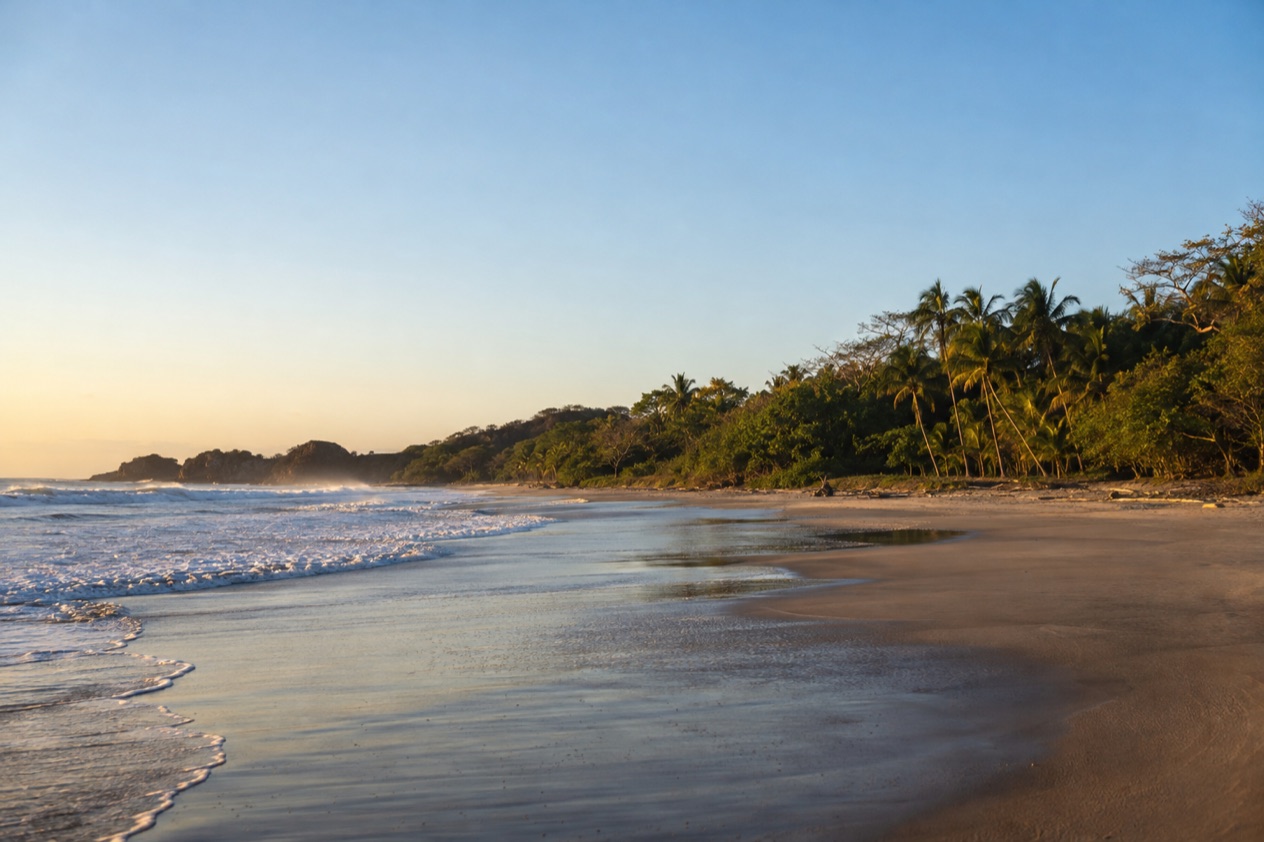
Before the sun clears the trees at Playa Guiones, the beach already belongs to surfers carrying boards down sandy paths and to early walkers with coffee in hand. Howler monkeys grumble in the dry, golden forest behind the dunes, and by midmorning the yoga studios spill barefoot guests onto cafe terraces. On this part of the Nicoya Peninsula, the dry season reaches its peak in March, a month that brings hot sun, warm water and long beach days for surfers, wellness travelers and anyone craving a slow, sunny week.
What is the weather like in Nosara in March?
March in Nosara is hot, bright and almost completely dry, with the sea as warm as the air is hot. The landscape is most golden, the dirt roads are dusty, and a cloudy afternoon is the exception.
| Month | Average high (°F) | Average low (°F) | Rain days | Sea (°F) |
|---|---|---|---|---|
| February | 91.7 | 76.2 | 1.1 | 85.6 |
| March | 92.5 | 76.9 | 2.7 | 86.6 |
| April | 90.8 | 77.8 | 11.7 | 86.8 |
Mornings start warm and still, and the hours before ten are the comfortable ones for a run, a surf session or a walk along the sand. By midday the sun is strong enough that shade, a hat and a long lunch become the sensible plan. Afternoons on the beach are glorious but hot, and the light turns amber and soft well before sunset.
Rain is rare this month. When it comes, it is a short shower or a passing gray cloud rather than the long afternoon downpours of the green season, and it is quickly forgotten. Evenings stay warm enough to eat outside in a T-shirt and sandals, with no need for a sweater, though a light layer helps in an air-conditioned yoga studio or restaurant.
Dry weather has a side effect the calendar does not show. Over the unpaved roads, dust lingers, trees lose their leaves, and in Guanacaste and the northern region wildfires are common from January through the end of May, so some days can bring hazy skies and the smell of smoke.
Can you swim in Nosara in March?
The water is warm, but whether and where you swim depends on the waves and currents.
Playa Guiones is famous for steady surf, and that means breaking waves and often a strong pull toward open water. It suits surfers and bodyboarders, and it is less suited to small children or nervous swimmers.
Rip currents are a grave danger in Costa Rica, causing the deaths of several American travelers every year, yet at most beaches here there are no lifeguards and no alerts about dangerous conditions. Most beaches do not have lifeguards or warnings about unsafe conditions.
Playa Pelada, to the north of the main beach, has rocky edges and tide pools that are fun to explore when the tide is low. Playa Garza, to the south, is a curved bay with fishing boats, and its water is often gentler than Guiones.
Nosara is a place for surf more than for snorkeling, so bring a rash guard, a hat and plenty of water rather than a mask. Beginner surf lessons are a popular way to start the morning.
What to do in Nosara in March
March here is about the slow rhythms of the dry season: surf at dawn, a smoothie at ten, a yoga class, a siesta in the shade, and sunset on the sand. The town has no big festival of its own that month. The Dia del Boyero, the parade of painted oxcarts honoring the drivers who once carried coffee to the coast, is held in Escazu near San Jose on the second Sunday of March, so it belongs to a trip that includes the capital rather than to a beach week.
What March does give you is reliable weather for the outdoors and a sea that invites you in. Many visitors fill the days with the same few pleasures, repeated happily: board in the morning, hammock in the afternoon, beach walk at sundown. The pace is part of the point.
Playa Guiones and the surf
Playa Guiones is the long, wide beach that put Nosara on the map, and in March it is easy to see why. The sand is firm and gently sloping, the waves are steady, and the beach stretches so far that even on a busy day you can find a patch with only a few boards and a couple of dogs. Learners paddle out beside local surfers, and the lineup is friendly and unhurried.
The best hours are early morning and again in late afternoon, when the heat eases and the light turns golden. Midday is better spent under a palm or at a beach cafe. Surf schools and board rentals are part of the town, and instructors usually start beginners on the smaller waves close to shore.
Walk the beach at low tide to find sandy flats and tide pools, and stay for sunset, when surfers silhouette against an orange sky. Follow the flags where there are any, and remember that most stretches of this coast are not guarded.
Yoga, wellness and slow mornings
Nosara has a reputation for wellness culture and yoga studios, and with its warm, still mornings, March is an ideal season for that. Classes run in open-air shalas among the trees, and the day tends to build around them: a class at sunrise or after a surf, then a bowl of fruit and granola at a nearby cafe.
Many visitors come specifically for a retreat week, and others simply drop into a class or two between beach sessions. Massage, breathwork and sound sessions are widely offered, and the dry air makes outdoor practice pleasant. It suits solo travelers, couples and friends who want a trip that feels restorative rather than busy.
Dry forest, birds and monkeys
Behind the beach, the dry forest is open and golden in March, and the thinner leaves make animals easier to spot. Howler monkeys often announce themselves at dawn with a deep, rolling roar, and you may see them moving along the branches near the roads and trails. Parrots, motmots, herons and many other birds are active in the cooler early hours, and iguanas bask on warm walls and rocks.
Animals are chances, never promises, so go slowly and look up. Early morning walks along the quiet roads and the edges of the forest are the most rewarding. Some trees bloom in the dry season, and a flash of yellow or pink blossom against the bare branches is a pleasant March surprise.
What to eat and drink
Meals here lean toward the fresh and the light. Ceviche, grilled fish of the day, and the classic casado (a plate with rice, beans, salad, plantain and a choice of meat or fish) are at home on a hot afternoon, and breakfast often means gallo pinto, the rice-and-beans mix, with eggs and fruit.
A pipa fria, a green coconut opened with a machete and sipped through a straw, is the drink of the beach, along with tropical fruit smoothies and cold local beer. Many cafes cater to the wellness crowd with smoothie bowls, plant-based plates and strong coffee. Evenings call for a table outside and something from the grill.
A two-day itinerary for Nosara in March
Day 1 begins at Playa Guiones early, before the heat builds. Daylight lasts about twelve hours in mid March, so the morning is long and there is time for an early surf lesson or a long beach walk, then a smoothie bowl or a plate of gallo pinto at a cafe near the sand. Retreat to shade at midday, whether that means a hammock, a pool or a lunch of ceviche.
In the late afternoon, return to the water when the sun softens and the surf is lively, then settle in for sunset on the beach. Dinner can be fresh fish at a casual restaurant in town. If a rare shower comes, move to a yoga studio, a massage or a long coffee at a bakery, and wait it out.
Day 2 shifts to the quieter edges of the coast. Start with a walk through the dry forest roads at dawn, when birds are active and howler monkeys may be calling, then continue to Playa Pelada for tide pools and a quieter stretch of sand. A morning yoga class makes a good bridge between nature and rest.
After lunch, head south to Playa Garza, where the bay is often gentler and fishing boats sit on the sand. Spend the hot hours there, swimming carefully and following the flags, and stay for a sunset drink. For the evening, choose a restaurant with a grill or a late dinner under the stars, and finish with a slow walk back through town.
Is Nosara busy in March?
Yes, March is one of the livelier months, because dry-season weather draws visitors from North America and Europe, and the town fills with surfers, yoga students and families.
Spring break weeks bring more families and groups, and Holy Week, which falls in March or April depending on the year, is a busy stretch for Costa Ricans on vacation as well. Beach cafes, surf schools and yoga classes are busier then, and the best rooms and vehicles go first. Outside those weeks, Nosara stays relaxed, and the long beach absorbs crowds easily.
As a habit, book rooms early for the holiday weeks, and a little later for the quieter ones. Rental cars and good-value houses go quickly in the dry season, and popular restaurants and retreat programs can fill on weekends and holiday evenings.
The mood in the streets is easygoing: bikes, quad bikes and dusty pickups share the roads, and the beach path fills at sunrise and sunset.
What to pack for Nosara in March
Pack for sun, sand and heat, with one or two items for the dusty roads and the cooler air-conditioned spaces.
- Light, breathable clothing and swimwear, because days are hot and you will be in and out of the water.
- A wide-brimmed hat and sunscreen, since the midday sun is strong.
- A rash guard for surfing or long beach days, to protect your shoulders and back.
- A reusable water bottle, for the hot hours on the beach and the dusty roads.
- Sandals and a pair of closed shoes, for sand, dirt roads and forest walks.
- A light layer, for cool studios and breezy evenings.
Good to know before you go
The U.S. State Department rates Costa Rica Level 2, ‘Exercise increased caution,’ due to crime; it says petty crime is common throughout Costa Rica and that violent crime also affects tourists, including armed robbery, homicide and sexual assault.
March falls in the dry season, so rain plans matter little, but sun and dust matter a lot.
Book rooms first, then a vehicle, and leave surf lessons and classes for later. In Guanacaste, fires are a frequent problem from January through the end of May, which means haze can settle in on certain days, and since lifeguards are absent at most beaches, rip currents are something to take seriously.
Nosara in March vs February and April
Moving the trip four weeks earlier to February gives a very similar picture: sun, dry air and a sea just slightly cooler. It is also a busy month, with winter escapees and long vacations, and the forest is a little greener from the previous rains. If your dates are flexible, February suits those who prefer slightly cooler days and want the driest stretch of the year.
Going four weeks later to April brings the first signs of the green season. Showers become frequent and the sky clouds over in the afternoons, though the sea is just as warm and mornings can still be bright. The town is a bit calmer outside the holiday weeks, rooms are easier to find, and the forest begins to turn green again, which many nature lovers enjoy.
Choose March if you want the most reliable sun for surf, yoga and beach days, and do not mind sharing the town with other travelers. Shift to April if you would trade some sunshine for greener scenery and a quieter mood, and to February if you want the driest weather with slightly lower heat.
Is March a good time to visit Nosara?
Yes, March is a very good time for beach lovers, surfers, yoga travelers and families who want dependable sun and a warm sea.
It suits anyone who plans days around the water and the outdoors, and it is especially good for those who like early mornings and slow afternoons. Travelers who dislike heat, dust or the occasional smoky haze, or who want lush green jungle and dramatic afternoon storms, would be happier in the green season. Those who want a quiet, nearly empty beach should also look to another month.
On arrival, head straight to Playa Guiones for a walk at the end of the day, when the heat eases and the surfers come in, and let the town’s pace settle in. Then plan your first morning: a surf lesson, a yoga class, or just a coffee and a long look at the water. March in Nosara is dry gold forest, warm surf and sunsets that make everyone stop talking for a minute.
Sources
- Open-Meteo / ECMWF ERA5, normals 1991-2020 computed for the grid cell at 9.9792N 85.6531W, checked October 8, 2026
- Open-Meteo Marine API, average 2015-2024, checked October 8, 2026
- sunrise-sunset.org, sunrise and sunset calculated for the 15th of the month, checked October 8, 2026
- U.S. Department of State, Costa Rica Travel Information, Safety and security (https://travel.state.gov/content/travel/en/international-travel/International-Travel-Country-Information-Pages/CostaRica.html), checked October 8, 2026
- U.S. Department of State, Costa Rica Travel Advisory, issued April 1, 2026 (https://travel.state.gov/content/travel/en/traveladvisories/traveladvisories/costa-rica-travel-advisory.html), read via the State Department open data API on October 8, 2026