
On alternate Sunday mornings, Garifuna hymns drift out of St Peter Claver Parish Church in Punta Gorda, sung in a language you will hear almost nowhere else in the country. By evening the talk has moved to the waterfront near the port on Fort Street, where fishing boats rest and the town slows to the pace of the far south. Staying here means choosing how close you want to be to all of that: a room in town, a bed in a coastal village, or a lodge set back among the cacao and the forest.
What is the best area to stay in Punta Gorda and the Toledo District?
For a first visit, Punta Gorda town is the best base, because it is the capital of the Toledo District and everything else in the south is organized around it. You can walk to the waterfront, the church, the market streets and the small restaurants, and you can set out from there toward the villages and the Maya sites.
If you want to feel the Garifuna side of the south, look at Barranco, the southernmost Garifuna village in Belize. If your idea of a vacation is jungle, cacao farms and river country, the lodges and village homestays of the district’s interior are a different kind of stay altogether. For a beach, be clear about what you are choosing: the Belize Hotel Association lists members in beach, jungle, island and mountain settings, and in Toledo the pull is the cultural and forest side more than a resort strip.
Budget travelers will find the town the natural fit, since guesthouses and small hotels cluster where the shops, buses and food are. Families do well where there is room to move and a kitchen or a restaurant on site, which usually means a lodge with grounds or an apartment-style rental in town.
Nightlife is not what the district is known for. Evenings here tend toward a long dinner, a conversation on a porch, or music in a village.
The areas differ less by distance than by rhythm. The town has a market, a port and a church calendar, and it carries the mixed population that shaped it: Garifuna, Mestizo, Ketchi Maya, Creole, East Indian and Mopan Maya families all live here. The coastal villages are smaller and organized around fishing and festivals. The interior is Maya country, with farming villages and forest that set the schedule for your days.
Think of it as three levels of immersion. Town gives you services and choice. A village gives you a neighbor’s view of the south. A lodge gives you landscape, with meals and guided outings arranged by the property. Many travelers split a stay between two of them, a night or two in town and the rest out in the district.
One more consideration is the kind of property you want. Resorts, hotels and lodges all appear among the Belize Hotel Association’s members, and they differ in how much they handle for you.
A town hotel leaves your days open and your meals to the restaurants nearby. A lodge usually ties your stay to its own tours, its dining room and its own pace, which suits people who prefer to be told what the day holds.
The best areas to stay in Punta Gorda and the Toledo District
Punta Gorda town center
P.G., as locals call it, is the capital and largest town of the Toledo District and the southernmost town in Belize. It was declared a town in 1895, and it still feels like a working port town more than a tourist center. The streets hold the market, small shops, bakeries, churches and family-run places to eat, and the sea is at the end of the street.
Lodging here runs to guesthouses, small hotels and apartment-style rentals. It suits first-timers, budget travelers, solo visitors and anyone who likes to step out the door and find dinner. Because the town is where the district’s services gather, it also works as a base for trips to the villages and the ruins of Lubaantun and Nim Li Punit.
A tip: the Garifuna Mass on every other Sunday morning at St Peter Claver is a good reason to be in town for a weekend. Plan your stay around it if the music and the language interest you, and take a room within reach of the church so the morning is unhurried.
The waterfront and the port on Fort Street
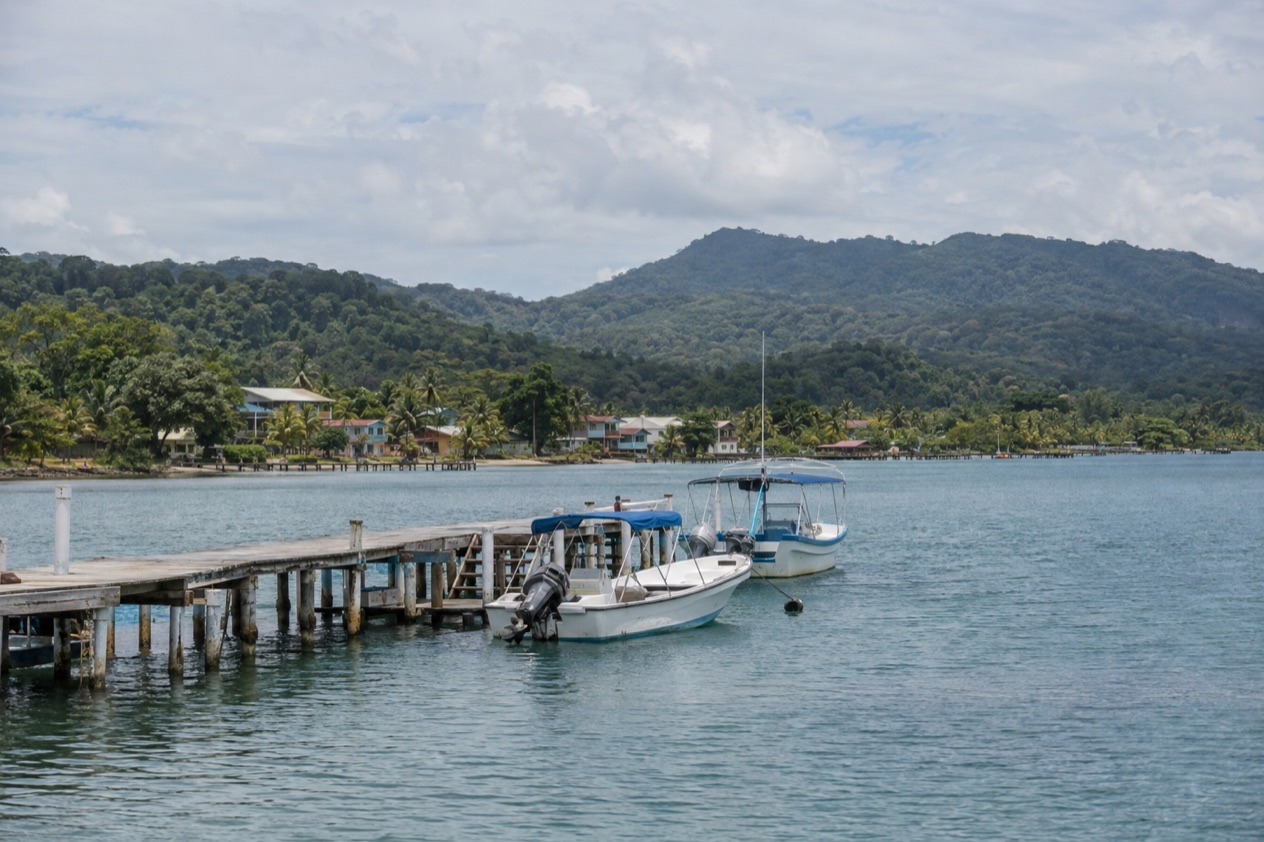
The Punta Gorda Port sits in the eastern part of town on Fort Street, and the stretch near it is where the town meets the water. This is where you watch boats come and go, where the evening light settles over the bay, and where you can walk along the shore after dinner. Rooms with a view of the water are the draw.
If you are catching a boat, the location is convenient for that reason alone, and for anyone who simply likes to wake to a harbor.
Ask about which side of the building faces the water and which faces the street. A port neighborhood has its own early-morning sounds, and a room at the back can make the difference for a light sleeper.
Barranco and the Garifuna coast
Barranco is the southernmost Garifuna village in Belize, and a stay here is a stay inside a living culture. Garifuna drumming, cassava bread, hudut (fish in coconut broth) and a strong tradition of dance and song are part of everyday life in communities like this one. Lodging is modest and small in scale, often a village guesthouse or a homestay, and the experience comes from the neighbors more than from amenities.
It suits curious travelers who want to listen and learn, and who are happy with simple rooms. It is not the place for a resort-style stay with a pool bar. Expect village rhythms, which means meals when they are ready and music when the community gathers.
A tip: go with respect for the place. Ask before photographing people, buy meals and crafts from local families, and let your host guide you to what is happening during your visit.
Maya villages and jungle lodges of the interior
Beyond the coast, the Toledo District is Maya country, home to Ketchi and Mopan Maya communities. This is the southernmost and least populated district in Belize, and it shows in the forest, the farms and the small villages along the roads. Lodging ranges from village homestays, where a family hosts you, to jungle lodges that set their rooms among trees and offer guided outings.
It suits travelers who want to hear birds at dawn, visit a cacao farm and see how chocolate begins as a bean. Families with older children who like nature, couples after quiet, and anyone building a trip around the Maya sites will find the setting a good match. Meals are often taken on site, so the property shapes your days.
A tip: a homestay is a different bargain from a lodge. You gain closeness to a household and a way of life, and you give up the polish. Choose according to which of the two you are really after.
Punta Gorda and the Toledo District areas compared
| Area | Best for | Feel |
|---|---|---|
| Punta Gorda town center | First visit, budget, solo travelers | Working port town with market, church and family restaurants |
| Waterfront and port on Fort Street | Sea views, boat connections | Harbor life, evening walks along the shore |
| Barranco | Culture seekers, Garifuna music and food | Small Garifuna village, simple lodging, community rhythm |
| Maya villages and jungle lodges | Nature, cacao, Maya heritage | Forest and farmland, homestays and lodges with on-site meals |
The main trade-off is services against immersion. In town you have restaurants, shops and a choice of rooms, but you are a visitor in a town that is going about its day. In a village or a lodge you give up that choice and gain a closer view of the south, with a host to explain what you are seeing.
A second trade-off is water against forest. The waterfront and the coast give you the sea and the harbor, while the interior gives you trees, birds and river country. The district does not offer both in one place, so deciding which matters more shapes where you sleep.
A third is quiet against company. The villages and lodges are calm by nature, and the evenings are yours. Town has more going on, but even there the pace is gentle and nothing resembles a nightlife district. If you want a lively scene after dark, the south is not the destination, and it is better to know that before you book.
Finally, there is the matter of how much you want arranged. Lodges tend to offer their own tours and meals, which makes planning easy and ties you to their program. Town stays leave the arranging to you, which is freedom for some and work for others. Many travelers combine the two, starting in town to get oriented and moving to a lodge or village for the heart of the trip.
Because the district is the least populated in Belize, the options are fewer than on the cayes or in the Cayo District. That is part of its appeal. Each place to stay has a character of its own, and the choice is less about a long list of hotels than about which kind of south you want to see.
How to choose your hotel in Punta Gorda and the Toledo District
Start with whether you want an all-inclusive setup or not. Lodges that serve meals and run their own outings give you a complete package, which is practical in a district with fewer restaurants outside town. A guesthouse or hotel in Punta Gorda leaves meals and plans to you, which suits people who like to wander and eat where the locals do.
Next, decide between the water and the land. A property on the waterfront gives you the harbor and the sea air. One in the interior gives you the forest and the sounds that go with it. Look at where the property actually sits, since a name that mentions the sea or the jungle does not always tell you which side of town or district it is on.
Think about the calendar too. Garifuna Mass takes place on alternate Sunday mornings, and a stay timed to it adds a memorable morning to the trip. For festivals and holiday weeks, a small district has a limited number of rooms, so settle on your property early once your dates are fixed. The Atlantic hurricane season runs from June 1 to November 30, and a stay in those months deserves a flexible mind about the weather.
For families, look at the practical details: whether there is a restaurant on site, whether rooms can hold everyone together, and whether the grounds suit children. For travelers with limited mobility, ask directly about steps, paths and the distance from the room to the dining area, since village and jungle properties vary widely and the answer is rarely visible in a photo.
Before you book, check a few things. Ask about noise: a room facing the street or the port will sound different from one at the back. Ask how transfers work if the property is outside town, because arranging your arrival matters more where there is no corner taxi stand. If the stay is beside the sea, ask whether sargassum reaches that stretch of shore, as the answer depends on the property’s own coast.
It also helps to confirm that a hotel is operating properly. Every hotel in Belize must display its Hotel Registration and Accommodation License in a conspicuous place, preferably at the reception counter. A property with a restaurant must hold a Food Establishment Certification, and one in a town must hold a Trade License Certificate from the Town Board. A reputable host will not mind the question.
Finally, match the property to the trip you are really taking. If your days are full of Maya sites and village visits, a simple room in town is enough.
If the lodge itself is the destination, with its trails, its birds and its table, then pay attention to what it offers and book it for that. The Belize Hotel Association’s accommodation guide lists member resorts, hotels and lodges and is a useful place to compare.
Good to know before you go
The U.S. State Department rates Belize Level 2, “Exercise increased caution”, because of crime, and says the south side of Belize City has historically had the highest concentration of violent crime.
Punta Gorda is the capital of the Toledo District and the southernmost town in Belize, and your lodging bill there will carry a tax like any other in the country. Hotels and tourist accommodations collect it from each guest on behalf of the government, so expect to see it added to your total in Belize dollars or the currency your host quotes.
| Fee | Amount | Who pays |
|---|---|---|
| Tourist accommodation tax | 9% | Each guest, collected by the hotel for the Government of Belize |
Sources
- Belize Tourism Board, Hotels (https://www.belizetourismboard.org/hotels/), checked October 11, 2026
- Wikipedia, Punta Gorda, Belize (https://en.wikipedia.org/wiki/Punta_Gorda,_Belize), checked October 11, 2026
- Wikivoyage, Punta Gorda (Belize) (https://en.wikivoyage.org/wiki/Punta_Gorda_(Belize)), checked October 11, 2026
- Wikipedia, Toledo District (https://en.wikipedia.org/wiki/Toledo_District), checked October 11, 2026
- Wikivoyage, Toledo District (https://en.wikivoyage.org/wiki/Toledo_District), checked October 11, 2026
- Belize Port Authority, Punta Gorda port (https://portauthority.bz/belize-port-facilities/punta-gorda-port/), checked October 11, 2026
- Belize Hotel Association (https://www.belizehotels.org/), checked October 11, 2026
- U.S. Department of State, Belize Travel Advisory, Level 2, March 11, 2026 (https://travel.state.gov/), checked October 11, 2026
- NOAA National Hurricane Center, Climatology (https://www.nhc.noaa.gov/climo/), checked October 11, 2026