
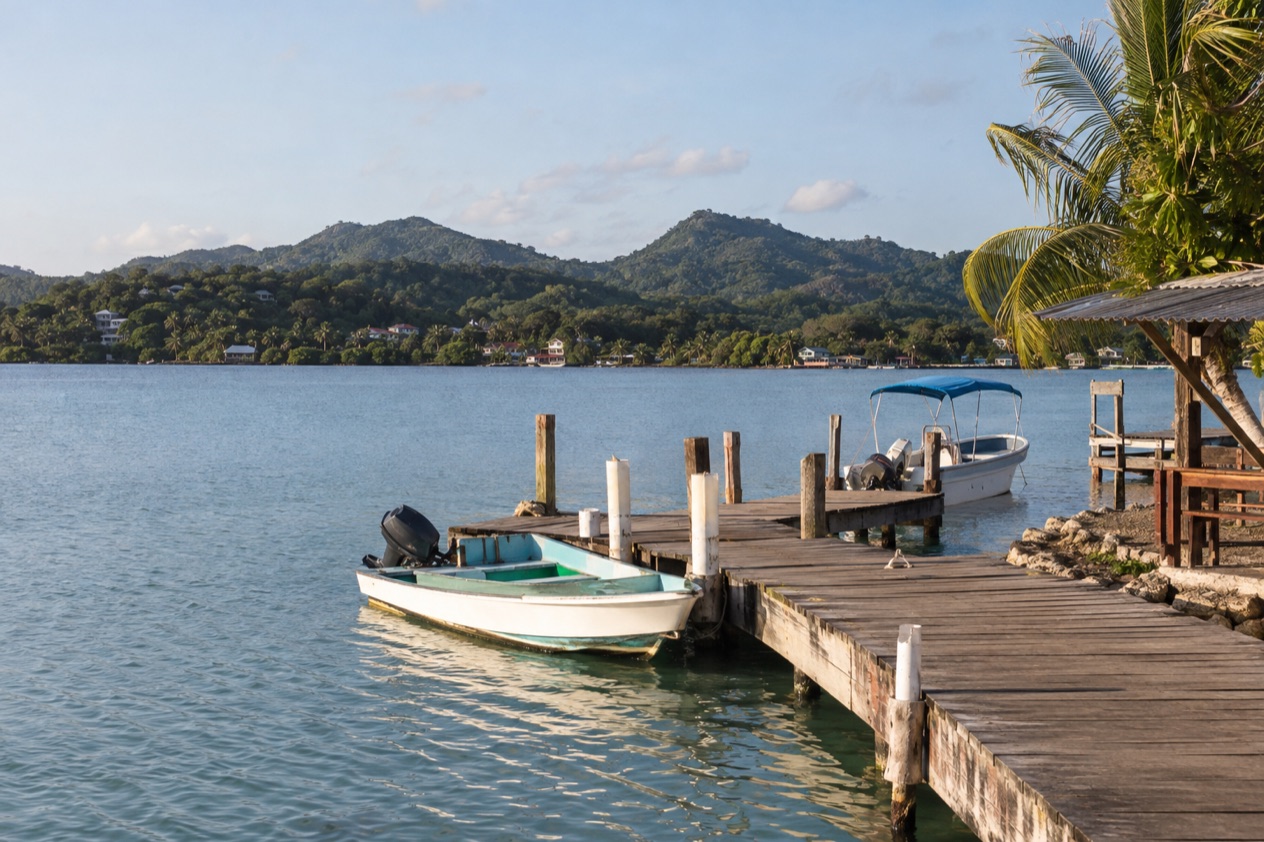
Punta Gorda wakes up slowly. Fishing boats rock at the edge of town, a church bell carries across the waterfront, and the talk in the street slides between English, Garifuna and Maya languages.
This is the far south of Belize, the Toledo District, where the last town on the map gives way to villages, rivers and the Guatemalan border. A few practical things are worth knowing before you arrive: how you enter, how you pay, how you move around and how far the nearest hospital may be.
What should you know before visiting Punta Gorda and the Toledo District?
Four things matter most here: the entry paperwork, the Belize dollar, the roads, and the thin medical care in remote areas. Punta Gorda is the southernmost town in Belize and the capital of the Toledo District, so everything else in the region radiates from a small place of just over five thousand people at the last census. Plan with that scale in mind.
What tends to surprise first-time visitors is how much the district is a meeting of peoples. Garifuna, Mestizo, Ketchi Maya, Mopan Maya, Creole and East Indian families all live in and around town, and English is the major language of Toledo, so you can talk to nearly anyone.
Fishing and agriculture shape daily life far more than tourism does, and the district’s Chocolate Festival brings chocolate and wine to Toledo in May. Near town you can stay overnight in traditional Maya houses, meet local Maya people and taste caldo and corn tortillas, which is a very different rhythm from the cayes.
Toledo is also the least populated district in Belize, and it feels that way. Distances between villages are real, services thin out quickly, and the border with Guatemala lies to the west and south, with the Sarstoon River marking the southern edge. Come ready for quiet, green country rather than a resort strip.
Entry, fees and paperwork
U.S. citizens need a U.S. passport valid for the length of their stay, and tourists staying less than 30 days do not need a visa. Every traveler must show proof of an onward or return ticket and enough funds to cover the whole stay. Belize does not require special immunizations for visitors. Visitors are usually given a 30-day stay at the start.
Those who want to stay longer must have the passport re-stamped at a local immigration office and pay an extra fee for each additional month, up to six months. The Visitor’s Permit Extension adds 30 days, as long as you do not work or do business without consent, and the immigration office nearest you can tell you whether you qualify. Children traveling without both parents need proof of consent and identification from the parent who stays behind, plus their birth certificates.
Arriving overland changes the fees, since the charge depends on whether you stay less or more than 24 hours. If you fly out through the international airport near Belize City, the departure charges are the ones in the table.
| Fee | Amount | Who pays |
|---|---|---|
| Passenger Service Fee, Philip S. W. Goldson International Airport | US$53.50 | Departing passengers |
| PACT (Protected Areas Conservation Trust) Fee, same airport | US$20.00 | Departing passengers |
| Visitor’s Permit Extension (30 more days) | BZ$200.00 | Visitors extending their stay |
| Overnight parking, same airport | US$9.00 | Drivers leaving a vehicle |
Money and cards
The Belize dollar is the currency, and its official value is pegged at two Belize dollars to one U.S. dollar. That fixed rate makes mental math simple: halve any Belize dollar price and you have the U.S. amount.
Because prices may be quoted in either currency, it helps to notice whether a sign or a menu says BZ$ or US$ before you agree to anything. The airport fees above are set in U.S. dollars, while the permit extension is set in Belize dollars.
Getting around
Traffic in Belize is something to learn before you drive, and the road network in the south reflects the range the country offers: from two-lane paved roads to dirt or gravel tracks. Driving at night is strongly discouraged, and roadside assistance is frequently unavailable, so a breakdown in the Toledo countryside can leave you waiting.
Valid U.S. or international driver’s permits are accepted only for three months after you first enter the country. Punta Gorda also has a port in the eastern part of town on Fort Street, the working waterfront where the sea meets the town. Near Punta Gorda, visitors can stay overnight in traditional Maya houses and visit Maya communities.
Health and the sun
Medical care is the point to plan around. Emergency services in Belize are usually unavailable or significantly delayed, and serious injuries or illnesses normally require evacuation to another country.
Advanced treatment is scarce even in Belize City and Belmopan, and in rural and remote areas, which describes much of Toledo, even basic care is hard to find or not available at all. Travel insurance that covers evacuation is a sensible match for a region like this.
The CDC recommends hepatitis A vaccine for unvaccinated travelers one year old or older, and for infants 6 to 11 months old. Hepatitis B vaccine is recommended for unvaccinated travelers younger than 60. Typhoid vaccine is recommended for those who might visit rural areas with poor sanitation, spend a month or more, or visit friends or relatives. A doctor or travel clinic can sort out the details before you leave.
The sun in southern Belize is strong, and the district’s rivers, farm paths and open waterfront give little reason to hide from it. A hat and sunscreen belong in the daypack.
Local customs and etiquette
A greeting goes a long way in Punta Gorda. Say good morning or good afternoon to shopkeepers, to people passing on the street and to anyone you sit beside, and expect the same back. Conversations are unhurried, and rushing a transaction can feel abrupt.
Dress is relaxed in the heat, but covering shoulders and knees is a courtesy in churches and when visiting villages. On some Sundays, Garifuna Mass is held in the morning at St Peter Claver Parish Church, with Garifuna hymns. If you attend, arrive quietly, sit toward the back and treat it as a service rather than a performance.
When you stay with a Maya family or visit a village, you are a guest in a home. Ask before taking photographs of people, accept food and drink graciously, and follow your hosts’ lead on the daily rhythm.
At local markets, prices are generally what they are, so friendly conversation counts for more than haggling. Meals tend to be built around rice and beans, stewed chicken, fresh fish, caldo and corn tortillas, with lunch as the main meal of the day.
Attitudes toward sexual orientation are worth knowing. Consensual same-sex relations are not legally restricted, but significant hostile sentiment persists, and an unenforced immigration law prohibits “homosexual” persons from entering Belize.
Good to know before you go
The U.S. State Department rates Belize Level 2, “Exercise increased caution”, because of crime, and says the south side of Belize City has historically had the highest concentration of violent crime.
The Atlantic hurricane season runs from June 1 to November 30, and the southern coast of Belize falls within it. Bring the documents that matter: your passport, your onward or return ticket and the proof of funds, and keep the receipts for your permit or extension fees.
One last habit suits this corner of the country: start your outings early and be back in town before dark, since night driving is strongly discouraged. Souvenirs deserve a thought too, because counterfeit and pirated goods can bring fines or be taken from you if you carry them back to the United States.
Sources
- U.S. Department of State, Belize Travel Information, Entry and exit requirements (https://travel.state.gov/), checked October 11, 2026
- U.S. Department of State, Belize Travel Information, Health (https://travel.state.gov/), checked October 11, 2026
- U.S. Department of State, Belize Travel Information, Traveling and transportation (https://travel.state.gov/), checked October 11, 2026
- U.S. Department of State, Belize Travel Information, Local laws and special circumstances (https://travel.state.gov/), checked October 11, 2026
- U.S. Centers for Disease Control and Prevention, Belize traveler view (https://wwwnc.cdc.gov/travel/destinations/traveler/none/belize), checked October 11, 2026
- Wikipedia, Belize dollar (https://en.wikipedia.org/wiki/Belize_dollar), checked October 11, 2026
- Wikipedia, Languages of Belize (https://en.wikipedia.org/wiki/Languages_of_Belize), checked October 11, 2026
- Philip S. W. Goldson International Airport (Belize), FAQ (https://www.pgiabelize.com/about-us/faq/), checked October 11, 2026
- Belize Immigration Department, Visitor's permit (https://immigration.gov.bz/permits/visitors-permit/), checked October 11, 2026
- Tropic Air, Belize immigration and visas (https://www.tropicair.com/belize-immigration-visas/), checked October 11, 2026
- Maya Island Air, Belize visa requirements (https://www.mayaislandair.com/belize-visa-requirements/), checked October 11, 2026
- NOAA National Hurricane Center, Climatology (https://www.nhc.noaa.gov/climo/), checked October 11, 2026
- Wikipedia, Punta Gorda, Belize (https://en.wikipedia.org/wiki/Punta_Gorda,_Belize), checked October 11, 2026
- Wikivoyage, Punta Gorda (Belize) (https://en.wikivoyage.org/wiki/Punta_Gorda_(Belize)), checked October 11, 2026
- Wikipedia, Toledo District (https://en.wikipedia.org/wiki/Toledo_District), checked October 11, 2026
- Wikivoyage, Toledo District (https://en.wikivoyage.org/wiki/Toledo_District), checked October 11, 2026
- Belize Port Authority, Punta Gorda port (https://portauthority.bz/belize-port-facilities/punta-gorda-port/), checked October 11, 2026
- Tropic Air, Punta Gorda (https://www.tropicair.com/punta-gorda/), checked October 11, 2026
- U.S. Department of State, Belize Travel Advisory, Level 2, March 11, 2026 (https://travel.state.gov/), checked October 11, 2026