
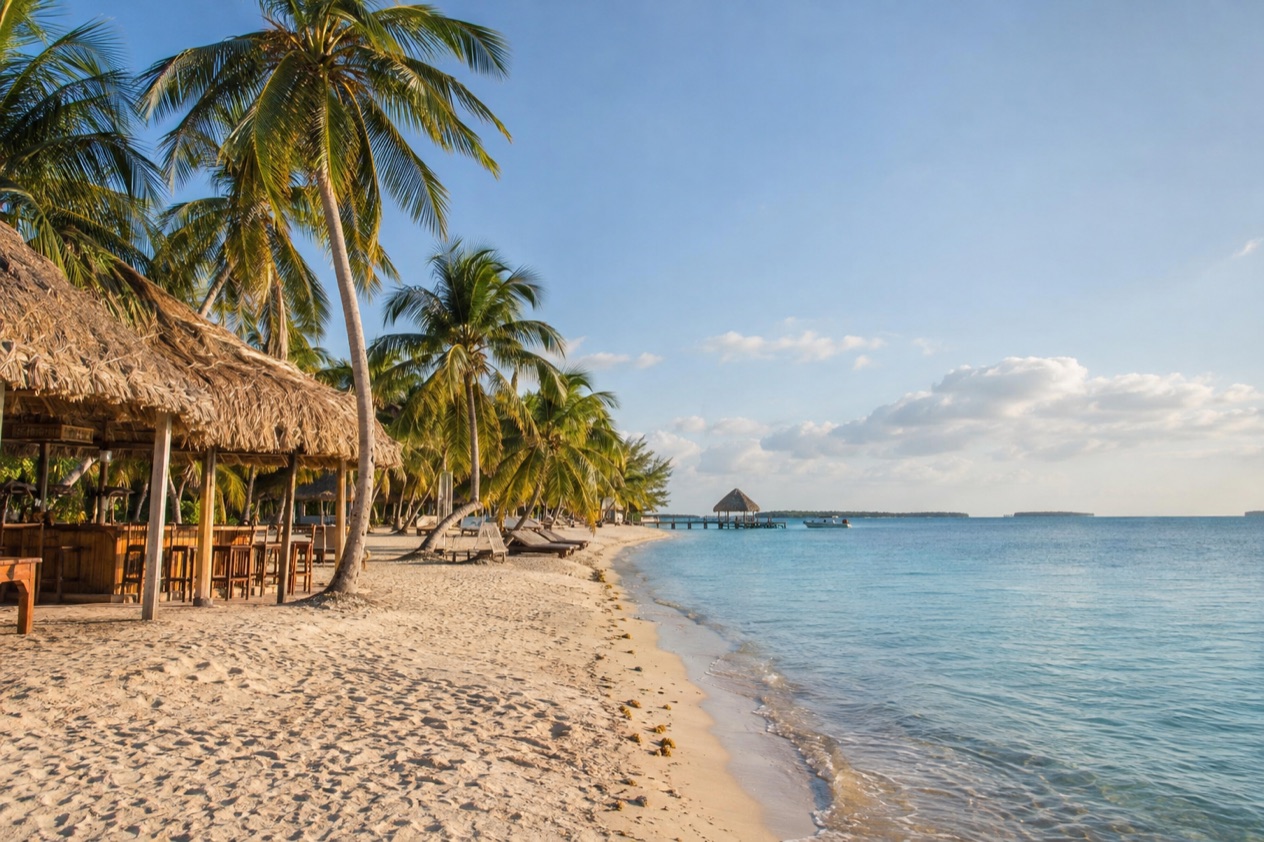
On a February morning in Placencia, the only traffic on the Sidewalk is flip-flops, and the smell of coffee and fry jacks drifts out of the open doors along the path. By June the sea has turned bathwater warm, the afternoons slow down, and the village settles into a rhythm all its own. The year here swings between a bright, breezy winter and a hot, wet late summer, and the peninsula’s southern tip suits each in a different way.
When is the best time to visit Placencia?
The best time to visit Placencia is the drier stretch from February through May, when the days are long, the rain is lightest and the sea is warm, though the months on either side have their own merits. Which month suits you depends on what you want from the trip.
For beach and sea time, March and April are the sweet spot. In Belize City, highs average about 86°F in March and close to 89°F in April, and rain falls on only a few days.
The sea warms steadily through the spring, which makes snorkeling trips to Laughing Bird Caye and the barrier reef pleasant. April and May are also the months when whale sharks arrive at Gladden Spit, so a spring visit adds a rare wildlife outing to the beach days.
For sightseeing and cooler air, aim for January and February. Daylight is shorter, the evenings are comfortable for a walk along the Sidewalk, and the village feels lively without being sweltering. Winter cold fronts, called northers, can bring a gray, breezy spell, so leave a little slack in your plans for boat days.
For budget and quiet, the wetter months from September into November leave the peninsula calm, with an easy pace in the restaurants and on the sand. They also fall in the Atlantic hurricane season, so that trade-off is worth weighing.
Families should know that March is spring break season for much of the U.S., and the beaches and bars reflect it. If your kids’ school calendar gives you a choice, early February or late April and May give the same sunshine with a more relaxed atmosphere. Summer works for families who do not mind heat and the occasional storm, since the sea is at its warmest then.
Placencia weather by month
The sea around Placencia stays warm all twelve months, and the days stretch and shorten only gently.
| Month | Sea at Placencia (°F) | Daylight on the 15th (hours and minutes) |
|---|---|---|
| January | 81.0 | 11 h 17 min |
| February | 80.7 | 11 h 39 min |
| March | 83.7 | 12 h 05 min |
| April | 84.3 | 12 h 34 min |
| May | 86.9 | 12 h 57 min |
| June | 88.2 | 13 h 09 min |
| July | 86.4 | 13 h 03 min |
| August | 87.6 | 12 h 43 min |
| September | 88.8 | 12 h 15 min |
| October | 87.1 | 11 h 48 min |
| November | 83.3 | 11 h 24 min |
| December | 80.7 | 11 h 11 min |
The shape of the year is easy to read. The sea is coolest in December through February, then climbs through spring and peaks around June and September, when it feels like bathwater. Daylight follows the sun: long June evenings give you more than thirteen hours of light, while December days are noticeably shorter, so winter dinners start after dark.
In Belize City, highs average about 84°F in January, climb to about 90°F by September, and rain falls on as many as thirteen days in October. January and December still see around ten rain days, but winter rain tends to arrive with passing fronts and gray spells, while summer and autumn rain comes in heavier downpours and storms. February through April is the stretch with the fewest rain days.
What is there to do in Placencia in each season?
February to May: reef days and whale sharks
The dry months are the time for boats. The barrier reef is a 45-minute ride from the village, and Laughing Bird Caye, a National Park and World Heritage Site, lies even closer, so snorkeling and diving fill the mornings. Between outings, the village itself is a pleasure: you stroll the Sidewalk, stop for ice cream or a rum punch, and watch the fishing boats come in.
In April and May, whale sharks gather at Gladden Spit, in the marine reserve that protects their spawning site. Sightings are a chance, not a promise, but this is the season boat captains plan around. Save these months for the reserve and leave the hot, wet autumn for something else.
June to October: warm sea, slow village
Summer and early autumn bring the warmest water of the year and a hush to the peninsula. Rain arrives in heavier bursts, and the hurricane season runs from June 1 to November 30, so plans on the water need flexibility. In return, you get long evenings, quiet restaurants and a village that feels like its own.
This is the time for lazy days: kayaking close to shore, reading on the sand, long lunches of fresh fish and sunset walks along the Sidewalk. Seine Bight, the Garifuna village on the peninsula, is worth a visit any time of year for its drumming culture and its food, and the slower season gives you more room to linger.
November to January: cooler air and the holidays
From late November the air softens, the sea cools a little and the village starts to fill with winter visitors. Evenings are pleasant for outdoor dining, and cold fronts can bring a gray, breezy day or two that suit a museum-free afternoon of coffee and books. Around Christmas and New Year the village is festive and busier, with lights and music along the Sidewalk.
This is a good window for reef trips once the autumn rain eases, and for exploring the wider Stann Creek District, including Dangriga and the Garifuna village of Hopkins. Whale sharks belong to spring, so leave those for April and May.
When is Placencia cheapest and least crowded?
Placencia is quietest from September through November, when the rain is heaviest and most visitors stay home. Rooms are easier to find, the Sidewalk is calm, and you can often have a stretch of beach to yourself. Restaurants still run, though some small businesses slow down or close for a short break at this time of year.
The busiest weeks follow the U.S. calendar. Christmas and New Year fill the peninsula, and so does March, when spring break crowds arrive for the sunshine. Easter week, which moves every year, is another peak, with families and locals both on holiday. Summer vacation brings a second, gentler wave, including travelers from neighboring countries, from about early July to late August.
The shoulder months, January and February, then late April through June, give the best balance. The weather is good, the sea is inviting, and the village has room to breathe. If you want sunshine without the crowds, those are the weeks to aim for. Holiday weeks mean holiday prices, so a few days either side of Christmas or Easter can make a real difference to what you find.
Which months should you avoid in Placencia?
Avoid September and October if you want dependable weather, since these are the wettest months and fall at the heart of the hurricane season. The Atlantic season runs from June 1 to November 30, and its peak is September 10, with most activity between mid-August and mid-October. An average season brings 14 named storms, and Placencia has been through one of the worst: Hurricane Iris struck southern Belize on October 8, 2001, with 145 mph winds and damaged nearly 95% of the buildings in the village.
That does not make every autumn trip a gamble, but it does mean travel insurance and flexible plans are wise, and boat outings may shift with the weather. Rain in these months comes in heavy downpours rather than gentle showers, and the sea is at its warmest and most humid.
Sargassum is the other thing to know. This brown algae floats in clumps, sometimes a mile long, and gives off a rotten-egg smell when it washes up on the beach.
It can disappoint on any beach trip, and it tends to be most noticeable from spring into summer, so no stretch of sand can be promised free of it. The reef and the cayes are a good way to spend the day if the shoreline is not at its best.
Winter has its own small drawback: northers, the cold fronts of the dry season, bring a few gray, breezy days that can disrupt boat trips. They pass, and they matter far less than a storm, but they are the reason a January trip benefits from a spare day.
When can you swim in Placencia?
The sea around Placencia is warm enough for a dip in every month of the year. It is coolest from December through February, when it still sits around 81°F, and it warms through spring to reach the high 80s by early summer and September.
In winter the water feels refreshing rather than cold, and with cooler air a swim is mostly a morning pleasure. March and April bring the comfortable middle ground, warm enough to stay in for a long time. From May through October the sea feels like bathwater, which suits long snorkeling sessions at the reef and the cayes.
What changes through the year is less the temperature than the shore itself. Sargassum can gather on the sand in spring and summer, and after rain or a norther the water near the beach may look cloudy. The reef trips take you to clearer water, with Laughing Bird Caye the closest stop.
Festivals and events in Placencia through the year
Winter holidays and Carnival
Christmas and New Year on the peninsula mean lights strung along the Sidewalk, live music in the bars and families gathering on the sand. December 25 is a day for long meals and quiet beaches, while the days around New Year carry a party atmosphere that lasts well into the night.
Carnival season in Belize falls around the weeks before Lent, with costumes, drums and street dancing in communities across the country. The Garifuna villages of the area, Seine Bight among them, keep strong traditions of drumming and dance, and these moments are a fine reason to wander beyond the beach if you are in town. Dates move with the calendar, so ask locally once you arrive.
Easter week and Día de Muertos
Easter week moves each year and is a time when Belizean families take to the coast. The beaches fill with picnics, music and games, and the village has a holiday feel. If you want quiet, avoid this week. If you want a taste of local life, it is a good one.
Día de Muertos, from October 31 to November 2, is observed across the region, and in southern Belize it appears in the cemetery visits and family remembrance that mark early November. It is a private time for many families, so approach it with respect and watch rather than join in.
Nature seasons: whale sharks and the reef
The great natural event of the Placencia year is the arrival of whale sharks at Gladden Spit in April and May. They gather around the spawning aggregations of snapper that the reserve protects, and boats head out to the reserve, about 22 miles off the coast, hoping for an encounter. Sightings are a chance, never a guarantee, which is part of what makes them memorable.
The rest of the year belongs to the reef. Between the two, the peninsula offers nature on the water nearly year-round, with the whale shark season as its annual high point.
Sources
- Open-Meteo Marine API, average 2015-2024, checked October 11, 2026
- sunrise-sunset.org, sunrise and sunset calculated for the 15th of the month, checked October 11, 2026
- NOAA NCEI, GHCN-Daily station BHM00078583 (Philip S. W. Goldson International Airport, Belize City), normals 1991-2020 computed from the daily record (https://www.ncei.noaa.gov/access/services/data/v1?dataset=daily-summaries&stations=BHM00078583), checked October 11, 2026
- Wikipedia, Placencia (https://en.wikipedia.org/wiki/Placencia), checked October 11, 2026
- Wikivoyage, Placencia (https://en.wikivoyage.org/wiki/Placencia), checked October 11, 2026
- Wikipedia, Seine Bight (https://en.wikipedia.org/wiki/Seine_Bight), checked October 11, 2026
- Belize Fisheries Department, Gladden Spit and Silk Cayes Marine Reserve (https://fisheries.gov.bz/gsscmr/), checked October 11, 2026
- Wikipedia, Gladden Spit and Silk Cayes Marine Reserve (https://en.wikipedia.org/wiki/Gladden_Spit_and_Silk_Cayes_Marine_Reserve), checked October 11, 2026
- Wikipedia, Silk Cayes (https://en.wikipedia.org/wiki/Silk_Cayes), checked October 11, 2026
- Wikipedia, Laughing Bird Caye (https://en.wikipedia.org/wiki/Laughing_Bird_Caye), checked October 11, 2026
- Tropic Air, Placencia (https://www.tropicair.com/placencia-plj/), checked October 11, 2026
- Maya Island Air, Placencia flights (https://www.mayaislandair.com/belize-flights-placencia/), checked October 11, 2026
- Wikipedia, Stann Creek District (https://en.wikipedia.org/wiki/Stann_Creek_District), checked October 11, 2026
- Wikivoyage, Stann Creek (https://en.wikivoyage.org/wiki/Stann_Creek), checked October 11, 2026
- Wikipedia, Monkey River Town (https://en.wikipedia.org/wiki/Monkey_River_Town), checked October 11, 2026
- Wikipedia, Climate of Belize (https://en.wikipedia.org/wiki/Climate_of_Belize), checked October 11, 2026
- NOAA National Hurricane Center, Climatology (https://www.nhc.noaa.gov/climo/), checked October 11, 2026
- Belize Tourism Board, Sargassum resource (https://www.belizetourismboard.org/tourism-resources/sargassum-resource/), checked October 11, 2026
- U.S. Department of State, Belize Travel Advisory, Level 2, March 11, 2026 (https://travel.state.gov/), checked October 11, 2026
To plan your stay
- Things to Do in Placencia: Reef Days, Whale Sharks, Garifuna Culture and Where to Eat
- Where to Stay in Placencia: The Village, Seine Bight, Beachfront Resorts and How to Choose
- Placencia from Belize City: Flights, Rental Cars and What Waits on the Peninsula
- Know Before You Go to Placencia: Entry Rules, Money, Health and Getting Around