
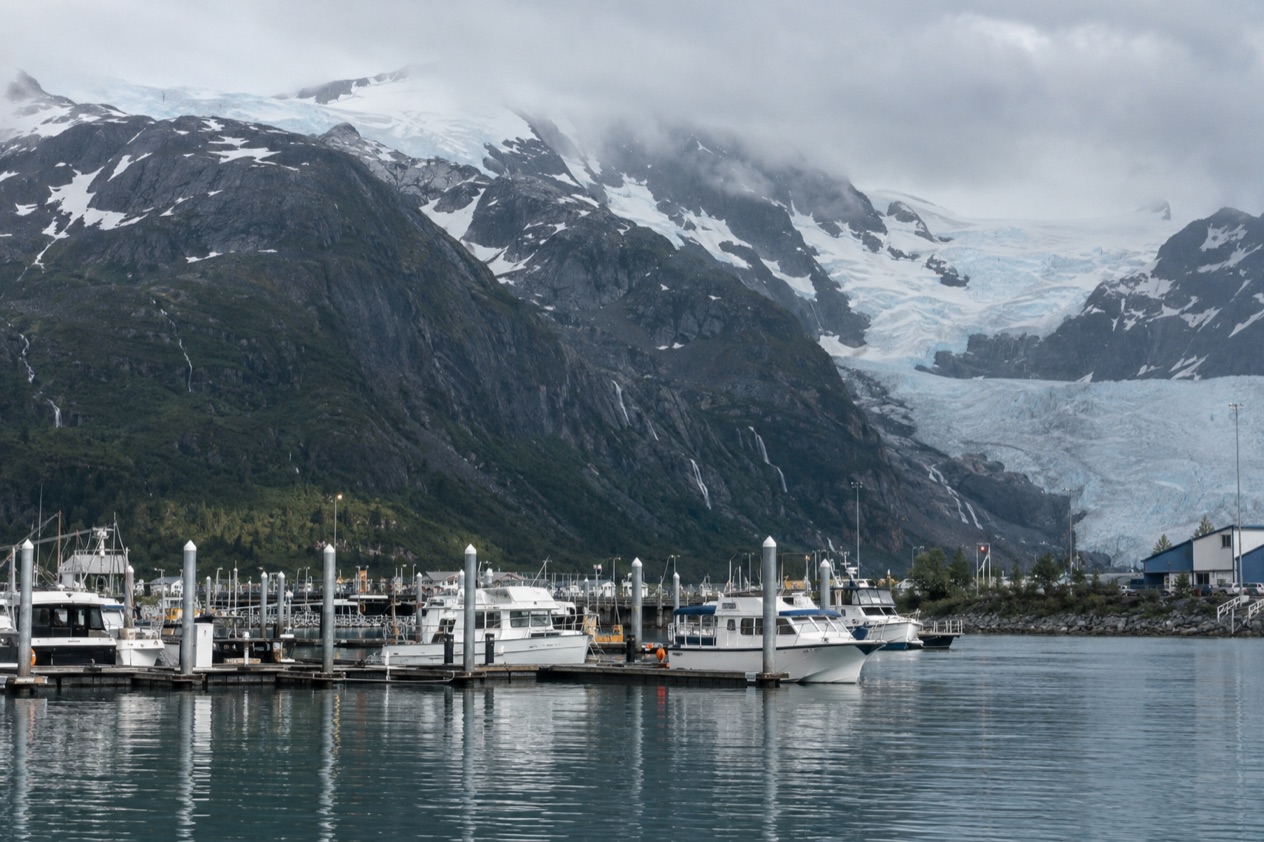
Morning in Whittier often starts with cloud sitting low on the Passage Canal, mountains dropping straight into the water and kayakers carrying paddles along the docks. By evening the town has gone quiet, and most of its residents are behind the windows of a single tall building. The real choice for a visitor is whether to sleep in that small, wet, end-of-the-road town, or in one of the places along the route that leads to it.
What is the best area to stay in Whittier?
For a first visit, the harbor and the town center are the natural base, because the glacier cruises, the kayak launches and the train all start within the same small cluster of buildings. For glaciers and parks, the stretch along the Portage Glacier Highway puts you in the Chugach National Forest on the way in.
For a lower-key base with more going on in the evening, Anchorage and Girdwood sit on the other side of the tunnel. For families, the answer depends on how much time the children will spend in a car or on a train.
The areas differ less in looks than in rhythm. Whittier itself is tiny, and being in town means the whole place is in reach on foot, with the water always in sight. Staying out of town trades that for a wider choice of places to eat and sleep, and for a day that begins with the drive in. The tunnel is the hinge between the two, and it shapes every plan.
Rain is the other thing that sets the mood. Whittier has an extremely wet climate, with about 197 inches of precipitation in an average year. A stay here is a stay in clouds, drizzle and sudden clearings, when waterfalls streak the cliffs and the water goes the color of slate. Plan indoor hours as part of the trip and you will enjoy it more.
If your days are built around Prince William Sound, sleep close to the dock. The sound holds the world’s largest concentration of tidewater glaciers, and the boats that go to see them leave from Whittier. The 26 Glacier Cruise offers a no-seasickness guarantee, which is worth knowing if the water worries someone in your group. Kayak tours launch from the docks too, and kayak drop-offs reach more remote parts of the sound.
If Whittier is one stop in a longer trip, think in terms of a route. The Glacier Discovery Train links Anchorage, Girdwood, Whittier, Portage, Spencer and Grandview, so a base in any of those towns can be tied to the others. Those who want a night in town but a city for the rest of the trip can split their stay, giving Whittier one night and keeping their main base elsewhere.
For travelers who mind logistics, remember that Whittier is a place you reach through a single tunnel. Pedestrians and bicycles are not allowed in it, so cars, buses and the train carry everyone. That matters for anyone who prefers not to drive, and it is one more reason to choose a bed near the thing you came for.
The best areas to stay in Whittier
The harbor and the docks
The harbor is the working heart of Whittier. Boats come and go, kayaks are lined up near the water, and the ferry terminal of the Alaska Marine Highway stands at the end of the Portage Glacier Highway. Early in the day you hear engines and gulls, and later the place settles into a hush broken by rain on metal roofs.
This area suits travelers with a boat or a kayak tour on the schedule, since sea kayaking tours launch from the docks. You can walk out of your door and be at the water in minutes. Rooms here are the kind you find in a small port town, and you should expect a simple, practical stay rather than a resort.
Tip: pack for wet weather even when the sky looks fine. Wet decks and drizzle at the dock are part of the experience, and a dry change of clothes in the room is a small luxury after a day on the water.
Begich Towers and the town center
Whittier is nicknamed the Town Under One Roof because almost all of its residents live in the Begich Towers Condominium. That one fact explains the center of town: a single large building holds most of the community, and the rest of the settlement arranges itself around it and the harbor. Streets are short, and there is no sprawl.
Staying near the Towers suits those who want to feel the everyday life of a small Alaska community, not just the dock scene. It also suits anyone who likes to walk to dinner and back in the rain without starting a car. The town does not have the nightlife of a city, and evenings are for quiet talk, a book and the sound of weather.
Tip: stay a full night rather than treating the town as a stop between a train and a boat. The clouds often lift in the evening, and the mountains around the canal look different in the changing light.
Along the Portage Glacier Highway
The Portage Glacier Highway connects the Seward Highway in Portage to the ferry terminal in Whittier, covering about 11.59 miles through the Chugach National Forest and the Anton Anderson Memorial Tunnel. This stretch is forest, water and mountains, and it is the doorway to the Portage Glacier area, which the tunnel also connects to the city.
A base on this side suits travelers who care more about the national forest than the harbor. You trade the walk-to-the-dock convenience for a landscape that opens out around you. Motor vehicle speed in the tunnel is limited to 25 miles per hour, so the crossing takes about ten minutes each way, and each morning and evening begins or ends with it.
Tip: because pedestrians and bicycles cannot use the tunnel, think of this side as a place for people with a car or a seat on public transport, not for those hoping to walk in and out of Whittier.
Girdwood
Girdwood is a stop on the Glacier Discovery Train, which runs from Anchorage through Girdwood to Whittier, Portage, Spencer and Grandview. It sits on the Anchorage side of the tunnel, so it makes a base for a trip that includes Whittier as an outing instead of as the stay.
It suits travelers who want a mountain-town evening with more choice than Whittier offers, and who are happy to travel to Whittier for the day. The train gives you a way to reach it without driving, and the same line carries on to the stops that can be reached only by rail.
Anchorage
Anchorage is about 58 miles northwest of Whittier, and it is where many trips begin. The Glacier Discovery Train starts here and follows much of the same route as the Coastal Classic, with an added turn off the main line to Whittier and a turnaround at Grandview.
Staying in the city suits travelers who want the widest choice of restaurants and rooms, or who are combining Whittier with other parts of Alaska. The cost is distance. A day trip to the sound means leaving the city and coming back, and the weather in Whittier can be very different from the weather you left behind.
Whittier areas compared
| Area | Best for | Feel | Getting around |
|---|---|---|---|
| Harbor and docks | Kayak tours, glacier cruises, ferry terminal | Working port, boats and weather | On foot |
| Begich Towers and town center | Experiencing the small town itself | Compact, quiet, everyone under one roof | On foot |
| Portage Glacier Highway | Chugach National Forest and Portage Glacier area | Forest and mountain road | By vehicle through the tunnel |
| Girdwood | Using the train, a base outside town | Mountain town on the rail line | Glacier Discovery Train or vehicle |
| Anchorage | Wide choice, longer trips across Alaska | City base | Glacier Discovery Train or vehicle |
The first trade-off is in town against out of town. Sleeping in Whittier means waking up to the canal, the clouds and the sound of the harbor, and it means the boats and kayaks are close. Sleeping elsewhere means a different kind of day, with the drive or the train as the first and last part of it.
The second is the dock side against the quiet side. Near the water the town is busy with comings and goings, while the streets around the Begich Towers feel more like a neighborhood. Both are small, and neither is more than a short stretch from the other, but the mood changes as you move away from the boats.
The third is weather. Whittier is wet in almost every season, with enormous yearly precipitation, so a base in town makes you part of the weather, and a base outside lets you step back from it. Neither is better. It depends on whether you see the rain as part of the place or as something to plan around.
The fourth is the tunnel. Everyone who sleeps outside Whittier but spends the day in it must pass through the same ten-minute crossing, while everyone who sleeps in town has done it once. A traveler who dislikes the idea of any dependency on a single passage should lean toward a night in town.
Finally, think about who is traveling. Those who like to be on the water at first light are better off at the harbor. Those who want to explore the forest and the glacier side may prefer the highway. Those who want a rail trip as part of the stay can pick Girdwood or Anchorage, and use the Glacier Discovery Train as the link.
How to choose your hotel in Whittier
Start with what you want to do the next morning. If the answer is a boat, a kayak or a glacier cruise, choose the harbor, because that is where those trips begin.
If it is a trail or a view in the national forest, the Portage Glacier Highway is closer. If it is a train ride, any stop on the Glacier Discovery Train line can be your base, from Anchorage and Girdwood through Whittier to Portage.
Think next about the tunnel. Motor vehicles pass through at a limited speed, and pedestrians and bicycles do not use it at all outside the annual Walk to Whittier event in June. For a traveler without a car, this means your lodging should be somewhere the train or a vehicle can reach, rather than a place that expects you to walk in.
For families, the main question is how long children can sit. A night in Whittier removes the daily crossing and puts the water close, and a night in Girdwood or Anchorage adds the crossing but gives more choice for meals. The train stops at places accessible only by rail, with day trip options for all ages and energy levels, which gives a family another way to spend the time.
For mobility, look at the layout of the town. Whittier is compact, and most of what you need lies near the harbor and the Begich Towers. A traveler who does not want to walk far can choose lodging close to the dock and keep the days built around one or two outings.
Then think about rain. In a place with this much precipitation, a room becomes part of the day, not just a place to sleep. A table by a window, a warm corner for wet gear and a view of the canal turn a gray afternoon into part of the visit. Look at photos of the room and the window, not only the building.
If you are camping or looking at a cabin, check with the operator for the dates they are open, since the details are theirs to give. A stay near the water and the forest suits those who like to be outdoors, but the weather means the gear matters as much as the site.
A last consideration is how long to stay. Whittier is a place for a night or two. It sits at the head of the Passage Canal in Prince William Sound, whose other settlements include Cordova, Chenega and Tatitlek, and the sound itself is so large that a single day on the water only starts to cover it. One night in town gives an evening and a morning, which is often enough to feel the place.
Choose by the thing you will remember: the water, the forest, the train or the town. Pick the area closest to that and let the rest follow.
Good to know before you go
Whittier lies about 58 miles southeast of Anchorage, and the way in runs along the Portage Glacier Highway to the tunnel, then down to the harbor. The Glacier Discovery Train is the rail option from Anchorage. Once in town, most of what you need is within a short stretch of the dock, so you can leave the car parked and let the weather decide how long you stay outside.
Sources
- Alaska.org, dest whittier (https://www.alaska.org/destination/whittier), checked October 11, 2026
- Wikipedia, Whittier, Alaska (https://en.wikipedia.org/wiki/Whittier,_Alaska), checked October 11, 2026
- Wikipedia, Whittier Tunnel (https://en.wikipedia.org/wiki/Whittier_Tunnel), checked October 11, 2026
- Wikipedia, Anton Anderson Memorial Tunnel (https://en.wikipedia.org/wiki/Anton_Anderson_Memorial_Tunnel), checked October 11, 2026
- Alaska Railroad, Glacier Discovery (https://www.alaskarailroad.com/ride-a-train/our-trains/glacier-discovery), checked October 11, 2026
- Wikipedia, Prince William Sound (https://en.wikipedia.org/wiki/Prince_William_Sound), checked October 11, 2026