
Early in the morning in Seward, fishing boats idle out of the harbor while gulls argue over the docks, and Mt. Marathon stands over the rooftops with cloud snagged on its shoulders. By evening the lights of Fourth Avenue come on and the smell of fried halibut drifts down the street. Seward is small enough that a bed in one corner never feels far from another, yet the choice between downtown, the waterfront, the quiet residential streets and a lodge out of town changes how your days begin and end.
What is the best area to stay in Seward?
For a first visit, downtown and the waterfront are the best base, because the shops, restaurants and harbor sit close together. For glaciers and parks, a lodge or cabin outside town puts you nearer the wilderness, while the residential streets behind the center suit budget travelers and families who want a kitchen and a little room to spread out.
Seward is a small port city at the head of Resurrection Bay, with a population of about 2,700, and that scale shapes the whole decision. There is no sprawl of resort districts to untangle.
Instead there is a compact grid of streets between the mountains and the water, a harbor that anchors the working life of the town, and a few places stretching out along the shore. The areas differ less in distance than in mood.
Downtown is the lively end. Restaurants, galleries, gift shops and small museums line the main streets, and after a day on the water you can walk to dinner without thinking about it. The waterfront feels busier and more maritime, with boats coming and going and the cruise and rail facilities close by. The residential streets are quieter and more local, with the feel of a Kenai Peninsula town where people live year-round.
If your trip is built around Kenai Fjords National Park, the wildlife and the whale watching that the park is known for, you will spend most of your daylight on a boat or in the backcountry anyway. In that case your bed matters most at the edges of the day: how early you can reach the dock, and where you want to eat when you come back tired and salty. A base in or near town makes those hours simple.
Families usually do best near the middle of town, within reach of the Alaska SeaLife Center, which the local tourism office calls a family-friendly attraction. Anglers have their own logic. Seward has a reputation as one of Alaska’s premier sportfishing destinations, so staying close to the Boat Harbor means you are near the boats, the fish-cleaning talk and the early starts that go with the sport.
Travelers who arrive without a car have a clear reason to stay central. The Alaska Railroad’s trains and the Park Connection buses bring people in from Anchorage, and a hotel in the middle of town keeps the rest of the trip on foot. Those who want solitude, a deck with a view of the bay or a campfire at night will lean toward the cabins and lodges outside the center.
One more point favors planning ahead of the season rather than around it. Seward offers year-round accommodations and activities, and even a winter weekend experience, so a stay outside the busy summer months is possible. The town changes character when the boats are fewer and the streets quiet down, and some travelers prefer exactly that.
The best areas to stay in Seward
Downtown and Fourth Avenue
Downtown is where Seward feels most like a town on a postcard, with Mt. Marathon rising steeply behind the buildings and the bay at the other end of the street. Cafés open early, bakeries and seafood places fill at midday, and the evening crowd drifts between galleries and bars. Lodging here tends toward small hotels, older inns, bed-and-breakfasts and a few apartment-style rentals tucked above shops.
It suits first-time visitors, couples and anyone arriving by train or bus from Anchorage who wants to leave the luggage and walk. You can reach restaurants, the harbor and the SeaLife Center from here without planning a route. The trade-off is a little more street noise on busy summer evenings, so ask for a room away from the main drag if you sleep lightly.
A good tip is to use downtown as a base for your slow hours. Spend the morning on the water, come back for a late lunch, and wander the shops before dinner. Because the area is so compact, the walk between a hotel and a dinner table rarely feels like an outing in itself.
The Boat Harbor and waterfront
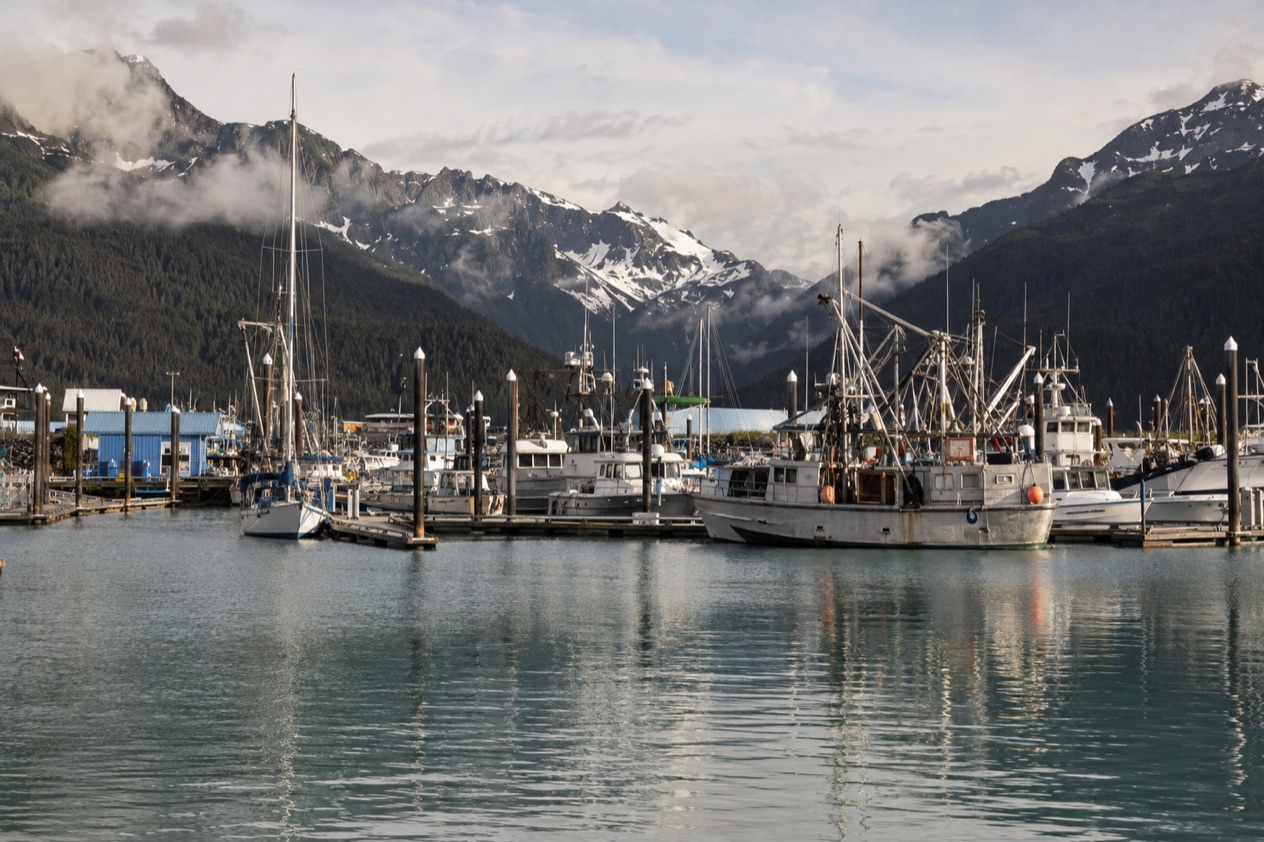
The Seward Boat Harbor was established in 1964 and is a certified Alaska Clean Harbor, and it is the heartbeat of the waterfront. Charter boats, fishing vessels and sightseeing cruises come and go, and the docks are lined with the kind of activity that makes watching the morning departures a pastime of its own. Lodging nearby leans toward waterfront hotels and inns with bay views, plus some rentals aimed at fishing groups.
This area suits anglers and travelers whose days start at the dock. It also puts you close to the railroad’s cruise ship terminal and docks, which sit on land the Alaska Railroad owns, so the district has a working-port feel rather than a purely visitor one. The harbor’s heavy equipment, from its Travelifts to its Syncrolift, is a reminder that boats here are used, repaired and hauled out, not just admired.
Expect more activity near the water when ships are in port and when boats return from the fjords. The reward is the view, with water and mountains in the same frame. A room facing the bay is worth asking about, since the light on Resurrection Bay is half the reason people choose this side of town.
Mt. Marathon and the residential streets
Behind the center, streets of small houses climb toward the base of Mt. Marathon, and here the feel changes from visitor town to neighborhood. Gardens, wooden porches and the occasional fishing boat parked in a yard give the area its character. Lodging is mostly guesthouses, bed-and-breakfasts, cabins in a yard and whole-house or apartment rentals with kitchens.
This is a good fit for families, longer stays and budget-minded travelers who want to cook a meal or two. It also suits anyone who likes to wake to quiet and to see the mountain close at hand. Because the mountain rises so steeply here, the streets nearest it slope upward, which is worth remembering if anyone in your group prefers level ground.
Your tip is to pick a place on the central side of the neighborhood if you plan to eat in town most nights.
Lodges, cabins and campgrounds outside town
Beyond the town edge, Seward gives way to the wild country of the Kenai Peninsula, and lodging changes with it. Here you find lodges, cabins and campgrounds set among spruce and mountains, with views across the bay or toward the glaciers that shaped the land. The area suits travelers who came for the landscape, the whale watching and the quiet, and who do not mind a bit of travel for dinner.
Staying outside town makes sense if your plan centers on Kenai Fjords National Park, the trails and the outdoors, and you would rather end a day with a campfire or a porch than a restaurant row. Seward is an Alaska community sandwiched between the Kenai mountains and the waters of the park, so the wild side of the trip is never far from any room you book.
A practical note is to think about how you will get to the harbor in the morning and back at night, since boat departures set the rhythm of the day. If you arrive by train or bus, a central base keeps things simple, and a lodge outside town is better for visitors who are already set up with their own transportation.
Seward areas compared
| Area | Best for | Feel | Getting around |
|---|---|---|---|
| Downtown and Fourth Avenue | First visits, couples, train and bus arrivals | Lively, shops and restaurants close together | On foot around the center |
| Boat Harbor and waterfront | Anglers, boat tours, bay views | Busy, maritime, working port | On foot to the docks and rail facilities |
| Mt. Marathon and residential streets | Families, longer stays, budget | Quiet, local, neighborhood | Short walks toward the center, slopes near the mountain |
| Lodges, cabins and campgrounds outside town | Park and wilderness trips, solitude | Peaceful, scenic, set among mountains and water | Own transportation to reach the harbor and town |
The first trade-off is in town against out of town. A room in the center gives you restaurants, shops, the harbor and the SeaLife Center within reach of each other, and nobody in the party needs to organize a ride. A room outside town gives you silence and scenery, with the compromise that every meal and every boat departure becomes a small journey.
The second is near the dock against the quiet side. The waterfront is where the action is, with boats leaving in the morning and returning with stories in the afternoon, and that energy can run into the evening.
The streets behind town are calmer, and you pay for that peace with a slightly longer walk when you want the harbor. Neither choice is wrong, and in a town this small the distance between them is modest.
Think too about how you will spend your evenings. Downtown rewards people who like to wander after dinner, browse a gallery and choose a place for dessert on the spur of the moment. The outlying lodges reward people who bring a book, watch the light change over the water and go to bed early for a dawn start. Matching the area to your evenings usually settles the question faster than matching it to your days.
If you cannot decide, split the stay. A night or two near the harbor for the boat trips, followed by a night in a cabin or a quieter guesthouse, lets you see Seward from both sides without much logistical effort. The town is compact, and the move from one corner to the other takes little time.
How to choose your hotel in Seward
Start with the kind of lodging that matches your trip. A hotel gives you a front desk, a restaurant nearby and the simplest arrival, and it fits travelers who want to drop their bags and head out. A bed-and-breakfast or guesthouse adds a personal touch, often a local breakfast and advice from a host who lives in town. An apartment or house with a kitchen suits families and longer stays.
A lodge or cabin changes the whole feel of a visit. You trade the town grid for a setting among trees and mountains, and the days shift toward the outdoors. Cabins suit couples and small groups who want privacy, while campgrounds are for travelers who bring their own gear and want to sleep close to the land. Each of these makes the most sense when your itinerary is built around the park and the water.
Think about how you arrive. The drive from Anchorage to Seward takes about 2.5 hours along the Seward Highway, and Seward is easily accessible from Anchorage, so a stay can start the moment you reach town. If you come by rail, the Coastal Classic takes 4.5 hours, and travelers can also board in Girdwood. A hotel in or near the center keeps the end of that trip simple.
Season matters for what you do, not for whether you can find a bed. Seward offers year-round accommodations and activities, including a winter weekend experience, so your dates do not rule the town out.
The Alaska Railroad offers daily passage between Anchorage and Seward in the summer, from May 13 to September 14, and the Park Connection runs a twice daily bus service from mid-May to mid-September. Outside those windows, plan your arrival around other means.
Families will want to be near the Alaska SeaLife Center, the state’s only public aquarium, and near places to eat without a long walk. A central guesthouse or a rental with a kitchen gives children room and makes mealtimes flexible. Teenagers who like fishing may be drawn toward the harbor, where the sport is part of daily life.
For travelers who prefer to keep walking to a minimum, the rise of Mt. Marathon behind town is worth keeping in mind. The streets close to the mountain slope upward, so a room nearer the center and the water keeps your movements on flatter ground. Ask the property about its entrances and layout if that matters for your group.
Finally, decide what you want the evenings to feel like. Seward is described locally as a land shaped by glaciers, set between mountains and the ocean, and where you sleep decides how much of that you see from your window. A harbor-view room puts the bay in front of you, a cabin puts the forest around you, and a downtown inn puts the town’s small pleasures at your door.
Good to know before you go
Seward is the ancestral homeland of the Alutiiq, or Sugpiaq, people, and the town’s slogan is Alaska Starts Here. Getting to town from Anchorage is straightforward by road, by the Alaska Railroad in its summer season or by the Park Connection bus, so your lodging can be settled before you worry about anything else. Choose the area that matches your mornings, and the rest of the trip tends to fall into place around it.
Sources
- Visit Seward (https://www.seward.com/), checked October 11, 2026
- Seward, cruise ship terminal (https://www.seward.com/maritime/dock-facilities/seward-cruise-ship-terminal/), checked October 11, 2026
- Seward, boat harbor (https://www.seward.com/maritime/dock-facilities/seward-boat-harbor/), checked October 11, 2026
- Alaska.org, dest seward (https://www.alaska.org/destination/seward), checked October 11, 2026
- Wikivoyage, Seward (https://en.wikivoyage.org/wiki/Seward), checked October 11, 2026
To plan your stay
- Best Time to Visit Seward: Summer Daylight, Weather by Month and Things to Do in Each Season
- Things to Do in Seward: Exit Glacier, the SeaLife Center, Kenai Fjords Boat Trips and Fishing
- Seward from Anchorage: the Seward Highway, the Coastal Classic Train and the Park Connection Bus
- Know Before You Go to Seward: Getting There, Weather, Bears and Local Habits