
The road into Portage Valley runs through spruce and cottonwood toward a lake that holds a cold, pale-blue color, with mountains standing close on every side. The glacier itself is out of sight at first, tucked up at the far end of Portage Lake, and that small act of hiding is part of the pull. This is a visit built around a short boat ride, a visitor center and a landscape that still carries the marks of an enormous retreat.
Is visiting Portage Glacier worth it?
Yes, if you want to see a glacier that ends in a lake and you like a place with a story, because Portage Glacier is retreating and the valley around it shows how far it once reached. It suits travelers based in Anchorage or Girdwood who want a glacier without a long expedition, and it pairs naturally with a visit to Whittier.
What sets it apart from other glaciers near Anchorage is the way you meet it. The glacier is no longer visible from the road, so the view has to be earned: in summer, a boat ride across Portage Lake is required to see it, and commercial boat tours run.
Hundreds of years ago the ice filled the entire valley and joined what are now five separate glaciers, so standing at the lakeshore you are looking at the shrunken remnant of something far larger. The terminus now ends in a glacial lake, which gives the scene its calm, mirror-like quality.
The surroundings add to the day. The valley sits beside Turnagain Arm, known for the largest tides in the United States, and the old townsite of Portage lies nearby with a haunting history of its own.
What to see at Portage Glacier
The glacier and the lake cruise
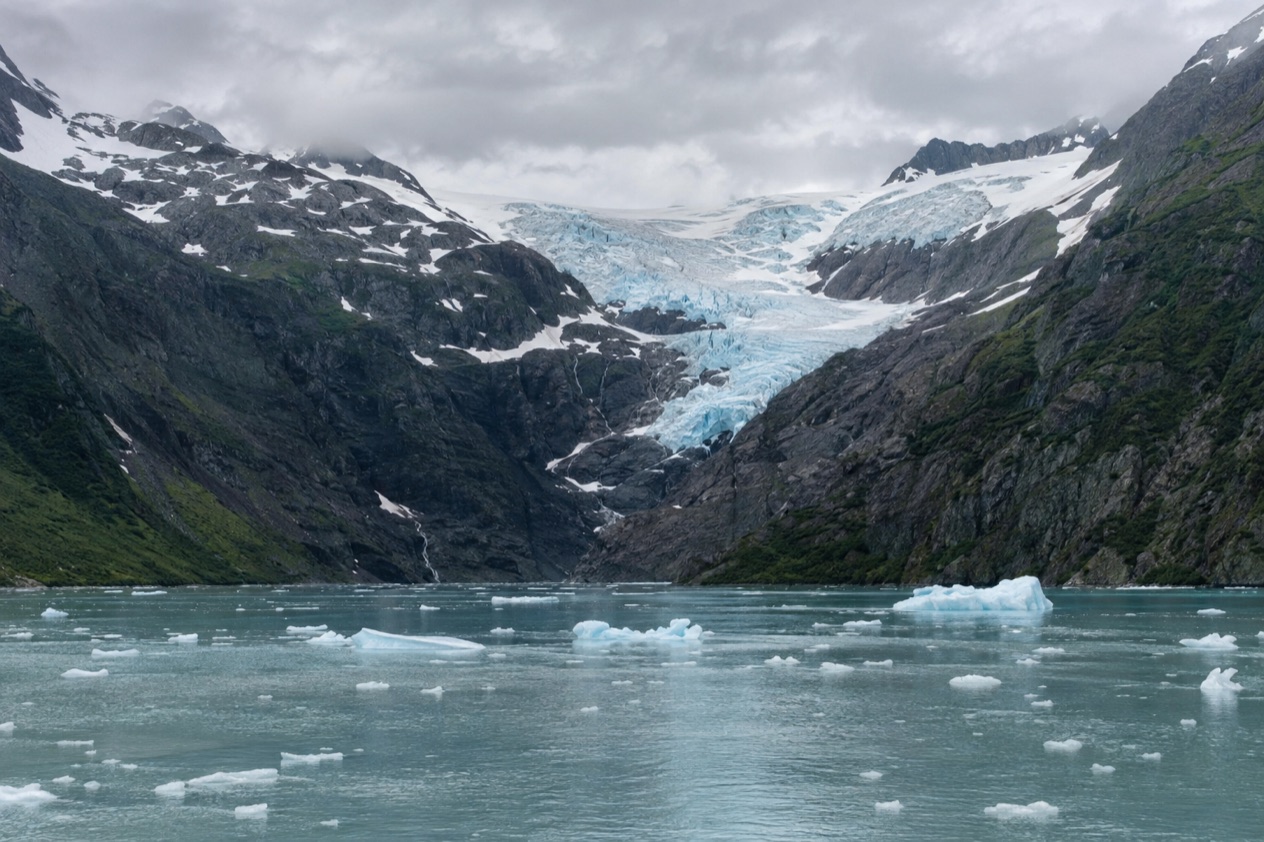
The main event is the view of the glacier from the water. The M/V Ptarmigan makes a cruise from the area around the Begich, Boggs Visitor Center, and it is the way to see the ice now that the road no longer offers a view. The glacier’s terminus is a lake, so you look across open water toward a wall of ice backed by mountains.
Look for the color of the ice, which often reads as a deep blue where it is compressed, and for the bergs that may float in the lake. Glaciers are living things, so what you see on the day depends on the conditions, and the retreat means the face sits farther back than it did for earlier generations of visitors.
Begich, Boggs Visitor Center
The visitor center is the base for the visit and the point from which the cruise is reached. It sits in the Chugach National Forest, in the Portage Glacier area, and it is also listed as an activity from Alyeska Resort in Girdwood, so people arrive from that side.
Use it as a place to understand the landscape before you head out on the water. The story of the valley, the retreat of the ice and the surrounding forest all make more sense once you have a sense of how the glacier once filled the whole valley floor.
The ghost forest and ruins of Portage
In the 1964 Alaska earthquake the ground sank about six feet, which put most of the town below high tide level. Salt water flooded the roots of the trees, and they died where they stood.
What remains today are the ruins of a few buildings and a gray ghost forest of dead trees. Portage first appeared in the 1950 census as a village of 34 people, and its townsite was later annexed by Anchorage. It is now a junction for the road and the railroad, and a quiet reminder of how quickly the land here can change.
The Portage Pass Trail and the wildlife center
For those who like to walk, the Portage Pass Trail near Whittier is described as popular and offers views of Passage Canal and Portage Glacier. It gives a different angle on the ice than the cruise does.
Near the site of Portage, at the head of Turnagain Arm, stands the Alaska Wildlife Conservation Center, one of the recreational draws of the area. Floating the Portage, Twentymile and Placer rivers is also popular locally.
Hours, tickets and rules
The glacier itself has no gate, but reaching the Whittier side means passing through the Anton Anderson Memorial Tunnel, which has set operating hours and a toll for vehicles heading toward Whittier. The hours change between the warmer and colder parts of the year.
| Site | Open | Admission |
|---|---|---|
| Anton Anderson Memorial Tunnel (summer months) | 5:30 a.m. to 11:15 p.m. | $13 regular vehicle or motorcycle, eastbound |
| Anton Anderson Memorial Tunnel (winter months) | 7:00 a.m. to 10:45 p.m. | $13 regular vehicle or motorcycle, eastbound |
Tolls are collected from eastbound vehicles. Vehicles pulling trailers pay $22, small buses and regular RVs pay $38, and large buses pay $137. Oversize vehicles 10 to 11 feet wide and 14 to 15 feet high pay $330 per use. Pedestrians and bicycles are prohibited in the tunnel, except during the annual Walk to Whittier event held in June.
How to get to Portage Glacier
Portage Glacier lies adjacent to Turnagain Arm, 50 miles southeast of downtown Anchorage. The route runs along the Seward Highway, and the Portage Glacier Highway then branches off toward the glacier area and Whittier.
From Girdwood, about 30 miles south of Anchorage along the Seward Highway, the glacier is also reached by road, and the visitor center is listed as an activity from Alyeska Resort. The Seward Highway is scenic but can be slow during peak summer travel times, so give yourself room on the way.
The Portage Glacier Highway connects the Seward Highway in Portage to the ferry terminal in Whittier, covering 11.59 miles through the Chugach National Forest and the Anton Anderson Memorial Tunnel. The glacier sits about 4 miles west of Whittier. Motor vehicles in the tunnel are limited to 25 miles per hour, and the passage takes about ten minutes.
A train runs from Anchorage to Girdwood, and Portage is a junction for the Alaska Railroad as well as the road. The tunnel carries both rail and automobile traffic beneath Maynard Mountain between Portage Lake and Whittier on Prince William Sound.
When to visit Portage Glacier
Summer is the season for the boat cruise, since a boat ride across the lake is required then to see the glacier and commercial tours operate. That makes the warmer months the natural choice if the ice itself is the goal. Long days also suit a trip that combines the glacier with Whittier, and the tunnel keeps its longest hours in the summer months, from early morning until late evening.
Winter offers something different. When Portage Lake freezes, the area sees plenty of foot, bike and ski traffic, and ice skating on the lake and the many marshy areas and creeks nearby is a local pastime. The tunnel runs shorter hours in the winter months, so plan around that if you are heading to Whittier.
Early in the day the tunnel is already open, which lets you reach the visitor center and the water before the afternoon. June brings the Walk to Whittier, the one day pedestrians may pass through the tunnel, held every year since 2002 except 2010. In early July Girdwood hosts its Forest Fair, an easy addition if you are staying there.
Tips for your visit
Think of Portage Glacier as the anchor of a day in the valley rather than a stop on its own. The cruise, the visitor center and the ghost forest of Portage together make a full outing, and the wildlife center at the head of Turnagain Arm is close by.
Combine it with the Seward Highway, which follows part of the southern edge of Chugach State Park along Turnagain Arm. Along the way you may see beluga whales, an endangered population commonly seen moving with the rising and falling tides. At low tide the arm becomes a broad mud flat, and hikers should take care not to get stuck in the quicksand-like mudflats.
In Girdwood, you can add the Crow Creek Gold Mine, a historic gold mine area open to the public, or the paved six-mile bike trail from Alyeska Resort to Bird Point. From July to September the Veilbreaker Skybridges are typically open for paid guided tours, weather permitting. If you head on to Whittier, the Whittier Creek Trail is a short hiking option, and the Portage Pass Trail gives you a second look at the glacier from above.
Along the arm, adventurous kayakers and surfers ride the bore tide, which can reach up to 6 feet high. Tides here reach up to 40 feet, the largest in the United States, which is worth keeping in mind anywhere near the water’s edge.
Good to know before you go
The tunnel toll is paid by eastbound vehicles, and exempt vehicles include those of the Alaska Railroad, the Alaska DOT&PF and emergency or law enforcement vehicles. State government agency or school district vehicles pay $11. Since the tunnel has fixed hours, plan your return so you are not caught on the Whittier side after closing. Near the water, watch the mudflats and the strong tides of Turnagain Arm.
Sources
- Wikipedia, Portage Glacier (https://en.wikipedia.org/wiki/Portage_Glacier), checked October 11, 2026
- Wikipedia, Portage, Alaska (https://en.wikipedia.org/wiki/Portage,_Alaska), checked October 11, 2026
- Wikipedia, Whittier Tunnel (https://en.wikipedia.org/wiki/Whittier_Tunnel), checked October 11, 2026
- Wikipedia, Turnagain Arm (https://en.wikipedia.org/wiki/Turnagain_Arm), checked October 11, 2026
- Wikivoyage, Girdwood (https://en.wikivoyage.org/wiki/Girdwood), checked October 11, 2026
- Alyeska Resort, summer (https://www.alyeskaresort.com/summer/), checked October 11, 2026
- Alaska.org, dest whittier (https://www.alaska.org/destination/whittier), checked October 11, 2026
- Wikipedia, Anton Anderson Memorial Tunnel (https://en.wikipedia.org/wiki/Anton_Anderson_Memorial_Tunnel), checked October 11, 2026
- Wikipedia, Chugach Mountains (https://en.wikipedia.org/wiki/Chugach_Mountains), checked October 11, 2026