
At the end of the Iditarod, a team of tired dogs trots down Front Street toward the burled arch while townspeople line the snowbanks and call out the mushers’ names. Nome has been the finish line of the trail for generations, and the town wears the role easily.
It sits on the Bering Sea coast, a gold rush town that stayed small and kept its character. It suits travelers drawn to dogs, history and Alaska Native culture more than to resort comforts.
Where is Nome and what is it like?
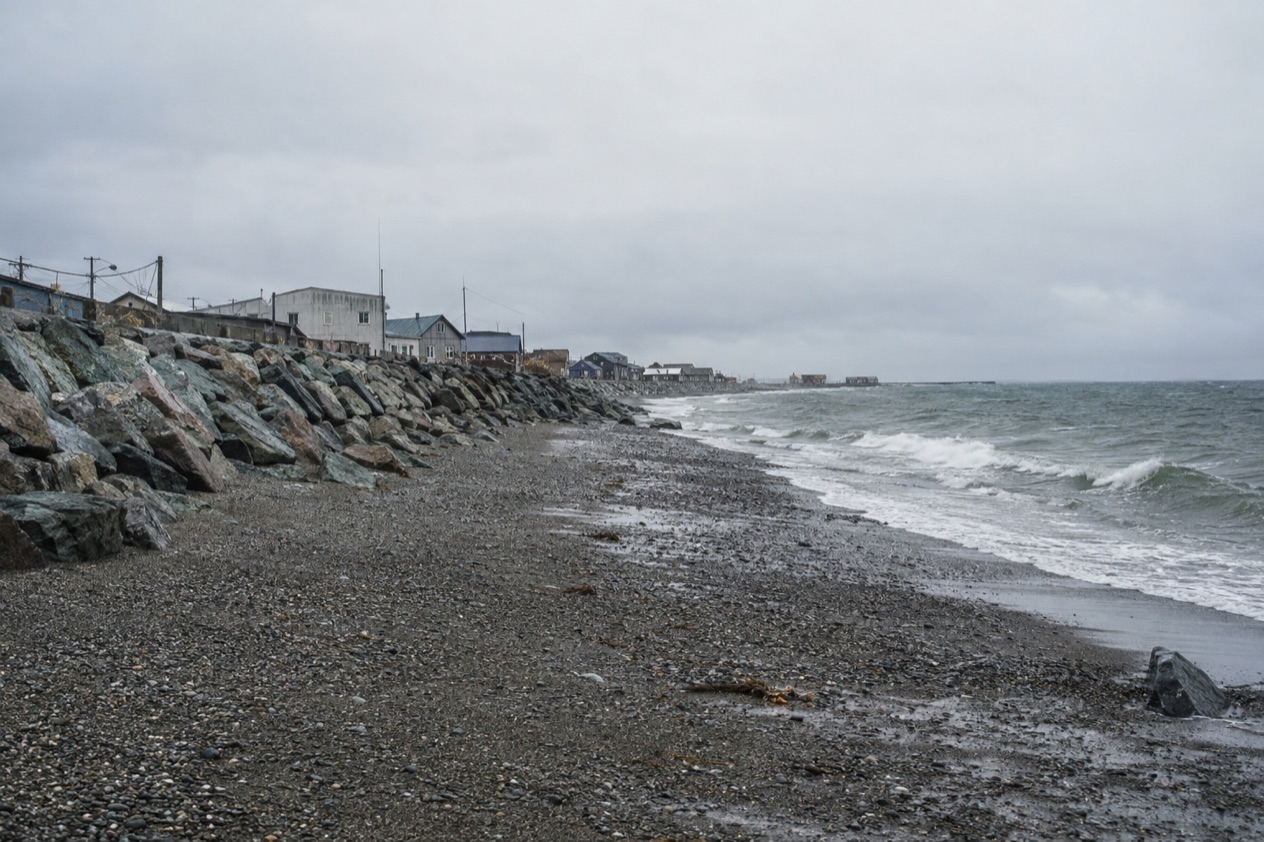
Nome is a city on the southern coast of the Seward Peninsula, facing Norton Sound and the Bering Sea. The 2020 census counted 3,699 residents, which makes it a real town with a school, a harbor, bars and churches, but still a place where people tend to know one another. The land around it is open and treeless, and the water is cold, gray and always present.
The town owes its fame to 1898, when three Nordic-Americans found gold on the ocean shores here and set off the Nome Gold Rush. You can still read that story in the place: weathered frame buildings, driftwood piled along the shore, and the habit of talking about gold as if it were a neighbor. Nome also claims the world’s largest gold pan, a claim that Quesnel, British Columbia, disputes, and locals seem to enjoy the argument.
Nome is also a gateway to Alaska Native homelands. Sixteen villages are tied to the Bering Straits Regional Corporation, and the Iñupiat and Yup’ik peoples of western Alaska have long relied on seal, salmon, walrus and whale from these waters. That subsistence life still shapes the rhythm of the seasons here, from hunting to fishing to the sharing of food.
The pace is unhurried and the weather decides the day. Travelers who love wide horizons, storytelling and a place with no polish will feel at home. Those who want boutique shopping, manicured trails or a long list of restaurants may find the town plain, and they should know that going in.
What is there to do in Nome?
The reasons to come are the Iditarod finish, the gold rush story written on the shoreline, and the chance to learn about Iñupiat and Yup’ik life on the Bering Sea.
The Iditarod finish
The Iditarod Trail Sled Dog Race commemorates the 1925 serum run, and Nome is where it ends. The race starts ceremonially in downtown Anchorage, restarts in Willow, crosses Rainy Pass in the Alaska Range and runs along the Bering Sea shore before reaching Nome, a trail of 1,049 miles. Teams pass through Skwentna, McGrath and Unalakleet on the way, and the last stretch comes after the mandatory eight-hour stop at White Mountain.
In Nome you can stand near the finish and watch teams come in one after another over many days. Each must cross the line with at least five dogs on the towline, so the mushers’ care for the animals is part of the scene. The Red Lantern Award goes to the last team in. It is a good moment for anyone who likes sports with a story, and for people who simply like dogs.
Gold rush history on the shore
The gold was found on the beach, and that fact still colors a walk along the water. The town’s older buildings, the stories of tent camps and the oversized gold pan all point back to 1898. It is the kind of history you take in on foot, by looking at the street grid, the rusted equipment and the shoreline itself.
Allow time to talk to people. Nome residents are often glad to explain how the town changed after the rush and what the sea does to it in winter. The pleasures are small and concrete: a stop at the gold pan, a slow look at the harbor, a long conversation over coffee.
Iñupiat and Yup’ik culture
Nome sits in a region of Iñupiat communities, and the traditions of the coast are part of everyday life. Families harvest seal, walrus, whale and fish, and when a whale is taken in an Iñupiat community, the meat and blubber are shared according to a traditional formula so that everyone benefits. Only a minority of Iñupiat speak their language today, which gives language revival real weight in the region.
As a visitor, the best approach is to listen and to respect what you are shown. Ask questions politely, never treat people or customs as a show, and remember that subsistence is a daily need and not a performance. You leave with a better sense of why this coast has been lived on for so long.
How many days do you need in Nome?
A long weekend is enough to know the town, and a few more days let you settle into its pace. Nome is small, so the sights do not need much planning. What takes time is the weather, the conversations and the waiting that is part of any place on the Bering Sea.
A short stay fits a walk along the shoreline, a look at the gold pan and the harbor, a meal in town and time to take in the history of 1898. If your visit falls at the end of the Iditarod, the short stay is organized around the finish. Teams arrive at all hours, and you will want to be near the street when they do.
With more days, you can follow the race properly, reading the standings and watching the mushers come in over a longer stretch. You can also use the time to learn about the Iñupiat and Yup’ik communities of the region, their language, their food and their relationship with the sea. A slower trip suits Nome well, because the place rewards patience more than a checklist.
If you cannot be there for the race, the Iditarod website lets you follow it from home. Visitors get race standings, short video clips and free live broadcasts, while Insider members get trail live streams and a GPS Tracker. It is a pleasant way to prepare for a trip, or to extend one once you are home.
Where to stay in Nome
Nome is one compact town, so the question is less about neighborhoods than about what you want from your base.
Staying close to the center suits travelers who like to walk, stop for coffee and watch the town’s life go by. In winter, that closeness means you can step out to watch the finish and return to a warm room, which matters when the wind comes off the sound. In summer, the same position gives you long evenings by the water.
Rooms a little away from the shore tend to feel quieter and suit those who want to sleep well and keep to themselves. The trade is distance from the harbor and the street, so think about how much you want to be part of the action. Either way, you are in a town where everything is close, and nothing demands a long commute.
Think too about the kind of trip you want. A traveler coming for the Iditarod will care about being near the finish, while someone coming for history and culture may prefer a calm base and a slower morning. Nome is not a place of grand lodges. It is a place where a simple room and a good conversation make the stay.
How do you get to Nome and get around?
Nome sits on the coast of Norton Sound, and its position on the Seward Peninsula shapes how it connects to the rest of Alaska.
For the race itself, that trail is a useful way to picture the map. It passes through Skwentna, McGrath and Unalakleet before it reaches Nome, a route that crosses mountains, river country and then open coast. It tells you how far the town lies from Anchorage, and why the finish feels like an arrival at the edge of the continent.
Once in Nome, the scale of the place does most of the work. The population is under four thousand, and the town hugs the shoreline, so the harbor, the main street and the places tied to the gold rush sit close to one another. Walking is how most of the town is seen, and the weather decides how long you stay out.
Travelers who want to see the villages of the region should treat each one as its own place, with its own people and its own customs. The Bering Straits region includes many communities, and each has a life of its own. Go with respect, and let local people tell you what is welcome and what is not.
When is the best time to visit Nome?
The two moments that stand out are the Iditarod finish, which comes in late winter and usually falls in March, and the mild stretch of July. They are almost opposite trips. March is about snow, dogs and a town gathered around the finish, while July is about a gentler coast and long light.
July is the milder month. Afternoons reach the upper 50s and nights stay in the mid-40s, with rain falling on about six days, usually as passing showers and not as a long soak. There is no snow, and the evenings are long enough to walk the shore after dinner. A light waterproof layer and a warm sweater are part of any visit.
January is the deep cold. Winter days are short, and the town goes quiet. It suits travelers who like cold and silence, and not those hoping for easy outdoor time.
The Iditarod finish is the busiest moment for the town’s attention, because teams arrive over a span of days and the street near the arch is where everyone gathers. If your goal is the race, plan around it. If your goal is the quiet history of the place, a milder month gives you more room to walk and talk.
Good to know before you go
Dress for the Bering Sea, not for the calendar. Wind and cold can arrive in any month, and the difference between a mild July afternoon and a January morning is large. Daylight changes with the seasons, short in deep winter and long in summer, so plan your outdoor time around it.
Remember that subsistence hunting and fishing are daily needs for many families here, so treat boats, drying racks and harvested animals with respect. The Iditarod’s name and marks are owned by the Iditarod Trail Committee, and individuals are not permitted to sell Iditarod-themed products, so buy souvenirs from legitimate sellers.
Sources
- Wikipedia, Nome, Alaska (https://en.wikipedia.org/wiki/Nome,_Alaska), checked October 11, 2026
- Iditarod Trail Committee, the Iditarod (https://www.iditarod.com/), checked October 11, 2026
- Iditarod, about (https://www.iditarod.com/about/), checked October 11, 2026
- Wikipedia, Iditarod Trail Sled Dog Race (https://en.wikipedia.org/wiki/Iditarod_Trail_Sled_Dog_Race), checked October 11, 2026
- Wikipedia, Alaska North Slope (https://en.wikipedia.org/wiki/Alaska_North_Slope), checked October 11, 2026
- Wikipedia, Yupik peoples (https://en.wikipedia.org/wiki/Yupik_peoples), checked October 11, 2026
- Wikipedia, Inupiat (https://en.wikipedia.org/wiki/Inupiat), checked October 11, 2026
- Wikipedia, Climate of Alaska (https://en.wikipedia.org/wiki/Climate_of_Alaska), checked October 11, 2026
- NOAA NCEI, U.S. Climate Normals 1991-2020, monthly (https://www.ncei.noaa.gov/access/services/data/v1?dataset=normals-monthly-1991-2020&stations=USW00026617), station Nome Muni Ap, elevation 13 feet, checked October 11, 2026