
A floatplane drops toward a lake with its pontoons skimming the surface, the engine noise fades, and the first thing you hear is a line peeling off a reel. That is the rhythm of an Alaska fishing lodge: a base near the water, days built around the fish, and evenings spent talking about the one that got away. Alaska fishing trips can be based around the Kenai River, Homer, or roadless Lake Clark, which is reached primarily by small aircraft.
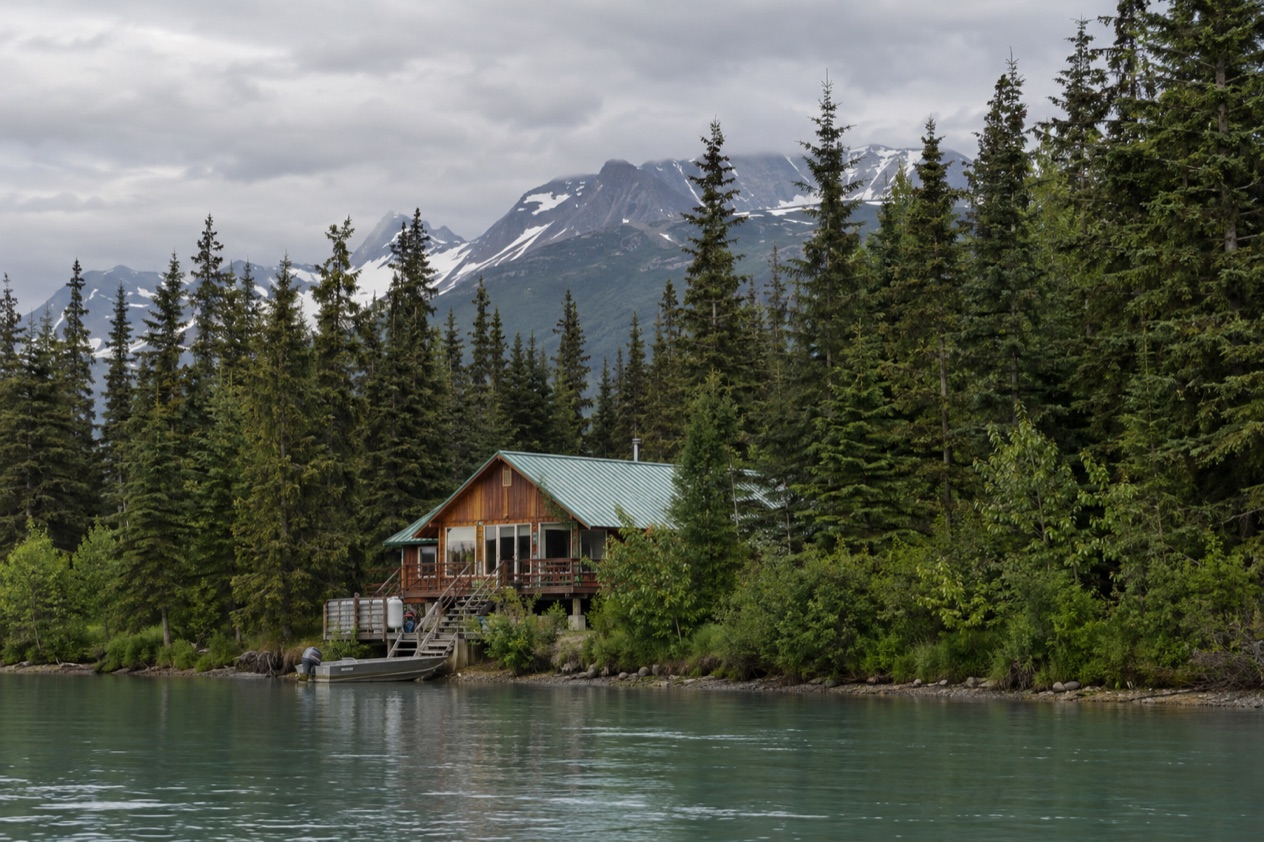
What are Alaska fishing lodges?
Alaska fishing lodges are places to stay that are organized around sport fishing, set on a river, a bay or a remote lake, where the day revolves around salmon, halibut, trout and the guides who know where they hold. The fishing is the point. Everything else, from the early gear check to the late talk over the day’s catch, serves it.
The state takes its sport fisheries seriously. Alaska’s Division of Sport Fish works year-round to protect, manage and improve them, and guided sport fishing operators must register and report their activity through eLogbooks. For a traveler, that means the guided side of the business is part of a managed system rather than a free-for-all.
The fish that draw people north
The Chinook, or king salmon, is the Alaska state fish, the largest and most valuable of the Pacific salmon, and it carries much of the lodge world’s reputation. Silver salmon, sockeye, pink and chum fill out the run list, and rainbow trout bring anglers to the lakes and streams of the southwest and the southeast.
All six Pacific salmon species are anadromous, which means they are born in fresh water, live in the ocean and return to the river where they hatched. They are also semelparous, so they die after spawning. Kings can be found on their spawning redds, the gravel nests, from September to December.
Salmon, halibut and the saltwater side
Not every lodge is about rivers. Out of Homer, saltwater anglers go after halibut, lingcod, rockfish, silver salmon and kings across the season. Halibut is the signature there, a flat, heavy fish that fights from the bottom and gives a day on a boat a very different feel from wading a stream.
River fishing is quieter and more intimate. You stand in a current, watch a drift, and wait for a strike. Saltwater days are broader, with open water, birds and the shoreline sliding past. Many anglers choose one over the other, and a lodge’s location usually settles the question for you.
Bush planes and the fly-in lodge
In much of Alaska the lodge sits where no road reaches, and the plane is part of the experience. Bush flying means aircraft operations in remote wilderness without prepared landing strips, and the planes carry tundra tires, floats or skis to land on rough ground, water, snow and ice. A floatplane touching down on a lake is how many remote fishing trips begin.
Noel Wien made the first successful bush flight to Livengood on August 19, 1924, a trip that took under an hour when the winter dog sled trail took several days. The first tourist flights in the bush came much later, to Nome and Kotzebue in 1947. Today in Western Alaska, 82% of towns are not connected by roads, so flying is simply how people move.
Where are they?
Fishing lodges sit in three broad kinds of Alaska country: the river corridors of the Kenai Peninsula, the harbor town of Homer on Kachemak Bay, and roadless wilderness such as Lake Clark reached by small aircraft. Each gives a different trip, with a different pace and a different set of fish.
The Kenai River
The Kenai River is in southcentral Alaska on the Kenai Peninsula, running 82 miles west from Kenai Lake to Cook Inlet near Kenai and Soldotna. It is the most popular sport fishing destination in Alaska, particularly for king salmon, and its upper, middle and lower stretches each fish and feel different.
The Upper River runs from Kenai Lake to Skilak Lake and includes a stretch of whitewater rapids in Kenai Canyon. The Middle River runs from Skilak Lake down to the Sterling Highway bridge near Soldotna. The final stretch near Cook Inlet is greatly influenced by the tides. Over 105 miles of river and lakes fall within the Kenai River Special Management Area, run by the Alaska Department of Natural Resources.
Two facts shape how you plan here. The king salmon fishery has been closed or heavily restricted in recent years because of low returns, so a lodge’s other fish matter. And pink salmon in the Kenai run only in even-numbered years.
Homer and Kachemak Bay
Homer calls itself The Halibut Fishing Capital of the World, and it is the jumping-off point for the waters of Kachemak Bay, Cook Inlet and the Gulf of Alaska. From the port, anglers can go after king salmon, halibut, lingcod, rockfish and silver salmon. King salmon are present in the waters around Homer year-round.
Halibut fishing starts in earnest in May and continues through September. The rod-and-reel world record halibut is 459 pounds, a number that explains the swagger around town.
On the Homer Spit, the Nick Dudiak Fishing Lagoon, also called the Fishing Hole, is stocked with kings and silvers, and you can target kings there from May through early July. It has a handicapped accessible platform and ramp, parking, fish cleaning tables, restrooms and a picnic area.
Lake Clark and the roadless interior
Lake Clark National Park and Preserve is remote and undeveloped, with no road access, so you get there primarily by small aircraft. It is a place where a lodge feels like an outpost, with turquoise lakes, tundra slopes and few signs of other people. Backpacking trips across the tundra and past those lakes are possible too.
The park gives a fishing trip company beyond the fish. At Silver Salmon Creek or Chinitna Bay, visitors may watch coastal brown bears graze on sedges, and Dick Proenneke’s historic cabin stands on upper Twin Lake. Both are good reasons to build a few off-the-water hours into the plan.
Southwest and the long rivers
Rainbow trout are found throughout southwestern and southeast Alaska, which is where many anglers head when trout are the goal. Farther north the salmon story stretches enormously. Chinook range as far as Kotzebue Sound, and the Yukon River has the longest freshwater migration route of any salmon, over 1,900 miles from the Bering Sea to spawning grounds upstream of Whitehorse.
Coho are found around the Bering Sea to mainland Alaska, chum from Alaska to California and in the Yukon, and pink salmon along Pacific coastal waters up to the Mackenzie River in Canada. The map of Alaska fishing is, in the end, the map of these runs.
What do stays include?
What a stay includes depends on the lodge, so read the property’s own description before booking. What surrounds a stay is easier to describe.
Guides and the fishing day
Guided fishing is the core of the experience. Guides read the current, the tide or the bay, and put you where fish may be. Registered operators report their activity through the state’s eLogbooks, which is part of how Alaska keeps track of what is caught.
If you are new to the sport, the state’s Rod Loaner Program rents fishing gear for free, which lowers the barrier to getting out on the water.
Getting there is part of the stay
At a roadless lodge the flight is often the first experience. Floats, tundra tires and skis let bush planes land on water, rough ground, snow and ice, so the view out the window can be a river braiding through the tundra or a lake with a single dock. In places like Lake Clark, small aircraft are the way in.
At road-system lodges on the Kenai or in Homer, you arrive by the highway and the day starts at a boat ramp or a river bank. The feeling is different, more neighborly and closer to town, but the rhythm of fishing is the same.
Beyond the rod
A good fishing trip leaves room for other things. Hatchery tours are available for visitors who want to see fish and learn how they are managed, a quieter way to understand the runs you are chasing. Homer’s lagoon, with its picnic area and cleaning tables, is a place to watch other anglers and swap stories.
The Tanana River drainage has six remote recreational public use cabins. And for those who like to walk, Lake Clark’s tundra slopes and turquoise lakes make a case for a day without a rod.
Good to know before you go
Fishing here follows the runs, so the season of a particular fish decides when a lodge is worth visiting. Halibut and kings off Homer have their own windows, the Kenai king fishery has been closed or heavily restricted in recent years, and spawning kings appear late in the year.
Look at the fish you want first, then choose the lodge and the month. The GoFishAK interactive maps help anglers discover sport fishing opportunities across Alaska, and they are a good place to start.
Sources
- Alaska Department of Fish and Game, Sport fisheries (https://www.adfg.alaska.gov/index.cfm?adfg=fishingsport.main), checked October 11, 2026
- Wikipedia, Bush flying (https://en.wikipedia.org/wiki/Bush_flying), checked October 11, 2026
- Wikipedia, King salmon (https://en.wikipedia.org/wiki/King_salmon), checked October 11, 2026
- Wikipedia, Pacific salmon (https://en.wikipedia.org/wiki/Pacific_salmon), checked October 11, 2026
- Wikipedia, Kenai River (https://en.wikipedia.org/wiki/Kenai_River), checked October 11, 2026
- Homer, fishing (https://www.homeralaska.org/fishing/), checked October 11, 2026
- National Park Service, Lake Clark National Park & Preserve, plan your visit (https://www.nps.gov/lacl/planyourvisit/index.htm), checked October 11, 2026
To plan your stay
- Camp Denali: Wilderness Lodge, Kantishna Location, Stay Schedule and On-Site Activities
- Kantishna Roadhouse: Indigenous-Owned Lodge, Location in Denali and What's On Site
- Alyeska Resort: Girdwood Location, Aerial Tram, Dining and Activities
- Alaska Bear Viewing Lodges: Brooks Camp, Lake Clark, Homer Flights and Staying Safe