
The floatplane drops toward Naknek Lake, and the shoreline resolves into spruce, gravel beaches and the mouth of the Brooks River. Somewhere along that river, brown bears stand in the current, heads down, watching for salmon. Katmai is a wilderness of volcanoes and wild water in southwest Alaska, and most visits to it begin at Brooks Camp.
Is visiting Katmai National Park worth it?
Yes, if what you want is bears, volcanic country and real wilderness rather than a park you can drive through. It suits travelers who are happy to plan around planes and weather, and who would rather watch a brown bear work a river than tick off roadside overlooks.
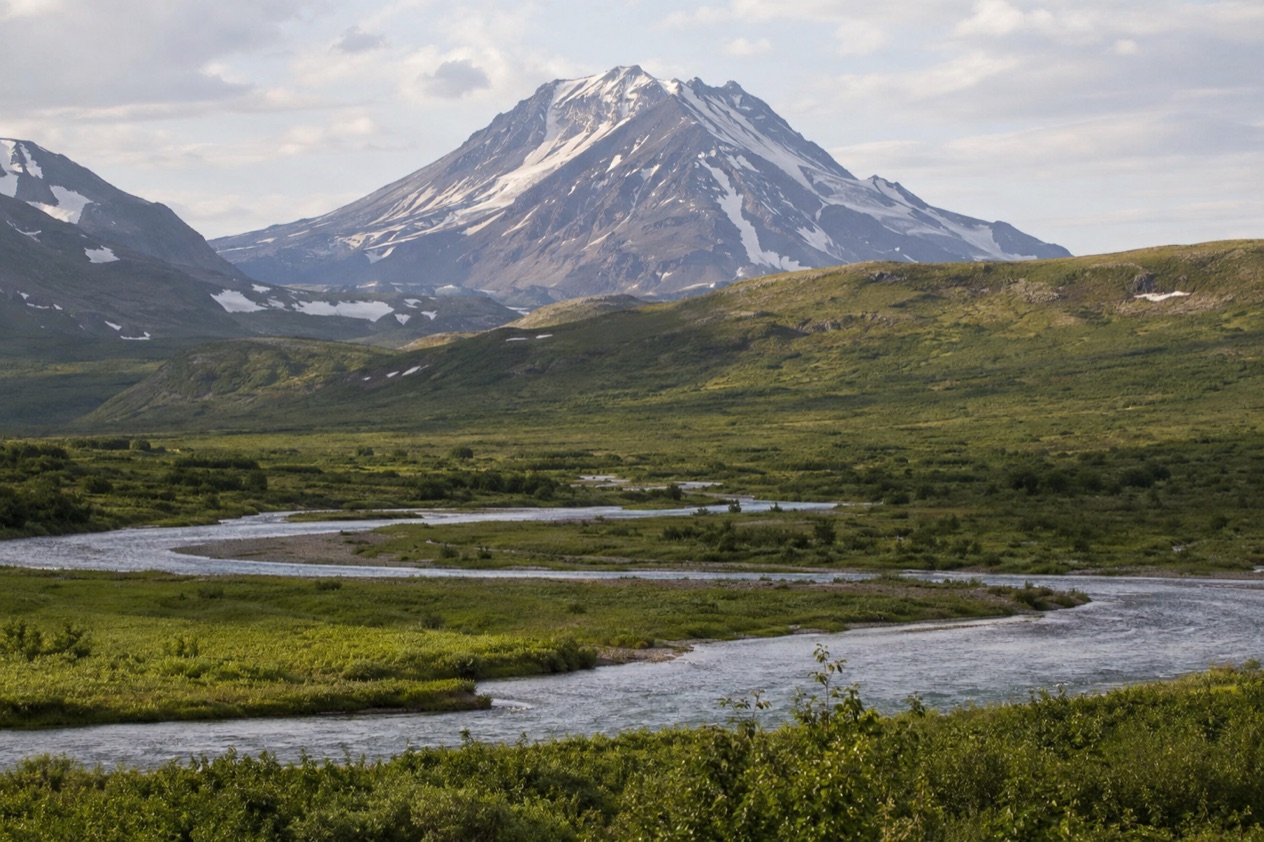
Katmai spans over four million acres, and the park protects both a volcanic landscape and some of the most important salmon and bear habitat anywhere. It holds the world’s largest protected brown bear population, estimated at about 2,200 bears. The park also carries the ash-covered valley left by the biggest volcanic eruption of the 20th century, which gives a visit two very different faces in one place.
What sets it apart from other Alaska parks is the lack of a road in. You cannot reach Katmai by car, services are few, and nearly everything revolves around one place, Brooks Camp, where bear viewing, fishing, history and scenery sit side by side. Denali and Kenai Fjords have their own rewards, but neither offers this concentration of bears at close range.
If you prefer a trip with a fixed schedule and a hotel lobby, Katmai will test your patience. Storms can reshape plans, and the park itself tells visitors to keep their schedules loose. For those who accept that, the payoff is a day or two spent in the company of animals that are doing exactly what they have always done here.
What to see at Katmai National Park
Brooks Falls and the bear viewing platforms
Brooks Falls is the image people carry of Katmai: a low cascade on the Brooks River where bears stand at the lip, mouths open, waiting for sockeye to leap. Bears are especially likely to gather at the Brooks Falls viewing platform when the salmon are spawning. The scene is a chance rather than a promise, but when the fish are running it is one of the great wildlife spectacles in North America.
July and September are by far the best months for bear viewing in the Brooks Camp area. Katmai has one of the highest densities of bears on earth, and few other places offer comparable viewing.
The Valley of Ten Thousand Smokes
The valley was created by the cataclysmic 1912 eruption, the largest of the 20th century, which buried a river valley in ash and left behind fields of pale, eroded deposits. The name comes from the countless steaming vents that once rose from the floor. Most of the geothermal features have cooled in the years since, so today the drama is in the scale and the stark color of the land.
Daily bus tours from Brooks Camp reach the valley, with a Park Service interpreter, along a 23-mile park road that ends at Three Forks, where the valley opens out below you. It is a different mood from the river: quiet, wide, windswept, and a reminder that Katmai’s volcanoes are still the defining force of the landscape.
Brooks River trails and the human history
The trails around Brooks Camp lead through quiet forest, alpine tundra and rugged mountain scenery, and some bring you to bear viewing along the way. Katmai has less than 6 miles of designated and maintained trails, so the paths are few and each one counts. Part of the appeal is the cultural history here, as the area around the river carries a long record of human use that rangers explain in their programs.
Katmai was declared a national monument in 1918, and in 1980 the area became a national park and preserve. Wildlife beyond the bears includes moose and foxes, and more than 700 species of plants have been documented across the park, from spruce forest to tundra.
Naknek Lake, flightseeing and the backcountry
The park’s lakes, rivers and streams offer countless places to boat, and access to the interior is by boat on Naknek Lake. Backcountry hiking and camping range from the lowland tundra of Bristol Bay to the Valley of Ten Thousand Smokes and the rugged Pacific Coast. Fishing is another draw, in streams with numerous, ravenous, trophy-sized fish.
Many pilots would argue that Katmai is best seen from the air, which is why flightseeing is a popular activity. From above, the volcano craters, braided rivers and lake-studded lowlands make sense in a way they cannot from the ground.
Hours, tickets and rules
Katmai needs no entrance pass, and the park itself never closes. What changes through the year is the staffed season at Brooks Camp, which covers the summer months and ends in mid-September, when the lodge and the ranger programs wrap up for the year.
| Site | Open |
|---|---|
| Katmai National Park and Preserve | Open year-round |
| Brooks Camp visitor center, ranger station, campground and auditorium (daily ranger-led programs) | June 1 to September 17 |
| Brooks Lodge (meals and lodging) | June 1 to September 17 |
A few rules shape every visit. All visitors to Brooks Camp must begin their stay with the 20-minute bear safety talk at the visitor center.
A permit is needed for any activity within the Brooks River Corridor, which takes in the river and 50 yards from the water’s edge along its banks, and backcountry camping is not permitted within the Brooks Camp Developed Area. Hunting and trapping are allowed only in the preserve, never in the national park. The minimum recommended distance from any bear is 250 feet.
How to get to Katmai National Park
You arrive by air. Katmai is on the Alaska Peninsula, 290 miles southwest of Anchorage, and it cannot be reached by car. The usual route runs through King Salmon, the closest significant town and the site of the park’s headquarters.
Anchorage to King Salmon
Daily commercial flights connect Anchorage with King Salmon. It is a useful stop before heading out: exhibits cover the natural resources and history of the Alaska Peninsula, a large collection of films is available to watch, and the Alaska Geographic bookstore sells maps, navigation charts, videos and posters. Its hours change seasonally.
King Salmon sits about 5 miles down the Naknek River from the park entrance. The Alaska Peninsula Highway links Naknek Lake near the entrance with King Salmon, but that road is not connected to the Alaska road system, which is why the final leg is not a drive from the rest of the state.
King Salmon to Brooks Camp
People reach Brooks Camp aboard small, float-equipped aircraft. Unlike most national park visitor centers in the United States, the one at Brooks Camp is accessible only by plane or boat. Authorized commercial providers include air taxis, bear viewing guides and sport fishing guides, and they handle much of the park’s visitor traffic.
Brooks Camp sits at the mouth of the Brooks River on the shore of Naknek Lake. From there, a park road runs to Three Forks, overlooking the Valley of Ten Thousand Smokes, and the camp also serves as the starting point for backcountry trips. Wherever you go beyond it, you travel on foot or by boat.
When to visit Katmai National Park
For bears, July and September are by far the best months in the Brooks Camp area. Those fall within the staffed season, when the lodge, campground, visitor center and daily ranger programs are all running. The park’s evening slide shows, walks and hikes belong to that same stretch, so it is also the time when the place feels most complete.
Once the season closes in mid-September, only very limited visitor services may continue at Brooks Camp through the end of that month. The park itself stays open year-round, but it becomes a different kind of trip: fewer facilities, more self-reliance, and a heavier dependence on pilots and guides who work in the area. Activities listed for the park include backcountry skiing, which tells you the winter landscape is part of the story.
Fall brings a special event. Since 2014, Katmai has hosted a yearly online contest called Fat Bear Week, which celebrates how the bears fatten up before hibernation. It is a fun way to follow the park from home, and a good reminder of why salmon matter so much here. Whatever the month, strong storms sweep through the area at any time of year, so build in slack for weather.
Brooks Camp visitors should expect windy, rainy and cold conditions, and dress and pack for diverse and changing weather. A bright morning can turn gray and wet within hours, which is part of the character of the peninsula.
Tips for your visit
Pack for weather first. Waterproof rain gear and extra food are the park’s own advice, because weather can delay pick-up from a chartered aircraft for days. Don’t make your schedule too tight, allow extra time for delays and always have a backup plan. Layers that handle wind and rain will do more for your comfort than anything else in your bag.
Tell a responsible person where you are going and when you expect to return, and how long overdue you can be before they should worry. Trip planners can be filled out in person at the King Salmon and Brooks Camp visitor centers, or you can email your itinerary to the dispatch office.
Park staff do not track individual trips, but a detailed itinerary may give rangers valuable information in an emergency. Backcountry travelers should consider a satellite phone or a satellite-based text messaging device.
All of Katmai is bear country, so follow the bear safety guidelines everywhere, not only at the river. Brooks Camp has a campground that fills on a per-person basis, to a maximum of 60 campers sharing 18 sites. Lodging is also available at Brooks Camp and at Grosvenor Lodge.
For a fuller trip, combine Brooks Camp with a bus tour to the valley, a flightseeing hop, or a day with a fishing guide. Katmai is one of many spectacular areas on the Alaska Peninsula. Nearby, the National Park Service also manages Aniakchak National Monument and Preserve, Alagnak Wild River and Lake Clark National Park and Preserve, and the Alaska Department of Fish and Game manages McNeil River State Game Sanctuary.
Accessible accommodations and facilities do exist in Katmai, though the park is largely wilderness. A virtual visitor stamp is offered for online visitors to print and tape into a passport book, and a planning guide called Novarupta is available for download.
Good to know before you go
Services are few both inside and near the park, so stock up in King Salmon, where the closest grocery store and post office are. Katmai carries some inherent risk, and preparation can make the difference between an adventure and a tragedy. There is no entrance fee to pay, and bears are the one rule that governs everything else here. For mail, the park’s address is PO Box 7, King Salmon.
Sources
- National Park Service, Katmai National Park & Preserve, plan your visit: basicinfo (https://www.nps.gov/katm/planyourvisit/basicinfo.htm), checked October 11, 2026
- National Park Service, Katmai National Park & Preserve, plan your visit: brooks camp (https://www.nps.gov/katm/planyourvisit/brooks-camp.htm), checked October 11, 2026
- National Park Service, Katmai National Park & Preserve, plan your visit: conditions (https://www.nps.gov/katm/planyourvisit/conditions.htm), checked October 11, 2026
- National Park Service, Katmai National Park & Preserve, plan your visit: fees (https://www.nps.gov/katm/planyourvisit/fees.htm), checked October 11, 2026
- National Park Service, Katmai nature (https://www.nps.gov/katm/learn/nature/index.htm), checked October 11, 2026
- National Park Service, Katmai National Park & Preserve, plan your visit: nearbyattractions (https://www.nps.gov/katm/planyourvisit/nearbyattractions.htm), checked October 11, 2026
- National Park Service, Katmai National Park & Preserve, plan your visit: safety (https://www.nps.gov/katm/planyourvisit/safety.htm), checked October 11, 2026
- National Park Service, Katmai National Park & Preserve, plan your visit: things2do (https://www.nps.gov/katm/planyourvisit/things2do.htm), checked October 11, 2026
- Wikipedia, Katmai National Park and Preserve (https://en.wikipedia.org/wiki/Katmai_National_Park_and_Preserve), checked October 11, 2026
- Wikivoyage, Katmai National Park (https://en.wikivoyage.org/wiki/Katmai_National_Park), checked October 11, 2026
- Wikipedia, King salmon (https://en.wikipedia.org/wiki/King_salmon), checked October 11, 2026