
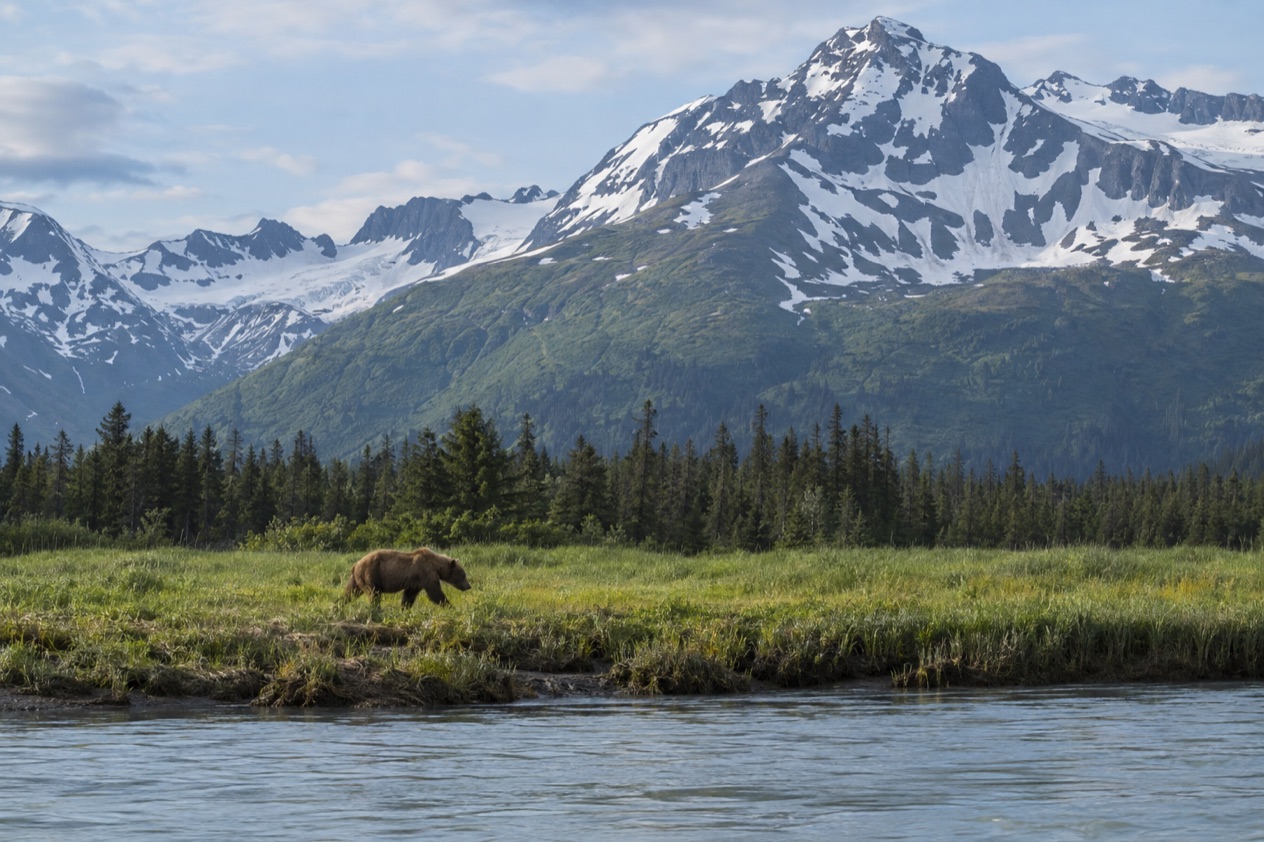
At Brooks Camp, the talk about bears begins before you have even set down your bag. A ranger explains how to behave, and soon after you are walking toward the Brooks River, where brown bears stand in the current watching for salmon. This is bear viewing in Katmai National Park and Preserve, a visit built around a river, a lake and the animals that gather there.
Is visiting bear viewing at Katmai worth it?
Yes, if you want to watch brown bears going about their lives in their own landscape, and you are happy to build a trip around small planes, rain gear and a flexible schedule. Katmai has one of the highest densities of bears on earth, and the National Park Service says few other places offer comparable bear viewing. Brooks Camp is the park’s most popular destination, known for the mix of bears, fishing, scenery, history and facilities in one spot.
What sets it apart from other Alaska wildlife stops is how concentrated everything is. Brooks Camp sits at the mouth of the Brooks River on the shore of Naknek Lake, so bears, river, lake, a visitor center and a campground all lie within one small area.
In parts of coastal Alaska, brown bears feed mostly on spawning salmon, and that rich diet helps explain the enormous size of the bears there. Bears that are mostly solitary may gather in numbers where a river holds spawning fish, and that is the kind of scene people come to Katmai hoping to witness. It is a chance, never a promise, and the weather has a say in it.
It suits travelers who like to learn as they watch. Rangers lead programs, the area carries a long human history, and a bus tour reaches a volcanic valley. It is less suited to anyone who needs a fixed itinerary, since storms can upset flights.
What to see at bear viewing at Katmai
The Brooks River and its bears
The Brooks River is the heart of the visit. Brown bears, which are easy to recognize by the hump of muscle over their shoulders, work the water for salmon that come to spawn. Watch how they choose a spot, how they stand and wait, and how younger or smaller bears give way to larger ones.
The river corridor, which includes the water and the banks along it, has its own permit rule for activities, so you watch within the framework the park sets up. Bring patience more than gear. A bear may fish in front of you for a long time, or the river may sit quiet for a spell before something appears.
Trails around Brooks Camp
Hiking trails in the Brooks Camp area offer more than bears. The park describes bear viewing, cultural history, quiet forests, alpine tundra and rugged mountain scenery along them. That gives you a way to spend hours away from the river, moving between forest shade and open tundra.
All of Katmai is bear country, so the safety guidelines apply on every path, not only beside the water. Keep in mind that the visit begins with the required bear safety talk, which sets out park regulations for your stay.
The Valley of Ten Thousand Smokes
Daily bus tours from Brooks Camp reach the Valley of Ten Thousand Smokes, the site of the largest volcanic eruption of the 20th century. The valley was formed by the cataclysmic 1912 eruption that Katmai preserves. Most of its geothermal features have cooled in the years since, so the story today is told by the ash-covered landscape itself.
It is a good counterweight to a bear-focused stay. Katmai was declared a national monument in 1918, and in 1980 it became a national park and preserve, a history you can read in this volcanic ground.
Ranger programs and history
At Brooks Camp, the park service runs a visitor center and ranger station, with daily ranger-led programs. Evening slide shows, walks and hikes are part of the schedule. Here you can learn about the bears, the volcanoes and the people who lived in the area, which makes the time between bear sightings feel full rather than empty.
Hours, tickets and rules
Services at Brooks Camp run on a season, and the dates matter more than the hour of the day. The park service operates its facilities from early June to mid-September, and lodge meals and lodging follow the same end date. A few very limited services may carry on a little longer.
| Site | Open |
|---|---|
| NPS visitor center, ranger station, campground and auditorium at Brooks Camp | June 1 to September 17 |
| Daily ranger-led programs at Brooks Camp | June 1 to September 17 |
| Brooks Lodge meals and lodging | Through September 17 |
| Visitor services at Brooks Camp (very limited) | Possibly through September 30 |
Every visitor to Brooks Camp must begin the stay by attending a brief bear safety talk that outlines park regulations. A permit is needed for any activities within the Brooks River Corridor, except for redfish fishery subsistence activities.
The corridor covers the river and 50 yards from the water’s edge along the banks, from the Lake Brooks inlet downstream to the elevated bridge and boardwalk. No permit is needed for travel to or from villages or homesites within it. Hunting and trapping are allowed only in the preserve, not in the national park.
How to get to bear viewing at Katmai
Most people reach Brooks Camp by small, float-equipped aircraft. Brooks Camp lies at the mouth of the Brooks River on the shore of Naknek Lake, a place defined by water, and landing on the water is how most visitors arrive.
The park has a visitor center in King Salmon as well as the one at Brooks Camp, and its mailing address is in King Salmon. That town is the park’s administrative base, and trip planners can be filled out there in person.
Plan for weather. Strong storms sweep through the area any time of year, and the park warns that bad weather may delay pick-up from a chartered aircraft for days. Don’t make your schedule too tight, allow extra time for delays and keep a backup plan. For those heading into the backcountry beyond Brooks Camp, the park suggests considering a satellite phone or a satellite-based text messaging device.
When to visit bear viewing at Katmai
The practical window is the season when Brooks Camp services run, from June 1 to September 17. That is when the visitor center, ranger station, campground and auditorium are staffed, and when lodge meals and lodging are available. The ranger programs share those dates.
The bears follow the salmon. Brown bears in coastal Alaska feed mostly on spawning salmon, so what you see depends on where the fish are in their run. Mating season runs from mid-May to early July in general, shifting later the farther north bears live, which is a reminder that bear behavior changes over a summer. The park does not give a best month for sightings, so treat any specific day as a chance.
Early autumn trips come with a limit. After September 17 only very limited services may continue, through September 30. Whatever the month, expect windy, rainy and cold conditions, and dress for changing weather. Winter is when bears prefer to den in a protected spot, though they are not full hibernators and can be woken easily.
Tips for your visit
Pack for weather first. The park says to carry waterproof rain gear and extra food, since storms can delay a flight out. Layers matter at Brooks Camp, where conditions are often windy, rainy and cold, and a visit needs to be dressed for all of it at once.
Tell someone your plans. The park asks you to let a responsible person know where you are going, when you expect to return and how long overdue you can be before they should worry.
Trip planners can be filled out at the King Salmon and Brooks Camp visitor centers, or you can email your itinerary to the park’s dispatch office. Park staff do not track individual trips, but a detailed itinerary may help rangers in an emergency.
Combine bears with the rest of Brooks Camp. A bus tour to the Valley of Ten Thousand Smokes, a ranger program in the evening and a walk on the trails fill the days between river watching. Anglers will find that Katmai offers fishing in streams with numerous, ravenous and trophy-sized fish. Flightseeing is also popular, and many pilots would argue the park is best seen from the air.
Good to know before you go
All of Katmai is bear country, and the park asks visitors to follow bear safety guidelines everywhere. In Alaska, all human sources of food must be kept secure from bears. A visit carries some inherent risk, and preparation can make the difference between an adventure and a tragedy. Services wind down after September 17, so the season is short, and weather can change your plans at any moment.
Sources
- National Park Service, Katmai National Park & Preserve, plan your visit: safety (https://www.nps.gov/katm/planyourvisit/safety.htm), checked October 11, 2026
- National Park Service, Katmai National Park & Preserve, plan your visit: brooks camp (https://www.nps.gov/katm/planyourvisit/brooks-camp.htm), checked October 11, 2026
- National Park Service, Katmai National Park & Preserve, plan your visit: things2do (https://www.nps.gov/katm/planyourvisit/things2do.htm), checked October 11, 2026
- National Park Service, Katmai nature (https://www.nps.gov/katm/learn/nature/index.htm), checked October 11, 2026
- Wikipedia, Brown bear (https://en.wikipedia.org/wiki/Brown_bear), checked October 11, 2026
- Alaska Department of Fish and Game, Living with bears (https://www.adfg.alaska.gov/index.cfm?adfg=livingwithbears.main), checked October 11, 2026