
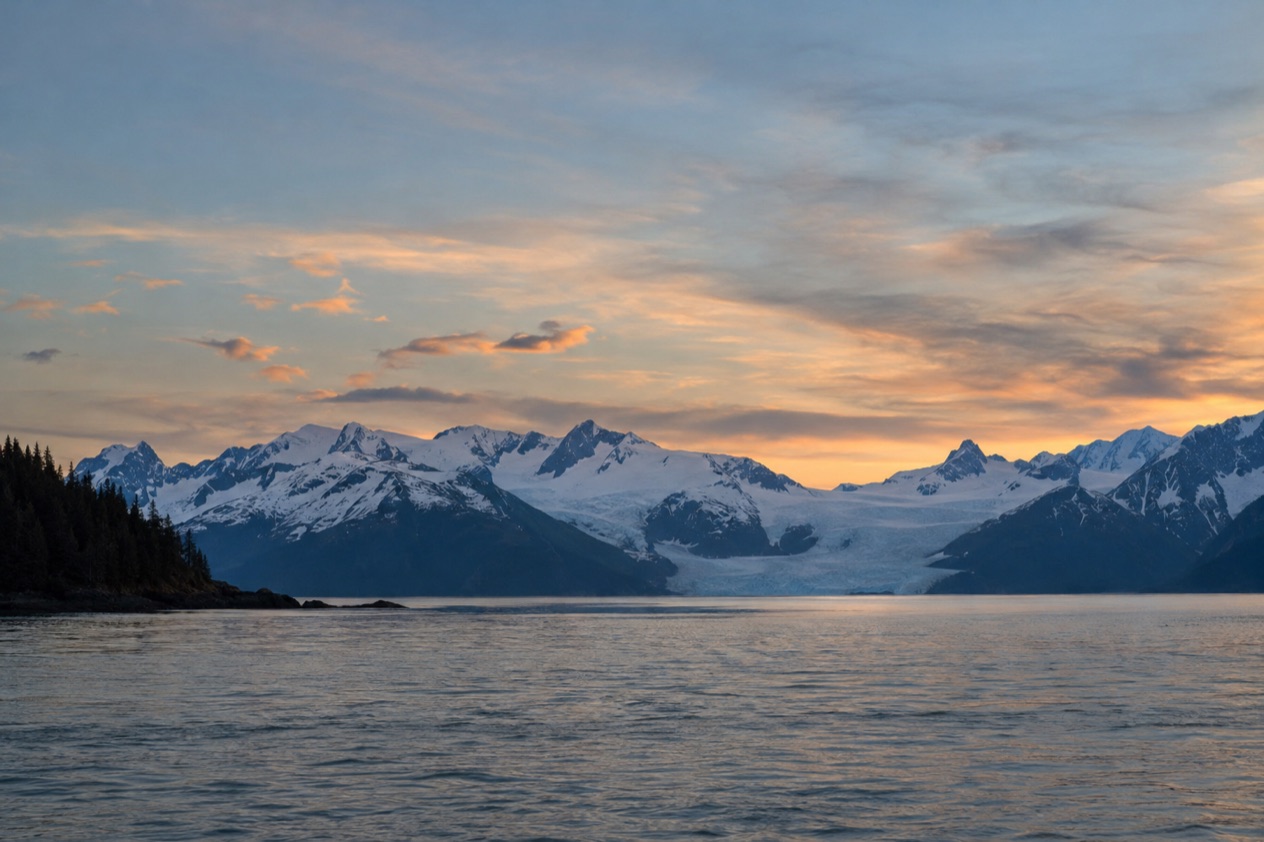
Out on Kachemak Bay the first thing you notice is the water itself, a gray-green sheet moving fast with the tide, with sea otters rolling on their backs and gulls wheeling over the boats. Across the bay the mountains and glaciers of the state park fill the horizon, and the little town of Homer sits behind you at the end of the road. This is a place for people who want to get on the water, step onto a wild shore or spend a night in a roadless harbor town.
Is visiting Kachemak Bay worth it?
Yes, if you like your scenery with a boat ride attached. Kachemak Bay suits paddlers, birders, wildlife watchers, anglers and anyone who enjoys the feeling of leaving the road system behind without going very far from a town with a harbor and a visitor center. It asks you to move by water or by air, and that is exactly the appeal.
Several things set it apart from other corners of the Kenai Peninsula. The bay holds Alaska’s first state park and its only state wilderness park, and most of that park has no road access.
It also holds the largest reserve in the National Estuarine Research Reserve System, so the shoreline and tidal flats are a working field laboratory as well as a pretty view. Add tides that rise and fall by a dramatic margin and a handful of communities, Homer, Halibut Cove, Seldovia, Nanwalek, Port Graham and Kachemak City, that each face the same water in a different way, and you have a bay with a personality of its own.
Compare it with the fjords and glaciers reached from other Kenai Peninsula towns and the difference is the feel. Here the bay is the main street. Water taxis cross it, kayakers read its currents, charter boats work its fishing grounds and small planes lift off from Homer toward the bear country on the far side of Cook Inlet. A day on Kachemak Bay is usually about crossing and what you find on the other side.
What to see at Kachemak Bay
Kachemak Bay State Park
Across the water from Homer, the state park is the bay’s wild side, a country of mountains, glaciers and marine wildlife. Visitors reach it by water taxi from Homer, and the crossing itself is part of the pleasure, with views opening up as the town shrinks behind you. Because most of the park has no road access, what you see on arrival is a shoreline with no parking lots and no visitor strip, just trees, rock and the tide line.
People come to hike, to paddle along the coast and to camp, since camping in the park is possible for travelers who accept that it is remote. Look for the layers of the place: spruce forest above, wrack and tide pools below, and glaciers glinting in the high country. Birds and sea mammals often show up close to the boat, so keep binoculars within reach on the crossing.
Gull Island and the bird rookery
Gull Island holds a bird rookery where visitors can observe seabirds, and it is one of the sights that gives a bay trip a clear focus. The rock is crowded with nesting colonies, so the noise and movement are the experience, a constant cloud of wings against the cliff.
Around Homer, many species of birds call the area home, including eagles and sandhill cranes. Scoters, grebes, ravens and loons are common, and eiders are sometimes seen, so even a quiet stretch of water can reward a patient look. A pair of binoculars and a field guide make the rookery far more interesting than a quick glance would.
Seldovia, the boardwalk town
Seldovia sits across the bay from Homer, and it began as a Russian fur trade post called Aleksandrovskaia in the late 1780s. Its older Russian name, Seldevoy, means Herring Bay.
For years it was known as the Boardwalk Town, until the Good Friday earthquake in 1964 dropped the surrounding land by six feet and nearly wiped out the town. Today only a small portion of the boardwalk remains, and it is called the new boardwalk even though it is the only one.
What you find now is a drowsy harbor, rebuilt boardwalks and streets that see more foot traffic than vehicles. There are no traffic signs, no movie theaters and no big stores.
You can fish, bicycle, hike, watch salmon or pick berries, and some visitors rent ATVs to cruise 11 miles along the coast to remote Jakalof Bay. Roughly a quarter of the population are Alaska Native people, and that heritage sits beneath the town’s Russian and boardwalk-era layers.
Birds around town include steller’s jays, pine siskins, magpies and blue herons, and about fifty bald eagles live here year-round. You might see otters, seals, whales, moose or black bear. Alaska.org recommends one to two nights in Seldovia, which gives time to slow down.
Wildlife on the water
Seals, sea otters, porpoises and whales play just offshore in Kachemak Bay, which is why a simple boat ride can fill a day. Sightings are never guaranteed, but the bay is a place where you often catch a glimpse of a whiskered face bobbing near the hull or a dark back arching in the distance.
Sea otters tend to float in the open with their paws raised, and harbor seals haul out on rocks. Keep a camera ready on the water taxi crossing and scan the swell lines, since movement in the water often gives animals away before you see them clearly.
Hours, tickets and rules
Kachemak Bay is not a single gated site with a ticket window. It is a body of water with a state park, a research reserve and several communities around it, so the practical question is how you arrive and what you do once you are there. The state park has no road access for most of its area, which means every visit begins with a seat on a boat or a plane.
Most visits follow the same pattern. You pick a way across, perhaps a water taxi from Homer to the park or a ferry to Seldovia, and you plan the rest around the tide and the weather. The rhythm of the day is set by the water as much as by any schedule.
A few rules and conditions come with the place. Travelers who camp in Kachemak Bay State Park are in a remote setting. Kayakers can turn to guides and instructors from several outfitters for safety and expertise on tides and currents, which matters because the tides here are extreme. For anyone who stays overnight in Seldovia, the choices include small hotels, B&Bs, RV sites and campgrounds.
How to get to Kachemak Bay
Start in Homer, which lies at the end of the Sterling Highway, 200 miles south of Anchorage, on the shore of the bay. From there the bay is reached by water or by air. Homer features the Homer Spit and Kachemak Bay as its notable areas, and the harbor is where most of the bay’s boats begin their trips.
For Kachemak Bay State Park, a water taxi from Homer crosses the bay, and travelers can enjoy views of mountains, glaciers and marine wildlife along the way. Because most of the park has no road access, visitors must arrive by airplane or boat.
For Seldovia there is no road system connecting the town to other communities, so all travel is by airplane or boat. A 150-passenger ferry can take you from Homer. Charter boats also operate from Seldovia, taking sport fishermen out to the fishing grounds of Kachemak Bay and other nearby waters, which makes the town a base for anglers as well as a place to stroll.
Several air services are based in Homer, including Emerald Air Service, Smokey Bay Air and Adventure Airways, and Homer is a gateway to Katmai, Lake Clark, McNeil River and Kachemak Bay parks. If your plans stretch beyond the bay, a short flight from Homer reaches Katmai and Lake Clark for brown bear viewing.
When to visit Kachemak Bay
Recreation and adventure are outside your door year-round in the Kachemak Bay area, and around the clock in the summer. That is a useful way to think about timing: the bay is not a single-season destination, though what you do changes with the weather and what each operator is running. Seldovia has snowy winters and brief dry summers, a climate that shapes how the town feels in each season.
The tides matter more than the calendar for planning a day. They are extreme, and the record numbers show how much the water can move.
| Tide record | Height | Date |
|---|---|---|
| Highest on record (above mean lower low water) | 25.25 ft | November 15, 1966 |
| Lowest on record (from mean lower low water) | -6.4 ft | April 27, 2002 |
| Average vertical difference | 15.53 ft | Measured at the Seldovia Tide Station |
| Recorded extreme difference | 31.72 ft | Measured at the Seldovia Tide Station |
What this means for you is simple. Paddlers benefit from the guides who know the tides and currents, and anyone planning a shoreline walk should think about where the water will be later in the day.
Time of day also shapes the mood. Early crossings tend to give you the water to yourself and a better chance to scan for otters and seals. Bird activity around Homer and Gull Island is a reason to keep a flexible plan, since wildlife appears on its own schedule and a slow boat is often better than a rushed one.
Tips for your visit
Bring binoculars. Between the bird rookery at Gull Island, the eagles, cranes, loons and grebes, and the otters, seals, porpoises and whales offshore, you will use them more than you expect. A camera with a good zoom serves the same purpose.
Give the bay more than a single afternoon if you can. Seldovia alone rewards one to two nights, and the state park changes character depending on whether you hike, paddle or simply sit on a shore and watch the tide move. A day in the park, a night in Seldovia and a morning on a charter or a kayak is a sensible way to see different sides of the water.
Nearby, Homer has plenty to combine with a bay trip, from the Homer Spit to the Alaska Maritime National Wildlife Refuge, which is headquartered in town. Bear viewing at Katmai and Lake Clark is an option for people who want to extend a trip. Visitors can fly over for a day, stay in a lodge or a guided campground for a longer period, or stay on board a boat and go ashore during the day.
Families and travelers with mobility concerns should think through the transfers, because the bay is reached by boat or plane and the park has no roads in most of its area. In Seldovia, streets see more foot traffic than vehicles, and ATVs can be rented to get around town. Anyone who wants a printed overview of the area can request a physical Homer Visitor Guide from the Homer Chamber of Commerce website.
Good to know before you go
Homer is the practical base, and Seldovia and the state park are the places where the bay turns quiet. Seldovia is small, with no big stores, so the town feels more like a harbor village than a shopping stop.
Kayakers should use guides and instructors for tides and currents, and anyone camping in the park should plan for a remote setting. Water taxi, ferry or plane is how you leave the road, and the tide will decide a good deal of what you do once you arrive.
Sources
- Wikipedia, Kachemak Bay (https://en.wikipedia.org/wiki/Kachemak_Bay), checked October 11, 2026
- Homer, outdoors and recreation (https://www.homeralaska.org/things-to-do/outdoors-and-recreation/), checked October 11, 2026
- Homer, glaciers (https://www.homeralaska.org/things-to-do/outdoors-and-recreation/glaciers/), checked October 11, 2026
- Wikipedia, Seldovia, Alaska (https://en.wikipedia.org/wiki/Seldovia,_Alaska), checked October 11, 2026
- Alaska.org, dest seldovia (https://www.alaska.org/destination/seldovia), checked October 11, 2026
- Alaska State Parks, Kenai Peninsula region (https://dnr.alaska.gov/parks/aspunits/kenai/kenaiindex.htm), checked October 11, 2026
- Homer Chamber of Commerce (https://www.homeralaska.org/), checked October 11, 2026
- Homer, things to do (https://www.homeralaska.org/things-to-do/), checked October 11, 2026