
Alaska’s days are full of ordinary pleasures: a ship easing up a fjord toward a glacier, a moose browsing at the edge of a town, rain tapping on a porch roof in the Southeast. Visitors spend their time among mountains, water and wildlife, and the question of safety here is mostly a question of how to behave in big country. The answer depends on where you are and what you are doing there.
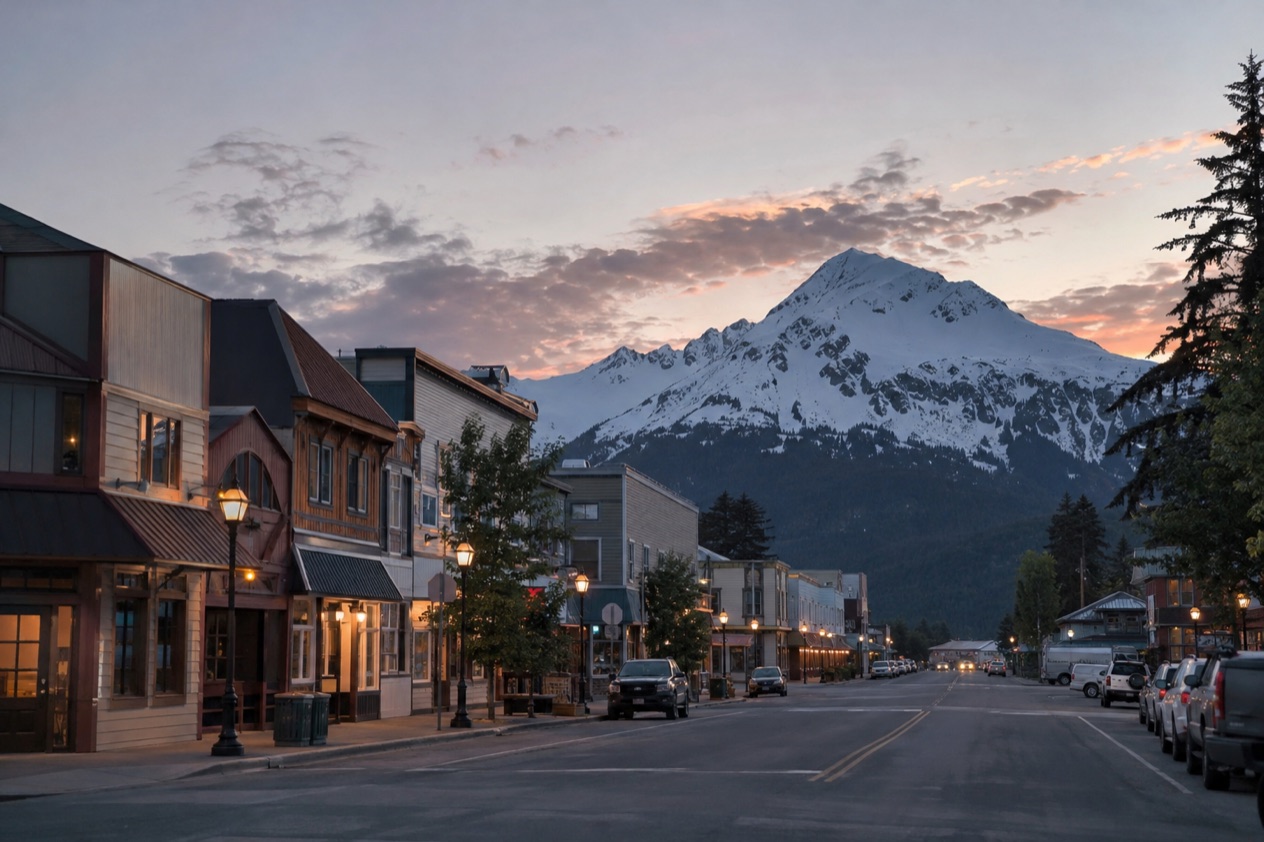
Is Alaska safe to visit?
Alaska is a place millions of people enjoy, but no honest page can promise a trip without surprises, because the risks here come from the land and its animals more than from the streets. All three North American bear species live in the state: black bears, brown bears (including grizzlies) and polar bears. A moose can look like a large, calm grazer, yet an adult can weigh anywhere from 800 to 1,600 pounds.
Alaska is also a landscape that keeps moving. Earthquakes are reported across the state by the thousands in a single year, most of them far too small to feel, and the ground, ice and water around the coast have a history of sudden change. Lituya Bay saw its most notorious landslide in July 1958, and that slide generated a devastating tsunami. It is a reminder that the scenery is alive, not a stage set.
What this means in practice is that the rules that matter most are the ones posted by the people who manage the land: the National Park Service in the parks and the Alaska Department of Fish and Game for wildlife across the state. Bear safety videos, for example, are even lent out by the department’s offices in Anchorage, Fairbanks and Juneau.
For a visitor, the sensible mindset is respect for distance, weather and animals. Alaska rewards patience, and the places people go, from park roads to fjords to small harbor towns, each come with their own conditions.
Safety by area in Alaska
Denali National Park
Visitors must keep wildlife wild, which means never feeding or harassing an animal. Bears must be given 300 yards at all times, and other animals get 25 yards. Those are the park’s own distances, and they apply whether you are looking at a bear on a far slope or a smaller animal close to a trail.
Cell phone coverage exists only within three miles of the park entrance. Beyond that, a phone should not be counted on as a lifeline. In an emergency inside the park, you dial 9-1-1 and give your location as Denali National Park.
Southeast Alaska and Juneau
Southeast Alaska is a land of rain and water. Juneau averages over 50 inches of precipitation a year, and some areas of the Southeast receive as much as 275 inches annually. That is the weather behind the dense green forests and the glaciers, and it shapes any day spent outdoors here, from a harbor stroll to a trail.
The region is also glacier and fjord country, where cruise ships and tour boats go to see ice. On the evening of August 9, 2025, passengers aboard the Hanse Explorer finished taking selfies and videos of the South Sawyer Glacier before the ship headed back down the fjord.
Valdez and Utqiaġvik
Valdez is known for snow, with up to 300 inches falling in a year. Utqiaġvik, the northernmost city in the United States, sits at the other end of the state’s range of conditions. Both places are a lesson in how different one state’s weather can be from town to town, and a visitor should treat each place’s conditions as its own.
Polar bears are one of the three bear species that live in Alaska, and the state’s bear rules apply to all of them.
Everyday safety in Alaska
Everyday safety in Alaska is largely about living alongside animals. People in Alaska must keep all human sources of food secure from bears, and that rule shapes how campsites, cabins and yards are kept. It is a habit as much as a regulation, and it applies in towns as well as in the backcountry.
Dangerous bear situations should be reported to the Alaska Department of Fish and Game using its wildlife encounter form. That reporting system exists so that the department can follow what is happening around people and bears.
Moose are common enough in Alaska that they are part of everyday life. Bulls are easy to recognize by their antlers, which only the males carry, and a big bull can grow an 80-pound rack in a single summer. The biggest trophy-class bulls come from the western part of the state, though trophy bulls are found throughout Alaska.
Getting around safely
In Denali, the emergency number is 9-1-1, and you give your location as Denali National Park.
Phone coverage in the park exists only within three miles of the entrance, so the moment you leave that zone, you should think of your phone as a camera rather than a connection. That is a fact about the park, and it is the park’s own picture of its communications.
On the water, the picture is of ships working their way up fjords toward glaciers and turning back down the fjord again, as the Hanse Explorer did at South Sawyer Glacier. Moving through glacier and fjord country is a matter of following the vessel’s route and the conditions of the place.
Wildlife, weather and terrain safety
Wildlife is the heart of Alaska’s outdoor safety. Bears of all three species live in the state, people must keep all human food secure from them, and in Denali the distances are firm: 300 yards from bears and 25 yards from every other animal. Visitors must never feed or harass wildlife.
Moose deserve the same respect. Adults stand almost 6 feet tall, and the weight range runs from 800 pounds for a small female to 1,600 pounds for a large male. The antlers of a bull grow at a pace of an inch a day through the summer, which gives a sense of how much energy these animals carry.
Weather and terrain vary enormously. Juneau gets over 50 inches of precipitation a year, parts of the Southeast get far more, and Valdez receives up to 300 inches of snow. Utqiaġvik is the northernmost city in the United States, a reminder that the state stretches into true Arctic conditions.
The ground itself is active. Thousands of earthquakes are reported in Alaska in a single year, and Lituya Bay’s 1958 landslide and tsunami show how steep terrain and water can combine. Near glaciers and fjords, the sense of scale is part of the experience, and so is the understanding that ice and slopes can change.
Good to know before you go
The habits that matter most are simple ones: keep food away from bears, give animals their space, and treat each park, town and coast as its own place with its own conditions. In Denali, remember that your phone works only near the entrance and that 9-1-1 is the emergency number. For a dangerous bear situation anywhere in the state, the Alaska Department of Fish and Game has a wildlife encounter form, and its offices in Anchorage, Fairbanks and Juneau lend bear safety videos.
Sources
- Alaska Department of Fish and Game, Living with bears (https://www.adfg.alaska.gov/index.cfm?adfg=livingwithbears.main), checked October 11, 2026
- Alaska Department of Fish and Game, Moose species profile (https://www.adfg.alaska.gov/index.cfm?adfg=moose.main), checked October 11, 2026
- National Park Service, Denali National Park & Preserve, plan your visit: safety (https://www.nps.gov/dena/planyourvisit/safety.htm), checked October 11, 2026
- Wikipedia, Climate of Alaska (https://en.wikipedia.org/wiki/Climate_of_Alaska), checked October 11, 2026
- Alaska Earthquake Center (https://earthquake.alaska.edu/), checked October 11, 2026