
At first light, the walls of the old Maya port of Tulum turn the color of honey while iguanas sun themselves on the stones and the Caribbean glitters below. Later the day moves to the beach road, where bicycles weave between palms, and ends at taco stands along the main avenue. Tulum is a small coastal town with jungle behind it and turquoise water in front, and it suits couples, friends and families who want ruins, sea and cenotes within easy reach of each other.
What are the best things to do in Tulum?
The best things to do in Tulum are the clifftop ruins, a day on the beach, a swim-and-stare stop at a cenote and a boat trip into the Sian Ka’an wilderness, followed by a long dinner in town.
- Walk the Maya ruins on the cliff, where the temples stand right above the sea.
- Spend an afternoon at a beach club along the hotel zone, with a daybed and a cold drink.
- Visit a cenote such as Gran Cenote or the Dos Ojos system for clear water and cave light.
- Take a boat or kayak tour in the Sian Ka’an Biosphere Reserve for mangroves, birds and quiet canals.
- Go inland to the jungle ruins of Cobá for a different, greener side of Maya history.
- Snorkel the reef or watch sea turtles in the bay at Akumal.
- Eat cochinita pibil and fresh ceviche at the stalls and small restaurants of Tulum Pueblo.
- Ride a bicycle between the town, the beach and the cafés, the way most locals and visitors do.
Sights and landmarks in Tulum
The Tulum ruins
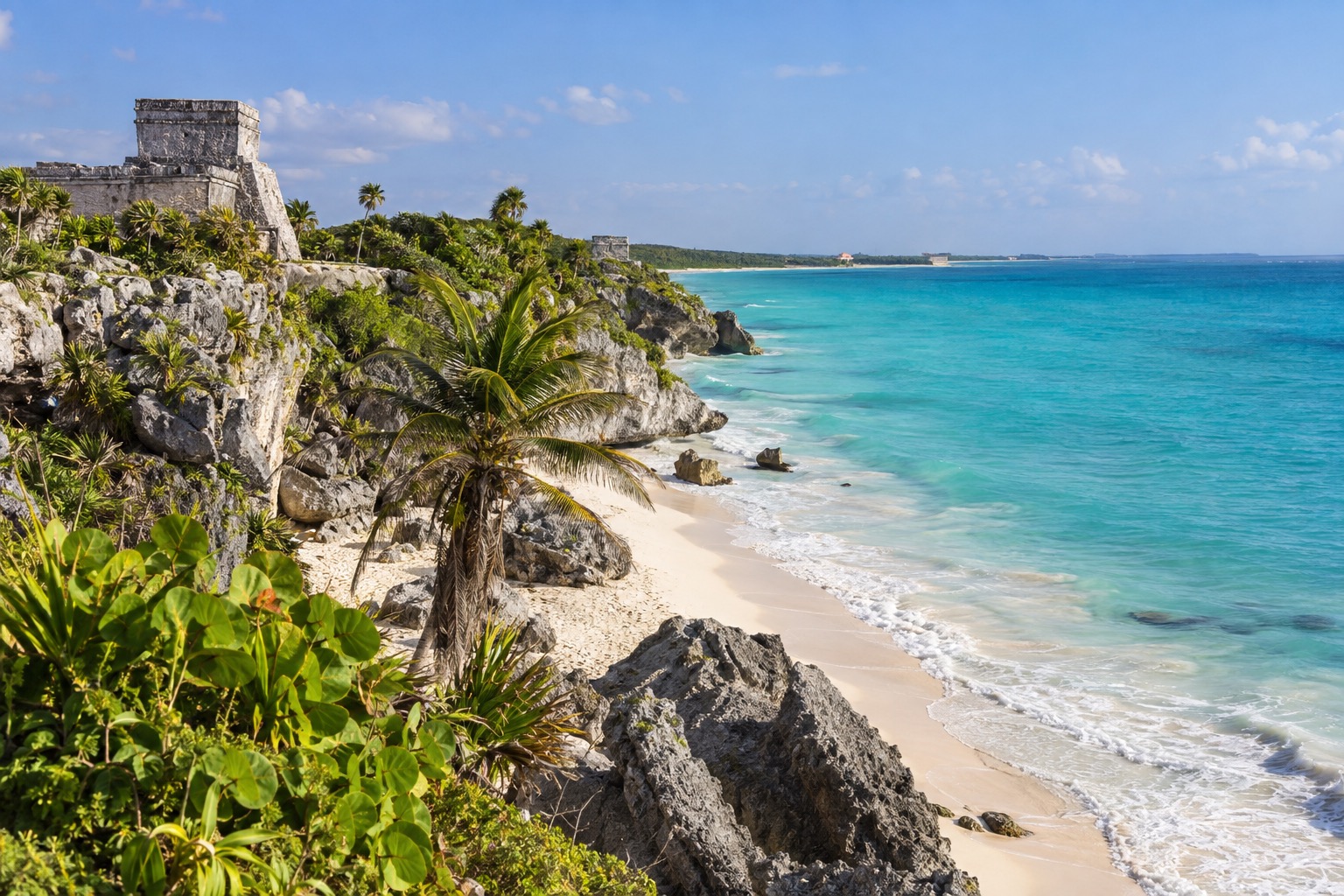
Few archaeological sites in Mexico have a setting like this one. Tulum was a walled Maya trading port, and its stone buildings stand on low cliffs directly above the Caribbean, with a small beach tucked into a cove below. The Castillo, the Temple of the Frescoes and the Temple of the Descending God are the buildings people photograph most.
The site is compact, so a visit is more about lingering than covering ground. Go first thing in the morning, when the light is soft, the paths are quiet and the tour groups have not yet arrived. You can reach the entrance by bicycle from the town, by a shared colectivo van or by taxi from the beach road.
There is little shade among the ruins, so a hat and water are worth bringing. It suits almost everyone, from history lovers to families, and an hour or two is plenty for most people.
| Site | Open | Admission |
|---|---|---|
| Tulum archaeological zone | Daily, 8:00 a.m. to 5:00 p.m. (last entry 3:30 p.m.) | $265 pesos for foreign visitors, $80 pesos for Mexican nationals. Free on Sundays for Mexican nationals and foreign residents of Mexico, and free for children under 13, visitors 60 and older, people with disabilities, and Mexican teachers and students with valid ID |
Tulum Pueblo and its main avenue
The inland town is where Tulum feels most Mexican. Avenida Tulum is busy all day with taxis, small shops, taquerías, juice bars and a market, and it is less polished than the beach strip. It is compact and easy to explore on foot.
The ADO bus station sits on the same avenue, which makes the town the natural base for onward trips along the coast. Come in the late afternoon, when the heat eases and the street food stalls start to fill, and wander without a plan. It is an easy stop for budget travelers, backpackers and anyone who likes to eat where locals eat.
Aldea Zama and La Veleta
These two newer neighborhoods are not sights in the usual sense, but you will pass through them. Aldea Zama is a planned development of condos, wide paved streets and landscaped pools between the town and the sea, quiet and modern. La Veleta, south of town, is rawer, with sand roads, new buildings and local homes mixed together.
Both are better by bicycle or scooter than on foot. They are pleasant places to see how Tulum is growing, and they offer cafés and small restaurants that are calmer than the main avenue.
Beaches and outdoor things to do in Tulum
The beach road and its beach clubs
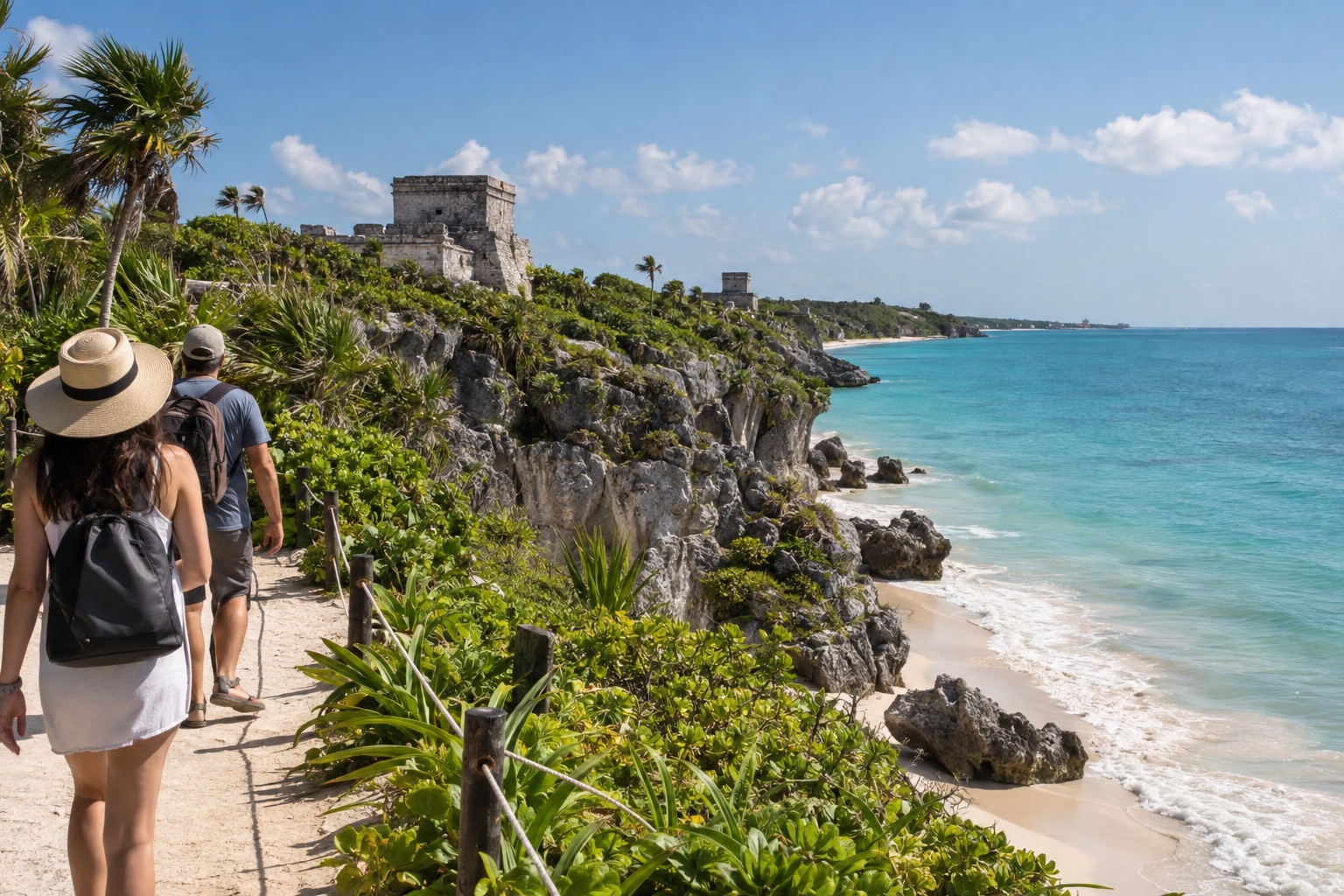
The beaches of Tulum run along a single narrow road lined with small hotels, palm-shaded restaurants and beach clubs, with a relaxed, low-rise, barefoot feel rather than a loud party scene. The sand is pale and soft, and the water is a clear Caribbean turquoise. It is a place for couples and anyone who wants the sea at the front door.
Getting there is simple: a taxi from town, a colectivo or a bicycle ride along the bike path. Once you are on the strip, walking and cycling are the easiest ways to move around, since parking is scarce. The sea can be calm one day and rough after a front the next, so look at the beach flags before swimming.
From December to April, daybeds and restaurant tables fill up, so reserve ahead. Bring cash, because some smaller spots have card minimums or no card machine at all.
Cenotes near Tulum
The limestone sinkholes around Tulum are among the region’s great sights. Two cenotes draw most visitors, Gran Cenote and Dos Ojos, and like the others they are run by local ejidos or private owners, each with its own hours and fees. Inside you find water so clear that the cave formations seem to float, with shafts of sunlight breaking through the roof.
Both lie a short drive from town, and a taxi or a rented bike gets you to the closer ones. Late morning is often when the light shines best into the caverns, while early arrivals tend to find fewer people. They suit most visitors who enjoy water and nature, and each cenote sets its own rules, so ask at the entrance.
Snorkeling, diving and quiet paddling
Offshore runs part of the Mesoamerican Barrier Reef, and snorkeling and diving trips leave from the beach zone and the town. Reef trips usually go out in the morning, when the water is clearest and the wind has not yet picked up. Conditions change with the weather, so the operator is the best judge of the day.
If you prefer quiet, the canals and lagoons of Sian Ka’an are made for kayaking and birdwatching. Those are covered in the day trips below.
Day trips from Tulum
Sian Ka’an Biosphere Reserve
This is the great wild space on Tulum’s doorstep, a UNESCO World Heritage site and a Ramsar wetland of international importance. It protects a huge stretch of coast, with mangroves, lagoons, jungle and part of the barrier reef, and it is home to birds, manatees, crocodiles and dolphins. A boat ride across the lagoons at a slow pace is a very different Caribbean from the beach clubs.
Independent car access into the reserve is limited and the interior roads are unpaved, so most visits go through boat and kayak tours organized by local cooperatives. The usual starting points are the village of Muyil and the fishing hamlet of Punta Allen. Morning departures catch the birds and cooler air, and the day suits nature lovers and families with older children. Plan on a full day, bring sun protection and insect repellent, and keep your expectations for wildlife flexible, since sightings are never guaranteed.
Cobá
Cobá is the jungle counterpart to Tulum’s seaside ruins. The site is spread across forest and beside lakes, with tall pyramids rising over the canopy and the sound of birds and howler monkeys in the trees. The long, shaded paths make it feel like an expedition rather than a quick stop.
It lies inland, reached by road from Tulum, usually by rental car, taxi or an organized tour. Go early, because the jungle heats up by midday. It suits history lovers and active travelers, and renting a bike or taking a bike taxi inside the site helps with the distances between the groups of buildings.
Akumal and its turtle bay
Akumal is a relaxed beach town up the coast toward Playa del Carmen, known for a sheltered bay where green sea turtles graze on seagrass. The white sand and gentle bay make it a favorite for a half-day outing, and the mood is more laid back than in the big resort towns.
You can reach it by car, taxi or the colectivo vans that run along the highway. Morning is when the turtles are most often seen and the beach is least crowded. It suits families and snorkelers, and it is a good idea to wear reef-safe sunscreen and keep a respectful distance from the animals.
- Bacalar is a freshwater lagoon far to the south, famous for its shades of blue, and best treated as a long day or an overnight stay.
- Chichén Itzá is the great inland Maya city, usually visited on a long organized tour with a stop at a cenote on the way back.
What to eat in Tulum
Eating in Tulum starts with the Yucatán peninsula’s own cooking, then branches out to seafood and global flavors. Cochinita pibil, pork slow-cooked in achiote and sour orange, is the classic, served in tacos or on tortas with pickled red onion. Look also for panuchos, salbutes and the lime-heavy soup sopa de lima.
Near the sea, ceviche, grilled fish and shrimp tacos come with a squeeze of lime and a splash of habanero salsa. Fresh coconut water, aguas frescas and cold micheladas are the drinks of the day, and mezcal is the evening choice. In Tulum Pueblo, taco stands and family-run restaurants serve the best of it, while the beach zone leans toward wood-fired kitchens, vegetarian cafés and long brunches with smoothie bowls.
Things to do in Tulum at night
Evenings in Tulum are about dinner and a slow drink, not about dancing until dawn. On the beach road, candlelit restaurants and palapa bars glow after dark, and some host DJs or live music. In town, the main avenue stays lively, with taco stands, mezcal bars and small clubs for those who want local nightlife.
Quieter options include a sunset drink on the sand, a stroll along the beach road or a late supper in a garden restaurant. Pay attention to your surroundings after dark and stay on well-lit pedestrian streets and in the tourist zones. Unlit roads in outer neighborhoods like La Veleta are best avoided on foot, and taxis can be hard to find late, so plan your ride back.
Things to do in Tulum with kids
Children usually remember the cenotes, the iguanas on the ruins and the boat rides. The ruins are short enough to hold their attention, and the little cove beneath the cliffs is a good reward. Gran Cenote’s clear water and turtles, if you spot them, are a highlight for curious kids.
A boat tour in Sian Ka’an, with birds and maybe a manatee or dolphin, suits older children, and Akumal’s bay is a gentle way to meet sea turtles. Keep the sun and heat in mind, with hats, water and shade breaks.
Check the beach flags and watch the waves, since the sea can be rougher than it looks. Aldea Zama and the town are better bases for families than the beach road, with more space and a quieter feel.
Good to know before you go
The U.S. State Department rates the state of Quintana Roo Level 2, ‘Exercise increased caution,’ due to terrorism and crime.
Tulum is easy to get around by bicycle, colectivo or taxi, and the town, the beach zone and the ruins are all linked by short rides. The newer airport southwest of town is the closest way in, and ADO buses connect the town to Cancun airport and the coast.
Bring some cash for smaller beach spots. Foreign visitors to Quintana Roo pay the Visitax environmental fee, which can be settled online. The Atlantic hurricane season runs from June through November, and seaweed can wash onto the beaches in some seasons.
Sources
- INAH, official for the Tulum archaeological zone, inah.gob.mx/zonas/99-zona-arqueologica-de-tulum, checked September 29, 2026
- Wikipedia, "Tulum", en.wikipedia.org, checked September 29, 2026 (source secondaire)
- INAH, inah.gob.mx/zonas-arqueologicas, checked September 29, 2026
- UNESCO World Heritage Centre, record 410, whc.unesco.org/en/list/410, checked September 29, 2026
- reserve de sourcage (CONANP dediee non atteinte, 404), aucun chiffre affirme
- common knowledge; no single official source available
- Wikipedia, "Tulum International Airport", en.wikipedia.org, checked September 29, 2026 (secondary source; the group’s official site not reachable that day)
- Wikipedia, "Tulum Municipality", en.wikipedia.org, checked September 29, 2026 (source secondaire)
- U.S. Department of State, Bureau of Consular Affairs, Mexico Travel Advisory, travel.state.gov, checked September 29, 2026
- Gobierno del Estado de Quintana Roo, portal visitax.gob.mx, checked September 29, 2026 (amount unconfirmed)
- NOAA National Hurricane Center, checked September 29, 2026
To plan your stay
- Best Time to Visit Tulum: Weather by Month, Crowds, Sargassum and Festivals
- Where to Stay in Tulum: Beach Zone, Town, Aldea Zama and La Veleta
- Tulum Airport to City: Taxis, Private Transfers, the ADO Bus and the Ride to the Beach
- Know Before You Go to Tulum: Visitax, Pesos and Cash, Getting Around and Sun Safety