
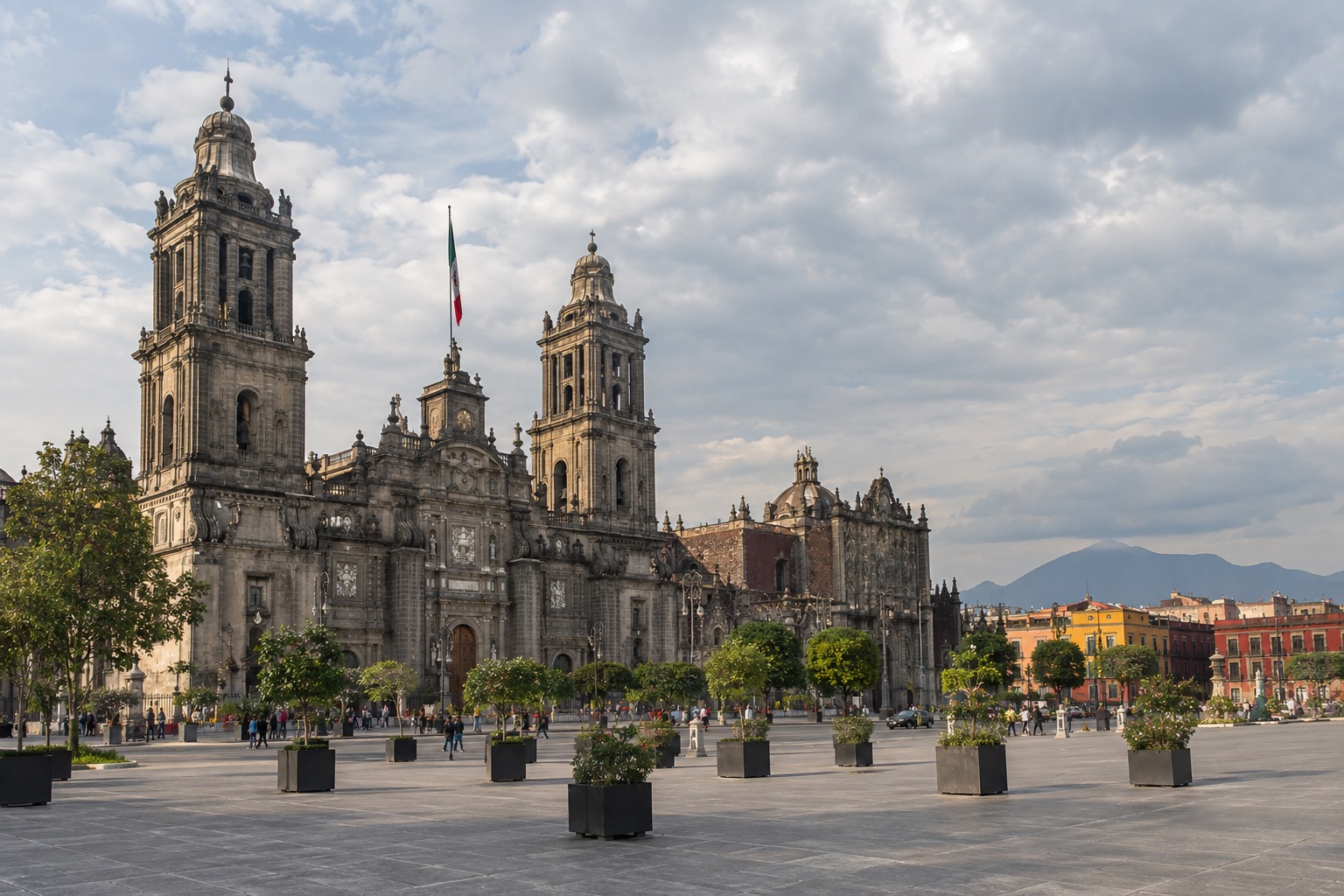
In August, the sky over the Zócalo turns slate gray by midafternoon, the first fat drops hit the flagstones, and vendors snap open plastic sheeting over their tamales without breaking stride. Then the sun comes back, the streets steam, and the city carries on. This is Mexico City in the middle of its rainy season, green in the parks, quiet in the museums and delicious at the table, a good month for travelers who plan their days around the weather.
What is the weather like in Mexico City in August?
August is mild and wet: comfortable mornings, warm but never hot afternoons, cool evenings, and rain on most days. It looks almost exactly like July, and September brings a slight cooling and a little less rain.
| Month | Average high (°F) | Average low (°F) | Rain (in) | Rain days | Daylight on the 15th |
|---|---|---|---|---|---|
| July | 76.5 | 55.4 | 6.85 | 21.8 | 13 hours 13 minutes |
| August | 76.3 | 55.8 | 6.91 | 20.8 | 12 hours 49 minutes |
| September | 74.7 | 55.6 | 6.22 | 18.2 | 12 hours 17 minutes |
The rain follows a pattern. Mornings are often bright and clear, which makes them the best hours for walking the center or visiting an outdoor site. Clouds build after lunch, and a downpour, sometimes with thunder, tends to arrive in the afternoon or early evening and can last a good while before it clears.
The night air cools enough that you’ll reach for a layer, most of all when a storm has just passed. Days are long, with daylight lasting close to thirteen hours, so there is still time for dinner and a stroll once the streets dry out.
What to do in Mexico City in August
August suits indoor culture and long meals, with outdoor plans slotted into the mornings. Museums are a natural fit for the afternoon showers, and the city has plenty of the kind that can fill half a day.
Museum afternoons when the rain arrives
When it rains, the Museo Nacional de Antropología, which sits in the Chapultepec area on Paseo de la Reforma, is the clear pick. Its 24 halls take you from the first peoples of the Americas to the Aztec world, and the big covered courtyard with its famous umbrella-like fountain is a good place to watch the rain fall while staying dry. Plan on several hours, and start with the Mexica hall if energy runs low.
Nearby, Chapultepec Castle sits at the top of its hill and houses the national history museum, with grand rooms and terraces over the park and the city. In the center, the Palacio de Bellas Artes, a marble opera house, displays murals by Rivera, Orozco and Siqueiros, while the Templo Mayor ruins stand just steps from the Zócalo, a good pairing for one morning downtown.
| Site | Open | Admission |
|---|---|---|
| Museo Nacional de Antropología | Tue to Sun, 9 a.m. to 6 p.m.; closed Mon | 210 pesos (105 pesos for Mexican nationals and residents) |
| Chapultepec Castle and Museo Nacional de Historia | Tue to Sun, 9 a.m. to 5 p.m.; closed Mon | 210 pesos (105 pesos for Mexican nationals and residents) |
| Templo Mayor | Tue to Sun, 9 a.m. to 5 p.m.; closed Mon | 210 pesos (105 pesos for Mexican nationals and residents) |
| Museo Frida Kahlo (Casa Azul) | Closed Mon; open late Thursday evenings for Noches Azules | 320 pesos, timed tickets online only |
Coyoacán and the Casa Azul between showers
Coyoacán is a neighborhood of cobbled lanes, shaded plazas and old colonial houses in the south of the city, and in the green of August it looks its best. The Casa Azul, Frida Kahlo’s blue house, is the main draw, and the garden courtyard is lovely when the plants are lush. Tickets are sold online for a set time slot, so a morning slot leaves the afternoon for lunch.
A quick stroll from that point takes you to the plazas and the weekend market, famed for street food stalls and crafts. Try a corn-based snack or a sweet churro under a covered stall while a shower passes. On Thursday nights, the Casa Azul keeps its doors open late for its Noches Azules, a stirring opportunity to visit it after nightfall.
Chiles en nogada and the flavors of the season
August is when chiles en nogada begin to appear on menus, a dish that people in Puebla and Mexico City wait for all year. A roasted poblano chile is stuffed with a mix of meat, fruit and spices, covered in a creamy walnut sauce and topped with pomegranate seeds and parsley, so it carries the green, white and red of the flag. It is a dish of late summer, when walnuts and pomegranates ripen, and it often runs into September around Independence Day.
Rainy afternoons also call for warm food: pozole, tortilla soup, a steaming cup of atole or hot chocolate, and tamales from the vendors who keep working through the weather. Markets and fondas are good for a long comida, the main meal of the day, that stretches until the sky clears.
Evenings at the arena and on the water
Lucha libre is a good evening plan whatever the weather. Masked wrestling takes over Arena México in the Doctores neighborhood on several evenings each week, and the regular fight nights are Tuesday, Friday and Sunday. The crowd is half the show, with families, chants and vendors selling beer and snacks.
For a morning outdoors, Xochimilco’s canals are worth the trip south. You can rent colorful flat-bottomed trajineras at the dock, while food boats and mariachi boats float alongside them. Go early, before the clouds gather, and the gardens along the chinampas look especially green in the rainy season.
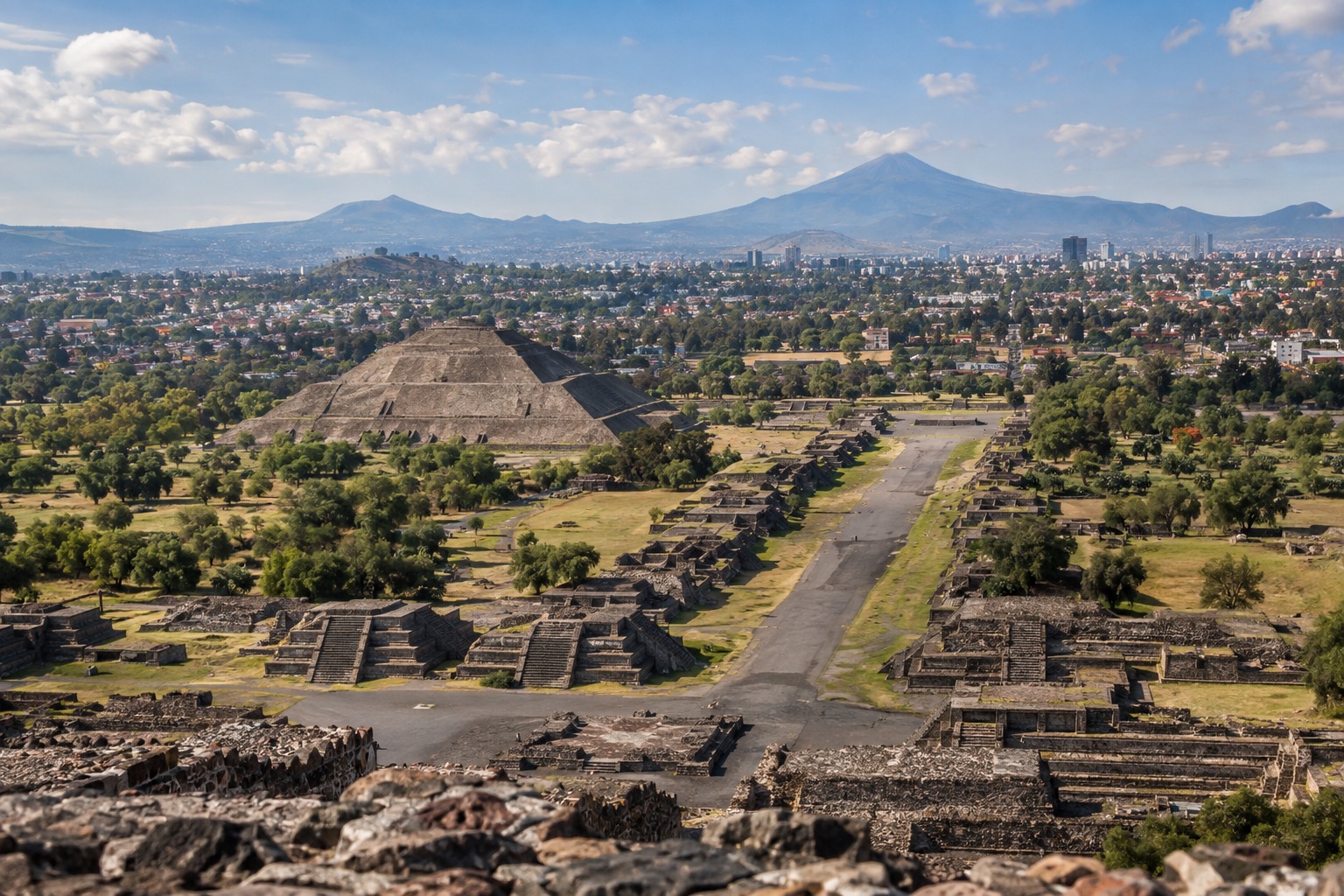
A day at Teotihuacan is the big outing beyond the city. The ancient city, a UNESCO World Heritage Site, is open daily and is mostly exposed, so go in the morning and leave the afternoon thunderstorms to others. Admission is 210 pesos, with the same rate as the city museums for Mexican nationals and residents at 105 pesos.
Is Mexico City busy in August?
Moderately: August is summer vacation for Mexican and U.S. families, so the big sights see steady crowds, but the rainy season keeps the city from feeling packed. Museums and the Zócalo draw families on school break, especially on weekends and free-time mornings, and lines at the best-known places tend to form before lunch.
Restaurants fill at the usual meal hours, particularly on weekends, and the popular spots in Roma, Condesa and Coyoacán reward an early table. Rooms are generally easier to find than in the dry winter months, and the afternoon rain thins out the street crowds for a while. Mornings are the time to see the headline sights at their calmest.
What to pack for Mexico City in August
Pack for rain and for a cool evening, with layers that dry fast and shoes that cope with wet pavement.
- A light rain jacket or compact umbrella for the afternoon storms
- Water-resistant walking shoes with good grip for wet cobblestones
- A sweater or light jacket for evenings after the rain
- Sunscreen and a hat for the clear mornings at Teotihuacan or Xochimilco
- A little pouch or protective sleeve that keeps a phone and tickets dry
Good to know before you go
The U.S. State Department rates Mexico City Level 2, Exercise Increased Caution, the same baseline level as most of the country.
August falls in the rainy season, so heavy afternoon downpours are normal and sometimes cause street flooding and slow traffic. The Metro and Metrobus will get you to much of the historic center and museum district, where a rechargeable card works at the turnstiles, and in a storm that ride usually beats a car. Museums are closed on Mondays, so plan the big sights for the rest of the week.
Is August a good time to visit Mexico City?
Yes, especially for travelers who love museums, food and green landscapes and do not mind a daily shower. It suits culture seekers and food lovers better than anyone hoping for a long, dry afternoon in the parks.
July is nearly identical, with slightly more rain days, while September is a touch cooler and a bit drier and brings the build-up to Independence Day. August sits in between, still fully in the rainy season but with a little more summer-break energy in the city. What stands out about August is the first chiles en nogada, the rinsed, glossy green of Chapultepec after a storm, and the pleasure of ducking into a museum or a fonda just as the sky opens.
Sources
- Servicio Meteorologico Nacional (CONAGUA), normales climatologicas 1991-2020, estacion 09048 (Tacubaya Central (Obs), Miguel Hidalgo), checked September 29, 2026
- sunrise-sunset.org, sunrise and sunset on the 15th of the month, checked September 8, 2026
- INAH, Zona Arqueologica Templo Mayor (inah.gob.mx/zonas/zona-arqueologica-templo-mayor), checked September 29, 2026
- Sistema de Informacion Cultural (sic.gob.mx), MNA sheet of 28/07/2026, checked October 3, 2026
- INAH, Museo Nacional de Antropologia, checked September 29, 2026
- INAH, Museo Nacional de Historia, Castillo de Chapultepec (inah.gob.mx/museos/museo-nacional-de-historia-castillo-de-chapultepec), checked September 29, 2026
- INAH, meme page, checked September 29, 2026
- INAH, Zona Arqueologica de Teotihuacan (inah.gob.mx/zonas/23-zona-arqueologica-de-teotihuacan), checked September 29, 2026
- Museo Frida Kahlo, museofridakahlo.org.mx (« NO CONTAMOS CON VENTA EN TAQUILLA », entrada general $320) et boletos.museofridakahlo.org.mx, checked October 3, 2026
- U.S. Department of State, Mexico Travel Advisory (travel.state.gov, date issued May 29, 2026), checked October 3, 2026
To plan your stay
- Things to Do in Mexico City: Museums, Pyramids, Xochimilco Boats and Street Food
- Where to Stay in Mexico City: Roma, Condesa, Polanco, Coyoacán and the Historic Center
- Mexico City Airport to City: Metro, Taxis and Travel Times to the Center, Roma and Polanco
- Know Before You Go to Mexico City: Getting Around, Money, Altitude and Local Customs