
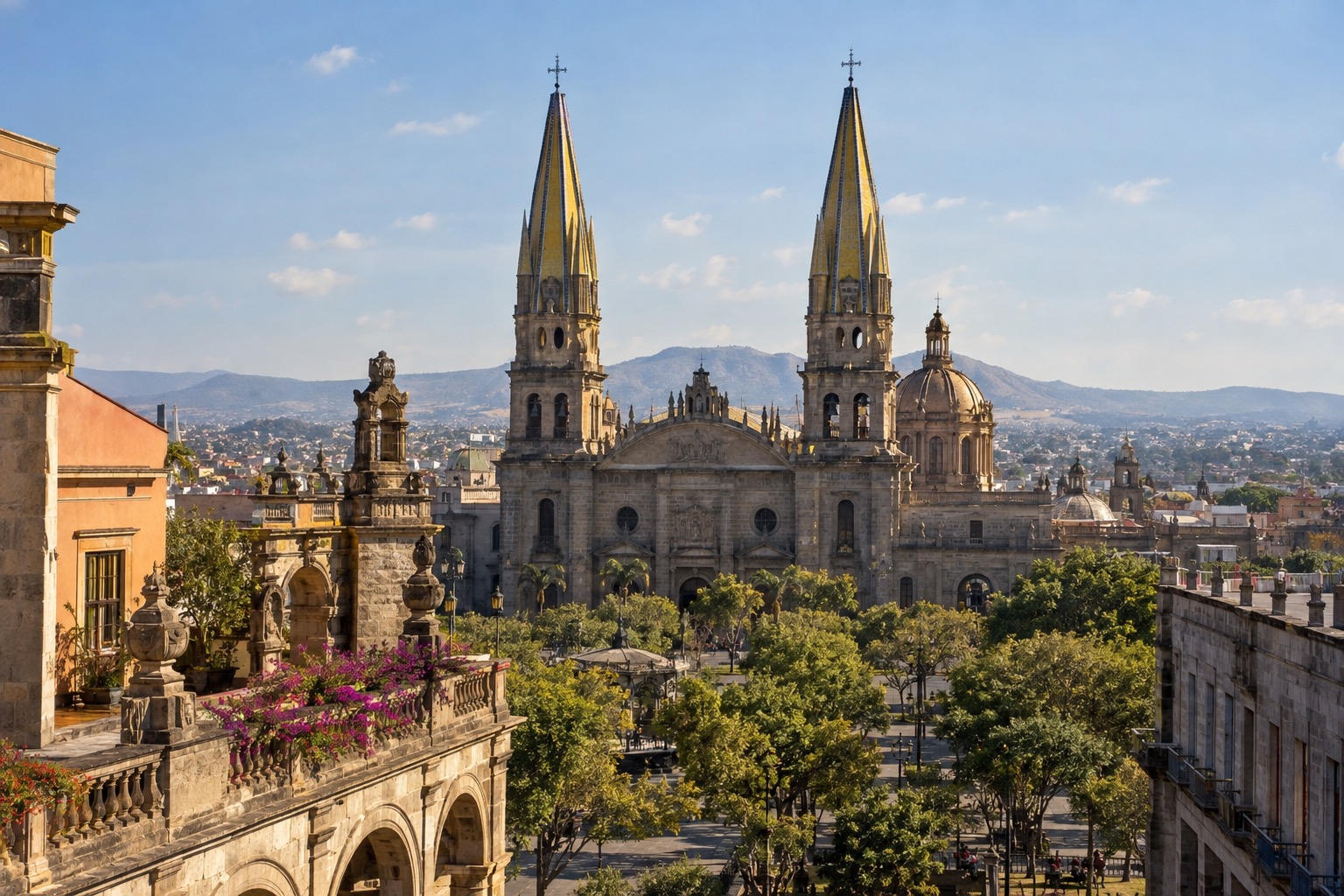
On a first morning in Guadalajara, the twin yellow-tiled spires of the cathedral catch the sun while vendors set up around the Plaza de Armas and the smell of fresh tortillas and strong coffee drifts out of the side streets. Mariachi is never far, and the pace is that of a big city that still lives by its plazas. Three days here give you the colonial heart, the craft towns next door and a taste of tequila country.
Is three days enough in Guadalajara?
Yes, three days is a comfortable length for a first visit, especially if you like cities you can cover on foot and want one outing beyond them. The historic center fills a full day, Tlaquepaque and Tonalá fill another, and the third is free for a trip into the agave fields.
What three days leave out is the slower side of the city: the bars and cafés of Colonia Americana at a relaxed pace, the quieter residential avenues of Providencia, and more time in the markets. With a few extra days, those are the first things to add, along with a second trip out of town.
Day 1 in Guadalajara
Start at the cathedral on the Plaza de Armas, early, before the streets fill with locals and visitors. The Teatro Degollado, the historic opera house, stands right across from it, and the Museo Regional is also in the historic center, so the morning stays within a few blocks. You are on pedestrian streets and colonial plazas, and everything is walkable.
| Site | Open | Admission |
|---|---|---|
| Museo Regional de Guadalajara | Tuesday to Sunday, 9 a.m. to 4 p.m. | 210 pesos (105 pesos for Mexican nationals and foreign residents) |
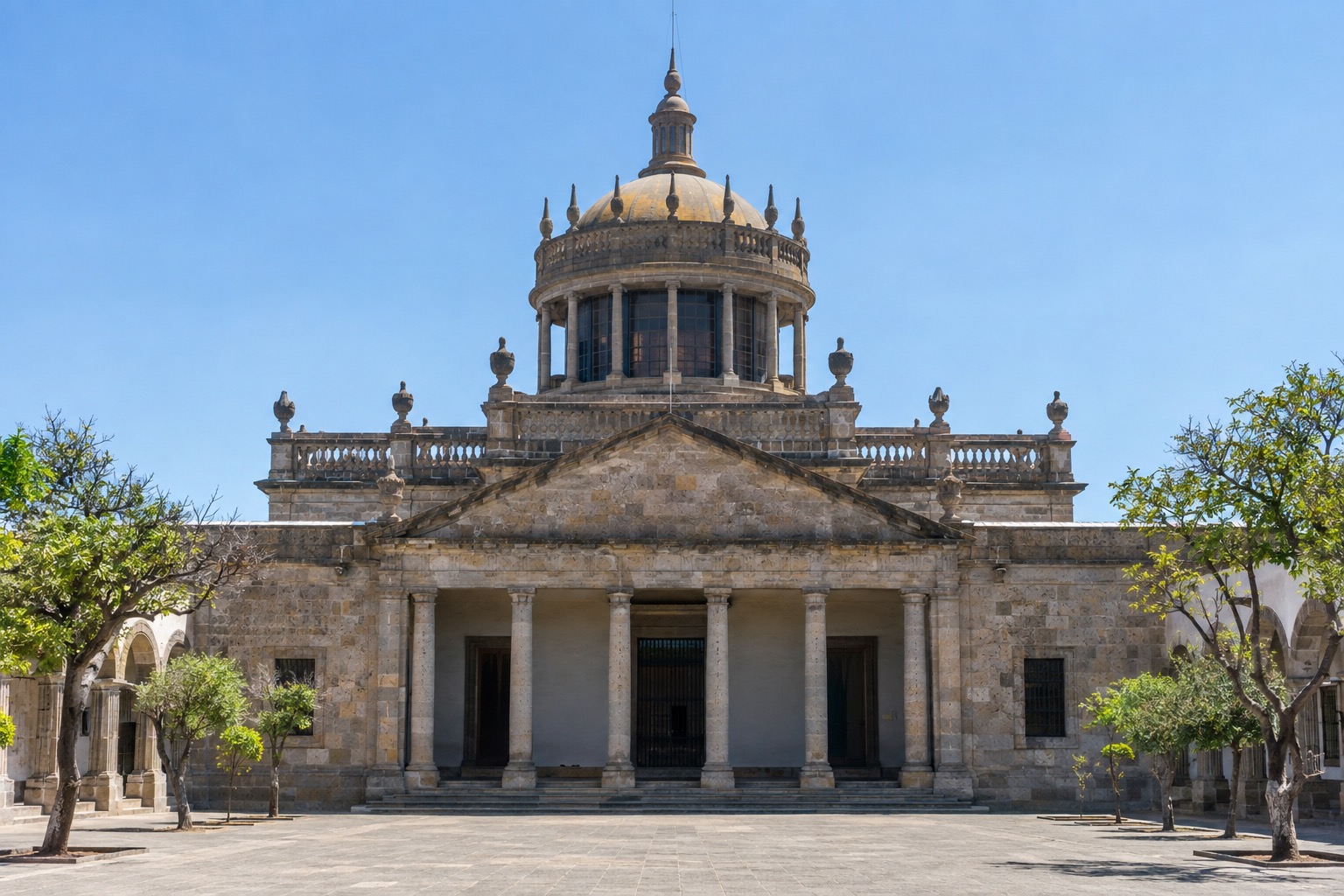
In the afternoon, trace the Plaza Tapatía, a route that joins the cathedral district to the Hospicio Cabañas and goes by the Rotonda de los Jaliscienses Ilustres. In the late 1930s, José Clemente Orozco painted the murals inside the chapel of the Hospicio, which is a Neoclassical complex and a UNESCO World Heritage Site. For the midday meal, either a market counter or a humble fonda near the center will hit the spot, and the expansive, covered Mercado San Juan de Dios, which also goes by Mercado Libertad, offers a place to eat amid sellers of food, leather and crafts.
Evening is for the plazas, when the center turns softer and locals come out to stroll. Dine in one of the restored colonial buildings or on a courtyard terrace. One piece of advice: if you’re staying downtown, request a room overlooking an inner courtyard, as it shuts out street sounds once night falls.
Day 2 in Guadalajara
Spend the day south of the center in Tlaquepaque, a crafts town of cobblestone streets, galleries, pottery and blown glass. A car or bus ride from the center takes roughly 15 to 25 minutes, so you can get there for a late breakfast. If you’d rather find fewer people at the shops and restaurants, head over on a weekday or get there early on a weekend.
Just nearby, Tonalá stages its big market for pottery and crafts each Thursday and Sunday, so if possible, arrange this day around one of those. The stalls spill over the streets with ceramics, glass and every kind of souvenir. Lunch is easy back in Tlaquepaque, in a courtyard restaurant with live mariachi, where the plazas are made for a long meal.
In the evening, head to Colonia Americana, about 10 to 20 minutes from the center by car. This is the bohemian part of town, with street art, cafés, international kitchens and bars along Avenida Chapultepec. Choose a spot on a side street if you prefer a calmer dinner.
Day 3 in Guadalajara
For day three, the obvious choice is Tequila, set among the agave fields west of the city. It is the town where the region’s namesake spirit is distilled, and several distilleries can be toured. Allow most of the day for the round trip and the visits, leaving the details of the outing to plan separately.
Back in the city, the evening can be slow. Walk the center once more when the cathedral is lit, or return to the Teatro Degollado’s square for a last stroll among families and couples. A late dinner of local specialties in a quiet restaurant closes the trip well. If you still have energy, spend the last hour in the Colonia Americana for a final drink, or buy a few crafts at the Mercado San Juan de Dios before you leave.
Where to stay for three days in Guadalajara
The historic center is the best base for this plan. Many sights are within walking distance, and the options run from restored colonial boutique hotels to hostels, guesthouses and some apartments, with no large resorts. From the airport it is roughly 20 to 35 minutes by car or taxi.
Colonia Americana suits couples, foodies and anyone who wants nightlife at the door, though a block or two off Avenida Chapultepec is quieter. Providencia is the choice for families and longer stays who prefer a calm residential feel. Zona Minerva is more corporate and car-oriented, better for a short, practical stay.
Getting around Guadalajara in three days
Day 1 is entirely on foot, with the light rail, buses and taxis available in the center if your feet tire. On Day 2, buses, taxis or ride-hailing connect Tlaquepaque to the center in about 15 to 25 minutes, and the trip to Colonia Americana is about 10 to 20 minutes by car.
Day 3 is easiest with a driver or an organized transfer to Tequila. In the city, taxis and ride-hailing are practical in Providencia and Zona Minerva, where distances are wider and traffic is heavy at rush hours.
Good to know before you go
The U.S. State Department rates the state of Jalisco at Level 3, Reconsider Travel.
Guadalajara sits inland, so there is no beach and no hurricane concern for the city itself. Carry some pesos for markets and small eateries, and use the usual city habits with your belongings in crowded areas. The rainy months run from June to September, while most of the rest of the year is dry, so pack accordingly.
Sources
- UNESCO World Heritage Centre, Hospicio Cabanas Guadalajara (whc.unesco.org/en/list/815), checked September 29, 2026
- INAH, Museo Regional de Guadalajara (inah.gob.mx/museos/museo-regional-de-guadalajara), checked September 29, 2026
- US Department of State, Mexico Travel Advisory (travel.state.gov), advisory of May 29, 2026, checked September 29, 2026 (date issued May 29, 2026)
- Servicio Meteorologico Nacional (CONAGUA), normales climatologicas 1991-2020, estacion 14065 (Guadalajara (Obs), Guadalajara), checked September 29, 2026
- sunrise-sunset.org, sunrise and sunset on the 15th of the month, checked September 8, 2026
To plan your stay
- Best Time to Visit Guadalajara: Weather by Month, Rainy Season, Crowds and Festivals
- Where to Stay in Guadalajara: Historic Center, Colonia Americana, Providencia and Tlaquepaque
- Guadalajara Airport to City: Taxi Times, Neighborhoods and Tlaquepaque
- Know Before You Go to Guadalajara: Money, Getting Around, Etiquette and Local Tips