
On a Molokai August morning the roosters start before the light does, and by the time the sun clears the hills the red dirt roads are already warm underfoot. Hand-painted signs point to fruit stands, the one-lane highway runs past fishponds and kiawe trees, and nobody seems to be in a hurry. August here is sunny, dry on the plains and easygoing, a good month for travelers who want the quietest of the main Hawaiian islands.
What is the weather like in Molokai in August?
August is hot, sunny and very dry on the central plain and the south shore, with trade winds that keep the heat comfortable most of the day.
| Month | Average high (°F) | Average low (°F) | Rain days | Sea (°F) |
|---|---|---|---|---|
| July | 85.5 | 72.7 | 1.7 | 79.8 |
| August | 86.5 | 73.4 | 1.7 | 80.1 |
| September | 86.7 | 72.8 | 1.9 | 80.9 |
Mornings are the soft part of the day, bright and a little breezy, ideal for walking a beach or driving out to the east end. By midday the sun on the open plain is strong, with little shade near the airport side of the island, so lunch under a tree or a covered porch is a pleasure rather than a pause.
Rain is a rare event in August. A passing shower may cross the hills now and then, mostly over the green uplands and the windward valleys of the north and east, while the lowlands stay dry.
Compare that with Hilo on the Big Island, which gets a soaking in the same month. Evenings stay warm enough for a T-shirt and a late dinner outdoors, and the sky clears into a deep star field because there are so few lights.
Dress in light cotton, a hat and sunglasses, and carry a thin layer for the breezy ridge roads. The light is long and golden in the late afternoon, which is when the south shore looks its best.
Can you swim in Molokai in August?
Granted, the sea tends to be balmy and welcoming, but since it shifts daily and varies by each stretch of sand, you could end up staying in long enough for your fingers to wrinkle.
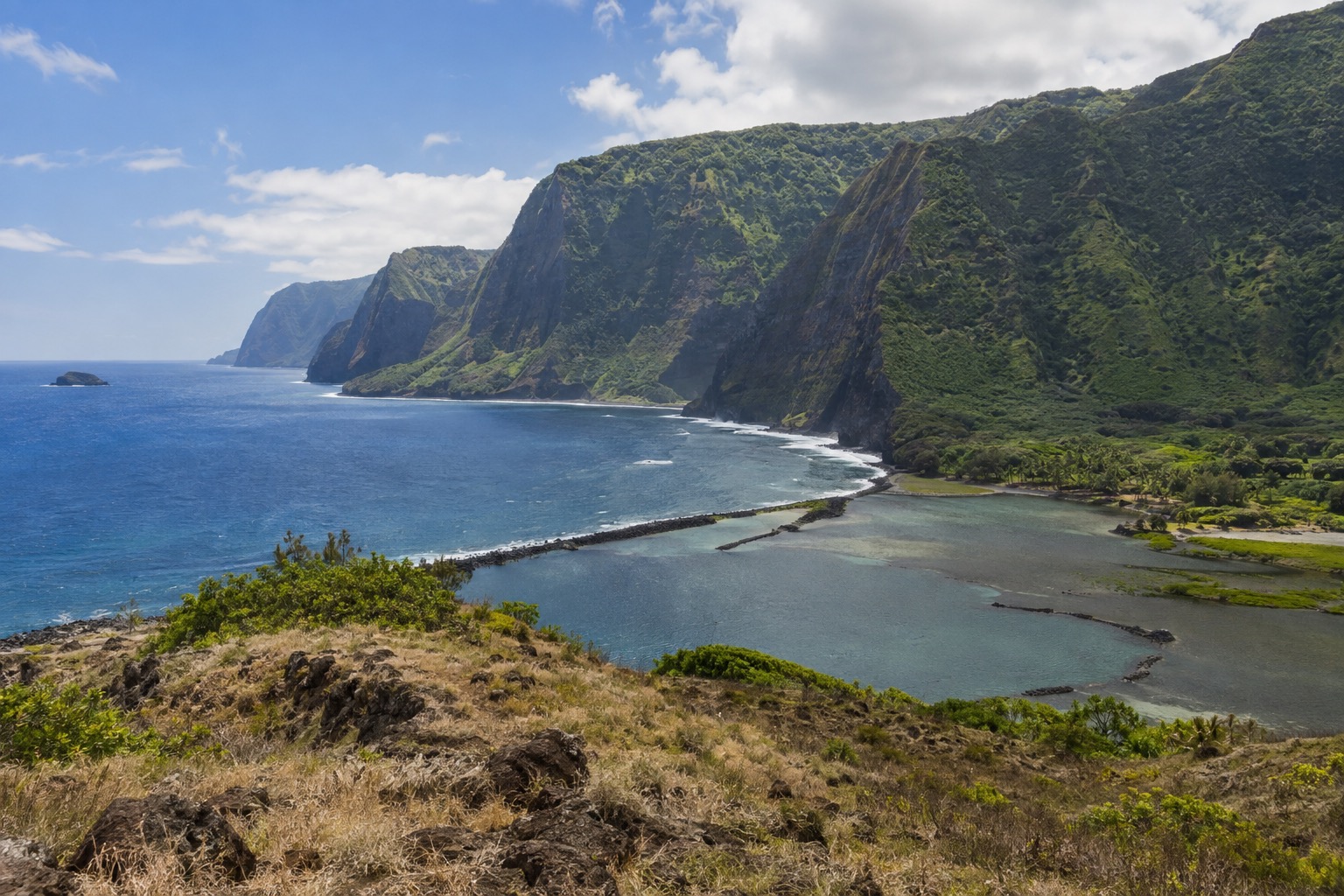
In summer the south shore, shielded by the island’s long reef, is usually the gentler side, and water there is often quiet and shallow near the shore. Even in summer, the north coast tends to be rougher thanks to its towering sea cliffs, and it is largely somewhere to view rather than to swim. Popo and Papohaku on the west end are broad, empty stretches of sand where the water can get lively, so a look at the waves comes first.
Molokai has very few lifeguards, so conditions are yours to read. Watch for any beach signs, ask a local at a fruit stand or shop, and stay out when the surf looks heavy. Bring a mask and snorkel if you like looking at fish over the reef, water shoes for the rocky entries, and mineral sunscreen. Give a wide berth to monk seals and sea turtles that are resting on the sand, since the two are protected.
What to do in Molokai in August
August on Molokai is about slow days outdoors rather than a calendar of events. The island keeps its rural character, and the pleasure is in small things: a hot loaf from a bakery that sells out early, a roadside stand with papayas and bananas, a stop to talk story with whoever is behind the counter.
Late summer is also a good time for the island’s Hawaiian cultural life, which tends to be local and unhurried. Hula, music and community gatherings happen throughout the year, and visitors are welcome to watch with respect, but there is no big tourist festival to plan around, so take the quiet as the feature.
The south shore and the old fishponds
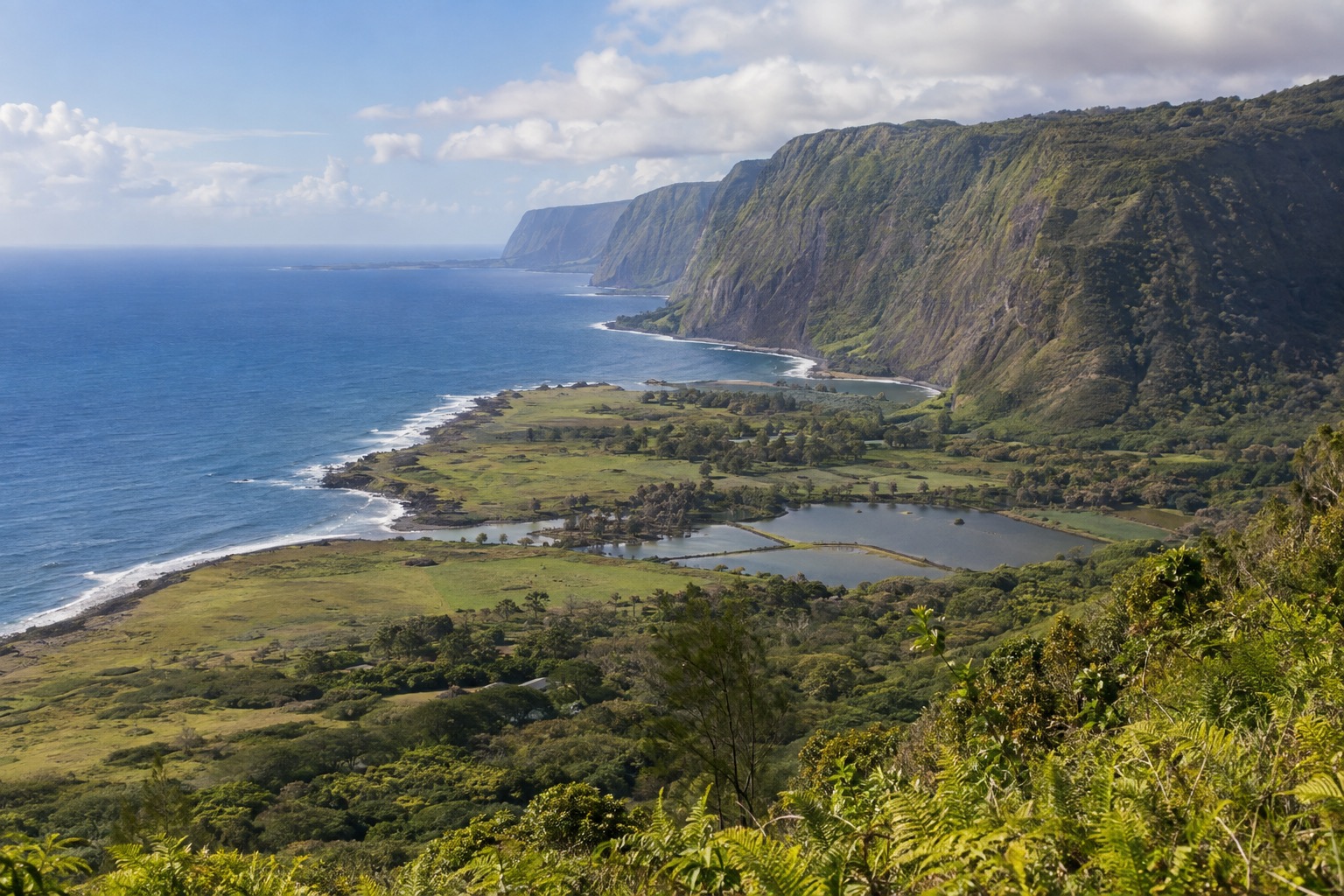
The highway along the south coast is the island’s scenic spine. Stone-walled fishponds, some centuries old, curve out into the shallow water, and the view across the channel toward Maui is clearest on dry August mornings. Stop at the pullouts to look, and stay off the walls, which are cultural sites.
Drive it in the morning, when the light is soft and the shoreline is quiet. The road is narrow and the pace is slow, so build in time for roadside stops. Wear a hat, since shade is scarce, and bring water, because services along the way are few.
Papohaku and the west end
In August, Papohaku, among Hawaii’s lengthiest stretches of white sand, tends to sit almost deserted. It suits long walks, picnics and sunset watching, with a wide horizon and kiawe trees for patches of shade. The water can be rough, so treat it as a place to stroll and wade unless the waves are clearly gentle.
Go in the late afternoon, when the heat eases and the sand glows. Bring snacks and water from town, since this end of the island has little in the way of shops, and keep an eye on the sky because sunsets here are a quiet main event.
Kaunakakai, the town on the pier
Kaunakakai is a short main street of low wooden storefronts, a harbor with a long wharf, and a handful of bakeries, shops and plate-lunch counters. It is where islanders do their errands, and strolling it gives you the clearest sense of everyday Molokai. Look for a local bakery, a poke counter and a shop for souvenirs made on the island.
Mornings are the liveliest time, when residents shop and the baked goods are fresh. Come back at the end of the day to watch the light on the wharf. Everything is casual here, so aloha shirts and slippers fit right in. If a hot afternoon calls for a break, the uplands are cooler and greener, and the drive toward the forest and the valley overlooks changes the whole feel of the island within a few miles.
A two-day itinerary for Molokai in August
In Kaunakakai, Day 1 begins with a bakery breakfast and a walk along the wharf while the air remains cool. Spend the morning driving east along the south shore, stopping at the fishpond pullouts and any quiet beach that looks calm. Sunrise comes early, so there is plenty of day, and the daylight lasts almost thirteen hours.
Eat a plate lunch at a local counter, then take the hottest hours easy with a swim or a shaded rest. In the late afternoon, wander the town shops, and have dinner at a casual restaurant, since evenings here are quiet and early. If a shower rolls in, head to a gallery, shop or café and wait it out.
Day 2 heads west in the morning, across the dry plain toward Papohaku. Stroll that stretch of sand while the morning is still cool, then eat a meal you brought from town in the shadow of the kiawe trees. Take the afternoon at your own pace, with a swim only if the water looks gentle.
Return toward the center of the island for a late-afternoon drive into the cooler uplands, then finish with sunset on the west or south side and a simple dinner. For a rainy day, a long lunch and a browse through Kaunakakai makes a fine fallback.
Is Molokai busy in August?
No, Molokai stays quiet even in August, which is one of its main attractions.
Summer brings mainland families and Hawaii residents on school break, so rooms and rental cars can be tighter than in the slower weeks of spring or fall. The island has few places to stay and a small fleet of vehicles, so book both early, well before you fly. Restaurants are small and often close early, and a table at a favorite spot may fill on weekends.
You will not meet crowds on the beaches or the roads, and cruise-ship days are not part of the picture here. The tempo is local: shops open and close on their own schedule, and that is part of the appeal. Plan meals with a little slack, and keep a snack in the car.
For the holiday weeks of the summer, book early. For quieter weeks later in the month, a few weeks ahead is usually the habit. Check the state parks notices page for any trail or park that needs a reservation or has changed its access.
What to pack for Molokai in August
Pack for sun, heat and dusty roads, with an easy layer for breezy evenings.
- Light cotton clothes, for hot days on the open plain
- A wide-brimmed hat and sunglasses, because shade is scarce
- Mineral sunscreen, for long hours outdoors and the reef
- Water shoes, for rocky entries along the south shore
- A mask and snorkel, for the warm, shallow water
- A refillable water bottle and snacks, since shops are far apart
- A light layer, for breezy evenings and the cooler uplands
Good to know before you go
August falls inside the Central Pacific hurricane season, which runs from June 1 to November 30, so keep an eye on forecasts as your trip nears. Getting around means a rental car, which is worth booking first, along with your room. Bring groceries and supplies from town, since stores are small and close early.
| Fee | Amount | Who pays |
|---|---|---|
| State Transient Accommodations Tax | 11.00% | Guests of hotels and short-term rentals |
| Maui County surcharge on the General Excise Tax | 0.5% | Applied to taxable sales in Maui County |
Molokai in August vs July and September
Moving the trip to July changes little. The air is a touch cooler, the sea a hair cooler, and summer break is in full swing, so rooms and cars can be just as tight. It suits travelers who want the same easy summer rhythm with slightly milder afternoons.
September is a little warmer in the sea and a bit more likely to bring a shower, though still very dry on the plains. Families are back in school, so the island feels even quieter, and the water is at its warmest. It is also deeper into the hurricane season, so watch forecasts.
If you need school-break dates, July and August are the choice. If you want fewer visitors and the warmest swim, lean toward September. For most travelers the differences are small, so pick by calendar and availability.
Is August a good time to visit Molokai?
Absolutely, this is for visitors seeking sunshine, balmy seas and a place that has hardly shifted in many years.
You will love August here if your idea of a vacation is a beach to yourself, a plate lunch on the wharf and a drive with few other cars. People who want nightlife, big resorts or a packed schedule will find this island suits them less, and they will be happier on Maui or Oahu. On arrival, pick up your car, stock the cooler in Kaunakakai and head to the south shore.
What makes August special is how little happens, and how well that works. The days are long, the sea is warm, the fishponds glow in the morning light, and the quiet of the west end beaches settles in at sunset.
Sources
- NOAA NCEI, monthly normals 1991-2020, station USW00022534, checked September 8, 2026
- Open-Meteo Marine API, average 2015-2024, checked September 8, 2026
- sunrise-sunset.org, sunrise and sunset calculated for the 15th of the month, checked September 8, 2026
- Hawaii Department of Taxation, Tax Announcement No. 2025-03 (Transient Accommodations Tax Law Changes from 2025 Legislative Session), files.hawaii.gov/tax/news/announce/ann25-03.pdf, checked September 24, 2026
- Hawaii Department of Taxation, County Surcharge on General Excise and Use Tax page, tax.hawaii.gov/geninfo/countysurcharge/, checked September 25, 2026
- NOAA NCEI, monthly normals 1991-2020, station USW00021504
- NWS Honolulu / Central Pacific Hurricane Center, « 2026 Central Pacific Hurricane Season Outlook », weather.gov/hfo/hurricaneOutlook2026, checked September 24, 2026