
On a September morning in Kaunakakai, the long wharf is already busy with fishermen, and the smell of fresh bread from a back-door bakery drifts down the main street, which has no stoplight and never seems to need one. The light is warm and steady, the trade winds keep the afternoons comfortable, and the island moves at the pace it always has. Molokai in September offers empty beaches, small-town stops and a slow week away from the crowds.
What is the weather like in Molokai in September?
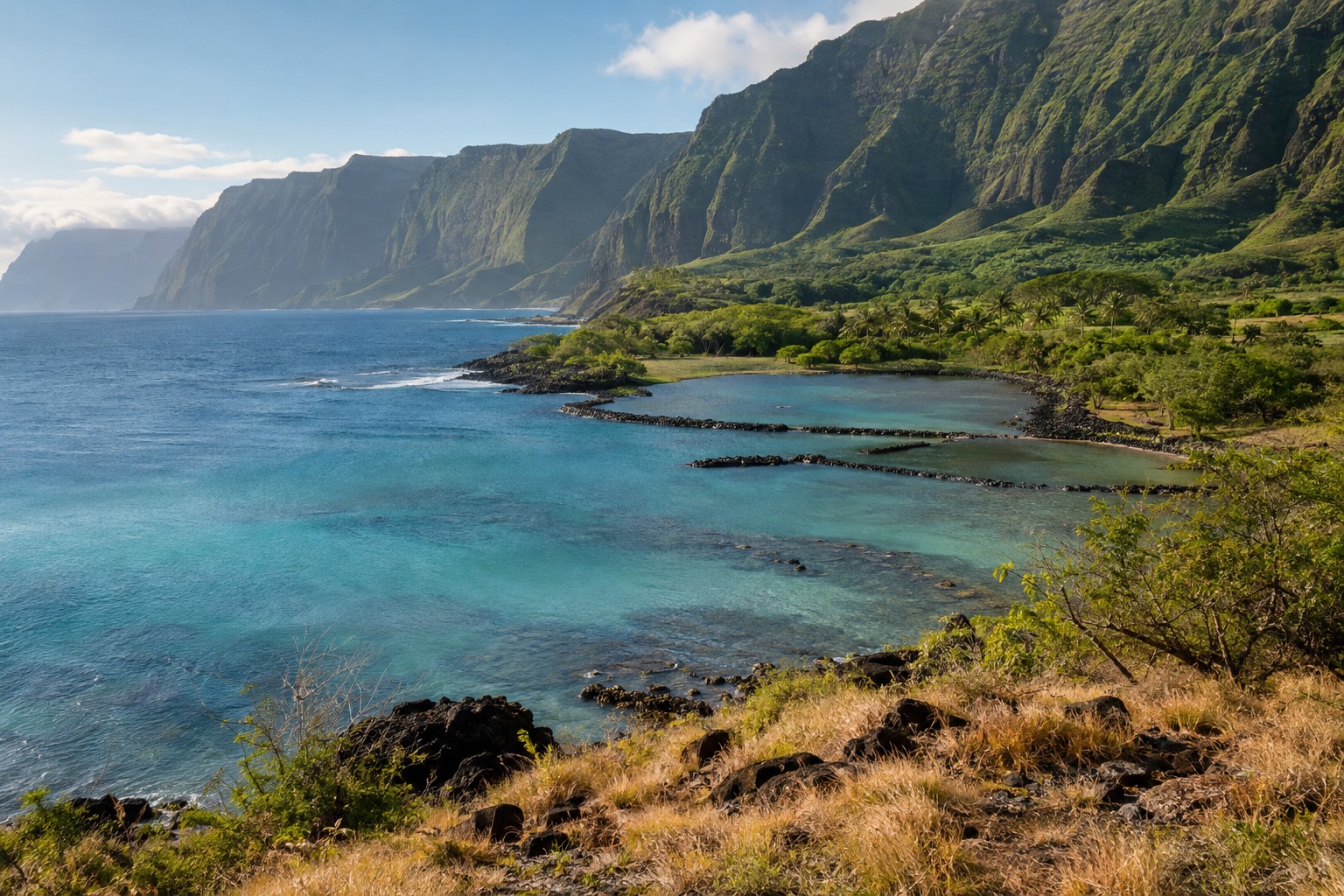
On Molokai in September, expect warmth, sunshine and little rain, while the trade winds keep the summer heat in check. Rain is brief and rare on the central plain and the dry west end.
| Month | Average high (°F) | Average low (°F) | Rain days | Sea (°F) |
|---|---|---|---|---|
| August | 86.5 | 73.4 | 1.7 | 80.1 |
| September | 86.7 | 72.8 | 1.9 | 80.9 |
| October | 85.5 | 71.4 | 2.7 | 80.7 |
Mornings start soft and bright, pleasant for a walk along the harbor or a drive across the island before the sun climbs. By midday the plain around the airport is hot and the light is hard, so shade, a hat and a cold drink matter. Afternoons are tempered by the breeze, which makes beach hours more comfortable than the thermometer suggests.
Rain, when it comes, is a passing shower, often at night or over the green ridges rather than on the coast. A month that gets about an inch in total is a dry one, and you can plan outdoor days with confidence. The wet side of the island is the east end and the high valleys, where clouds catch on the mountains, while the south shore and the west stay sunny and dry.
Most nights you can have dinner outdoors in a T-shirt because the air stays gentle, but once the breeze strengthens you may reach for something light. Days are still long, and the sun sets with a gold and pink glow over the water toward Oahu. The sea sits in the low 80s, and it is warm all day.
Can you swim in Molokai in September?
Sure, you can swim for a long time in that warm water, and there is no need for a wetsuit to stay comfortable.
For Molokai’s north-facing coast, summer tends to bring calmer days, since winter is when large swells arrive, and the south shore, shielded by a long fringing reef, is often quieter. Beaches such as Papohaku on the west end are broad and beautiful, but the open ocean there can have shore break and currents, so it is as much a place for walking as for swimming. Closer to the harbor, the shallow reef flats are good for wading, though the water can be murky.
Snorkelers and swimmers should watch the signs and ask locals about the day’s conditions, since there are few lifeguards on the island. Bring your own gear, reef shoes and plenty of water, and never turn your back on the surf. Families with small children usually do best in the sheltered spots along the south shore.
What to do in Molokai in September
September is a month of easy days: slow drives, empty sand, local food and a calendar that belongs to the island rather than to visitors. Molokai holds community events through the year, and late summer is often when neighborhoods gather for fishing contests, canoe races and fundraisers. Ask at your lodging or at a shop in Kaunakakai what is happening that week, since small-island events are announced on bulletin boards and by word of mouth.
Kaunakakai and the south shore
Kaunakakai is the island’s only real town, and a stroll down its main street takes in a few general stores, a fish market, a hardware store and the old-fashioned bakeries. A hot bread run after dark, when locals line up at a back door for sweet loaves, is one of the island’s quiet rituals. The wharf stretches into calm water and is a good place to watch fishermen and the afternoon light.
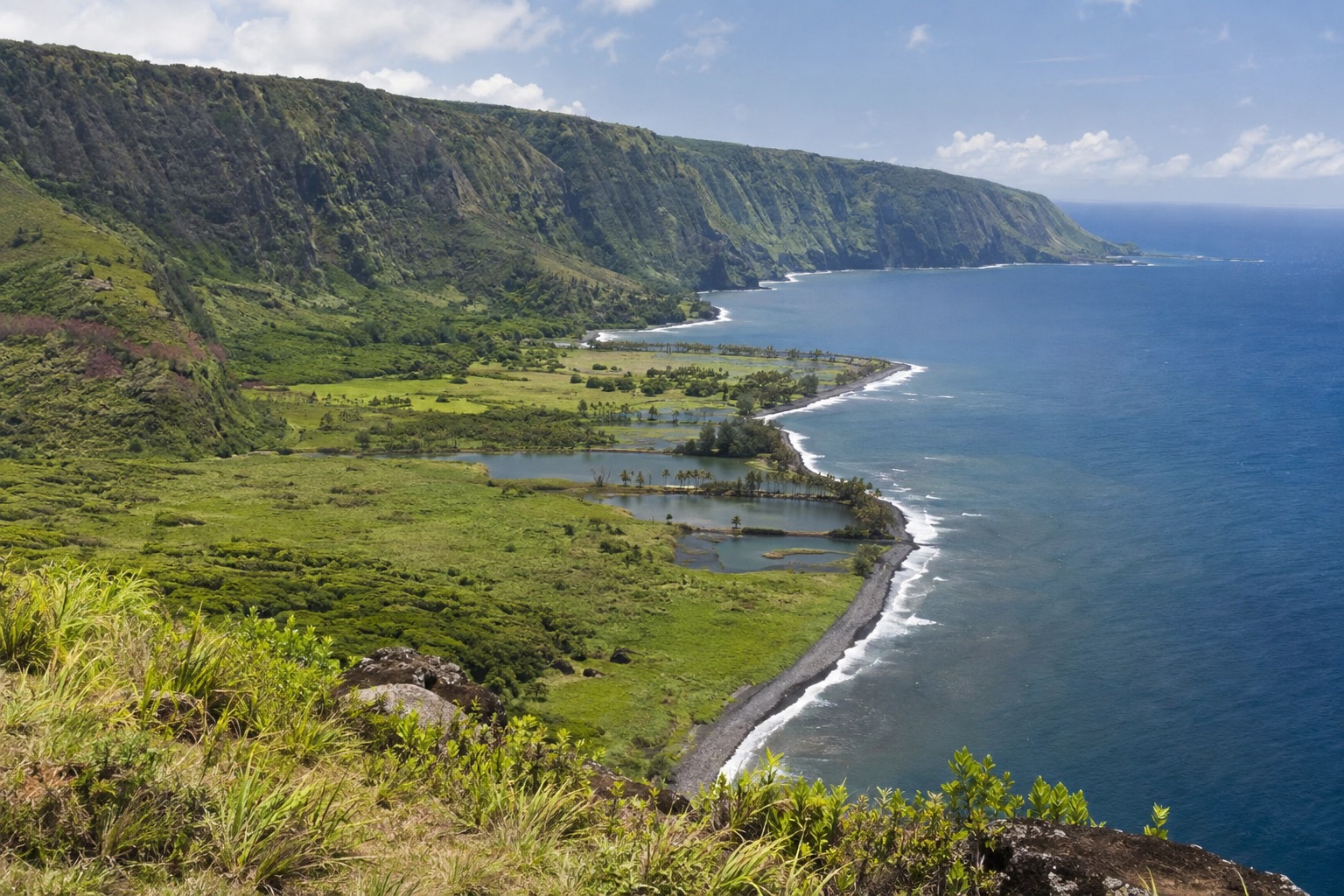
East of town, the road runs along the south shore past fishponds built by Native Hawaiians centuries ago. The coast is lined with pull-offs, palm groves and low reef flats, and the drive is best in the morning, when the air is clear and the water is flat. Stop at small beach parks, stay on the paths and treat the ponds with respect, since they are cultural sites.
The west end and Papohaku Beach
The west end of Papohaku is dry, open and wide, and the beach itself stands among Hawaii’s longest stretches of white sand. Long strolls, picnic meals and evening sunsets are what this spot is made for, and you will hardly see anyone around. Kiawe trees give some shade behind the sand, and the view across the channel to Oahu is clear on good days.
Swim with caution here, as the open-ocean exposure means surf and currents can change quickly. Come in the late afternoon to stay for the sunset, and bring water, since there are few services nearby. Nearby Moomomi, on the north shore, is a protected coastal dune area best seen on foot with respect for its fragile plants.
The cool uplands and the east end
The road east rises into greener country, where the air is cooler and the fields give way to forest and mountain valleys. This side catches more rain, so it is lush even in a dry month. It is a good drive for a day when the beach feels too hot, with views of the coast and the cliffs that fall to the sea on the north side.
Kalaupapa, the historic peninsula below the north cliffs, is a sacred and protected place, and visits there follow special arrangements. Plan well ahead if you hope to go, and treat the place with the quiet respect it deserves.
For food, expect plate lunches, fresh fish, poke, sweet bread and local fruit stands. Restaurants are few and small, and many close early, so plan dinner before dark.
A two-day itinerary for Molokai in September
Day 1 starts early in Kaunakakai, with coffee and a pastry before the day warms up. Wander out onto the pier in the calm sea and soft light, then spend the morning traveling east along the south shore, stopping by the fishponds and small beach parks. Have lunch at a local plate-lunch counter or a picnic from a market, and take the hottest hours slowly in the shade.
In the late afternoon, turn back toward town and stop at a shop or two for local crafts. Dinner is simple and early, and after dark you can look for the famous hot bread from a back door. The sun sets a bit after 6:30, so time your walk to catch the glow.
Day 2 heads west. Drive across the central plain in the cool of the morning and reach Papohaku with plenty of room to walk. Spend midday in the shade with a picnic, then explore the dry west end at an easy pace.
Stay for sunset over the channel, with Oahu on the horizon. If the weather turns gray, head to the museums, galleries and small shops in town, and have a long lunch indoors.
Is Molokai busy in September?
September finds Molokai quiet, just as it stays for most of the year, and next to Maui or Oahu the island draws few visitors.
The school year is underway on the mainland, so the family rush of summer has faded. What remains is a small trickle of travelers who come for solitude, hiking and the slower pace. Restaurants are rarely crowded, though they are few and some keep short hours, so a table is easy but choices are limited.
Lodging on Molokai is limited, with a handful of small hotels, condos and vacation rentals. Rental cars are few as well, and the island has no big agencies on every corner, so booking a car early is a good habit. A room is usually easy to find at this time of year, but the best places still fill on weekends and holiday weeks, so reserving early is wise.
If you plan to visit special sites, such as Kalaupapa, arrangements need to be made well ahead of the trip. Everything else is relaxed, and the island rewards people who go with the flow.
What to pack for Molokai in September
Pack light for warm days and cool, breezy evenings, and bring a few items suited to a dry, sunny island with few shops.
- Mineral sunscreen and a wide-brimmed hat, since the sun is strong on the open plain and beaches.
- A light long-sleeve layer for breezy evenings and early mornings.
- Reef shoes and snorkel gear, because rentals are limited.
- A refillable water bottle, as services are sparse on the west end.
- Sturdy sandals or light hiking shoes for coastal walks and uplands.
- A small rain shell for a passing shower on the east side.
Good to know before you go
The Central Pacific hurricane season runs from June 1 to November 30, so September falls inside it. Hawaii is rarely hit, but it is wise to follow forecasts and keep your plans flexible. Molokai is a small island with few services, so fill up the gas tank when you can, carry cash and groceries for remote days, and book your rental car early. Lodging is subject to the state accommodations tax and a county surcharge.
| Fee | Amount | Who pays |
|---|---|---|
| Transient Accommodations Tax (state) | 11.00% | Guests, on gross rental proceeds |
| General Excise Tax county surcharge (Maui County) | 0.5% | Added to the General Excise Tax |
Molokai in September vs August and October
Moving the trip earlier to August brings nearly identical weather, a touch drier and a hair warmer at night, with the sea a shade cooler. The difference is people: August still carries some summer family travel, so the island feels slightly busier and rooms book earlier.
Moving later to October brings a bit more rain, cooler nights and a slightly more changeable sky, though the island stays warm and mostly sunny. Visitors thin out further, and the first hints of the winter pattern begin to show in the sea over the following weeks.
If you want the driest and most settled days with a quiet island, September sits in the sweet spot. Families tied to school calendars may prefer August, and travelers who like a little more green and cooler evenings may enjoy October.
Is September a good time to visit Molokai?
September is indeed a great month for anyone seeking an island that is peaceful, bright, and free of crowds, with balmy seas and relaxed afternoons.
It suits people who like to drive slowly, walk long beaches, eat local food and talk to shopkeepers. It is less suited to those who want nightlife, big resorts, shopping or a packed activity list, since the island offers very little of that in any month.
Once you land, grab supplies and gas in Kaunakakai, check on your rental car, and find out from folks there what is happening this week and how the ocean looks. Then start with the south shore drive, which sets the tone for the island. What is special about September on Molokai is the stillness: the dry golden light on the west end, the fishermen on the wharf at dawn, and the sense that the island belongs, for a few weeks, to the people who live there.
Sources
- NOAA NCEI, monthly normals 1991-2020, station USW00022534, checked September 8, 2026
- Open-Meteo Marine API, average 2015-2024, checked September 8, 2026
- sunrise-sunset.org, sunrise and sunset calculated for the 15th of the month, checked September 8, 2026
- Hawaii Department of Taxation, Tax Announcement No. 2025-03 (Transient Accommodations Tax Law Changes from 2025 Legislative Session), files.hawaii.gov/tax/news/announce/ann25-03.pdf, checked September 24, 2026
- Hawaii Department of Taxation, County Surcharge on General Excise and Use Tax page, tax.hawaii.gov/geninfo/countysurcharge/, checked September 25, 2026
- NOAA NCEI, monthly normals 1991-2020, station USW00021504
- NWS Honolulu / Central Pacific Hurricane Center, « 2026 Central Pacific Hurricane Season Outlook », weather.gov/hfo/hurricaneOutlook2026, checked September 24, 2026