
On a June morning in Kaunakakai, the screen doors of the little shops on Ala Malama Street bang open early, and the smell of hot bread from the bakery drifts toward the wharf where fishermen are already back from the water. Molokai moves at its own pace, with no high-rises, no traffic lights and a long, dry, sunny stretch of summer ahead. June is a month for quiet beaches, back roads, and an island that still feels like old Hawaii.
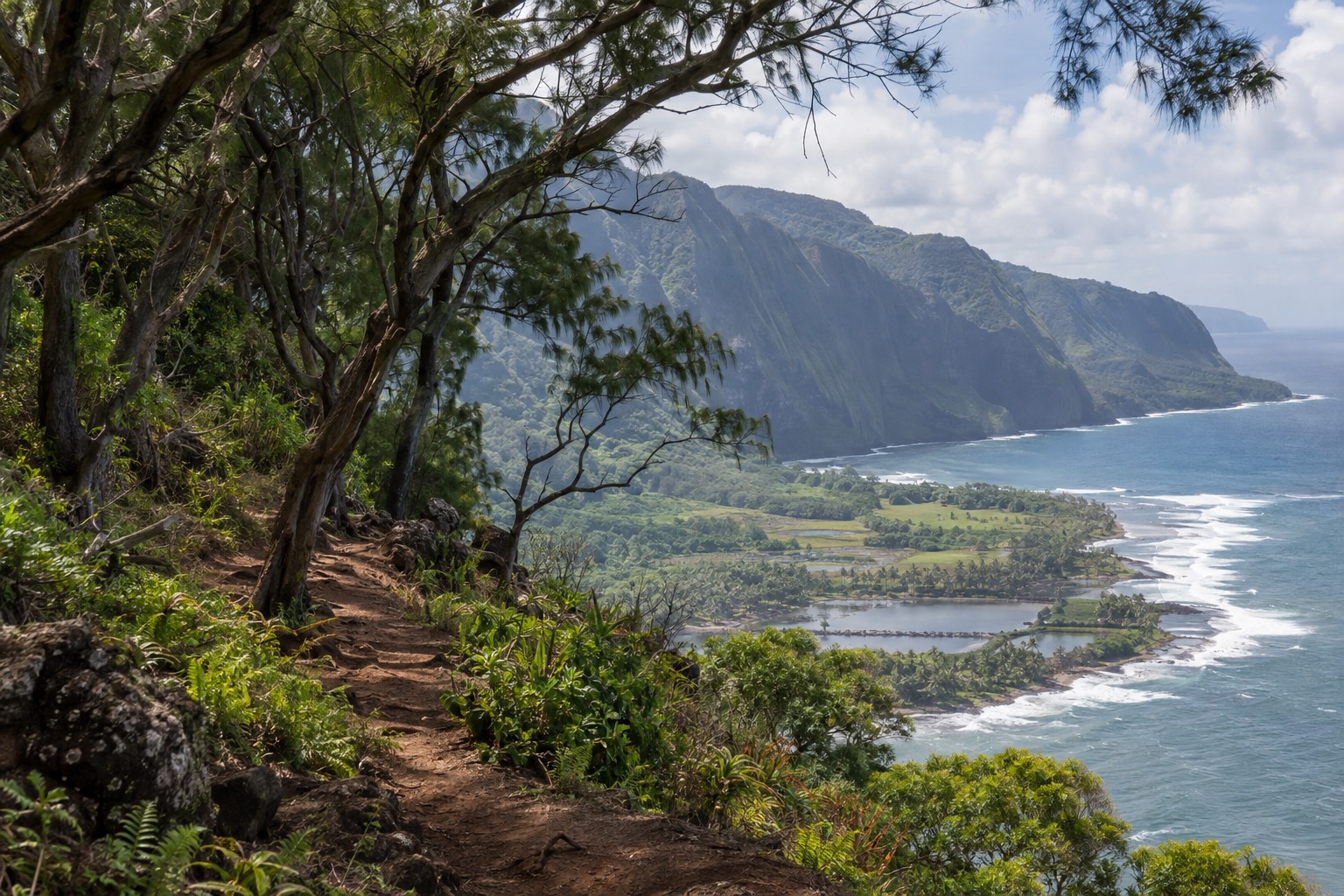
What is the weather like in Molokai in June?
June is warm, bright and very dry on Molokai, with sunshine on most days and only the rare passing shower.
| Month | Average high (°F) | Average low (°F) | Rain days | Sea (°F) |
|---|---|---|---|---|
| May | 82.8 | 68.6 | 2.1 | 77.8 |
| June | 84.7 | 71.5 | 1.1 | 79.0 |
| July | 85.5 | 72.7 | 1.7 | 79.8 |
Mornings start soft and clear, and by midday the sun is strong enough that a hat and shade become part of the plan. The trade winds usually keep the air moving, which takes the edge off the afternoons on the central plain and along the south shore. Evenings stay mild, so dinner outside in a T-shirt is the norm.
Rain, when it comes, is a short shower that drifts over and moves on, and it rarely lasts long enough to change a day. Molokai Airport, on the central plain, records just a fraction of the rain that drenches Hilo’s wet windward coast, since the island lies in the rain shadow cast by Maui and the Big Island. The green folds of the east end and the high valleys catch more clouds than the dry west and south.
The light is long, with about thirteen and a half hours of daylight in mid-June, so you can fit a beach morning, a drive and a late sunset into one day. Pack for sun first, with a light layer for breezy evenings and for the cooler air up in the Kamakou forest.
Can you swim in Molokai in June?
Yes, you can swim for a long, comfortable stretch because the water is warm, and on the island’s south and west-facing shores, June begins the calmer season.
Summer swells tend to favor the south side, where the reef-fringed coast along Kaunakakai is usually shallow and gentle. Out on the west end, Papohaku Beach stands as one of Hawaii’s longest white sand stretches, wide and nearly empty, but powerful shore break and currents can sweep through the water, so for walking, picnics and sunsets it beats a casual swim. Some beaches along the north shore are cut off by cliffs and only open up to waves in winter.
Snorkelers often head for sheltered spots along the south coast when the water is clear, bringing their own mask and fins since gear is limited on the island. Families with young children do best on the quietest, shallowest stretches.
Nobody should treat any beach as a sure thing: conditions change from day to day, so read the signs, follow any flags and ask a lifeguard where one is on duty. Many Molokai beaches have no lifeguard at all.
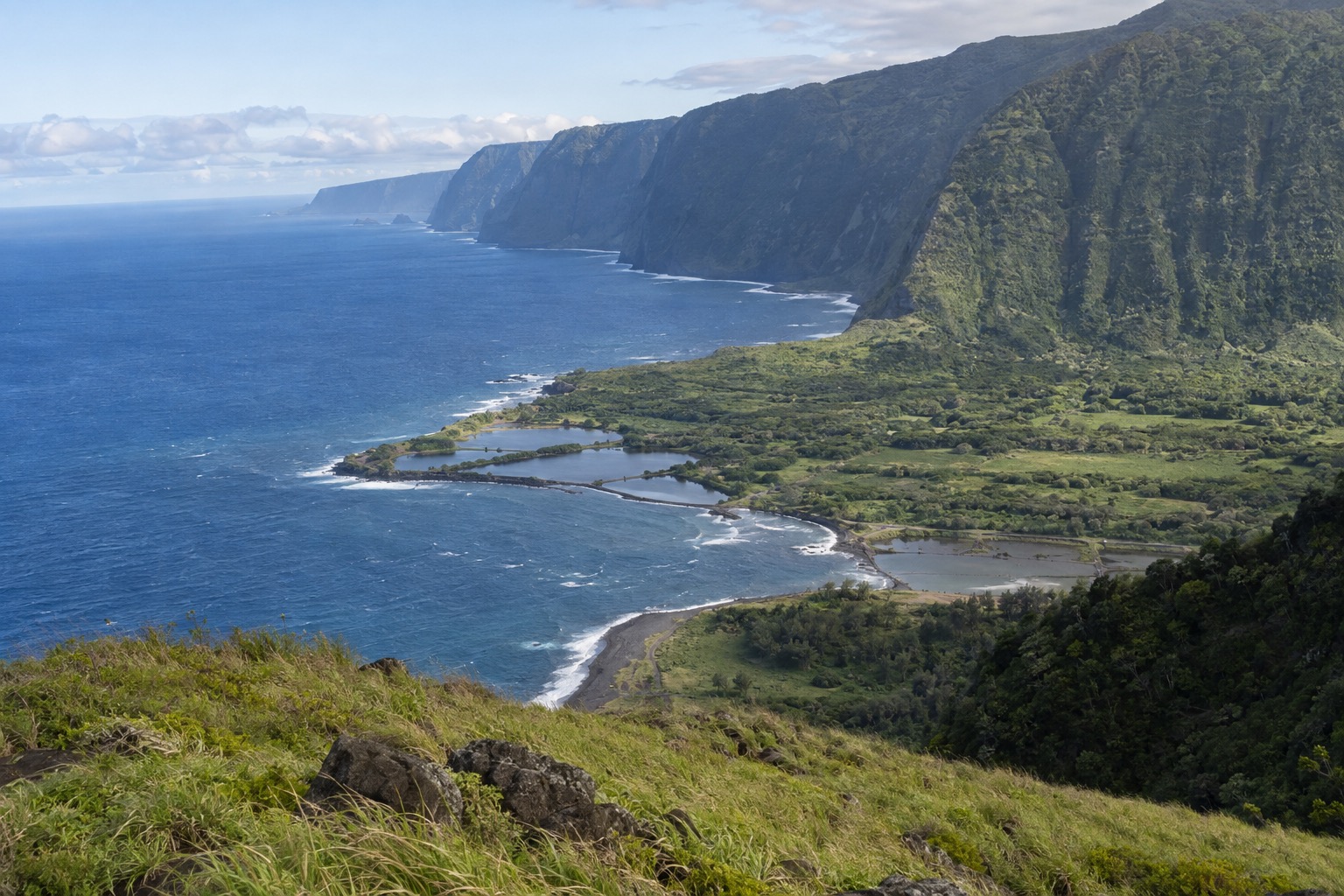
What to do in Molokai in June
June on Molokai is not about a big event. It is about the rhythm of the island: early mornings at the wharf, the farmers’ stands, long afternoons on empty sand and sunsets that stretch late. The month also brings the start of the Central Pacific hurricane season on June 1, but the dry, sunny weather is what most people notice here.
Kamehameha Day on June 11 is a state holiday, and Hawaiian communities mark it with lei draping and gatherings. You may catch small local celebrations, flower lei and hula in towns, though the island keeps these events modest and community-run. Treat them as a welcome to watch respectfully rather than a show.
Kaunakakai and the south shore
The island’s sole genuine town is Kaunakakai, where a handful of blocks lined with low wooden storefronts lead down to a long wharf. Start with a stroll down Ala Malama Street, stop at the bakery for fresh bread and a pastry, and look for local fruit stands and shops selling crafts and fish.
Out on the wharf, the late-afternoon light turns the water gold, and you can watch the fishermen and local families. The coast road east of town runs along old fishponds, built by Hawaiians long ago, and offers some of the most relaxed driving on the island. It suits anyone who wants an easy morning without a plan, and it is best before the midday sun gets strong.
Papohaku Beach and the west end
The west end is wide, dry and open, with Papohaku Beach unrolling for miles along the coast. You reach it by road from Kaunakakai, crossing the central plain and passing the old ranchland. Bring water, shade and a picnic, because services are scarce.
Go late in the day, when the heat eases and the sun drops toward the horizon over the ocean. Oahu may glow faintly on the horizon on a clear evening. The beach is for strolling and sunsets more than swimming, and it suits couples, photographers and anyone chasing solitude.
The east end and the green valleys
The road east of Kaunakakai narrows and turns greener, passing small beaches, churches and quiet villages. This side of the island sees more cloud and more rain, so it has the lush look the west lacks. Pull over where you can and watch the Pacific roll against the reef.
It is a slow drive that deserves a half day, with stops for views and a picnic. Fill the tank and bring snacks before you set out. The east is the part of Molokai that suits people who like winding roads and scenery over activity.
Beyond these drives, Molokai rewards the unhurried: a stop at a roadside stand for fresh fruit, a visit to the local coffee and macadamia growers on the central plain, or an afternoon reading in the shade. Seafood and local plates such as poke, plate lunches and fresh fish are the island’s food, served in simple, friendly places.
A two-day itinerary for Molokai in June
Day 1 begins in Kaunakakai, where you want to be early, before the sun climbs. Pick up bread and coffee on Ala Malama Street, then walk to the wharf as the town wakes up. By mid-morning drive the coast road east along the old fishponds, stopping at roadside beaches and pulling over for views.
At midday, return to town for a plate lunch or a fish sandwich from a local counter, then rest in the shade during the hottest hours. In the afternoon, take a swim off a sheltered south-shore spot if the water looks calm. Dinner is simple and local, and the evening ends early, as most of the island does.
If a rare shower rolls through, spend the time browsing the shops and galleries in town and lingering over a long lunch. Day 2 heads west across the central plain. Leave after breakfast, passing ranchland and open fields, and reach Papohaku Beach by late morning for a long walk on the sand. Bring a picnic, since little is sold out there.
Spend the afternoon at the west end, then drift back toward the plain for a visit to a coffee or macadamia farm if one is open. Return to the west shore for sunset, which in mid-June comes late, and watch the sky color over the water. Dinner back in Kaunakakai closes the trip. If the weather turns gray, trade the beach for a slow drive to see the central plain and a stop at a local market or café.
Is Molokai busy in June?
No, Molokai stays quiet in June, even when school is out and the rest of Hawaii fills with families.
The island has few hotels and condos, no big resorts and no cruise ships calling at its ports, so summer crowds never build the way they do on Oahu or Maui. You may notice more local families at the beaches on weekends and around holidays such as Kamehameha Day, but the pace barely changes. Because eateries tend to be tiny and frequently shut their doors before evening ends, you should make dinner plans instead of counting on finding a table.
Rental cars and rooms are limited because the island is small, and a car is the main way to get around, so book both early, especially for the holiday weeks of summer. For a quieter stretch you can book later, though options are always few. Inter-island flights are small, so lock those in as soon as your dates are set.
No park or trail reservation system governs a Molokai visit in June, and the beaches and roads are open to anyone. The quiet is the point, and you are expected to be a respectful guest: leave no trace, stay off private land and ask before entering anywhere that looks like a family property.
What to pack for Molokai in June
Pack light and for the sun, with a few things that help on a quiet island with few shops.
- Mineral sunscreen and a wide-brimmed hat, because the sun is strong and shade is scarce on the west end.
- A reusable water bottle, since services are limited on long drives.
- Mask and snorkel, because gear is hard to find on the island.
- A light layer for breezy evenings and cooler forest air.
- Sturdy sandals or water shoes for rocky reef entries.
- Cash and snacks for roadside stands and long drives.
Good to know before you go
The Central Pacific hurricane season opens on June 1 and runs to November 30, so the trip falls at the very start of it. Flights to Molokai are on small planes, and a rental car is the practical way to see the island, so book both early. Services are limited after dark, and many small places close in the evening, so plan meals ahead.
| Fee | Amount | Who pays |
|---|---|---|
| State Transient Accommodations Tax | 11.00% | Guests, on gross rental |
| Maui County surcharge on the General Excise Tax | 0.5% | Charged on taxable sales in Maui County |
Molokai in June vs May and July
Moving the trip to May brings a slightly cooler sea and a touch more rain, though showers are still brief. The island is quiet, the evenings are a little fresher and the days are a shade shorter. It suits anyone who prefers milder afternoons and does not mind a few more clouds.
July is a little hotter and the sea warmer still, with the long, sunny days of high summer. Family travel peaks across Hawaii in these weeks, so rooms and cars can be harder to find even on a small island. Expect the same dry, easy rhythm, with the beaches inviting for longer swims.
Choose May if you want a gentler heat, and July if warm water matters most. June sits between the two, with the driest weather of the three and the Kamehameha Day celebrations in the middle of the month.
Is June a good time to visit Molokai?
Yes, June suits travelers who want sun, warm water and a slow, quiet island without crowds.
It is a fine month for beach walkers, drivers who like empty roads, photographers chasing long sunsets and anyone who wants to disconnect. Folks seeking nightlife, large resorts, guided tours or a full schedule of things to do will find the island a poorer fit, because Molokai has nothing of the kind. Those who want waves for surfing will also find summer quiet on most shores.
On arrival, pick up your rental car, stock up on water and snacks in Kaunakakai, and take the coast road east while the morning is still cool. Save the west end for the evening. What makes June special here is the light: long, golden days over a dry, open island, with the sea at its warmest yet and the roads and beaches almost to yourself.
Sources
- NOAA NCEI, monthly normals 1991-2020, station USW00022534, checked September 8, 2026
- Open-Meteo Marine API, average 2015-2024, checked September 8, 2026
- sunrise-sunset.org, sunrise and sunset calculated for the 15th of the month, checked September 8, 2026
- Hawaii Department of Taxation, Tax Announcement No. 2025-03 (Transient Accommodations Tax Law Changes from 2025 Legislative Session), files.hawaii.gov/tax/news/announce/ann25-03.pdf, checked September 24, 2026
- Hawaii Department of Taxation, County Surcharge on General Excise and Use Tax page, tax.hawaii.gov/geninfo/countysurcharge/, checked September 25, 2026
- NOAA NCEI, monthly normals 1991-2020, station USW00021504
- NWS Honolulu / Central Pacific Hurricane Center, « 2026 Central Pacific Hurricane Season Outlook », weather.gov/hfo/hurricaneOutlook2026, checked September 24, 2026