
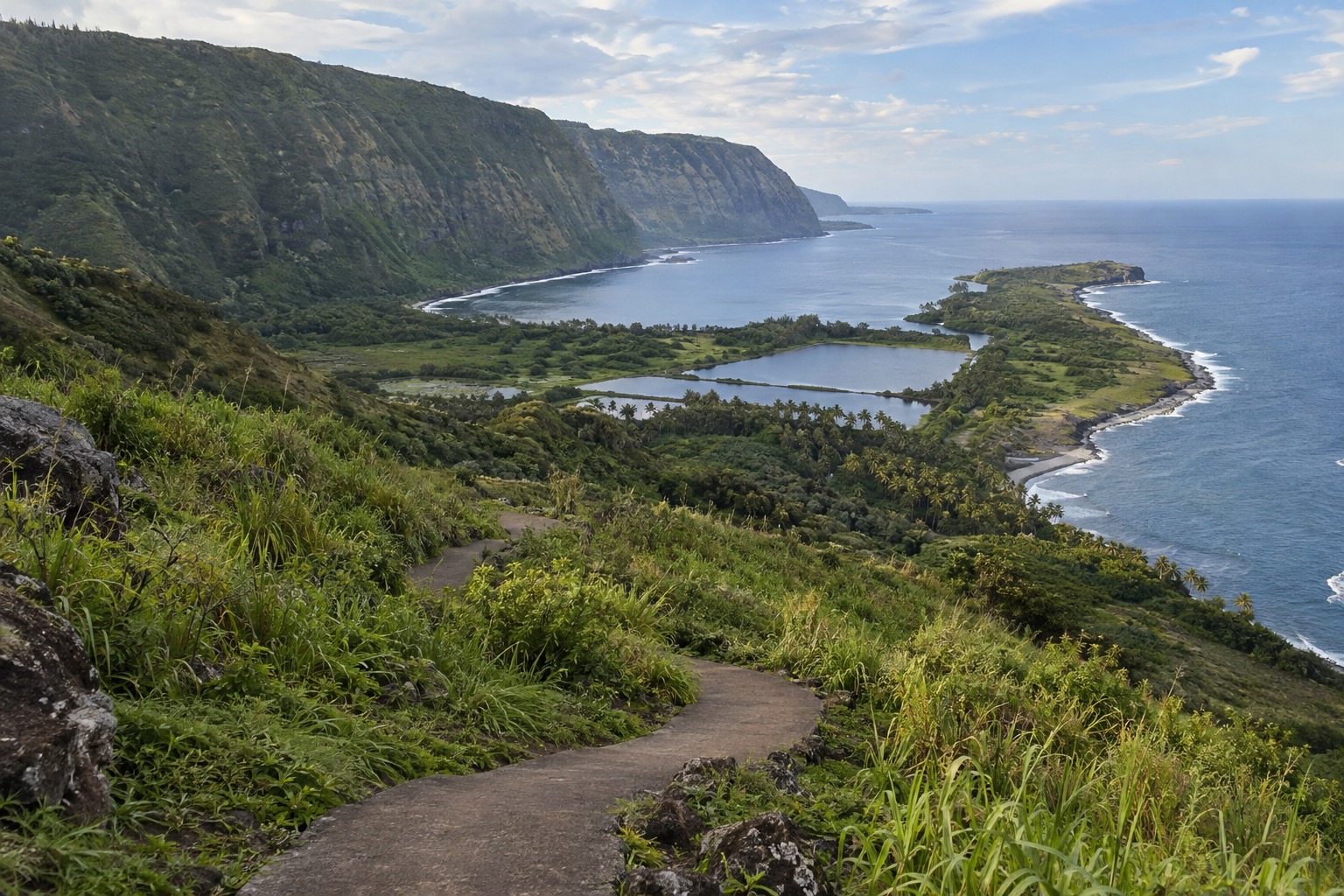
On a July morning in Kaunakakai, the smell of fresh bread drifts from the back door of Kanemitsu’s Bakery while the town’s one main street wakes slowly. Pickup trucks idle by the wharf, fishermen haul in their catch, and the light turns the hills of the east end a deep green. Molokai in July is warm, dry and unhurried, a month for the quiet side of Hawaii, with long beach days and almost no crowds.
What is the weather like in Molokai in July?
Molokai in July is warm, sunny and mostly dry, with trade winds that keep the afternoons comfortable.
| Month | Average high (°F) | Average low (°F) | Rain days | Sea (°F) |
|---|---|---|---|---|
| June | 84.7 | 71.5 | 1.1 | 79.0 |
| July | 85.5 | 72.7 | 1.7 | 79.8 |
| August | 86.5 | 73.4 | 1.7 | 80.1 |
The island’s airport sits on the central plain, on the leeward side, where the mountains pull most of the rain out of the trade-wind clouds before they arrive. That is why July here feels so different from the wet windward coast around Hilo on the Big Island. Mornings are bright and soft, the afternoons are hot in the sun but rarely heavy, and a breeze usually does the cooling.
Rain, when it comes, is a short passing shower, often over the green uplands and the north-facing valleys rather than on the beaches. A day that is gray from dawn to dusk is unusual. The wet season belongs to winter, so July is the kind of month when you can plan outdoor days without a backup for every hour.
Pack for sun first. Evenings stay mild enough to eat outside in a T-shirt, perhaps with a light layer when the wind picks up near the shore. Days are long, with the light lingering well into the evening, so there is time for a late swim and a slow dinner.
Can you swim in Molokai in July?
You can count on the ocean being warm enough for a lengthy, pleasant swim, so a wetsuit will not be necessary.
Summer is the gentler season for the island’s north-facing coast, which takes the big swells in winter, while the south shore, sheltered by the island itself, is usually calmer in July. Much of that south shore is protected by a long fringing reef, so the water near the beach is often shallow and flat, better for wading and paddling than for dramatic waves.
Popular spots for a swim include the beaches on the west end, such as Papohaku, a very long strand of pale sand. Currents and shore break can still appear, so the lifeguard (where there is one) and the beach signs decide.
Many beaches on Molokai have no lifeguard and little development, so bring your own water, shade and snacks. Stay off the living reef, and leave lots of space for any sea turtles or monk seals you encounter. Families with small children and nervous swimmers should choose the calmest-looking stretch, watch the water for a while first, and stay close to the shore.
What to do in Molokai in July
July on Molokai is about slow, outdoor pleasures: beaches nearly to yourself, small-town errands, hikes under a high sun, and the sort of conversations you only have in a place where everyone seems to know everyone. Nothing here is built for crowds, and that is the appeal.
Local life sets the rhythm. Fishing, canoe paddling and hula practice go on all summer, and community events tend to be small, friendly and open to visitors who come with respect. Kamehameha Day on June 11 has just passed, but its spirit lingers in lei-making and hula gatherings. If a local event is on during your stay, go quietly, ask before taking photos and buy from the stalls.
Kaunakakai and the south shore
Kaunakakai is the island’s main town, and it is easily walked in an hour or two. The wharf, the old-fashioned storefronts, the hot bread at the bakery and the plate lunches at local counters give a real picture of everyday Molokai. There are no traffic lights and no big resorts, and it is better enjoyed as a morning stroll than a full day.
Heading east along the coast, you pass old fishponds built by Hawaiians centuries ago, walls of stacked stone running out into the shallows. They are best seen from the road in the soft light of early morning, when the water is still and egrets often stand along the walls. Treat them as cultural sites and stay off the stones.
The drive east passes through lush valleys, with views of Maui across the channel. Before you head out, gas up and pack some snacks, because there aren’t many places to stop. It suits anyone who likes a scenic, slow drive with frequent stops.
Papohaku and the west end
The west end is dry, open and wide. Papohaku Beach ranks with Hawaii’s longest stretches of white sand, and by July that broad shoreline usually sits nearly deserted. Late in the day, once the heat lets up and the light goes gold, stroll from one end of it to the other and keep an eye out for the sun sinking toward the horizon.
Behind the beach are shaded picnic areas that suit a long lunch. Because the sand is open and exposed, sun protection and plenty of water matter. Swimming here depends on the day, since the open ocean on this side can be rough, so look at the waves before you decide and treat a calm morning as the best chance.
The dry plains and ranch land inland make a good contrast with the green east. Allow time for pulling over, since the best photographs on Molokai tend to come from unplanned stops at the side of the road.
Kalaupapa, the north shore and the sea cliffs
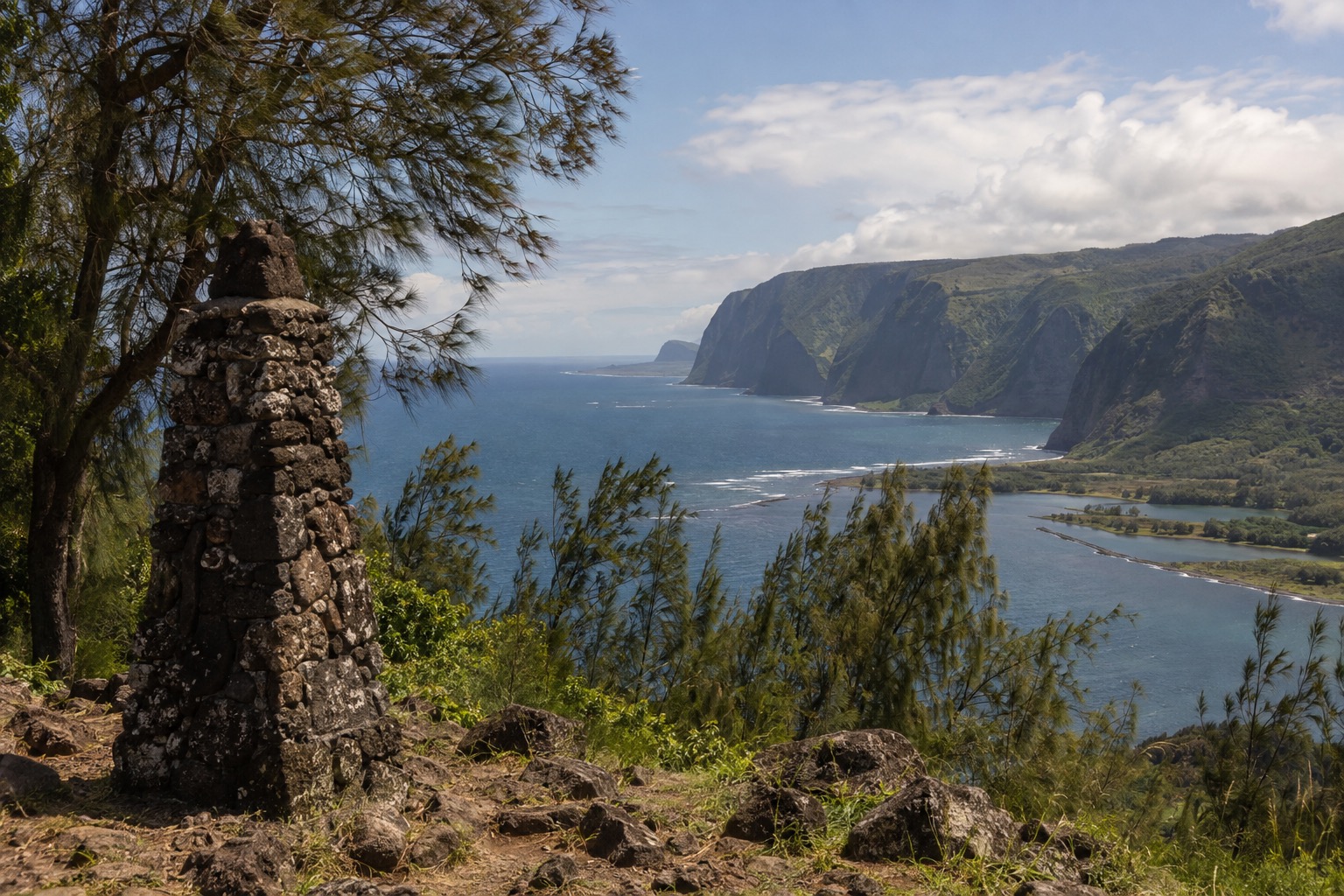
Some of the world’s tallest sea cliffs rise along the north coast, and beneath them the Kalaupapa peninsula carries a history that calls for genuine respect. It is a place of memory, tied to people who were sent there by the government because of Hansen’s disease. Access is controlled and takes planning, so treat any visit as a respectful pilgrimage rather than a sightseeing stop.
If you do not go down, you can still take in the scale of the cliffs from lookouts on the high ground, where the air is cooler and clouds sometimes drift over the green ridges. Go in the morning, when the view is clearest. Bring a layer, as the plateau can be breezy and damp even in summer.
The island’s food is local and uncomplicated, from fresh fish and poke to plate lunches, bakery treats and roadside fruit stands. Eat where the locals eat, and take things slowly.
A two-day itinerary for Molokai in July
Day 1 starts early in Kaunakakai, with bakery pastries and a walk around the wharf before the sun climbs. By mid-morning, drive east along the shore, stopping at the fishponds and the small beaches, and plan lunch from a roadside stand or a picnic. The heat peaks around midday, so spend that time under the shade of trees or in the water, then continue toward the green valleys of the east end in the softer afternoon light.
Return to town for dinner at a casual local spot, and watch the light fade over the channel. With daylight lasting past dinner, you have time for a gentle evening walk by the harbor. If a shower turns up, a slow browse of the town’s small shops and a long coffee are a perfectly good rain card.
Day 2 heads west, away from the town and into the open, dry country. Start early, before the sun gets strong, and reach Papohaku Beach for a long walk on the sand and, if the water looks calm, a swim. Picnic in the shade behind the beach during the hottest hours.
In the afternoon, turn toward the highlands and the north-shore lookouts, where the air is cooler and the views of the cliffs open up. Return to the coast for the end of the day and a last sunset, when the beaches on the west side are at their quietest. If the weather turns, spend the time at a cultural stop, a small museum or a coffee shop in town.
Is Molokai busy in July?
No, Molokai stays quiet even in July, though summer is when more families from the mainland and from other islands arrive.
School is out, so some local families travel and visit relatives, and the island’s small stock of rooms and vacation rentals can fill on busy weekends. There are very few hotels, so lodging is limited whatever the month, and booking well ahead is a good habit for any summer trip. Rental cars are also few, and you will want one to reach the beaches and the far ends of the island, so reserve it early.
Because the restaurants tend to be tiny and open only briefly, with a few shutting early or on particular days, you should build your meals around those hours and carry some snacks with you. Nothing here needs elbowing through a crowd. You can count on calm at the beaches, on the roads and at the lookouts, and a long stretch of sand will often be yours alone.
Where Molokai does ask for planning is in visits to protected or sacred places, which are controlled and not open to casual drop-ins. Think of the island as a place where you adapt to local rhythms, rather than the other way round.
What to pack for Molokai in July
Pack light, sun-ready clothes for warm days and a layer for breezy evenings and cooler highlands.
- Pack mineral sunscreen and a broad-brimmed hat, since the beaches offer almost no shade.
- A refillable water bottle, since services are few and the sun is strong.
- Sturdy sandals or light hiking shoes for lookouts and uneven paths.
- A light rain jacket or windbreaker for passing showers and breezy plateaus.
- Snorkel gear, if you have your own, for calm mornings along the south shore.
- A small cooler and snacks for long drives between stops.
Good to know before you go
July falls inside the Central Pacific hurricane season, which runs from June 1 to November 30. Services on the island are limited, so fill the tank, carry water and plan meals in advance. Getting around is most practical with a rental car, so book your lodging and that car first.
| Fee | Amount | Who pays |
|---|---|---|
| State Transient Accommodations Tax | 11.00% | Guests, on the rental price of the room |
| Maui County surcharge on the General Excise Tax | 0.5% | Added to taxable sales in the county |
Molokai in July vs June and August
Moving the trip earlier to June brings slightly cooler air and a little less rain, with the island just as quiet. The sea is a touch cooler as well, and the school-break rush has not fully started, so rooms and cars can be a little easier to find.
Going later to August brings the warmest air and sea of the three months, with the same dry feel. It suits people who want the most summer-like days and the warmest water. Family travel stays strong into the month, so book ahead as for July.
The differences are small. Choose June if you prefer slightly softer heat, and August if you want the warmest swims. July sits comfortably in the middle, which is a good reason to keep it if your dates are fixed.
Is July a good time to visit Molokai?
For travelers seeking sunshine, warm water and a peaceful island, plus a love of simple joys, July truly fits the bill.
It suits beach walkers, drivers who love open roads, photographers who like long light, and anyone who wants to feel the rhythm of a small community. Those craving nightlife, sprawling resorts, tour stands on every corner or a jam-packed schedule will find it a poorer fit. Winter surf fans should look to another season for the big north-shore waves.
On arrival, pick up the car and the groceries first, since stores and restaurants close early, then take a slow first drive along the south shore to get your bearings. What makes July special on Molokai is the combination of dry, golden days and a coast where the loudest sound is often the wind in the kiawe trees.
Sources
- NOAA NCEI, monthly normals 1991-2020, station USW00022534, checked September 8, 2026
- Open-Meteo Marine API, average 2015-2024, checked September 8, 2026
- sunrise-sunset.org, sunrise and sunset calculated for the 15th of the month, checked September 8, 2026
- Hawaii Department of Taxation, Tax Announcement No. 2025-03 (Transient Accommodations Tax Law Changes from 2025 Legislative Session), files.hawaii.gov/tax/news/announce/ann25-03.pdf, checked September 24, 2026
- Hawaii Department of Taxation, County Surcharge on General Excise and Use Tax page, tax.hawaii.gov/geninfo/countysurcharge/, checked September 25, 2026
- NOAA NCEI, monthly normals 1991-2020, station USW00021504
- NWS Honolulu / Central Pacific Hurricane Center, « 2026 Central Pacific Hurricane Season Outlook », weather.gov/hfo/hurricaneOutlook2026, checked September 24, 2026