
On a May morning in Kaunakakai, the only sounds on Ala Malama Street are roosters, a screen door and someone calling out to a neighbor. Bread is coming out of the oven at the little bakery, and the trade winds are already ruffling the kiawe trees along the shore. Molokai in May is quiet, sunny and unhurried, a month for slow roads, empty beaches and an island that still lives at its own pace.
What is the weather like in Molokai in May?
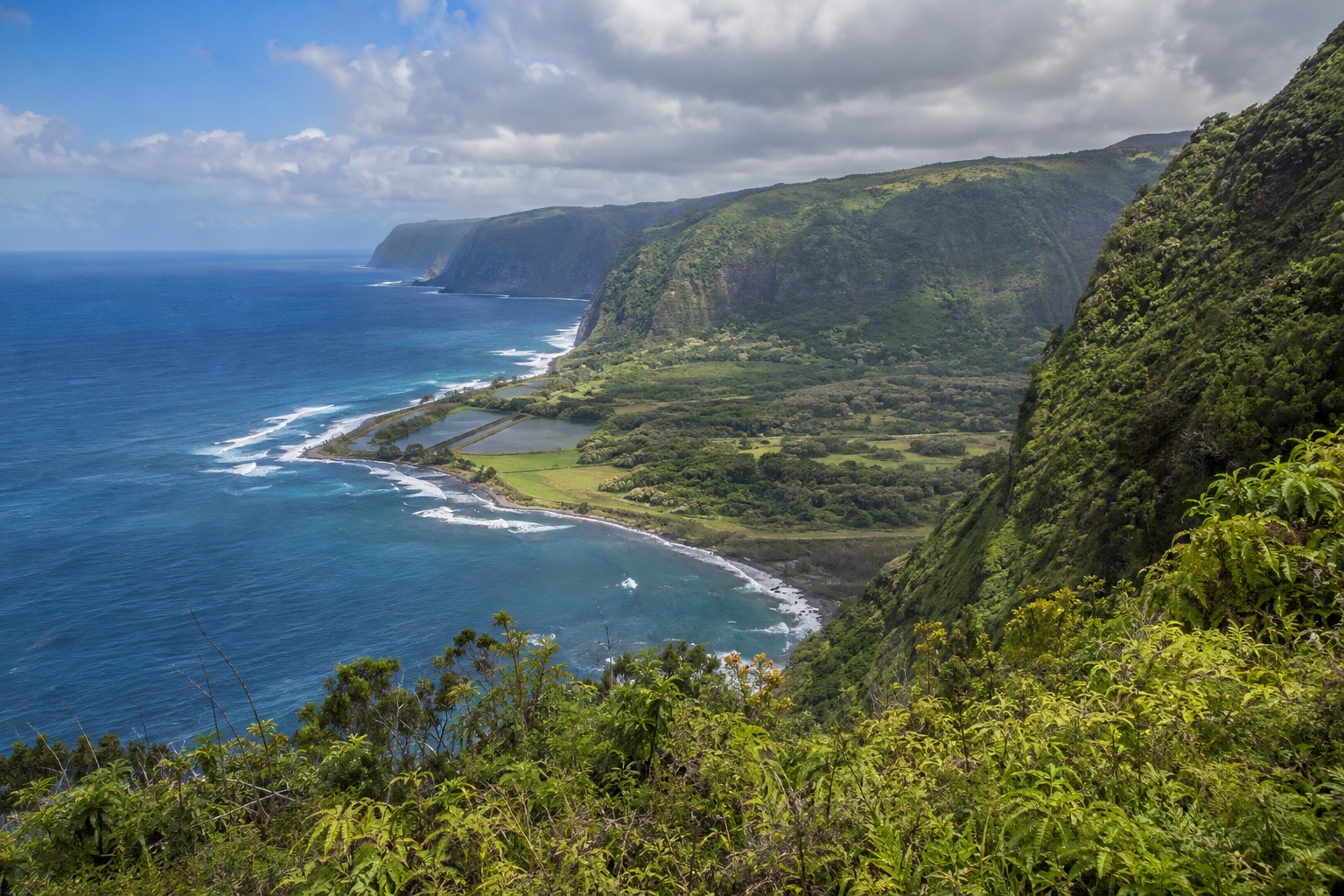
May is warm, sunny and mostly dry on Molokai, with the trade winds keeping the afternoons comfortable and only a couple of short showers in the whole month.
| Month | Average high (°F) | Average low (°F) | Rain days | Sea (°F) |
|---|---|---|---|---|
| April | 81.0 | 67.1 | 3.4 | 76.9 |
| May | 82.8 | 68.6 | 2.1 | 77.8 |
| June | 84.7 | 71.5 | 1.1 | 79.0 |
Mornings start soft and fresh, pleasant enough for coffee on a lanai in a T-shirt. By midday the sun is strong and the central plain around the airport and Kaunakakai feels hot, though the breeze takes the edge off. Evenings cool just enough that you may want a light layer after sunset, and you can eat outside every night.
What rain there is usually comes as a brief passing shower, more often over the green uplands and the east end than on the dry southern shore. Molokai’s leeward south and west sides are dry because the island’s own eastern mountains block the trade-wind rain. A rain day here is a pause of twenty minutes, not a lost afternoon.
The light in May is long and golden, with about thirteen hours of daylight, so there is time for a beach morning and a late drive. Bring sun protection even on cloudy-looking days, because the tropical sun burns quickly, and pack a light rain shell if you plan to head up toward the cooler, wetter forest.
Can you swim in Molokai in May?
Yes, the sea is warm enough for a long, comfortable swim, though the water is a shade cooler than it will be by midsummer.
Molokai’s best-known swimming is along the south and west shores, where May water usually feels pleasant and the reef often keeps the shoreline gentler than the open coast. Papohaku Beach, at the west end, ranks among Hawaii’s longest stretches of white sand, and late in spring it makes a lovely spot for a walk or a little sunbathing, but because its waves and currents can run strong, it suits strollers better than swimmers who scare easily. Calmer pockets along the south shore tend to suit families better.
On Molokai, the north coast’s huge sea cliffs mean you should not plan to swim there, and whenever swells roll in, the open ocean may turn rough along any shore. Since Molokai has so few lifeguards, look at the warnings that are posted, watch the ocean for a few minutes before entering, and ask locals how the conditions are today. Bring your own mask and snorkel, as gear is not easy to find, and use mineral sunscreen.
What to do in Molokai in May
May begins with Lei Day on May 1, and on Molokai it feels personal. Schools and community groups make leis from island flowers, and the tradition of the lei, the hula and the pride of the place come together in a low-key, local celebration. Molokai is considered the birthplace of hula, and the spirit of that story is felt throughout the island, especially in spring when flowers are in bloom.
The island has no big resorts, no traffic lights and a modest number of visitors, so what you do here is mostly simple. You drive, you walk, you swim, you eat at small local places, and you talk to people. May’s dry weather and long days suit this slow rhythm perfectly.
Papohaku Beach and the west end
The west end is open, windy and wide. Papohaku is a long ribbon of pale sand backed by kiawe and ironwood, and you may walk a long stretch without meeting another person. It is a good place for a picnic, a barefoot walk and a sunset, as the sun drops toward the horizon with Oahu sometimes visible in the distance.
The drive from Kaunakakai runs across the dry plain and past old ranchland, and it is a pleasant ride rather than a quick one. Go in the afternoon when the light turns warm, bring water and food, since services are scarce, and treat the sea with respect, because waves here can be strong.
Halawa Valley and the east end
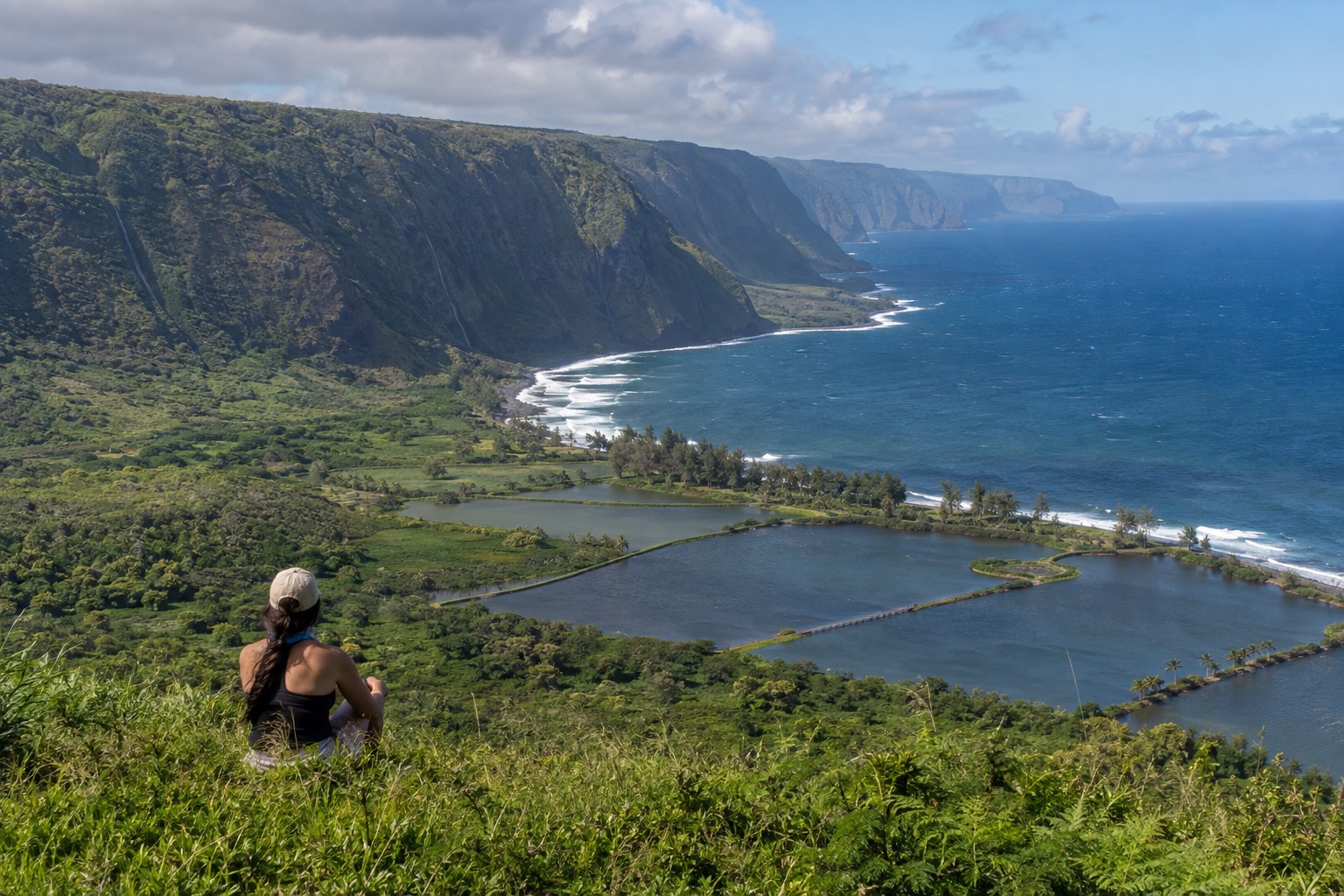
Heading east, the road hugs the south shore and passes ancient fishponds, among the oldest in the islands, before rising and winding into land that grows greener. It ends at Halawa Valley, a deep, lush valley with a waterfall at its head and a deep cultural history. Access to the valley is tied to local families and the community, so go with respect for the people who live there and follow their guidance.
May’s drier weather generally makes the east end drive more pleasant, though showers are likelier here than on the plain. The road is winding and slow, so allow a full day, bring a lunch and a rain layer, and do not rush the trip.
Kaunakakai and the local table
Kaunakakai is a one-street town, and that is its charm. You can wander past the wharf, the small shops and the bakery, pick up fresh bread, and stop for plate lunches, poke and shave ice. Local fish, sweet potatoes and fruit from roadside stands make up much of the island table, and the food is plain and good.
Evenings are quiet, and many places close early, so plan dinner with that in mind. Stock up on groceries in town if your lodging has a kitchen, as options are limited elsewhere on the island.
May is also a month for gentle outings: a sunrise on the south shore, a drive to the lookouts above the cliffs, and slow afternoons by the water. Respect the land, which is sacred to many Native Hawaiians, keep off the reef and leave cultural sites undisturbed.
A two-day itinerary for Molokai in May
Day 1. Start early in Kaunakakai with coffee and fresh bread, then walk the wharf while the air is still cool. In the morning, make your way east along the south shore, pausing at the fishponds and little beaches, then keep going toward the island’s greener end ahead of the midday heat. Have a simple lunch from a local stand or bring a picnic.
Return in the afternoon and swim at a quiet south-shore beach, then browse the shops in town. Dinner is at a small local restaurant, and the evening is for a slow stroll or just watching the stars, which are bright with so few lights. If the weather turns, a shower usually passes within minutes, and a cafe or shop is a good place to wait.
Day 2. Head west in the morning toward Papohaku Beach, where the long sand is quiet and the light is clear. Walk the shore, swim only if conditions look gentle, and enjoy a picnic under the trees. Midday is hot on the dry plain, so keep this stretch relaxed.
In the afternoon, drive back across the plain and visit a local farm stand or craft shop for lei, fruit and souvenirs. Sunset falls in the evening on the west side, with the light turning gold over the water, so aim to be at the shore by then. If rain arrives, spend the time in town at a museum or gallery, or simply with a book on the lanai.
Is Molokai busy in May?
No, Molokai is quiet in May, as it is for most of the year, and that is much of its appeal.
The spring break rush on the mainland has mostly passed, and the summer family weeks have not yet begun, so the island sits in a calm stretch between them. Even in busier months Molokai has few visitors compared with Maui or Oahu, since there are no big resorts and lodging is limited to small condos, cottages and a handful of hotels.
That small scale cuts both ways. Rooms and rental cars are few, so it is wise to book early even for a quiet month, especially if you want a specific cottage or a vehicle for the whole stay. Restaurants are small and often close early, so for a special dinner it helps to ask ahead.
Memorial Day weekend near the end of the month brings more local and visiting families, so book earlier if your dates overlap with it. Other weeks are easygoing. Because many places are family-run, hours can shift, and a friendly question to your host will go further than any schedule.
What to pack for Molokai in May
Pack light and simple, since the island is casual and the weather is warm.
- Mineral sunscreen and a hat, because the May sun is strong and the shade is scarce on the west end.
- A light rain shell, for the quick showers that pass over the uplands and the east end.
- Sturdy sandals or shoes, for rocky shorelines and dirt roads.
- Your own mask and snorkel, since rental gear is hard to find.
- A light sweater, for cooler evenings and the drive to the higher country.
- A refillable water bottle and snacks, as services between towns are few.
Good to know before you go
May falls just before the Central Pacific hurricane season, which runs from June 1 to November 30, so the month is outside the official season. Molokai is small and quiet, services are limited, and many places keep short hours, so plan for gas, groceries and meals ahead of time. Book a rental car and lodging first, as both are in short supply. Lodging is subject to the state and county taxes below.
| Fee | Amount | Who pays |
|---|---|---|
| State Transient Accommodations Tax | 11.00% | Guests on lodging |
| Maui County surcharge on the General Excise Tax | 0.5% | Applied through the county, which includes Molokai |
Molokai in May vs April and June
Moving a month earlier to April brings slightly cooler air and water, and a few more showers, but the island is just as calm and green. The landscape is often lusher after the wetter winter, which many visitors like, and the spring break crowds on other islands have little effect here.
Moving a month later to June brings hotter, drier days and the warmest sea of the three, which suits swimmers and snorkelers. School is out on the mainland, so summer family travel begins to pick up, and the hurricane season starts on June 1. The longest days of the year give you plenty of light for beach time.
Choose May if you want the balance: warm water, dry weather, long light and a peaceful island. Choose April for greener hills and a slightly cooler feel, and June if the warmest ocean matters most to you.
Is May a good time to visit Molokai?
Yes, May is an excellent time for travelers who want a quiet, sunny and unhurried island.
It suits walkers, beach lovers, families who like simple days, and anyone interested in Hawaiian culture and a slower pace. Travelers seeking nightlife, big resorts, organized tours or a long list of restaurants will find it a poorer fit, because none of that exists on Molokai in any month.
On arrival, pick up groceries and any supplies in Kaunakakai first, since shops and restaurants are few and close early. Then settle into the rhythm: a morning swim, a long drive with a picnic, and an evening on the porch with the trade winds. What makes May special here is the combination of Lei Day flowers, warm clear days and an island that feels like it belongs to the people who live on it, with plenty of room left for a visitor to be a quiet guest.
Sources
- NOAA NCEI, monthly normals 1991-2020, station USW00022534, checked September 8, 2026
- Open-Meteo Marine API, average 2015-2024, checked September 8, 2026
- sunrise-sunset.org, sunrise and sunset calculated for the 15th of the month, checked September 8, 2026
- Hawaii Department of Taxation, Tax Announcement No. 2025-03 (Transient Accommodations Tax Law Changes from 2025 Legislative Session), files.hawaii.gov/tax/news/announce/ann25-03.pdf, checked September 24, 2026
- Hawaii Department of Taxation, County Surcharge on General Excise and Use Tax page, tax.hawaii.gov/geninfo/countysurcharge/, checked September 25, 2026
- NOAA NCEI, monthly normals 1991-2020, station USW00021504
- NWS Honolulu / Central Pacific Hurricane Center, « 2026 Central Pacific Hurricane Season Outlook », weather.gov/hfo/hurricaneOutlook2026, checked September 24, 2026